

Fine Art Poster
From £28
A giclée print on 200gsm matte fine art paper, using a twelve-colour process for accurate, fade-resistant colour. Supplied unframed, delivered flat or rolled.

Archival giclée
Frames arrive ready to hang
Secure checkout
Made to order
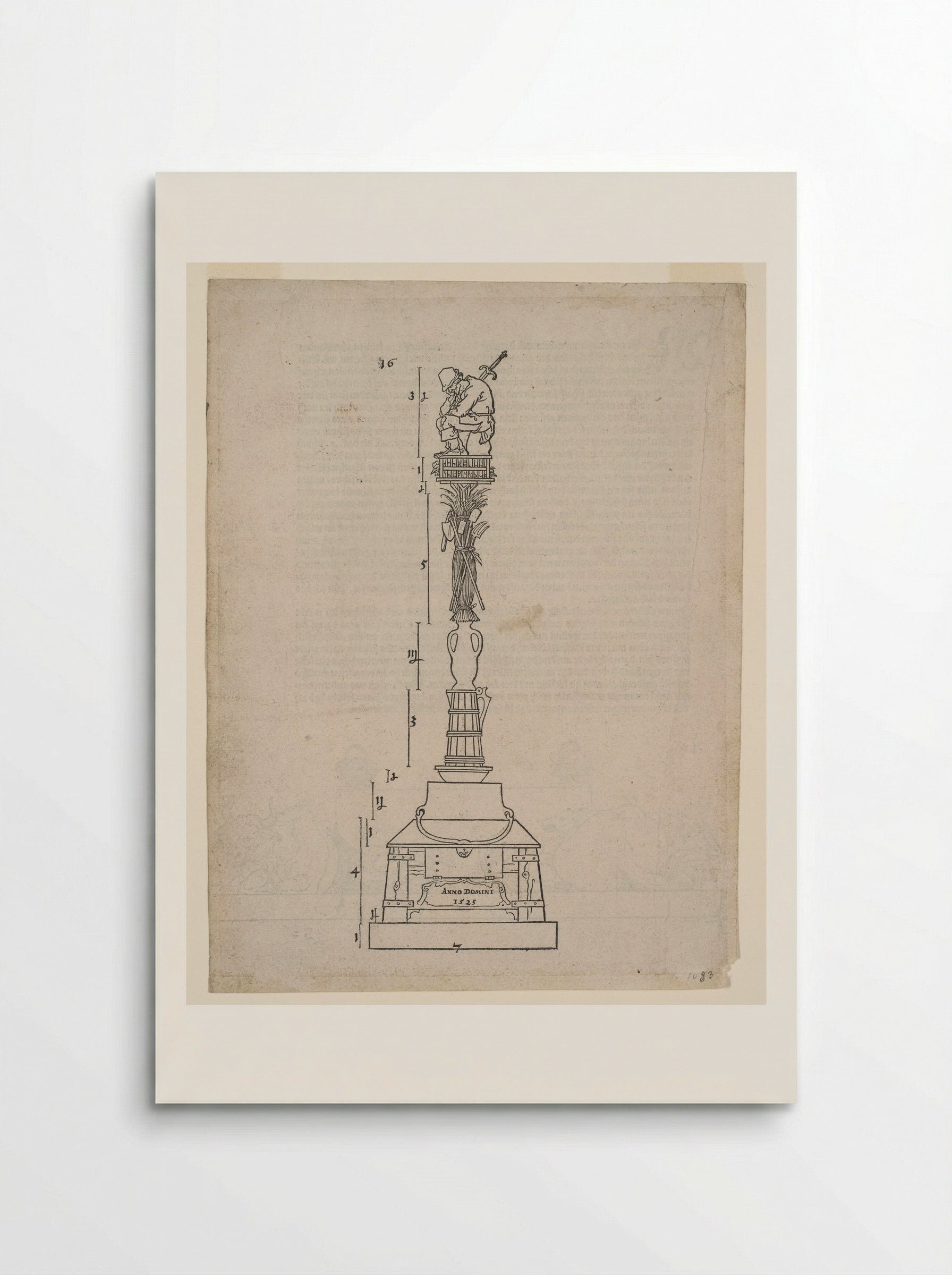
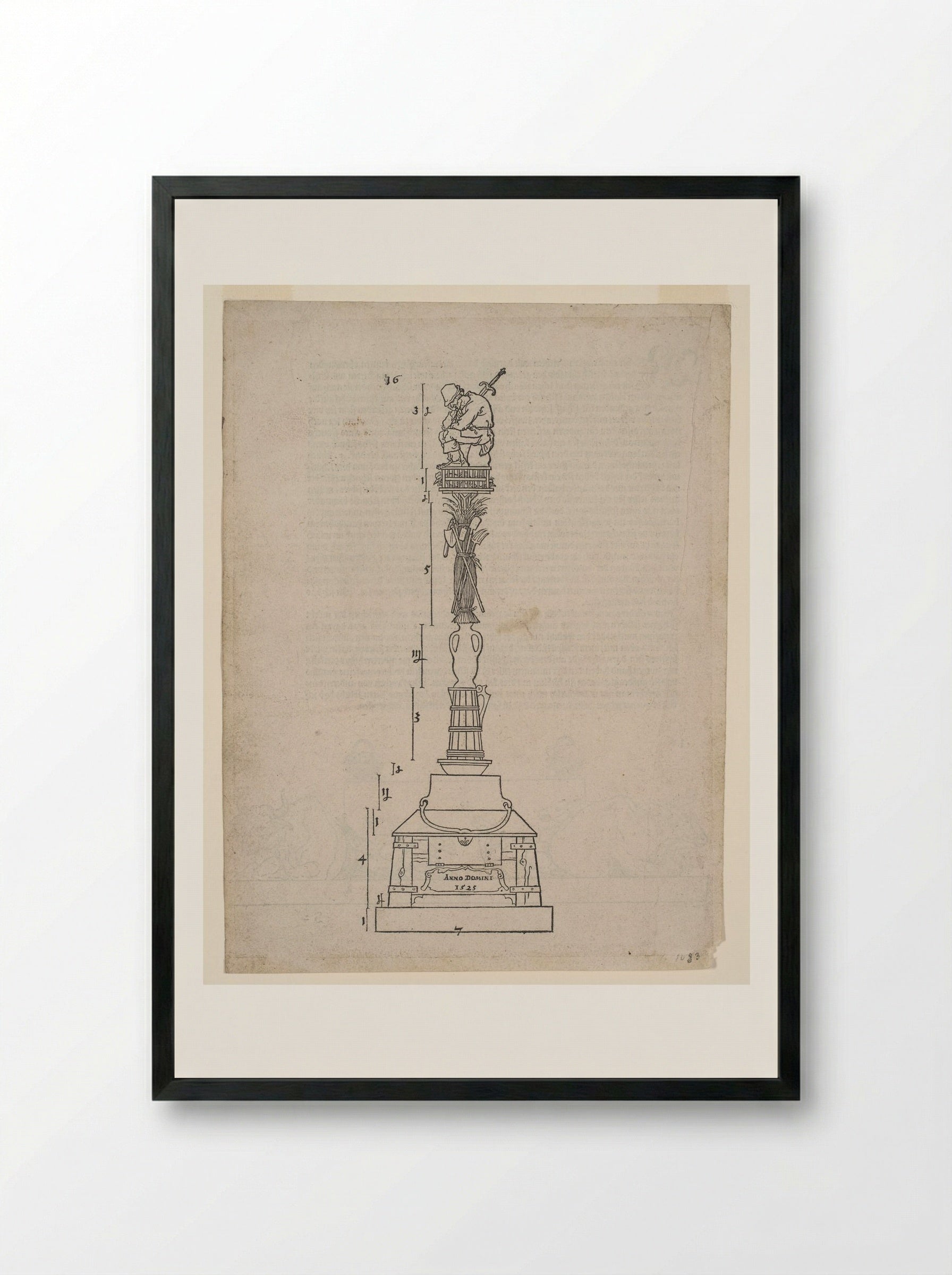
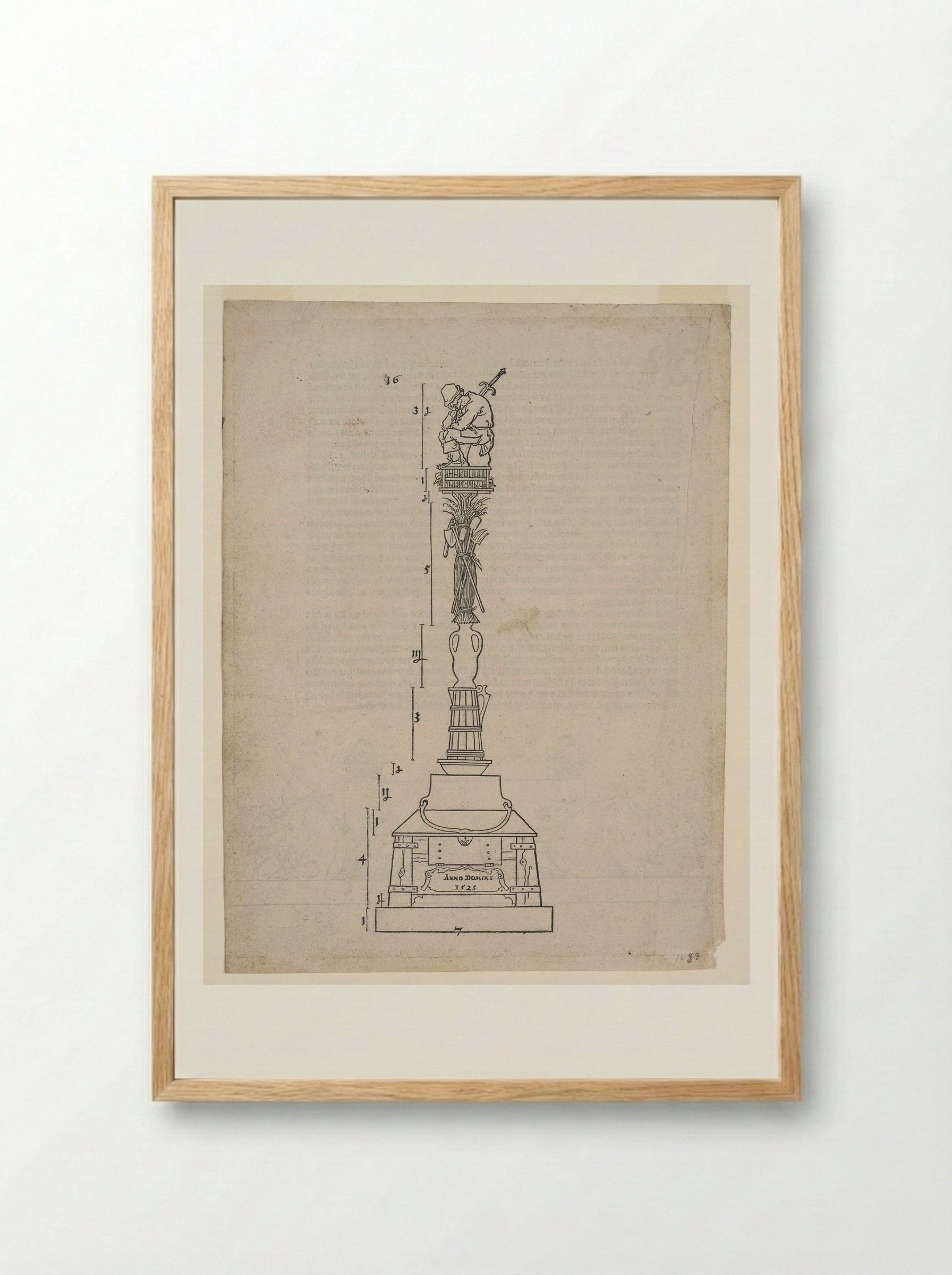
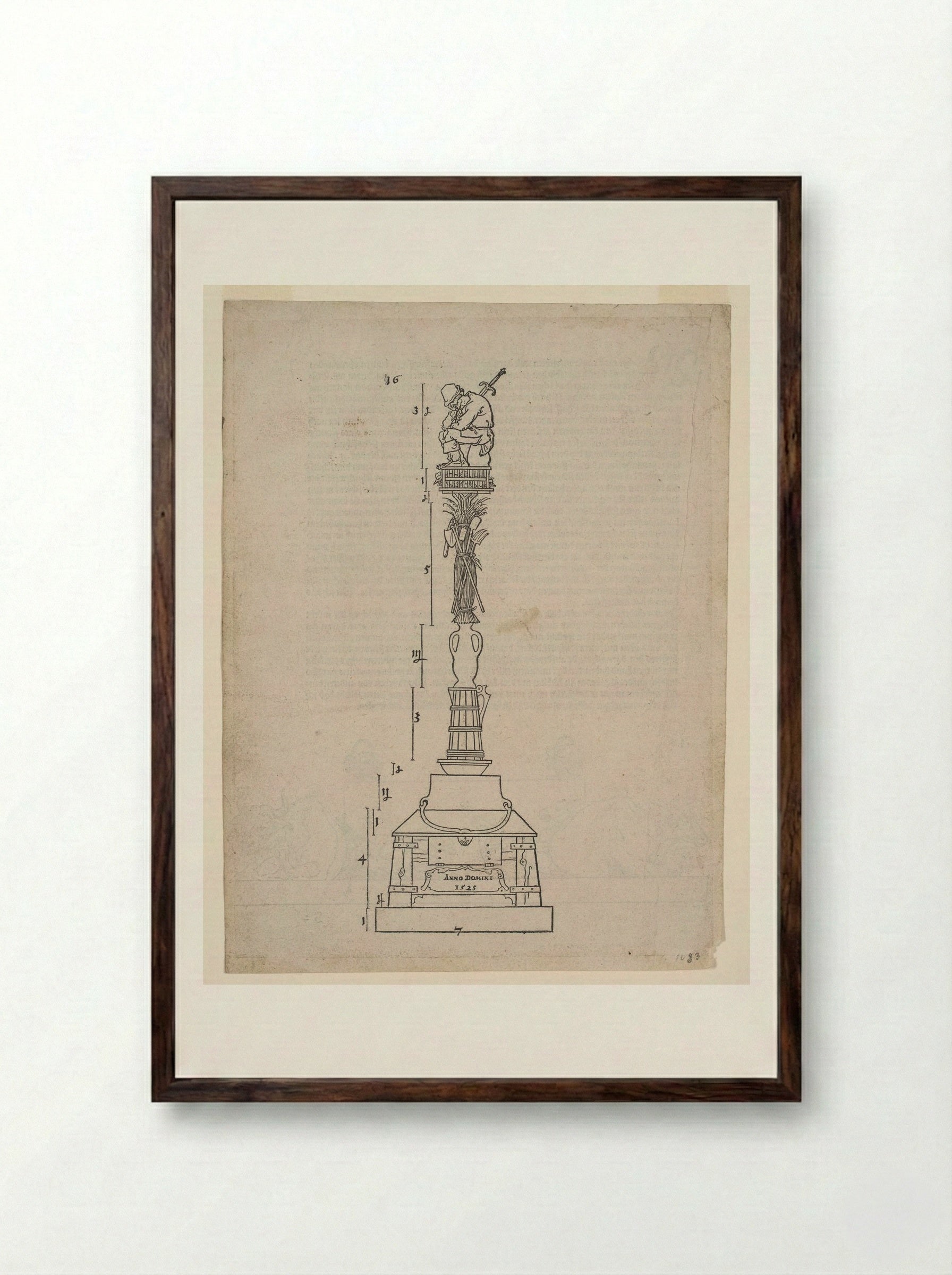
A woodcut by Albrecht Dürer from 1525, "Column of Victory for the Subjugation of the Peasants" is a symbolic representation of the German Peasants' War aftermath, rendered in Dürer's characteristic precise linework.
Albrecht Dürer's "Column of Victory for the Subjugation of the Peasants" is a complex woodcut created in 1525. Dürer, a leading artist of the German Renaissance, is celebrated for his printmaking skills and intellectual depth. This work reflects the social and political tensions of the time, particularly the aftermath of the German Peasants' War (1524-1525). The uprising was brutally suppressed, and this print is thought to be a commentary on the subjugation of the peasantry. The print depicts a column composed of various symbolic elements. At the base, an inscription reads "Anno Domini 1525". The column rises through different tiers, incorporating objects associated with peasant life and labour, such as bundles of wheat and agricultural tools. At the top, a figure sits slumped in defeat, with a sword placed nearby, symbolising the loss and oppression suffered by the peasants. The entire composition is rendered with precise linework, typical of Dürer's meticulous technique. The use of perspective and the detailed rendering of textures add to the visual impact of the print.
Because every print is made to order, we don't offer change-of-mind returns, refunds or exchanges. If your order arrives faulty, damaged or incorrect, we'll replace it free of charge — just contact us within 48 hours of delivery. See our refunds page for full details.
We ship worldwide, printing at the production hub nearest to your delivery address. Delivery times and costs vary by destination — you'll see the options available to you at checkout.
Each print is produced to order using 12-colour giclée printing on FSC-certified archival paper. Designed in Britain and printed at your nearest production hub to reduce waste and speed up delivery.

Artist Biography
Our Features
Designed for Lasting Impact
Every Solis piece is made to order with archival, gallery-quality materials built to last.
To keep your artwork looking its best:
Museum-grade giclée on FSC-certified archival matte paper, with framed and canvas options.
Made to order
Every piece is printed to order. These are the five finishes, and what makes each one different.
From £28
A giclée print on 200gsm matte fine art paper, using a twelve-colour process for accurate, fade-resistant colour. Supplied unframed, delivered flat or rolled.

From £45
The same fine art print in a solid wood frame with UV-protective acrylic glaze and rigid backing. Five frame colours. Arrives ready to hang.
Why Choose Us ?
Damage-free delivery guarantee
Fast Shipping
Museum-Quality Materials
Artist Biography
Albrecht Dürer
You May Also Like
We use cookies to measure our marketing and see which prints people love.We use cookies to measure our marketing.
By continuing to browse, you agree · Privacy Policy