



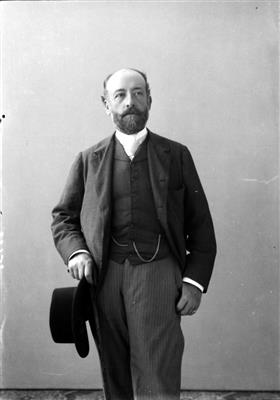
About Federico Andreotti
1847–1930
Florentine painter who specialised in elegant Rococo Revival genre scenes of 18th-century aristocratic courtship and leisure.
Museums5
Countries3
Largest reported holdingWallraf–Richartz Museum, Cologne · 1 recorded work
Loading map…
Where to see Federico Andreotti
Collection holdings are reported here; current display varies. Check with each museum before visiting.
-
1 recorded work
Wallraf–Richartz Museum
Cologne, Germany
-
1 recorded work
Glasgow Museums Resource Centre
Glasgow, United Kingdom


-
1 recorded work
Kelvingrove Art Gallery and Museum
Glasgow, United Kingdom
-
1 recorded work
Los Angeles County Museum of Art
Los Angeles, United States
-
1 recorded work
Blackburn Museum and Art Gallery
Blackburn, United Kingdom


Frequently Asked Questions
Where can I see Federico Andreotti's work?
Federico Andreotti's paintings appear in many public collections. These include museums in Europe and the Americas. In Italy, his works are held by the Galleria Nazionale d'Arte Moderna e Contemporanea in Rome. Other Italian museums include the Pinacoteca di Brera (Milan), and the Galleria d'Arte Moderna (Florence). Outside Italy, museums with works by Andreotti include the Musée des Beaux-Arts in Chambéry, France. In Buenos Aires, Argentina, the Museo Nacional de Bellas Artes holds examples of his art. Several US museums also own his paintings. These include the Dahesh Museum of Art in New York City; the Haggin Museum in Stockton, California; and the Wichita Art Museum in Kansas. Consult museum websites for details regarding specific works and their display status. Art auction databases may also provide information on the locations of paintings that are not in public collections.What should I know about Federico Andreotti's prints?
Federico Andreotti (1847[1]-1930[1]) was an Italian painter. He is best known for genre scenes and portraits. Andreotti's paintings often depict historical or aristocratic subjects. These subjects are typically rendered in detailed, colourful compositions. Born in Florence, Andreotti studied at the Academy of Fine Arts. Here, he trained under Enrico Pollastrini. Andreotti gained recognition for his skill in depicting period costumes and settings. His works often evoke a sense of nostalgia for the past. Andreotti's paintings were popular among collectors during his lifetime. Many of his works are now held in private collections. Others can be found in museums across Europe. Prints of Andreotti's paintings offer accessible ways to enjoy his art. These prints capture the charm and elegance of his Belle Époque subjects. They remain popular choices for those interested in historical genre painting.Why are Federico Andreotti's works important today?
Federico Andreotti (1847[1]-1930[1]) was an Italian artist who painted genre scenes. Andreotti's paintings provide a glimpse into upper-class life in Europe during the late 19th and early 20th centuries. His works often depict elegant women in luxurious settings, engaging in social activities such as reading, playing music, or conversing. These paintings offer insights into the past, including fashion, interior design, and social customs of the period. Andreotti's attention to detail and skilled brushwork capture the textures and colours of fabrics, furniture, and other decorative elements. His paintings evoke a sense of nostalgia for a bygone era. While his subject matter may seem lighthearted, Andreotti's works reflect the values and aspirations of the society in which he lived. They provide a window into a world of refinement and privilege, offering a glimpse into a specific time and place.Who did Federico Andreotti influence?
Federico Andreotti's artistic style, characterised by its focus on genre scenes and portraiture, places him within a tradition of Italian painting that enjoyed considerable popularity during the late 19th and early 20th centuries. Analysing specific influences is difficult, as Andreotti's work is more derivative than innovative. He absorbed elements from earlier artists, such as the Italian Renaissance painters, and from his contemporaries. His paintings often depict scenes of leisure and elegance, reminiscent of the Rococo period, but interpreted through a later, more sentimental lens. Andreotti's work appealed to a broad audience, particularly the middle class, who appreciated his accessible subject matter and pleasing aesthetic. While he may not have directly shaped the trajectory of major artistic movements, his paintings contributed to the visual culture of his time. His legacy lies in his ability to capture the tastes and preferences of his era, offering a glimpse into the social customs and artistic sensibilities of the late 19th and early 20th centuries.Who influenced Federico Andreotti?
It is difficult to say with certainty who influenced Andreotti, as source material is limited. However, some context can be established. Andreotti was active in a period when several artistic movements were developing, including Futurism. This Italian movement, which began in the early 20th century, involved artists such as Umberto Boccioni, Carlo Carrà and Gino Severini. These artists, along with figures like Pablo Picasso, were interested in modernising art, and rejected past styles. Futurist artists and theorists often referenced earlier artists. Michelangelo and Raphael were cited as examples of artistic achievement; however, the Futurists aimed to surpass them. They also engaged with contemporary thinkers such as Friedrich Nietzsche, Henri Bergson, and Karl Marx. Andreotti's relationship to these figures and movements requires further research.What style or movement did Federico Andreotti belong to?
Federico Andreotti (1847[1]-1930[1]) was an Italian painter. His artistic style is typically categorised as late-19th-century genre painting. He is known for depictions of historical scenes, often featuring elegant figures in period costume. Andreotti's works often present anecdotal moments from the lives of the upper classes, rendered with attention to detail and a sense of theatricality. These paintings, while not aligned with avant-garde movements, found favour with collectors interested in refined, historical subjects. His paintings evoke a sense of nostalgia for a bygone era. Andreotti's subject matter is distinct from the social realism or impressionistic experimentation that was gaining traction among some of his contemporaries. Instead, he cultivated a style that celebrated beauty, grace, and historical narrative, aligning him with a more conservative strand of academic painting.What was Federico Andreotti known for?
Federico Andreotti (1847[1]-1930[1]) was an Italian painter. He is best known for genre scenes, often depicting upper-class figures in moments of leisure or courtship. These paintings often have an historical feel, with subjects in eighteenth-century costume. Born in Florence, Andreotti studied at the Academy of Fine Arts. He later became a professor there. His artistic style is characterised by its attention to detail and its use of light and colour to create atmosphere. Andreotti's work was popular during his lifetime, and he exhibited extensively both in Italy and internationally. His paintings were sought after by collectors, particularly in Europe and North America. Today, his works can be found in many private and public collections. They offer a glimpse into the tastes and interests of the late 19th and early 20th centuries.What was Federico Andreotti's art style?
Federico Andreotti's art style is best described as Rococo Revival. His paintings feature clear compositions, handsome figures, opulent settings, and an optimistic mood, appealing to collectors who valued charm and clarity.
Sources
Where to See guide aggregates verified holdings of Federico Andreotti's works across the following collections.
- [1] wikipedia Wikipedia: Federico Andreotti Used for: biography.
- [2] book Masterpieces of western art : a history of art in 900 individual studies from the Gothic to the present day Used for: biography.
- [3] book Post-impressionism : cross-currents in European painting Used for: biography.
- [4] book Post-impressionism : cross-currents in European painting Used for: biography.
Editorial overseen by Solis Prints. Sources verified 2026-10-14. Click a source for details, or hover over [N] in the page above to preview.
Editorial standardsMethodologyCorrectionsAI disclosureAbout the editorial team