



About Enrique Martínez Celaya
Cuban · 1964–present
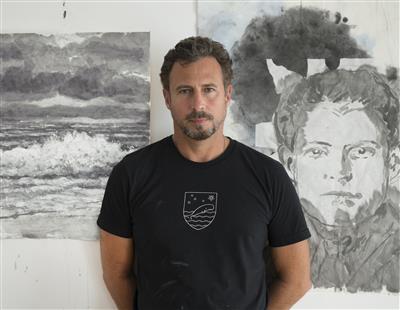
Cuban[1]-born painter and former laser physicist whose work examines memory, exile, and consciousness across painting, sculpture, and installation.
Museums3
Countries1
Most worksMetropolitan Museum of Art, New York City · 3 works
Loading map…
Where to see Enrique Martínez Celaya
Ranked by works you can see in person.
-
3 works
Metropolitan Museum of Art
New York City, United States
-
1 works
The Phillips Collection
Washington D.C., United States


-
1 works
Los Angeles County Museum of Art
Los Angeles, United States

Frequently Asked Questions
Where can I see Enrique Martínez Celaya's work?
Enrique Martínez Celaya's work has been featured in numerous exhibitions around the world. In the past, his pieces have been on display in both solo and group exhibitions. These include shows at the Centre Georges Pompidou in Paris (1989), the Museum des 20. Jahrhunderts in Vienna (1990), and the Institute of Contemporary Art, University of Pennsylvania (1991-1992[1], travelling to Newport Beach, California in 1992). Other venues that have exhibited Martínez Celaya's art include the Kunstmuseum Basel, the Museum fur Gegenwartskunst in Basel (both in 1991), and the Stedehjk Museum, Amsterdam (1991-1992). In 1983, his paintings and watercolours were shown at the Anthony d'Offay Gallery in London, and his work was included in the "New Art" exhibition at the Tate Gallery, London. His pieces are held in various public and private collections, such as the Instituto Valenciano de Arte Moderno (IVAM) Centre Julio Gonzalez, Generalitat Valenciana, Valencia, and the collections of Wilfried and Yannick Cooreman in Puurs, Belgium.What should I know about Enrique Martínez Celaya's prints?
Enrique Martínez Celaya's printmaking occurs within a contemporary art market where editioning is a common practice. Editioning allows artists to generate revenue, build prestige, and broaden the reach of their work. The practice has historical precedents, such as Albrecht Dürer's woodcuts and Auguste Rodin's sculpture multiples. However, contemporary artists often combine printmaking with other media, such as film and video. This raises questions about where the 'artistic' value resides, whether in the original work or its physical manifestations. Limited edition prints have become increasingly sophisticated, using creative marketing. This sophistication can sometimes blur the lines between an original print and a reproduction, potentially confusing buyers. To address this, some regions have implemented legislation requiring detailed information about prints, including the artist's name, production year, medium, and edition size. While these laws aim to protect artists, dealers, and collectors, the definition of an 'original' print remains a subject of debate.What techniques or materials did Enrique Martínez Celaya use?
Enrique Martínez Celaya's practice involves diverse materials and techniques, often combining painting with sculptural elements. Some of his paintings begin with a base of oil paint mixed with wax and turpentine. The wax medium is heated to maintain a liquid state and mixed with the oil paint before application to the canvas, using both brushes and spatulas to achieve the desired texture. The artist may use leftover paint, with wax already added, to mix subsequent colours, creating variations in the final surface. Beyond painting, Celaya incorporates materials like clay, stoneware, sand, and plaster, reflecting an interest in archeology and the recovery of objects. These materials appear in three-dimensional works that relate to both painting and architecture. His approach involves assembling diverse elements, sometimes alluding to historical and cultural references.Who did Enrique Martínez Celaya influence?
It is difficult to say exactly who Enrique Martínez Celaya influenced, though influence itself can be understood in different ways. Some artists and writers are connected by shared ideas, even if they have never met or read each other's work. For example, the Cuban[1] writer Severo Sarduy, a member of the Parisian Tel Quel group, saw language as a lens through which to view the world. Sarduy's ideas connect him to writers such as Jean-Pierre Faye, John Banville, William T. Vollmann, and Ramón Dachs, who responded to the Copernican de-centred "image" of thought. Other artists directly influence each other through their work and personal interactions. Cy Twombly, for instance, positioned himself at the end of a line of modernists, including Manet and Picasso. Similarly, Clemente paid homage to Beuys in his 1974 pencil drawing, Untitled (jOSl ?H BJ ) US), and was drawn to Warhol's blending of art and life.Who influenced Enrique Martínez Celaya?
Enrique Martínez Celaya found inspiration in a number of artists and movements. Cy Twombly, Joseph Beuys, Andy Warhol, and Alighiero Boetti all served as mentors and sources of inspiration. Boetti, a major figure in Arte Povera, had a spiritual kinship with Clemente, stemming from their shared interest in Eastern art and philosophy. Boetti's collaborative approach, often using local artisans, gave Clemente the sense that the artist's hand could be removed from the process, opening the work to chance. Clemente also pays homage to Beuys, sharing his belief in the transformative power of art through ritual. Like Beuys, Clemente explored drawing as a generative process, yielding a vocabulary of visual sources. Warhol's blending of art and life, his willingness to mix high and low culture, and his ability to recognise the equal importance of art history, media, fashion, and social gatherings also appealed to Clemente. Twombly, an American expatriate living in Rome, also influenced Clemente. He was attracted to Twombly's penchant for classical civilisation, engagement with past and present, and sensibility driven by linear impulse.What style or movement did Enrique Martínez Celaya belong to?
It is difficult to assign Enrique Martínez Celaya to a single style. One source notes analogies between his work and Abstract Expressionism, particularly the paintings of de Kooning and Joan Mitchell. However, the same source argues that Martínez Celaya's paintings represent a distinctive contribution rather than a derivative of the New York School. Another passage compares Martínez Celaya to older Cuban[1] artists such as Victor Manuel and Amelia Peláez. His paintings are described as existing in a state of tension, with a sense of negativity that distinguishes them from the more upbeat Art Informel of the School of Paris. Luis Camnitzer noted that Martínez Celaya often 'painted in black and white as a reaction against the sweet colours of his predecessors'. These observations suggest that Martínez Celaya's work engages with various artistic trends while maintaining its own unique character.What was Enrique Martínez Celaya known for?
Enrique Martínez Celaya is known for work that blends art with his interests in science and philosophy. Born in Cuba in 1964[1], he trained as a physicist before becoming an artist. This background informs his multidisciplinary approach. His output includes paintings, sculptures, and installations. Common themes involve memory, identity, and the search for meaning. Recurring images, such as boys, animals, and boats, appear in his pieces. These motifs act as symbolic vehicles for exploring emotional and intellectual states. Martínez Celaya's art often has a melancholic quality. His use of colour and texture creates a sense of atmosphere and introspection. He has exhibited internationally, and his work is held in numerous public and private collections. He also writes extensively on art and theory.What is Enrique Martínez Celaya known for?
Enrique Martínez Celaya is known for his paintings, sculptures, and installations. His work often deals with themes of memory and exile, exploring what remains after displacement and what vanishes.
Sources
Where to See guide aggregates verified holdings of Enrique Martínez Celaya's works across the following collections.
- [1] wikipedia Wikipedia: Enrique Martínez Celaya Used for: biography.
- [2] book guggenheim-guhe00solo Used for: biography.
- [3] book guggenheim-hugo00newy Used for: biography.
- [4] book guggenheim-museum00solo Used for: stylistic analysis.
- [5] book guggenheim-newimagesfromspa00ro Used for: biography.
- [6] book Braun, Emily, 1957-; Asor Rosa, Alberto; Royal Academy of Arts (Great Britain), Italian art in the 20th century : painting and sculpture, 1900-1988 Used for: biography.
Editorial overseen by Solis Prints. Sources verified 2026-08-31. Click a source for details, or hover over [N] in the page above to preview.
Editorial standardsMethodologyCorrectionsAI disclosureAbout the editorial team