

About Émile Munier
French · 1840–1895
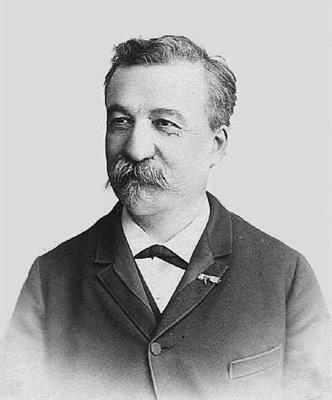
- portrait
French[1] academic painter trained by Bouguereau, best known for sentimental domestic scenes of children and animals that achieved wide popularity in the 1880s.
Where to see Émile Munier
Ranked by works you can see in person.
Frequently Asked Questions
Where can I see Émile Munier's work?
Émile Munier's work can be viewed in several museums across Europe. In France, these include the Musée des Arts Décoratifs in Paris, the Musée d’Art et d’Industrie in Roubaix, the Musée de l’Ecole de Nancy, and the Musée des Beaux-Arts in Nancy. Other French[1] museums that hold works by artists of Munier's period include the Musée Toulouse-Lautrec in Albi, the Musée des Beaux-Arts in Besançon, the Musée des Beaux-Arts in Dijon, and the Musée de la Chartreuse in Douai. Further museums are the Musée de Peinture et de Sculpture in Grenoble, the Musée Crozatier in Le Puy, and the Musée des Beaux-Arts in Lille. Others are the Musée des Beaux-Arts in Nantes, the Musée des Beaux-Arts Jules Cheret in Nice, and the Musée Matisse in Nice. Also, the Musée des Beaux-Arts in Orléans, the Musée du Louvre in Paris, and the Musée Gustave Moreau in Paris. Plus, the Musée National d’Art Moderne, Centre Georges Pompidou in Paris, the Musée d’Orsay in Paris, and the Musée du Petit Palais in Paris. Finally, the Musée Rodin in Paris, the Musée des Beaux-Arts in Quimper, the Musée Saint-Denis in Reims, and the Musée des Beaux-Arts in Rennes. In Belgium, you can find his work at the Brangwyn Museum in Bruges and the Clockarium Museum in Brussels.What should I know about Émile Munier's prints?
Émile Munier was a French[1] academic artist known for his paintings of genre scenes and portraits, but information about his printmaking is scarce. Print collecting itself became a popular pastime during Munier's lifetime. Some context can be gleaned from the printmaking activities of Munier's contemporaries. For example, Édouard Manet created etchings, and a portfolio of eight prints was published in 1862[1]. Manet's etching The Absinthe Drinker exists in three states, with the third state amplifying the atmosphere of the painting. Félix Bracquemond, a more experienced printer, aided Manet in his printmaking endeavours. Bracquemond also created an ex libris for Manet in the 1870s. The Print Collectors, a print by Honoré Daumier (a contemporary of Munier), depicts two men examining prints in an art gallery. Daumier was known for his cartoon lithographs; he made around 4,000 of them.Why are Émile Munier's works important today?
Émile Munier was a French[1] academic artist who lived from 1840[1] to 1895[1]. He is known for his genre paintings, often depicting scenes of everyday life, particularly those featuring women and children. Munier's work provides insight into the values and aesthetics of the late 19th century. His paintings reflect the period's interest in sentimental and idealised representations of domesticity. This offers a glimpse into the social norms and cultural aspirations of the time. Munier's artistic training followed a traditional path. He studied at the École des Beaux-Arts, and he exhibited at the Paris Salon. His style is characterised by its technical skill, attention to detail, and smooth finish. Although he was not considered part of the avant-garde, his work was popular during his lifetime. He gained recognition for his ability to capture the charm and innocence of childhood. His paintings offer a contrast to the more experimental styles that emerged during the same period, such as Impressionism. This makes Munier's work a useful point of comparison for understanding the diverse range of artistic approaches that co-existed in 19th-century France.What techniques or materials did Émile Munier use?
Unfortunately, the provided texts contain limited information about Émile Munier's specific artistic techniques. However, some passages do offer general insights into painting methods of the period. One passage mentions the practice of applying paint in criss-crossing strokes, known as cross-hatching, to build up depth and tone. Another describes 'dragging', a technique using a stiff brush loaded with colour across a dry, rough surface, allowing underlying colours to show through. The 'ebauche' method involved an underpainting in sombre earth colours, ranging from deep browns to pale creams, providing a base for the finished work. This academic approach contrasts with the Impressionists, who favoured brighter hues from the outset. The passages also refer to the use of transparent earth colours for dark areas, and the practice of blending separate touches of colour for halftones, until brush marks become imperceptible.Who did Émile Munier influence?
Émile Munier's artistic style aligned with academic painting; therefore, he did not directly influence avant-garde movements like Impressionism or Fauvism. However, academic painters maintained a presence in the art world, and their techniques were passed on to future generations through formal art education. Looking at other artists, Gustave Moreau, though part of an older generation, taught many of the Fauves at the École des Beaux-Arts. Moreau's emphasis on literary inspiration and ornate style had an impact on Post-Impressionism, even though he predated the movement itself. Similarly, Pierre Puvis de Chavannes, while untouched by Impressionism, was greatly admired by younger artists for his placid, mythological subjects. These examples show how artistic influence can occur across different styles and movements, even if not always direct or obvious.Who influenced Émile Munier?
The question of influence is complex. Some claim that artists are self-generating. Others suggest artists blend multiple influences to create something new. Charles Gleyre (1806-1874[1]) and Thomas Couture (1815-1879[1]) were independent artists who offered alternatives to the Academy. Gleyre, who taught Monet, Renoir, Sisley and Bazille in the early 1860s, encouraged outdoor studies. He communicated an admiration for painting and an appreciation of craft. Couture, whose most famous pupil was Edouard Manet (1832-1883), encouraged his students to work rapidly and simply, suppressing detail in favour of direct spontaneity. He passed on his love of the Old Masters to Manet. Around 1815, Suisse, an ex-model, established an open life studio where artists such as Ingres, Courbet, Manet and Cezanne furthered their training. Rodolphe Julian founded the Academy Julian in 1868, which became internationally known among independent artists. Horace Lecoq de Boisbaudran's classes provided another option for drawing instruction. He invented a method of training by drawing from memory, which encouraged originality. His most famous students were Auguste Rodin and Henri Fantin-Latour.What is Émile Munier's most famous work?
It is difficult to name one single work as Émile Munier's "most famous". He produced many paintings, mostly genre scenes of domestic life. His paintings often feature women and children in sentimental poses, reflecting popular tastes during the late 19th century. These works were widely reproduced as prints, further increasing his visibility. Without specific sales data or critical commentary to draw upon, it is hard to assess which enjoyed the greatest popularity during his lifetime, or which maintains the strongest reputation today. Many of his paintings share similar themes and styles, making it difficult to single out one as significantly more well-known than the others. Further research using period sources, such as exhibition catalogues and art journals, would be needed to determine which of Munier's works achieved the broadest recognition.What style or movement did Émile Munier belong to?
Émile Munier (1840[1]-1895[1]) is best known as an academic painter, sometimes placed within the late-period developments of the French[1] *pompiers* (fireman) style. This label refers to artists who maintained conservative, academic traditions during the rise of Impressionism and other avant-garde movements. Munier's style focused on genre scenes and portraits, often depicting idyllic scenes of peasant life or sentimental portrayals of women and children. His technique was characterised by smooth brushwork, careful attention to detail, and an emphasis on realistic representation, all hallmarks of academic training. While some art historians consider Munier a follower of William-Adolphe Bouguereau, it is important to note that the *pompiers* label covers a range of artists with varying approaches. Munier's work reflects a broader trend in late 19th-century art: a continuation of academic traditions in opposition to the emerging modern styles.
Sources
Where to See guide aggregates verified holdings of Émile Munier's works across the following collections.
- [1] wikipedia Wikipedia: Émile Munier Used for: biography.
- [2] book Watkins Jane (Ed.), Masterpieces of Impressionism and Post-Impressionism. The Annenberg Collection Used for: stylistic analysis.
- [3] book Watkins Jane (Ed.), Masterpieces of Impressionism and Post-Impressionism. The Annenberg Collection Used for: stylistic analysis.
- [4] book Watkins Jane (Ed.), Masterpieces of Impressionism and Post-Impressionism. The Annenberg Collection Used for: stylistic analysis.
- [5] book Nathalia Brodskaya, The Fauves Used for: biography.
- [6] book Bernard Denvir, World of Art_ Post-Impressionism Used for: biography.
- [7] book Bernard Denvir, World of Art_ Post-Impressionism Used for: biography.
- [8] book Bernard Denvir, World of Art_ Post-Impressionism Used for: biography.
Editorial overseen by Solis Prints. Sources verified 2026-08-21. Click a source for details, or hover over [N] in the page above to preview.
Editorial standardsMethodologyCorrectionsAI disclosureAbout the editorial team