



About Dr. Atl
Mexican · 1875–1964
- landscape painting
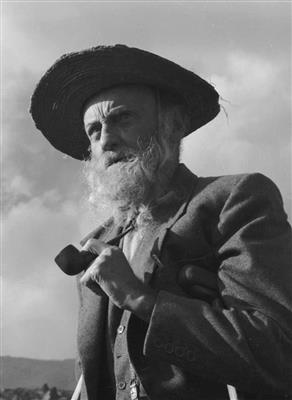
Mexican[1] modernist whose volcanic landscapes and political activism helped shape early twentieth-century Mexican art.
Museums1
Countries1
Most worksMuseo Soumaya, Mexico City · 1 works
Where to see Dr. Atl
Ranked by works you can see in person.
-
1 works
Museo Soumaya
Mexico City, Mexico

Frequently Asked Questions
Where can I see Dr. Atl's work?
Dr. Atl's artwork can be viewed in several museums internationally. In the United States, these include the Los Angeles County Museum of Art (LACMA), the Metropolitan Museum of Art in New York, the Minneapolis Institute of Arts, and the Museum of Modern Art, also in New York. Other US locations are the Saint Louis Art Museum, the National Gallery of Art in Washington DC, and the University of Michigan Museum of Art in Ann Arbor. In Canada, Dr. Atl's work can be seen at the Royal Ontario Museum. Within the United Kingdom, museums include the Brighton Museum & Art Gallery, the Manchester Art Gallery, the National Museums of Scotland (Royal Museum) in Edinburgh, and the Victoria & Albert Museum in London.What should I know about Dr. Atl's prints?
Dr. Atl (1875[1]-1964[1]) was the pseudonym of Gerardo Murillo, a Mexican[1] artist known for his depictions of Mexican geography. He was particularly interested in volcanoes. Atl developed a method of producing coloured lithographs, which he called "Atl-color". This allowed him to create prints with a wide range of tones and textures. He often created images of the Popocatépetl and Iztaccíhuatl volcanoes near Mexico City. These prints capture the grandeur and drama of the Mexican landscape. Atl's prints were intended to make art more accessible. He wanted to create affordable artworks that could be enjoyed by a wider audience. He was also interested in promoting Mexican culture and identity through his art. His prints often depict scenes of rural life, traditional customs, and historical events. These images helped to create a sense of national pride and unity in post-revolutionary Mexico. Atl was a complex figure, involved in both artistic and political movements. His prints offer a window into his artistic vision and his deep connection to Mexico.Why are Dr. Atl's works important today?
Dr. Atl (Gerardo Murillo, 1875[1]-1964[1]) is significant because he promoted Mexican[1] art and culture. He rejected European academic styles, instead advocating for artistic nationalism, and his theories on 'action art' influenced the development of performance art. Atl studied art in Mexico City and Europe, where he was exposed to various avant-garde movements. Upon his return to Mexico, he encouraged artists to represent Mexican subjects, and he explored the country's geology and natural phenomena. He developed 'Atl-Color,' a method of mixing pigments, and created distinctive representations of volcanoes and Mexican topography. His writings on popular art, combined with his artworks, contributed to a sense of national identity. His work matters because it connects modernism with Mexican identity.What techniques or materials did Dr. Atl use?
Information on Dr Atl's specific techniques is scarce in the provided texts. However, the passages do offer some general context on painting materials and methods. Oil paint can be altered using mediums and thinners. Thinners, such as turpentine or mineral spirits, evaporate quickly and do not alter the paint's chemical composition. Mediums, which include oils or varnishes, do alter the chemical composition and can help achieve different textures. A common medium can be made by combining linseed oil, damar varnish, and turpentine or mineral spirits. Some artists used unprimed canvas, leaving areas exposed as outlines. Basic colour areas were established using undiluted paint. The absorbency of the canvas could make the paint appear dull if not reworked. Brushstrokes varied, and outlines could be added into wet paint. The passages also mention the use of sketches on paper, the development of oil sketches into finished paintings, and the preference for absorbent priming. Some artists used white grounds to add luminosity to their paintings.Who did Dr. Atl influence?
Dr. Atl, born Gerardo Murillo Cornado (1875[1]-1964[1]), had a considerable effect on Mexican[1] art and culture. His students and followers absorbed his artistic techniques and his nationalist ideology. Among those he mentored was Diego Rivera, who adopted Dr. Atl's plein air painting methods early in his career. Rivera's later mural work, with its focus on Mexican history and social issues, can be seen as an extension of Dr. Atl's cultural nationalism. Another artist influenced by Dr. Atl was José Clemente Orozco. Although Orozco developed his own distinctive style, his early work shows the impact of Dr. Atl's teachings on colour and composition. David Alfaro Siqueiros also acknowledged Dr. Atl's influence, particularly in the use of industrial materials and techniques. Beyond these famous muralists, Dr. Atl inspired a generation of artists to engage with Mexican identity. He encouraged them to represent the nation's natural beauty and its social realities. His emphasis on direct experience and emotional expression shaped the artistic output of many of his students and associates.Who influenced Dr. Atl?
Dr. Atl, born Gerardo Murillo in 1875[1], absorbed a range of influences that shaped his artistic vision. In his early years, the artist was exposed to academic art traditions. Later, a trip to Europe exposed him to new ideas. While studying in Europe, he was particularly impressed by the Italian Renaissance. He admired the scale and scope of Renaissance art, especially the works of Paolo Uccello. Uccello's experiments with perspective and depiction of movement were particularly appealing. Atl's contact with the French Impressionist movement also had an impact. He admired the Impressionists' focus on capturing fleeting moments and the effects of light and atmosphere. This can be seen in his later paintings of Mexican[1] volcanoes. He was also influenced by the writings of Camillo Boito, an Italian architect and art critic. Boito's ideas about the relationship between art, nature, and national identity resonated with Atl's own developing sense of Mexican nationalism. These combined influences helped to shape Dr. Atl's unique style and artistic philosophy.What is Dr. Atl's most famous work?
Dr. Atl (born Gerardo Murillo) is best known for his paintings of Mexican[1] volcanoes. These works often depict Popocatépetl and Iztaccíhuatl. He changed his name to "Dr. Atl" which means "Dr. Water" in Nahuatl. Atl's most celebrated artistic achievement is likely his series of volcano paintings. He developed a unique style, using "Atl-colour", a type of crayon he created himself. This medium allowed him to capture the textures and colours of the Mexican terrain. Beyond painting, Atl was an active writer, journalist, and vulcanologist. His writings and activism often focused on Mexican identity and culture. He advocated for the preservation of indigenous art forms. He also wrote extensively about the geology of Mexico. His large-scale murals and landscapes are collected by museums in Mexico and internationally. Although he produced a wide range of work, his volcano paintings remain his most recognised and significant contribution to Mexican art. They offer a visual record of the country's geological wonders.What style or movement did Dr. Atl belong to?
Dr. Atl (born Gerardo Murillo Coronado in 1875[1]) is generally associated with Mexican[1] Modernism and, more specifically, with the development of a distinct Mexican form of Expressionism. After studying art in Mexico City and Europe, Atl returned to Mexico and became a proponent of artistic nationalism. He encouraged artists to move away from European styles and to embrace Mexican subjects and traditions. His own work often depicted Mexican volcanoes, mountains, and the local countryside. While his style shares some characteristics with European Expressionism, such as the use of bold colours and expressive brushwork, Atl's focus on Mexican themes and his desire to create a national art distinguish him from the European movement. He sought to create a visual language that reflected the unique character of Mexico, its history, and its people. His theories around "Action Art" also tie him to avant-garde circles.
Sources
Where to See guide aggregates verified holdings of Dr. Atl's works across the following collections.
- [1] wikipedia Wikipedia: Dr. Atl Used for: biography.
- [2] book John Rewald;, Czanne and America Used for: stylistic analysis.
- [3] book guggenheim-artoftomorrowfif1939gugg Used for: biography.
- [4] book guggenheim-solomonrguggenhe00gugg Used for: biography.
- [5] book guggenheim-thirdenlargedcat1938reba Used for: biography.
Editorial overseen by Solis Prints. Sources verified 2026-08-21. Click a source for details, or hover over [N] in the page above to preview.
Editorial standardsMethodologyCorrectionsAI disclosureAbout the editorial team