

About David Ligare
American · 1945–present
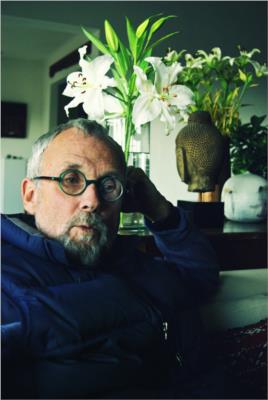
American[1] Neoclassical realist who fuses Poussin's compositional rigour with Californian light to explore hospitality, myth, and philosophical meaning.
Museums1
Countries1
Most worksFine Arts Museums of San Francisco, San Francisco · 1 works
Loading map…
Where to see David Ligare
Ranked by works you can see in person.
-
1 works
Fine Arts Museums of San Francisco
San Francisco, United States

Frequently Asked Questions
Where can I see David Ligare's work?
To view works by David Ligare, it is advisable to check the collections of major art museums. Many notable institutions hold fine art that may include his pieces. Some of these are the Los Angeles County Museum of Art (LACMA), the Metropolitan Museum of Art in New York, and the Minneapolis Institute of Arts. Other significant locations are the Museum of Modern Art in New York, the Royal Ontario Museum in Toronto, and the Virginia Museum of Fine Arts in Richmond. Additional museums that may hold Ligare's work include the Ackland Art Museum (University of North Carolina at Chapel Hill), the Art Gallery of Ontario (Toronto), the Art Institute of Chicago, the Baltimore Museum of Art, the J. Paul Getty Museum in Malibu, the National Gallery of Art in Washington, D.C., the Philadelphia Museum of Art, the Saint Louis Art Museum, the University Art Museum (University of California, Santa Barbara), and the Yale University Art Gallery in New Haven. Always verify directly with the museum to confirm current exhibitions.What should I know about David Ligare's prints?
When considering David Ligare's prints, it is useful to understand some printmaking terminology. An original print is made by hand, with the artist creating the artwork directly on a plate, woodblock, stone, or screen. Each print is considered an original because the artist creates the artwork specifically to be a print. These are often sold through specialised print galleries or fine art galleries. Original prints are always sold in limited editions; because plates made by hand can only withstand a certain amount of use, the number of prints is limited. Some publishers impose their own limits to increase a print’s value. These limits may be set as high as 700 to 1,000 impressions, but some prints are limited to just 250 to 500. Reproduction prints (also known as posters and image prints) are reproduced by photochemical means. The plates do not wear out, so there are no physical limits on the number of prints that can be made. Quantities, however, may still be limited by the publisher in order to add value.Why are David Ligare's works important today?
David Ligare, born in Oak Park, Illinois, in 1945[1], is an important figure in contemporary realism. He moved to Los Angeles in 1951 and later studied at the Art Center College of Design. His travels in Europe, particularly Greece, influenced his artistic direction. After a period in the U.S. Army, Ligare moved to Big Sur, California, in 1968. He taught at the University of California, Santa Barbara, and at the University of Notre Dame Rome Studies Program. Ligare is known for his classical paintings encompassing figures, still lifes, and Arcadian scenes. In the 1980s, he played a role in re-establishing realism in painting. Unlike some artists, Ligare embraced tradition without irony, drawing inspiration from Poussin and David. He adopted aspects of Neoclassical ideology, believing in art's capacity to offer philosophical insight. Ligare's still lifes, a primary theme since the late 1980s, often feature objects on a shallow shelf against a sea and sky backdrop, reminiscent of Renaissance techniques. His work combines classical Greek, Christian, and contemporary elements.Who was David Ligare?
David Ligare, born in 1945[1], paints figures in sunlit Californian settings, employing the formal gravity of Poussin. He spent time in Europe and Greece in 1963; this trip was formative for him.What techniques or materials did David Ligare use?
David Ligare is known for paintings that often evoke classical themes. While specific details about his techniques are not widely published, some general observations can be made based on the characteristics of his work. Ligare's paintings typically feature smooth surfaces and controlled brushwork. This suggests he may employ techniques similar to those of the Old Masters, such as careful layering and glazing. The effect is one of clarity and precision. Given the realistic depiction of figures and objects in his compositions, it is likely that Ligare makes preparatory drawings to establish accurate proportions and spatial relationships. He may also use oil studies to explore colour relationships and tonal values before commencing the final painting. The medium is oil on canvas.Who did David Ligare influence?
David Ligare re-established realism during the 1980s, influencing other artists to embrace traditional techniques. Unlike some, Ligare avoided irony or parody when adopting the styles of Nicolas Poussin and Jacques-Louis David. He embraced Neoclassical ideology, believing in art's philosophical and epistemological capabilities. Ligare felt it possible to make choices within the Classical canon that reflected moral or ethical decisions. E Scott Hess also contributed to the increased respect for realism during this period. As a student, Hess felt alone in his interest in narrative art and the illusionist devices of the Old Masters. Frustrated by his instructors' lack of expertise in classical technique, he enrolled at the Academy of Fine Arts in Vienna. Ligare's influence helped to create an environment where artists like Hess could explore realism with greater acceptance.Who influenced David Ligare?
It is difficult to identify specific artistic influences on David Ligare from the passages provided. The texts largely consist of acknowledgements, dedications, and expressions of gratitude from various authors to their mentors, colleagues, and friends. One passage mentions Hans Hofmann, David Smith, Braque, Picasso, Kandinsky, Miro, Matisse, Mondrian, Leger, Renaissance artists, Quattrocento artists, Old Masters, American[1] masters, and African art, but this is in the context of *another* artist's influences, not Ligare's. Another passage mentions Charles Bassett and David Lubin, two American studies professors at Colby College; Earle G. Shettleworth, Jr, director of the Maine Historic Preservation Commission; and David De Long and Sam Harris, professors in the Graduate Program in Historic Preservation at the University of Pennsylvania. However, these figures appear to have influenced the *author* of that passage, not Ligare.What style or movement did David Ligare belong to?
David Ligare's work is often associated with Neoclassicism, a style that draws inspiration from the art and culture of ancient Greece and Rome. This is evident in his use of classical subjects, compositions, and a focus on idealised forms. Neoclassical art emerged in the mid-18th century as a reaction against the Rococo style's perceived frivolity and decadence. It sought to revive the principles of order, reason, and clarity that were admired in classical antiquity. Artists like Jacques-Louis David and Jean-Auguste-Dominique Ingres were prominent figures in the Neoclassical movement, and their work influenced subsequent generations of artists. Ligare's paintings often feature figures in classical settings, rendered with a precise attention to detail and a restrained colour palette. His work explores themes of mythology, history, and the human form, reflecting the Neoclassical interest in elevating subject matter and conveying moral messages. While Ligare's art is rooted in the classical tradition, he also brings a contemporary sensibility to his work, creating a unique and personal vision within this established style.
Sources
Where to See guide aggregates verified holdings of David Ligare's works across the following collections.
- [1] wikipedia Wikipedia: David Ligare Used for: biography.
- [2] book Judith Anne Testa, An Art Lover's Guide to Florence Used for: biography.
- [3] book guggenheim-emergingartists100wald Used for: biography.
- [4] book guggenheim-guhe00solo Used for: biography.
- [5] book Unknown, Reclaiming female agency : feminist art history after postmodernism Used for: biography, stylistic analysis.
- [6] book Landauer, Susan, The not-so-still life : a century of California painting and sculpture Used for: biography.
Editorial overseen by Solis Prints. Sources verified 2026-08-31. Click a source for details, or hover over [N] in the page above to preview.
Editorial standardsMethodologyCorrectionsAI disclosureAbout the editorial team