

About Bela Kadar
Hungarian · 1877–1956
- Expressionism
- avant-garde
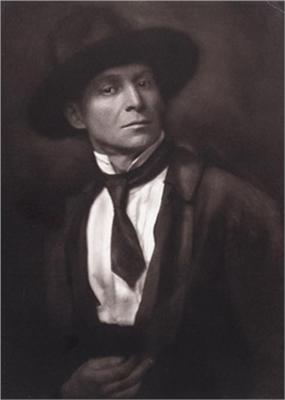
Hungarian[1]-Jewish painter (1877[1]–1956[1]) who moved from iron-turner to exhibiting at Galerie Der Sturm and the Brooklyn Museum, blending folk art with modernism.
Museums2
Countries1
Largest reported holdingBuffalo AKG Art Museum, Buffalo · 1 recorded work
Loading map…
Where to see Bela Kadar
Collection holdings are reported here; current display varies. Check with each museum before visiting.
-
1 recorded work
Buffalo AKG Art Museum
Buffalo, United States
-
1 recorded work
Yale University Art Gallery
New Haven, United States


Frequently Asked Questions
Where can I see Bela Kadar's work?
Bela Kadar's work can be viewed in several museums that hold collections of Bauhaus art and design. In Germany, the Bauhaus-Archiv, Museum für Gestaltung, in Berlin, and the Bauhaus Museum in Weimar both hold relevant collections. The Bauhaus Dessau Foundation in Dessau also maintains a collection. Other German museums with holdings include the Kunstgewerbe Museum of Decorative Arts in Berlin, the Brohan Museum in Berlin, the Museum für Kunst und Gewerbe in Hamburg, and the Museum beim Markt in Karlsruhe. Outside of Germany, the Zentrum Paul Klee in Bern, Switzerland, has examples of Bauhaus art. In the United States, the Busch-Reisinger Museum in Cambridge, Massachusetts, maintains a collection, as do the Josef and Anni Albers Foundation in Bethany, CT and the Moholy-Nagy Foundation in Ann Arbor, MI. The Utsunomiya Museum of Art and the Misawa Bauhaus Collection, both in Japan, also hold relevant works.What should I know about Bela Kadar's prints?
Bela Kadar (1877[1]-1956[1]) was a Hungarian[1] painter and graphic artist. He is known for his distinctive style, which blends elements of cubism, expressionism, and folk art. Kadar studied in Budapest and Paris during the early 20th century. These experiences exposed him to modern art movements. He developed a personal style characterised by bold colours, simplified forms, and decorative patterns. His subject matter often included scenes of Hungarian peasant life, religious themes, and portraits. Prints by Kadar are reproductions of his paintings, typically produced as silkscreens or lithographs. These prints make his work more accessible to a wider audience. The prints often retain the strong colours and graphic qualities of his original paintings. Collectors value them for their unique aesthetic and connection to Hungarian modernism. They offer an opportunity to own a piece of Kadar's artistic vision at a lower price point than original paintings. When buying a Kadar print, it is important to check its provenance and condition.Why are Bela Kadar's works important today?
Bela Kadar's paintings offer insight into the cultural milieu of early 20th-century Central Europe. Born in Budapest in 1877[1], Kadar absorbed influences from Hungarian[1] folk art, the Vienna Secession, and German Expressionism[1]. His style synthesised these elements into a distinctive form. Kadar's work provides a visual record of a specific time and place. His paintings often depict scenes of rural life, Jewish traditions, and modernist urban settings. This combination reflects the diverse cultural influences present in Hungary during his career. His art also reflects the broader artistic trends of the period. While Kadar developed a personal style, his engagement with Expressionism and other movements places him within the context of early modernism. His works are valuable as examples of how these international styles were adapted and reinterpreted by artists in Central Europe. Kadar died in 1956[1].What techniques or materials did Bela Kadar use?
Bela Kadar worked in several media, including oil paint, watercolour, and printmaking. His style incorporated elements of Cubism, Expressionism[1], and Constructivism. Kadar's early work, before 1930[1], often featured strong outlines and flat areas of colour, reminiscent of stained glass. He frequently used bold, contrasting colours to create a sense of energy and dynamism. Some of his paintings show influence from folk art and children's drawings. Later in his career, Kadar's style became somewhat softer and more decorative. He continued to use bright colours, but he also began to incorporate more subtle tonal gradations. His subject matter ranged from portraits and figure studies to scenes of everyday life and Jewish folklore. Kadar's prints, often produced as illustrations for books and magazines, demonstrate his skill as a draughtsman and his ability to translate his painterly style into a graphic medium. He is known for a decorative style.Who did Bela Kadar influence?
Bela Kadar's artistic influence is not clearly documented through direct students or a named school of followers. However, his style, which fused elements of Cubism, Expressionism[1], and folk art, likely resonated with other artists exploring similar themes of national identity and modernism. Kadar's work appeared during a period when many Hungarian[1] artists sought to synthesise international styles with local traditions. Artists such as György Galántai, Gábor Altorjay, and Tamás Szentjóby, who explored the boundaries of artistic expression in Hungary, may have indirectly benefited from Kadar's example of blending different artistic vocabularies. Kadar's exploration of form and subject matter possibly provided a reference point for later generations navigating the complexities of artistic identity within a rapidly changing art world.What is Bela Kadar's most famous work?
It is difficult to name Bela Kadar's single most famous work, as popularity and recognition can vary among audiences and art experts. However, his body of work includes a variety of notable pieces that have contributed to his recognition as an artist. Kadar's paintings often feature figures and scenes inspired by Hungarian[1] folk art and Jewish traditions. Some known works include titles such as Volkstanz (Folk Dance), Russian Woman's Love, and several still lifes (Stilleben in German). He also produced many portraits and figure studies, such as Redhead (Rotschopf) and Tragischer Kopf (Tragic Head). Kadar's diverse output makes it challenging to single out one definitive piece as his most famous.What style or movement did Bela Kadar belong to?
Bela Kadar's artistic affiliations are complex. Hungarian[1] literature of the early 20th century saw several movements arise together, including Expressionism[1], Futurism, and Cubism. These movements charged each other and blended in unique ways. Expressionism in Hungary acquired folkloristic tendencies and local concepts. Expressionism as a literary term appeared around 1915[1] in Hungarian criticism. Proto-Expressionist writers displayed characteristics of the style before it was formally defined. Lajos Kassák, a central figure of the Hungarian avant-garde, combined Futurist and Expressionist doctrines in his periodicals *Tett* and *Ma*. Kassák's activism, a Hungarian variant of Expressionism, aimed to create a new unity from chaos. After 1919, Hungarian Expressionism fragmented. Kassák and his followers moved towards Dadaism and Constructivism. Expressionism experienced a revival among younger writers around 1920, but this faded as more objective tendencies emerged in poetry. Some writers combined Expressionist syntax with Hungarian national traditions. Expressionism also survived in Hungarian literature in territories belonging to other countries after 1920, such as Czechoslovakia, Yugoslavia, and Romania.What was Bela Kadar known for?
Bela Kadar, a Hungarian[1] artist, is associated with several early twentieth-century art movements. These include Expressionism[1], Futurism, and Cubism. Kadar did not align himself exclusively with any single movement. Instead, he drew inspiration from multiple sources. Hungarian Expressionism emerged around 1915[1], later than in Germany. It was influenced by folk art and local ideas. Lajos Kassák, an organiser and artist, was a central figure. Kassák's journals *Tett* (Action) and *Ma* (Today) combined Futurism and Expressionism. Kadar's work appeared in *Ma*. Expressionist artists aimed to express inner emotions and spiritual truths. They favoured abstraction over faithful representation. This approach resonated across various art forms, including painting and literature. Some critics saw Expressionism as a revolt against middle-class values. Others viewed it as a step towards revolution. After 1919, many Hungarian Expressionists, including Kadar, emigrated.
Sources
Where to See guide aggregates verified holdings of Bela Kadar's works across the following collections.
- [1] wikipedia Wikipedia: Bela Kadar Used for: biography.
- [2] book guggenheim-thirdenlargedcat1938reba Used for: biography.
- [3] book Husslein-Arco, Agnes, editor; Koja, Stephan, editor; Law, Rebecca (Translator), translator; McInnes, Robert (Translator), translator; Somers, Nick, translator; Monet, Claude, 1840-1926. Paintings. Selections; Österreichische Galerie Belvedere, h Used for: biography.
- [4] book Masterpieces of western art : a history of art in 900 individual studies from the Gothic to the present day Used for: biography.
- [5] book Katalin Cseh-Varga;, The Hungarian Avant-Garde and Socialism Used for: biography.
- [6] book Katalin Cseh-Varga, The Hungarian Avant-Garde and Socialism Used for: biography.
- [7] book Magda Hellinger, The Nazis Knew My Name Used for: biography.
Editorial overseen by Solis Prints. Sources verified 2026-09-30. Click a source for details, or hover over [N] in the page above to preview.
Editorial standardsMethodologyCorrectionsAI disclosureAbout the editorial team