



About Antonio Carneiro
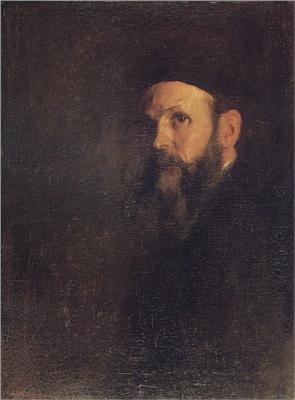
Museums1
Countries1
Largest reported holdingCalouste Gulbenkian Museum, Lisbon · 1 recorded work
Loading map…
Where to see Antonio Carneiro
Collection holdings are reported here; current display varies. Check with each museum before visiting.
-
1 recorded work
Calouste Gulbenkian Museum
Lisbon, Portugal

Frequently Asked Questions
Where can I see Antonio Carneiro's work?
Antonio Carneiro's works can be viewed in several museums. In Portugal, his art is held in the Museu Calouste Gulbenkian (Lisbon) and the Museu Nacional de Arte Antiga (Lisbon). The Museu de Arte (São Paulo) in Brazil also holds examples. Other museums that may exhibit his paintings include the Metropolitan Museum of Art (New York), the Minneapolis Institute of Arts, the Los Angeles County Museum of Art, the Royal Ontario Museum (Toronto), the National Gallery of Scotland (Edinburgh), and the National Museum of Wales (Cardiff). The Victoria & Albert Museum (London), Brighton Museum & Art Gallery, Manchester Art Gallery, and the National Museums of Scotland (Edinburgh) may also hold his work. Always check museum websites for current exhibitions.Who did Antonio Carneiro influence?
Antonio Carneiro's artistic influence is not well documented. However, we can examine the documented influence of artists from earlier periods, such as Titian and Caravaggio, to understand how influence occurs. After his death, Titian's paintings became part of the mainstream of European art, partly via artists in northern Italy. Annibale Carracci (1560-1609[1]) visited Venice in 1585 and saw Titian's work. Carracci's paintings display Titian's influence in the atmospheric setting, the figures' bodies, the facial types, and the suggestive, feathery depiction of the sky. Carracci, along with Caravaggio (1571-1610), helped initiate the Baroque style in Rome. Caravaggio influenced Dutch, French, and Spanish artists, including Hendrick ter Brugghen, Rembrandt van Rijn, Simon Vouet, and Diego Velázquez. Interest in Caravaggio declined during the eighteenth and nineteenth centuries, but it returned with the rise of modern art in the twentieth century.What style or movement did Antonio Carneiro belong to?
Antonio Carneiro's work aligns with Expressionism[1], a movement that gained traction primarily in Germany and Austria during the early 20th century. Expressionism moved away from traditional methods of capturing reality, instead emphasising subjective emotions and inner psychological experiences through extreme uses of pictorial form. Expressionist artists, drawing influence from figures like Vincent van Gogh, Paul Gauguin, and Edvard Munch, further departed from conventional notions of realistic depiction. They were also influenced by Henri Matisse and the Fauves, Cubists, African and Oceanic art, and German and Russian folk art. This approach involved emotion-charged imagery, simplified forms, and intense colour juxtapositions. Expressionist painters employed a loaded, self-conscious brushstroke to convey feeling and sensibility.What was Antonio Carneiro known for?
Antonio Carneiro (1872[1]-1930[1]) was a Portuguese artist known for his individual, emotionally charged paintings. Expressionism[1], as a broad movement, valued the artist’s inner vision and emotional expression over realistic depiction. The term gained traction in the early 20th century, popularised by the Munich-based periodical *Der Sturm*. While the Fauves explored expressionism through bold colour and brushwork, the wider movement encompassed diverse approaches. Carneiro's work often explored themes of saudade (a Portuguese term for a deep emotional state of nostalgic or deeply melancholic longing for an absent something or someone that one loves), spirituality, and the human condition. He worked in a variety of genres, including portraiture, symbolic compositions, and depictions of Portuguese life. His paintings display a distinctive use of colour and light to create atmosphere and convey emotion. Carneiro's unique style defies easy categorisation, but it places him among the important figures in Portuguese modernism.What is Antonio Carneiro known for?
António Carneiro is known for his paintings and poetry, which colleagues recognised as drawing from the same source. His triptych A Vida (Life): Hope, Love, Longing won a Silver Medal at the Exposition Universelle in 1900[1], establishing his international reputation.What was Antonio Carneiro's art style?
His work reflects a synthesis of academic compositional training with a Symbolist's preoccupation with inner states. António Carneiro's art expressed longing and spiritual aspiration through figure and atmosphere rather than narrative action.
Sources
Where to See guide aggregates verified holdings of Antonio Carneiro's works across the following collections.
- [1] wikipedia Wikipedia: Antonio Carneiro Used for: biography.
- [2] book Nina A. Mallory, El Greco to Murillo Used for: biography.
- [3] book Lilian H. Zirpolo, Historical Dictionary of Baroque Art and Architecture Used for: biography.
- [4] book Jennifer D. Milam, Historical Dictionary of Rococo Art Used for: biography.
- [5] book Camnitzer, Luis(Author), Joe R. and Teresa Lozano Long Series in Latin American and Latino Art and Culture : Conceptualism in Latin American Art : Didactics of Liberation Used for: stylistic analysis.
- [6] book Leonor de Oliveira;, Portuguese Artists in London Used for: stylistic analysis.
Editorial overseen by Solis Prints. Sources verified 2026-09-30. Click a source for details, or hover over [N] in the page above to preview.
Editorial standardsMethodologyCorrectionsAI disclosureAbout the editorial team