



About Alessandro Zezzos
Italian · 1848–1914
- genre painting
- landscape painting
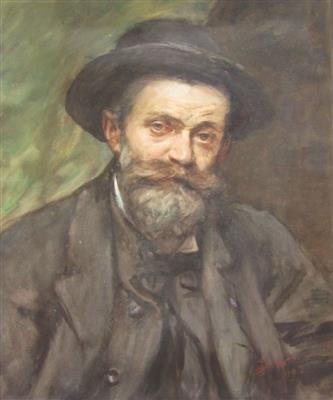
Venetian genre painter who trained Umberto Boccioni before the future Futurist abandoned all his teacher stood for.
Museums2
Countries2
Largest reported holdingWallraf–Richartz Museum, Cologne · 1 recorded work
Loading map…
Where to see Alessandro Zezzos
Collection holdings are reported here; current display varies. Check with each museum before visiting.
-
1 recorded work
Wallraf–Richartz Museum
Cologne, Germany
-
1 recorded work
Walker Art Gallery
Liverpool, United Kingdom


Frequently Asked Questions
Where can I see Alessandro Zezzos's work?
Alessandro Zezzos's work can be viewed in several museums and galleries. In Italy, these include the Fondazione Regionale Cristoforo Colombo (Genoa), the Museo del Bijou di Casalmaggiore, and the Museo Richard-Ginori della Manifattura di Doccia (Sesto Fiorentino). In the United States, Zezzos's pieces are held by the Charles Hosmer Morse Museum of American Art (Winter Park, Florida), the Los Angeles County Museum of Art, the Metropolitan Museum of Art (New York), the Minneapolis Institute of Arts, the Museum of Modern Art (New York), and the Wolfsonian at Florida International University (Miami Beach). In Canada, his work is at the Royal Ontario Museum (Toronto). In the UK, see the Bakelite Museum, the Brighton Museum & Art Gallery, the Geffrye Museum (London), the Manchester Art Gallery, the National Museums of Scotland, and the Victoria & Albert Museum (London).What should I know about Alessandro Zezzos's prints?
Alessandro Zezzos was active in Venice during a period when art collecting was a common pursuit among patricians. These collectors prized original works and sometimes tried to prevent copies from being made. Illustrated books of collections were produced at this time. Cardinal Federico Borromeo created one in 1625, titled *Museum Bibliothecae Ambrosianae*, as a guide to his collection. Later, David Teniers organised *Theatrum Pictorium* (1660), the first illustrated book on a single picture collection. These books communicated the importance of painting and painters, as well as the glory of the collector. Similarly, Vincenzo Giustiniani, a collector of modern paintings, created the *Galleria Giustiniana* to disseminate knowledge of his collection. The prints in *Galleria Giustiniana* were collected together at different times. Bloemaert, Matham, Natalis and Persin were all living in Palazzo Giustiniani with Sandrart from about 1633 onwards, a sign that prints were then being produced in a systematic way. Giustiniani requested that prints be pulled from the plates of the *Galleria* in editions not exceeding two hundred copies.Why are Alessandro Zezzos's works important today?
Alessandro Zezzos's work is important because it reflects a broader interest in re-evaluating early twentieth-century Italian[1] art. This includes movements such as Futurism and the search for a modern Italian identity in the arts. Figures like Medardo Rosso, though not a painter, are relevant. Rosso sought to break from tradition. He opened sculpture to the effects of light and atmosphere. The Futurists admired Rosso, as seen in their manifestos. Umberto Boccioni regarded Rosso as the most "real" and modern European sculptor. Boccioni's concepts of simultaneity and "dynamic sensation" were inspired by Rosso's writings. Futurism aimed to inspire faith in the contemporary world. It sought to understand what is good and beautiful in modern civilisation. The machine, speed and aviation were all possible subjects. This faith is important. The re-examination of Futurism involves recognising its influence on other art forms, and its contribution to a new vision of society.What techniques or materials did Alessandro Zezzos use?
Alessandro Zezzos's techniques involved a range of materials, as determined through micro-invasive investigation methods. These methods included the use of micro-fragments for studying the stratigraphy of the artwork. Sampling was conducted using cotton swabs and solvents, such as acetone, to analyse the varnishes applied. The fragments underwent initial examination and documentation using a Nikon Eclipse 600 optical microscope, with both visible and ultraviolet reflected light. Some fragments were analysed further using pyrolysis-gas chromatography coupled with mass spectrometry (Py-GC/MS) to identify organic compounds. Spectroscopic techniques, such as Fourier transform infrared spectroscopy (FTIR) in transmission mode with a diamond cell, were employed to analyse samples where selective micro-sampling was feasible. This helped identify inorganic and organic compounds, especially in preparatory layers. More representative fragments were set in resin to create cross-sections, which were then observed using reflected light optical microscopy (visible and ultraviolet). Sections were examined with a Philips XL 20 scanning electron microscope (SEM) in low-vacuum mode, without metallisation. This allowed for elemental analysis using an electron microprobe (EDS).Who did Alessandro Zezzos influence?
Alessandro Zezzos's body of work is not widely known, so his influence on other artists is difficult to assess. However, some general context about artistic influence in the region may be helpful. For example, the painter Caravaggio, though not Venetian, influenced many artists. These include Dutch painters Hendrick ter Brugghen, Gerrit van Honthorst, and Dirck van Baburen; French painters Simon Vouet, Valentin de Boulogne, and Georges de La Tour; and Spanish painters Francisco Ribalta, Jusepe de Ribera, and Diego Velázquez. Annibale Carracci, who, along with Caravaggio, helped initiate the Baroque style, was conversant with art in Venice. He visited there in 1585. In general, Venetian artists throughout the sixteenth century remained fundamentally indebted to the painting of Giovanni Bellini. By that century, a manner of painting and perceiving had developed in Venice that could undoubtedly be called “Venetian.”Who influenced Alessandro Zezzos?
It is difficult to identify the specific influences on Alessandro Zezzos. However, some general observations can be made about the artistic environment of the time. During the Renaissance, Italian[1] artists were exposed to a range of influences. Some artists looked to classical antiquity for inspiration, while others were more interested in contemporary developments. The influence of Jan van Eyck's paintings, for example, can be seen in the work of several Florentine painters of the later fifteenth century. Figures such as Leonardo da Vinci explored perspective, colour, and chiaroscuro, and his manuscripts circulated among artists. The debates over religious reform also played a role in shaping artistic ideas. Artists, writers, and humanists engaged with questions of faith, and these concerns found expression in their work.What style or movement did Alessandro Zezzos belong to?
Alessandro Zezzos (1848[1]-1922) was a Greek artist whose work aligns with the academic art movement of the late 19th century. This style, prevalent across Europe, emphasised technical skill, historical or mythological subjects, and a sense of idealised beauty. Academic artists often sought to revive the artistic principles of the Renaissance and classical antiquity. Zezzos's paintings typically feature carefully rendered figures, dramatic compositions, and a polished finish, all characteristic of the academic approach. While some contemporary artists were beginning to explore more avant-garde styles like Impressionism, Zezzos remained committed to the established traditions of academic painting. His subject matter, often drawn from Greek history and mythology, further situates him within this movement. He is recognised for genre scenes.What was Alessandro Zezzos known for?
Alessandro Zezzos was a Greek artist of the 19th century, known for genre paintings and portraits. He was part of a generation of Greek artists who moved away from strictly historical or mythological themes, turning instead to scenes of everyday life. Genre painting during this period often depicted people in their ordinary environments, showing local customs, occupations, and social interactions. Zezzos's work provides insights into Greek society of his time, capturing details of clothing, architecture, and daily activities. His portraits also reflect an interest in contemporary society, showing individuals from various social classes. These portraits offer a glimpse into the appearance, fashion, and social status of his subjects. While he may not be as well known as some of his contemporaries, Zezzos's paintings are valued for their contribution to the documentation of 19th-century Greek life.
Sources
Where to See guide aggregates verified holdings of Alessandro Zezzos's works across the following collections.
- [1] wikipedia Wikipedia: Alessandro Zezzos Used for: biography.
- [2] book Masterpieces of western art : a history of art in 900 individual studies from the Gothic to the present day Used for: biography.
- [3] book Post-impressionism : cross-currents in European painting Used for: biography.
- [4] book Post-impressionism : cross-currents in European painting Used for: biography.
Editorial overseen by Solis Prints. Sources verified 2026-09-30. Click a source for details, or hover over [N] in the page above to preview.
Editorial standardsMethodologyCorrectionsAI disclosureAbout the editorial team