



Hans Thoma
Thoma learned to paint from a clock-face maker. He was born in Bernau, in the Black Forest, in 1839; his father was a woodworker, his mother came from a family of artisans. He started as a lithographer's apprentice in Basel, then as a clock-face painter in Furtwangen, completing neither apprenticeship before entering the Karlsruhe Academy in 1859.

Biography
A trip to Paris in 1868 with his friend Otto Scholderer exposed him to Courbet and the Barbizon painters, whose realism influenced his landscape style. He moved to Munich and spent six years there, then to Frankfurt, where he lived from 1876 to 1899. He also spent extended periods in Italy, becoming one of the "German Romans", artists who found in Renaissance observation a means of contemporary expression that fed into European Symbolism.
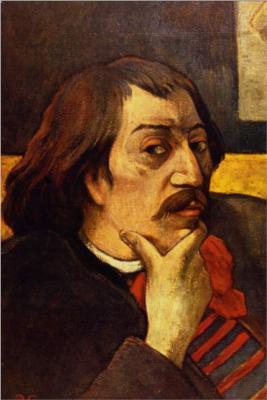
His landscapes of the Black Forest, with their deep greens, rounded hills and pastoral stillness, made him the best-known painter of that region. He also painted mythological and Symbolist subjects, self-portraits with allegorical figures, and genre scenes of German rural life. He married his student Cella Berteneder, who became known as a painter of flowers and still lifes.
In 1899 he was appointed director of the Kunsthalle Karlsruhe, a position he held until 1919. After his death in 1924, his work was appropriated by nationalist and Nazi ideology, and several paintings were looted from Jewish collectors during the Third Reich. The association has complicated his posthumous reputation. He remains little known outside Germany, a painter whose Black Forest landscapes speak to regional identity with an honesty that the political appropriation could not quite destroy.
Timeline
- 1839Born in Bernau in the Black Forest, the son of a miller. Trained first as a lithographer and clock-face painter before pursuing art.
- 1859At 20, entered the Karlsruhe Academy after years of self-taught study, learning under Johann Wilhelm Schirmer and Ludwig des Coudres.
- 1868At 29, travelled to Paris with painter Otto Scholderer, where he was deeply impressed by Gustave Courbet and the Barbizon School.
- 1876At 37, moved from Munich to Frankfurt am Main, where he connected with avant-garde circles and gradually built his reputation over two decades.
- 1890At 51, achieved his long-awaited artistic breakthrough at an exhibition in Munich after years of struggle for recognition.
- 1899At 60, returned to Karlsruhe as director of the Kunsthalle, one of Germany's most prestigious gallery appointments.
- 1924Died aged 85 in Karlsruhe, by then regarded as one of Germany's most esteemed painters of landscapes and regional life.
Notable Works
Tap to view larger.
Where to See Hans Thoma
1 museum worldwide.
-
1 works
Kunsthalle Bremen
Bremen, Germany
Tue 10:00–21:00, Wed–Sun 10:00–17:00/18:00 (seasonal), closed Mondays · €12–€15 adults

Next stop
Symbolism →
Explore the artists and ideas of Symbolism.
Hans Thoma prints
Hand-finished archival prints from Hans Thoma's body of work.


Related Artists


Take Hans Thoma home.
See all Hans Thoma prints →Frequently Asked Questions
What is Hans Thoma's most famous work?
Hans Thoma is best known for paintings that blend realism with a mystical or symbolic quality. Although he produced a substantial body of work, including prints and drawings, pinpointing a single "most famous" piece is difficult. However, some paintings recur frequently in discussions of his art. One often-cited example is "Paradise Garden" (1899), which exists in several versions. Its idyllic imagery and symbolic elements are characteristic of Thoma's style. Another work that receives attention is "The Rhine near Säckingen" (1891), showing his connection to the German countryside. Thoma's popularity peaked in the late 19th and early 20th centuries, particularly in Germany. His work appealed to those seeking a return to more traditional artistic values, in contrast to the avant-garde movements of the time. The blend of realism and symbolism found in paintings such as "Paradise Garden" contributed to his appeal, offering viewers both recognisable imagery and deeper, more personal meanings.What should I know about Hans Thoma's prints?
Hans Thoma (1839-1924) was a German artist, printmaker, and painter associated with late Romanticism and early modernism. He explored various printmaking techniques, including lithography, etching, and woodcuts, and his prints often reflect themes present in his paintings, such as mythology, allegory, and scenes from everyday life. Thoma's prints display a concern with form and composition. His style moved away from strict realism, favouring a more simplified, expressive approach. This is visible in his use of line and his handling of light and shadow. During the late 19th and early 20th centuries, there was a growing interest in printmaking as an original art form, rather than just a means of reproduction. Thoma's prints were part of this movement, and he often created works specifically intended as prints. Collectors should be aware of the different states and editions of Thoma's prints. Some prints may have been produced in larger numbers, while others are rarer. The quality of the impression, the paper used, and the condition of the print all affect its value.What style or movement did Hans Thoma belong to?
Hans Thoma, along with Arnold Böcklin and Hans von Marees, is considered one of the "late Romantics" in Germany. These artists connected their work to the ideas of Symbolism, using figurative patterns and topics of literary Symbolism. Symbolism began as a literary movement that championed imagination. It reacted against the representational focus of Realism and Impressionism. Symbolist painters used emotive colours and stylised images to convey moods and visions, sometimes painting dreamlike scenes. Symbolism valued strangeness, mystery, and the sensation of the other-worldly. Remy de Gourmont described it as anti-Naturalism. Symbolism in the plastic arts was a reflection of a literary-intellectual movement. The ideas of Symbolism influenced artists with diverse creative aspirations in the post-Impressionism era. Earlier influences on Symbolism included the German Romanticists, such as Friedrich, Runge, and the Nazareans, as well as the English Pre-Raphaelites.What techniques or materials did Hans Thoma use?
Hans Thoma worked primarily as a painter and printmaker. In painting, he sometimes employed a crimson underpainting that peeked through the final layer of black paint. He was known to use thick cream paint mixtures, applying them with a broad spatula over the surface. For dense black backgrounds, Thoma created a layered effect using oil paint, ashes, sand, and coal dust. He would then apply thinned black paint and turpentine with a fine lettering brush into the marks made by a palette knife, adding touches of pure crimson red to the blackened lines. The palette knife was instrumental in his drawing technique, sometimes exposing the light colour of the primed canvas. Thoma also explored lithography and etching, developing personal techniques to enrich these mediums. In lithography, he used a turpentine etching process to bring tonal areas out of the stone, creating deep blacks and silky greys. His etchings often began with an underdrawing made directly from nature, resulting in lively, calligraphic works. He frequently reworked plates, transforming the surface through repeated etchings and enlivening them with strokes of a bare needle. Because he printed his own work, he was able to fully utilise all the technical possibilities of the medium.What was Hans Thoma known for?
Hans Thoma (1839-1924) was a German artist, printmaker, and illustrator. He is best known for his paintings, which often combined realistic and symbolic elements. Thoma's work is associated with late Romanticism and early German Impressionism. Born in Bernau im Schwarzwald, he trained as a lithographer before studying at the Karlsruhe Academy. Later, he studied in Düsseldorf and Paris. These experiences exposed him to various artistic styles, which influenced his developing aesthetic. Thoma's paintings frequently depict scenes from his native Black Forest. They often incorporate mythological or allegorical figures. His style blended close observation with a mystical quality, setting him apart from pure naturalism. He produced portraits, genre scenes, and decorative works in addition to his landscapes. He gained considerable recognition during his lifetime, becoming a professor at the Karlsruhe Academy and director of the Karlsruhe Kunsthalle. His work was celebrated for its German character and its synthesis of tradition and modernism.When did Hans Thoma live and work?
Hans Thoma was born on 2 October 1839 in Bernau im Schwarzwald, Germany. He died on 7 November 1924 in Karlsruhe. Thoma began his artistic training with a lithographer before entering the Karlsruhe Academy in 1859. He later studied at the Düsseldorf Academy. His early work showed the influence of 19th-century realism. In the late 1860s, Thoma travelled to Paris, where he encountered the work of Gustave Courbet and the Barbizon School. These encounters pushed him towards a more personal style. He spent time in Italy in the 1870s, particularly Florence, which further shaped his artistic vision. Thoma became associated with the Munich School, though he maintained an independent course. He eventually returned to Karlsruhe to direct the Kunsthalle and teach at the Academy. His work included paintings, prints, and drawings, often depicting idyllic scenes from the Black Forest and mythological subjects. He is associated with a German national romanticism.Where can I see Hans Thoma's work?
Hans Thoma's paintings and prints are held in numerous European museums and private collections. In Germany, you can view his work at the Brucke Museum and the Nationalgalerie, both in Berlin; the Kunsthalle and Sammlung Bottcherstrasse, both in Bremen; the Ludwig Museum and Wallraf-Richartz Museum, both in Cologne; the Folkwang Museum in Essen; the Kunsthalle in Hamburg; the Niedersachsisches Landesmuseum in Hanover; the Stadtische Kunsthalle in Mannheim; the Bayerische Staatsgemaldesammlungen in Munich; the Stiftung Ada und Emil Nolde in Seebtill; and the Von der Heydt Museum in Wuppertal. In Switzerland, Thoma's art can be seen at the Kunstmuseum in Basle; the Kunstmuseum and Gottfried Keller Stiftung, both in Berne; the Petit Palais in Geneva; the Kunstmuseum in Winterthur; and the Kunsthaus in Zurich. His pieces are also held in the Thyssen-Bornemisza Collection.Where was Hans Thoma from?
Hans Thoma was German. He was part of a generation of painters who had to contend with stylistic contradictions in the 1880s. Thoma, along with Wilhelm Leibl and Wilhelm Trübner, was one of the realists working in Munich during the 1860s and 1870s. These artists, in addition to Adolf Von Menzel, are considered to be the roots of what is known as German Impressionism. However, strands of symbolism and idealism from Romantic sources remained close to the surface. Arnold Böcklin and Hans Von Marees were models who exerted an influence not dissimilar to that of Puvis de Chavannes in France. In 1890, Karl Scheffler noted that Corinth and Slevogt were in Munich, which was an important art centre at the time. The more progressive artists, led by Von Stuck, were in contact with Symbolist circles in Paris. They formed the first Secession in Germany in 1892.Who did Hans Thoma influence?
Hans Thoma's artistic output had an impact on several artists and movements, particularly within Germany. He is associated with the late Nazarene movement, a group of German Romantic painters active in the 19th century, and his work also anticipates some aspects of Symbolism. Thoma's emphasis on mood and subjective experience resonated with artists seeking alternatives to naturalism. His focus on German subjects, folklore, and mythology helped to shape a sense of national identity in art. This approach influenced subsequent generations of German artists who explored similar themes. While Thoma's direct influence on specific, named artists is not always explicitly documented, his work provided a model for those interested in combining realism with imaginative or spiritual content. His art contributed to the development of modern German art by exploring themes of nature, spirituality, and national identity. He provided a point of reference for artists navigating the transition from Romanticism to more modern styles.Who influenced Hans Thoma?
Hans Thoma absorbed a range of influences during his artistic development. Early exposure to the work of Swiss artist Bartholomeus Lämmlin shaped his initial style. Lämmlin's precise realism and attention to detail are visible in Thoma's early portraits and studies. Later, Thoma encountered the work of Gustave Courbet. Courbet's emphasis on realism and depiction of everyday life had a considerable impact. Thoma adapted Courbet's approach to his own paintings of the German countryside and its people. The Old Masters also played a role in Thoma's artistic formation. He studied the paintings of artists such as Hans Holbein and Albrecht Dürer. Their compositional techniques and use of symbolism informed Thoma's later, more allegorical works. He combined these diverse influences into a personal style, characterised by its realism, symbolism, and idealised depictions of rural life.Who was Hans Thoma?
Hans Thoma (1839-1924) was a German painter and graphic artist. He worked in a late Romantic style, moving towards Impressionism during his long career. Born in Bernau im Schwarzwald, he trained as a lithographer before studying at the Karlsruhe Academy under Johann Wilhelm Schirmer. Later, he studied in Düsseldorf and Paris. Thoma travelled extensively, spending time in Italy and settling in Frankfurt in 1877. His early work was realistic, but he developed a more personal, symbolic style. Thoma's subject matter included portraits, genre scenes, and mythological subjects. He produced many works inspired by his native Black Forest. These paintings often feature idyllic scenes of rural life. In 1899, Thoma was appointed director of the Karlsruhe Kunsthalle, a position that gave him considerable influence in the art world. He received many honours during his lifetime and is considered an important figure in German art of the late 19th and early 20th centuries. His work can be found in major museum collections, including the Nationalgalerie in Berlin.Why are Hans Thoma's works important today?
Hans Thoma (1839-1924) was a German painter associated with a return to more traditional, Romantic styles in the late 19th century. His work has importance in the context of German art history, as well as for the ways he engaged with earlier masters. Some of Thoma's pieces show the influence of artists such as Rembrandt and Hals. For example, his 1905 *Self-portrait as a Bacchant* demonstrates the influence of Hals. Thoma's *Othello* (1884) is based on a work by Hals held in Kassel. These connections to the past, alongside his contributions to German art, make Thoma's work relevant to the study of art history and the development of modern painting.
Sources
Editorial draws on the following primary and tertiary references for Hans Thoma.
- [1] museum Kunsthalle Bremen Used for: museum holdings.
- [2] book Masterpieces of western art : a history of art in 900 individual studies from the Gothic to the present day Used for: biography.
- [3] book Post-impressionism : cross-currents in European painting Used for: biography.
- [4] book Post-impressionism : cross-currents in European painting Used for: biography.
Editorial overseen by Solis Prints. Sources verified 2026-09-22. Click a source for details, or hover over [N] in the page above to preview.
Editorial standardsMethodologyCorrectionsAI disclosureAbout the editorial team