



Ettore Tito
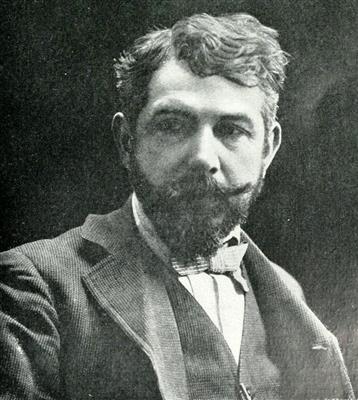
Ettore Tito was the preeminent painter of late 19th and early 20th-century Venice, a chronicler of the city's daily life whose canvases captured gondoliers, fishermen, market scenes, and the ever-shifting quality of Venetian light with an authority that made him the natural successor to the grand genre tradition of the Serenissima. Born in Castellammare di Stabia in 1859[3], he trained at the Accademia di Belle Arti in Venice and stayed, making the city his home for the rest of his life.
Biography
In 1894[3] he was appointed Professor of Painting at the Accademia, a post he held for over three decades until 1927. The position gave him a platform from which to shape an entire generation of Venetian painters while maintaining a prolific exhibition career of his own. He showed widely across Europe and America, and in 1915 was awarded the Grand Prize in painting at the Panama-Pacific International Exposition in San Francisco, one of the most prestigious international art fairs of the era.
Tito's painting sits at the intersection of academic realism and the freer handling associated with the Italian[3] plein air tradition. His genre scenes have an immediacy that sets them apart from the more studied academicism of his contemporaries, while his portraits and mythological works demonstrate the formal training that earned him institutional recognition. In 1926[3] he was made a member of the Royal Academy of Italy, a state honour reflecting his standing as Italy's most distinguished Venetian painter.
He died in Venice in 1941[3], having spent over sixty years recording the city whose light and life had defined his art.
Timeline
- 1859Born in Castellammare di Stabia.
- 1859Trained at the Accademia di Belle Arti in Venice.
- 1894Appointed Professor of Painting at the Accademia di Belle Arti, Venice.
- 1915Awarded the Grand Prize in painting at the Panama-Pacific International Exposition in San Francisco.
- 1926Became a member of the Royal Academy of Italy.
- 1927Retired from his position as Professor of Painting at the Accademia di Belle Arti after over three decades.
- 1941Died in Venice at 82, after recording the city for over sixty years.
Notable Works
Tap to view larger.
Where to See Ettore Tito
1 museum worldwide.
-
2 works
Galleria Nazionale d'Arte Moderna e Contemporanea di Roma
Rome, Italy
Tue–Sun 9:00–19:00, closed Mondays · €17 adults

Next stop
Realism →
Explore the artists and ideas of Realism.
Related Artists



Frequently Asked Questions
What is Ettore Tito's most famous work?
It is difficult to name Ettore Tito's single most famous work, as his artistic output was varied and spanned several decades. However, some of his more well-known paintings include those depicting Venetian life and scenery. He captured the atmosphere of Venice with skill, often portraying scenes of everyday life, such as fishermen at work or social gatherings. These paintings are admired for their colour and depiction of light. Tito also produced historical and allegorical paintings, as well as portraits. His style evolved over time, but he remained committed to figurative art. He exhibited widely, both in Italy and internationally, gaining recognition during his lifetime. While no single piece overshadows his other works, his paintings of Venice have a popularity.What should I know about Ettore Tito's prints?
Ettore Tito (1859[3]-1941[3]) was an Italian[3] artist known for his paintings and prints, particularly those depicting Venetian life and landscapes. He was associated with the Venetian art scene and the broader Italian Impressionist movement. Tito's prints often feature scenes of everyday life in Venice: fishermen at work, market scenes, and views of the city's canals and architecture. His style is characterised by loose brushwork and a focus on capturing light and atmosphere. He employed techniques such as etching and lithography to create his prints, often using colour to enhance the visual impact. His artistic training began at the Academy of Fine Arts in Venice, where he later taught. Tito gained recognition early in his career, exhibiting his work internationally and receiving awards. He was commissioned to create decorative works for public buildings and private residences. Today, his prints are popular among collectors interested in Venetian art and Italian Impressionism. They offer a glimpse into the beauty and charm of Venice during the late 19th and early 20th centuries.What style or movement did Ettore Tito belong to?
Ettore Tito's career spanned several artistic movements. Although he is not widely known as a Symbolist, Symbolism was a broad European movement at the end of the 19th century. It favoured the imaginary over the real world. Symbolist artists aimed to express individual spirit, often exploring the darker, irrational aspects of the human psyche. They rejected Realism[3] as trivial, seeking a deeper significance beyond superficial appearances. Symbolism appeared in France around the 1880s. Symbolists were fascinated by ancient mythology and tried to escape rational thought. They wished to transcend the visible and rational world to reach pure thought, flirting with the unconscious. Symbolism opposed scientific logic, aspiring to prioritise the spiritual over the material. Its adherents addressed intuition, the subconscious, and imagination, inspiring the struggle against the power of matter.What techniques or materials did Ettore Tito use?
Ettore Tito was a painter, so his practice centred on paint media. Fresco was one option, and he also used oil paint. Venetian artists had access to a wide range of pigments, importing azurite blue from Germany and Hungary, carmine red from Poland, and verdigris green from the Netherlands. Natural ultramarine blue came from present-day Afghanistan, and other plant and insect extracts from eastern regions. Greece supplied green earths; indigo, woad, and brazilwood came from the New World. Shops specialising in art supplies appeared in Venice around 1500. Tito would prepare his canvases by stretching and sizing them. Size reduces the fibres' absorbency and prevents oil making them brittle. A gesso ground, made from gypsum and animal skin glue, was applied thinly and smoothly, just filling the gaps between the weave. The composition was laid in using paint, mainly earth pigments and white.What was Ettore Tito known for?
Ettore Tito was an artist active in Italy during a period of diverse artistic movements, including Symbolism[3]. Symbolism emerged in France and Europe between the 1880s and the early 20th century. Symbolist artists, drawing inspiration from ancient mythology, sought to move beyond the constraints of rational thought imposed by science. Their aim was to transcend the visible and rational world, reaching a realm of pure thought and exploring the boundaries of the unconscious. Key figures associated with Symbolism include Gustave Moreau and Odilon Redon from France; Fernand Khnopff and Félicien Rops from Belgium; Edward Burne-Jones and Dante Gabriel Rossetti from England; and Jan Toorop from the Netherlands. These artists employed symbolic imagery and evocative themes to convey subjective emotions and ideas, often exploring themes of mythology, spirituality, and the human psyche.When did Ettore Tito live and work?
Ettore Tito was born in 1859[3] in Castellammare di Stabia, near Naples. He died in Venice in 1941[3]. Tito's family returned to Venice when he was young, and he began his artistic training there. He studied at the Academy of Fine Arts in Venice. He is known for his paintings of Venetian life, including scenes of fishing, sailing, and everyday activities. He also painted portraits and historical subjects. His style is characterised by its realism and attention to detail. He captured the atmosphere of Venice with skill. Tito exhibited his work widely during his lifetime, both in Italy and internationally. He achieved considerable success and recognition. He was regarded as one of the leading Venetian artists of his time.Where can I see Ettore Tito's work?
It is difficult to pinpoint exactly where one might view works by Ettore Tito. However, many major museums hold collections of art deco items, and these may include his work. In the UK, these include the Brighton Museum & Art Gallery, Manchester Art Gallery, the National Museums of Scotland (Royal Museum) in Edinburgh, and the Victoria & Albert Museum in London. In the US, you might try the Metropolitan Museum of Art in New York, the Minneapolis Institute of Arts, or the Los Angeles County Museum of Art (LACMA). Other museums include the Royal Ontario Museum in Toronto and the National Gallery of Scotland in Edinburgh. These museums may be worth investigating.Where was Ettore Tito from?
Ettore Tito was an Italian[3] artist. Although sources do not specify his exact place of birth, his artistic career is associated with Venice. He studied at the Academy of Fine Arts in Venice, and he later became a professor there. Tito's paintings often depicted scenes of Venetian life, including its canals, markets, and festivals. His style captured the atmosphere of the city, and he became known for his ability to portray light and movement. He also painted subjects from the countryside, and portraits. His connection to Venice is not only through his subject matter, but also through his artistic training and teaching. He contributed to the artistic community of the city, and his work is often seen as part of the Venetian tradition.Who influenced Ettore Tito?
Ettore Tito, born in Italy in 1859[3], absorbed a range of influences throughout his artistic development. He began his formal training at the Academy of Fine Arts in Venice, where he was exposed to academic traditions. Tito's work shows the impact of the Venetian environment; its light, colour, and atmosphere are apparent in his paintings. He studied the Old Masters, particularly those of the Venetian School, such as Titian, Veronese, and Tintoretto. Their handling of colour and dramatic compositions informed Tito's own style. He also engaged with contemporary artistic movements. The influence of Impressionism can be seen in his interest in capturing fleeting moments and the effects of light. Tito, however, never fully adopted Impressionist techniques, retaining a stronger emphasis on form and narrative. His travels throughout Europe exposed him to different artistic trends, further broadening his artistic horizons.Why are Ettore Tito's works important today?
Ettore Tito (1859[3]-1941[3]) was an Italian[3] artist known for his paintings of Venetian life and landscapes. He captured scenes of everyday existence, from fishermen at work to social gatherings. His artistic skills are evident in his use of colour and light, which evoke the atmosphere of Venice and the surrounding areas. Tito's importance lies in his contribution to Italian art during the late 19th and early 20th centuries. He was associated with the Venetian art scene, and his works offer insights into the cultural and social context of the period. As an instructor at the Academy of Fine Arts in Venice, Tito helped shape the next generation of Italian artists. His influence can be seen in the works of his students and followers, who carried on his artistic traditions. His paintings are valuable historical documents, preserving moments in time. They allow viewers to experience the past, offering a glimpse into a world that has since changed. Tito's artistic output provides a visual record of Venice and its people, ensuring that their stories are remembered.How did Ettore Tito die?
Ettore Tito died in Venice in 1941[3]. He had spent over sixty years painting the city and its unique atmosphere.What is Ettore Tito known for?
Ettore Tito is known for his paintings of Venice, which capture the city's daily life and light. He painted scenes of gondoliers, fishermen, and markets, establishing himself as a successor to the Venetian genre tradition. In 1915[3], he received the Grand Prize in painting at the Panama-Pacific International Exposition in San Francisco.
Sources
Editorial draws on the following primary and tertiary references for Ettore Tito.
- [1] museum Galleria Nazionale d'Arte Moderna e Contemporanea di Roma Used for: museum holdings.
- [2] wikidata Wikidata: Q259946 Used for: identifiers.
- [3] wikipedia Wikipedia: Ettore Tito Used for: biography, birth dates, death dates, identifiers, movement attribution, nationality.
- [4] book Post-impressionism : cross-currents in European painting Used for: biography.
- [5] book Post-impressionism : cross-currents in European painting Used for: biography.
- [6] book Beckett, Wendy, Sister Wendy's odyssey : a journey of artistic discovery Used for: biography.
Editorial overseen by Solis Prints. Sources verified 2026-09-30. Click a source for details, or hover over [N] in the page above to preview.
Editorial standardsMethodologyCorrectionsAI disclosureAbout the editorial team