



Esteban Frances
Born in the Catalan port town of Portbou on 30 July 1913[1], Esteban Francés began his career in Barcelona before the Spanish Civil War transformed his life entirely. He had enrolled at the Escola de la Llotja after abandoning law studies, but by 1936[1] the Nationalist uprising forced him to flee Spain, first to Paris, then eventually to Mexico and New York.
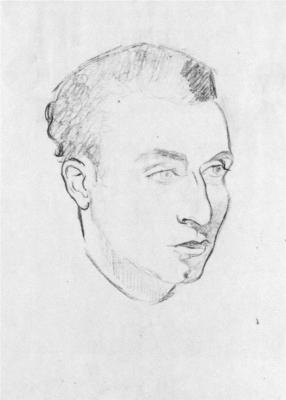
Biography
In Paris he joined the inner circle of the Surrealist movement: André Breton, Yves Tanguy, Roberto Matta, and Victor Brauner became colleagues. A violent incident in 1938[1] marked the group permanently. When a quarrel between Francés and fellow Surrealist Óscar Domínguez turned physical, Domínguez hurled a glass; Victor Brauner stepped between them and was struck, losing the sight in his left eye. The episode haunted Brauner's admirers, who noted that his own paintings from years earlier had depicted a figure with an injured eye.
Francés had also become romantically involved with the Spanish painter Remedios Varo during this period, a relationship that connected him further to the movement's Spanish-exile community. In Mexico, where many Surrealists regrouped after the fall of France, he continued developing a painting style that combined biomorphic imagery with Catalan landscape memory.
He later settled in New York, where his work entered the collection of the Museum of Modern Art. He died on 21 September 1976[1] in Deià, Majorca, at the age of 62.
Timeline
- 1913Born in Portbou, a Catalan port town, on 30 July.
- 1936Left Spain due to the Nationalist uprising, relocating to Paris.
- 1936Enrolled at the Escola de la Llotja after abandoning law studies.
- 1938Was involved in an altercation with Óscar Domínguez in Paris, resulting in Victor Brauner losing sight in one eye.
- 1938Began a romantic relationship with Remedios Varo, a Spanish painter.
- 1940Relocated to Mexico, where many Surrealists regrouped after the fall of France.
- 1976Died in Deià, Majorca, on 21 September, aged 62.
Notable Works
Tap to view larger.
Next stop
Browse the movements →
Every movement in the collection, from the Renaissance to Pop art.
Related Artists




Frequently Asked Questions
What is Esteban Frances's most famous work?
It is difficult to name one single work as Esteban Frances's most famous. Several paintings appear repeatedly in art-historical texts. These include *Immaculate Conception of El Escorial*, *Immaculate Conception of Los Venerables*, and *Immaculate Conception of the Franciscan*. Frances also painted *Jacob Laying the Peeled Rods Before Laban's Flock* and *Little Fruit Vendors*. Other notable works are *Martyrdom of Saint Andrew*, *Moses Before the Rock of Horeb*, and *The Patrician Relating His Dream to Pope Liberius*. Frances was a prolific portraitist; his sitters included Don Justino de Neve, Isabel Malcampo, and Nicolas Omazur. He also completed two self-portraits, one around 1650 and another around 1670-75. Religious paintings, such as *Saint Francis Embracing the Crucified Christ* and *Saint Ildenfonso Receiving the Chasuble*, are also attributed to him.What should I know about Esteban Frances's prints?
Esteban Frances's prints, like those of many artists, exist within a specific set of conventions. Printmakers often limit the number of impressions in an edition, a decision made by the artist, not dictated by technical constraints. This limit is declared on each print, usually in pencil, following established, though informal, customs. The edition number appears as a fraction on the lower left margin; the print's individual number above a total edition size (e.g. 12/25 means print number 12 of 25). The print's title is written in the centre, and the artist's signature on the right. These descriptions are always signed in pencil. An "original print" is conceived as a print and executed solely as such, usually in a numbered and signed edition. Each print is an original, pulled individually from the matrix, making it a "multi-original". Reproductions, however, are copies of works in other media and do not gain originality from numbering or signing. The market plays a significant role in determining the worth of art, though artists have resisted external rules. Price variations can occur due to quality, condition, or market "noise".What style or movement did Esteban Frances belong to?
It is difficult to assign Esteban Frances to a single style or movement. His career spanned much of the 20th century, a period of rapid artistic change. However, the references to tomb sculpture may provide a clue. Tomb sculpture has a long history, from ancient Egypt to the works of Bernini. The tomb of Francis I at the Abbey Church of St-Denis is one example. Tomb sculpture can take many forms, including effigies, reliefs, and free-standing figures. It often reflects the artistic styles of its time. Analysing Frances's work in relation to the history of tomb sculpture may reveal connections to broader artistic movements. Further research into his specific techniques and influences would be needed to draw definitive conclusions.What techniques or materials did Esteban Frances use?
Esteban Frances worked with earthen materials and construction techniques. His work involved adobe (mud brick), a common material in Argentinian architecture. Adobe consists of basic materials like clay, water, and straw. Frances also used the "chorizo" construction method. This popular technique involves mixing straw and mud to create sausage-shaped rolls ("chorizos"). These rolls are then hung on a frame of branches or leather strips, later replaced by wire. The gaps are filled with mud. Another technique Frances employed was "palo a pique", a system using wood construction in which the gaps are filled with mud. He also worked with "estanteo", a framework of thick branches interwoven with finer ones, then filled with mud. Frances's work also involved "tapial", a method of ramming damp earth within a wooden frame. Frances's work acknowledged the importance of understanding traditional techniques and adapting them to contemporary needs, including the use of recycled materials.What was Esteban Frances known for?
Esteban Frances, who settled in Seville in 1629, became a leading artist there. He was known for religious pictures, including saints at prayer and devotional still lifes. These works aligned with the spirit of the Counter-Reformation. Frances employed a tenebrist style, reminiscent of Herrera the Elder. This style featured simple figures and objects, clear, sober colours, and deep solemnity expressed via thickly applied paint. These qualities made him well suited to painting austere religious subjects. He produced many altarpieces and decorated a number of monasteries with extensive fresco cycles. Named “pintor del rey” in 1634, he had to work as an art dealer to supplement his income a decade later. By 1658, he relocated to Madrid and entered the Santiago Oder. His work shows the influence of Caravaggio, Velazquez, El Greco, Cotán, Dürer, Raphael, and Titian; nevertheless, it possesses great originality.When did Esteban Frances live and work?
Esteban Frances was born in Berga, Spain, in 1902. He is known for surrealist painting and collage. Frances studied at the Escola Superior de Belles Arts de Sant Jordi in Barcelona. During the Spanish Civil War, he moved to Paris, where he lived from 1936[1] to 1939. While in Paris, he associated with André Breton and other surrealists. In 1936, Frances participated in L'Art espagnol contemporain at the Musée du Jeu de Paume. He had a solo show at the Galerie Pierre that same year. Frances moved to Mexico in 1939, remaining there until 1947. He then travelled to the United States, living there until 1949. Frances returned to France in 1949 and lived there for most of the rest of his life. He died in Barcelona in 1976[1].Where can I see Esteban Frances's work?
Many museums with Art Deco collections may hold works by Esteban Frances. These include institutions in the United States, the United Kingdom, Spain, Portugal, France, and Belgium. In the United States, you might check the Charles Hosmer Morse Museum of American Art (Winter Park, Florida), the Los Angeles County Museum of Art, the Metropolitan Museum of Art (New York), the Minneapolis Institute of Arts, the Museum of Modern Art (New York), the Royal Ontario Museum (Toronto), the Virginia Museum of Fine Arts (Richmond), or the Wolfsonian at Florida International University (Miami Beach). In the United Kingdom, possible locations are the Bakelite Museum (Williton), the Brighton Museum & Art Gallery, the Geffrye Museum (London), the Manchester Art Gallery, the National Museums of Scotland (Edinburgh), and the Victoria & Albert Museum (London). In Spain, consider the Museo Art Nouveau y Art Deco (Salamanca) and the Museu d’Art Modern (Barcelona). In Portugal, the Museu Calouste Gulbenkian (Lisbon) is a possibility. In France, there is the Musée d’Art et d’Industrie (Roubaix), the Musée de l’Ecole de Nancy, the Musée des Arts Décoratifs (Paris), and the Musée des Beaux-Arts (Nancy). In Belgium, there is the Brangwyn Museum (Brugge) and the Clockarium Museum (Brussels).Who did Esteban Frances influence?
Esteban Frances (1907-1976[1]) was associated with Surrealism early in his career. He worked in painting, drawing, printmaking, and set design. However, there is little published scholarship detailing specific artists he influenced. Frances's early biomorphic Surrealism shows the influence of Yves Tanguy and Joan Miró. His work also relates to Giorgio de Chirico's Metaphysical painting. Frances's time in Paris during the 1930s placed him among many artists experimenting with Surrealism. His participation in Surrealist exhibitions, such as those at the Galerie Renou et Colle, brought him into contact with the movement's leading figures. Later in life, Frances moved away from pure Surrealism. He explored more personal and symbolic imagery. Any influence he had on later artists likely stems from his technical skill and imaginative compositions. His stage designs, for ballets such as "Le Combat," may have impacted theatrical design, but this requires further research.Who influenced Esteban Frances?
Esteban Frances was part of the School of Paris, a community of émigré artists working in Paris from the 1900s through the 1930s. Luis Fernandez, who arrived in Paris in 1924[1], was another Spanish artist associated with the School of Paris. Fernandez's early work was influenced by the Purism of Amédée Ozenfant and Le Corbusier. He moved towards Neo-Plasticism and Abstraction-Création. Fernandez admired Juan Gris and the work of Torres-Garcia and Gonzalez. He was also close to Picasso and collaborated with him. These artists shared an interest in geometric volumes and a hybrid of abstraction and Surrealism. Bores, Caneja, and Cossio also recall Zurbaran. Fernandez later abandoned abstraction, revealing links to Gonzalez. This tension between the abstract and the figurative, and the spirit of hallucination, also appears in the work of Torres-Garcia, Fernandez, and Gonzalez, and, to some extent, Picasso.Who was Esteban Frances?
Esteban Frances (1913[1]-1976[1]) was a Spanish artist associated with Surrealism. Born in Port-Bou, Spain, he later died in Barcelona. In 1936[1], Frances participated in an exhibition by the Logicophobiste group in Barcelona. This group included various Catalan artists who drew inspiration from Surrealism. Following the Spanish Civil War, where he fought for the Republicans, Frances arrived in Paris in 1937. There, he connected with the younger Surrealist painters Matta and Gordon Onslow-Ford. These artists, according to André Breton, brought "absolute" automatism to the movement. It was during this period that Frances invented grattage. This technique involved applying thin layers of paint to a wood panel, then scraping away at the surface with a blade. Grattage had a considerable influence on the Parisian avant-garde. By 1940, Frances had moved to Mexico, and by 1945, he was in New York. He increasingly focused on set design for George Balanchine's ballets. Eventually, he distanced himself from Surrealism and stopped working as a set designer. In his later years, he retired to Deya, in the Balearic Islands, and, according to some sources, "returned to order".Why are Esteban Frances's works important today?
To assess Esteban Frances's importance, one must consider his historical context and artistic contributions. Frances lived and worked during a period of significant artistic transformation. His art provides insight into the artistic movements of his time. He was not working in isolation; his pieces are part of a broader artistic conversation. Examining his paintings allows a better understanding of the period's influences, styles, and techniques. Further research into his biography, critical reception, and specific works would give a more complete picture of his importance. Consider his place alongside other artists of the time, and how his work reflects or diverges from prevailing trends. Without more information, a detailed assessment of his importance is difficult.What was Esteban Frances's art style?
In Mexico, Esteban Francés developed a painting style that combined biomorphic imagery with Catalan landscape memory.
Sources
Editorial draws on the following primary and tertiary references for Esteban Frances.
- [1] wikipedia Wikipedia: Esteban Frances Used for: biography, birth dates, death dates, identifiers, movement attribution, nationality.
- [2] book guggenheim-berriarei00bilb Used for: biography.
- [3] book guggenheim-twopri00weis Used for: biography.
- [4] book Masterpieces of western art : a history of art in 900 individual studies from the Gothic to the present day Used for: biography.
Editorial overseen by Solis Prints. Sources verified 2026-08-29. Click a source for details, or hover over [N] in the page above to preview.
Editorial standardsMethodologyCorrectionsAI disclosureAbout the editorial team