



Emile Claus
- French Realism
- Luminism
Emile Claus was a baker's apprentice and flax trader before he became a painter, and those early years of working-class labour in the Flemish countryside may explain why the life of ordinary people on the River Lys absorbed him for the rest of his career. He settled in 1883[3] at a cottage he named Zonneschijn (Sunshine) in Astene, Belgium, and the name was a manifesto: the next four decades of work would revolve around light, specifically the glancing, silver-gold light that comes off water and wheat fields in the early morning.
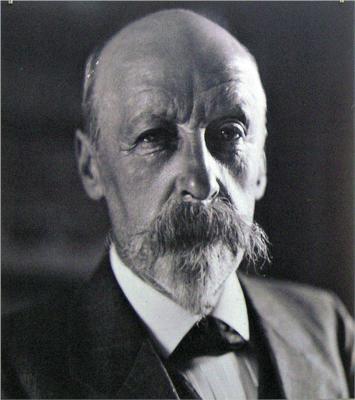
Biography
Born on 27 September 1849[3] in Sint-Eloois-Vijve, Claus studied at the Antwerp Academy of Fine Arts between 1869[3] and 1874 under landscape painter Jacob Jacobs. He earned his reputation as the pioneer of Belgian[3] luminism, a variant of Impressionism with a particular fixation on atmospheric light effects. Critics called him the sun painter and the painter of the Lys, neither title being inaccurate.
His social circle was not provincial. He befriended Auguste Rodin, Émile Zola, and the Belgian[3] writer Emile Verhaeren. In 1904[3] he founded the artist group Vie et Lumière, which brought luminism into an organised movement. He was elected to the Royal Academy of Science, Letters and Fine Arts of Belgium in 1911, and awarded Commander of the Order of Leopold in 1919.
When German forces invaded Belgium in 1914[3], Claus spent the war years in London, painting the Thames with the same concentrated attention he had given the Lys for thirty years. His last words, spoken in Astene on 14 May 1924[3], were reported as: flowers, flowers, flowers.
Timeline
- 1849Born in Sint-Eloois-Vijve, Belgium on 27 September.
- 1869Began studies at the Antwerp Academy of Fine Arts.
- 1874Completed studies at the Antwerp Academy of Fine Arts.
- 1883Settled in Astene, Belgium, at a cottage named Zonneschijn.
- 1904Founded the artist group Vie et Lumière, promoting luminism.
- 1911Elected to the Royal Academy of Science, Letters and Fine Arts of Belgium.
- 1914Moved to London during the German invasion of Belgium.
- 1919Awarded Commander of the Order of Leopold.
- 1924Died in Astene, Belgium on 14 May.
Notable Works
Tap to view larger.
Where to See Emile Claus
2 museums worldwide.
-
2 works
Art Gallery of South Australia
Adelaide, Australia
10:00–17:00 daily, closed Christmas Day · Free
-
 1 works
Galleria Nazionale d'Arte Moderna e Contemporanea di Roma
Rome, Italy
Tue–Sun 9:00–19:00, closed Mondays · €17 adults

Next stop
Browse the movements →
Every movement in the collection, from the Renaissance to Pop art.
Related Artists


Frequently Asked Questions
What is Emile Claus known for?
Emile Claus is known as the pioneer of Belgian[3] luminism, a variant of Impressionism with a particular fixation on atmospheric light effects. He earned the nicknames 'the sun painter' and 'the painter of the Lys'. In 1904[3], he founded the artist group Vie et Lumière, which brought luminism into an organised movement.What is Emile Claus's most famous work?
Without specific references to confirm a single 'most famous' work, it's challenging to definitively name one. However, examining available lists of works attributed to Emile Claus may offer some insight into his better-known pieces. These lists often include titles such as 'The Big Poplar II', 'Park', 'Pine Forest II', and 'Pond of Schloss Kammer on the Attersee'. Other works include, 'Night in Nice', 'Night in Saint-Cloud', 'Night in St. Cloud', and 'Nude'. It is important to note that fame and recognition can fluctuate, and what is considered an artist's most notable work can vary depending on the source and the criteria used (critical acclaim, popularity, influence, etc.). Further research into Claus's exhibition history and critical reception would be needed to accurately determine his most celebrated painting.What should I know about Emile Claus's prints?
Émile Claus (1849[3]-1924[3]) was a Belgian[3] painter associated with luminism and impressionism. Although he is best known for his paintings, he also produced prints, including etchings and lithographs. Claus's prints often reflect the same themes and stylistic characteristics as his paintings. These include rural scenes, landscapes, and depictions of daily life in the Flemish countryside. His prints are characterised by his interest in capturing the effects of light and atmosphere. Claus sought to convey the transient qualities of sunlight, shadow, and colour. While Claus's prints are not as widely known as his paintings, they offer insight into his artistic practice and his engagement with printmaking techniques. They also provide a more accessible way for collectors to acquire his work. His prints can be found in museum collections and private holdings.What style or movement did Emile Claus belong to?
Émile Claus (1849[3]-1924[3]) began his career painting in the Belgian[3] realist tradition. He trained at the Academie des Beaux-Arts, Antwerp. Claus established his reputation as a realist artist when he exhibited *The Cockfight* at the Antwerp Cercle Artistique in 1882[3]. However, Claus is best known for his Impressionist work. He converted to Impressionism at the end of the 1880s, after spending three winters in Paris. While there, he worked closely with the French artist Le Sidaner. By 1894, Claus was exhibiting paintings in the Impressionist style at the Libre Esthetique. Claus's contact with French painting was very important. In 1904, he was a founder member of the Vie et Lumiere group, along with Anna Boch, Heymans, Morren, Degouve de Nuncques, and Ensor. This group of Belgian Impressionists was associated with the Libre Esthetique. His painting *A Sunny Day* (1899) demonstrates an affinity with French Impressionism. The radiant light, short brushstrokes, and bright colours show a debt to Camille Pissarro.What techniques or materials did Emile Claus use?
Émile Claus was an oil painter, part of a movement to paint in open air. He used techniques that allowed him to capture the transient effects of outdoor light. Monet, a contemporary, often used tinted, pale grounds, particularly greys, cream, and beige. He preferred a thin layer of preparation which left the canvas grain exposed. Over this, he dragged dry, stiffish paint from which he had first soaked the oil binder, to create ragged flickerings of colour across the surface. His colours, like his ready-prepared canvases, were bought ready made, as the mechanisation of paint grinding was commonplace for artists' colours from the 1830s. Oil paint existed well before the Impressionists, but they refined it. Painters diluted pigments with a binding agent of oil and a drier. This transparent mix is the glazing. As it dries well, many layers of glazing can be applied and subtly modelled to emphasise shapes, light, and to give depth.What was Emile Claus known for?
Émile Claus (1849[3]-1924[3]) was a Belgian[3] painter associated with luminism. He is best known for his paintings that captured the effects of light and atmosphere. Born in Sint-Eloois-Vijve, Belgium, Claus received his early training at the Academy of Fine Arts in Antwerp. Initially, his style was realistic, influenced by artists such as Hippolyte Boulenger. However, a stay in Paris exposed him to impressionism. He adapted impressionistic techniques to the Belgian countryside. Claus's mature work focused on depicting the River Lys (Leie) and the surrounding rural areas. He used broken brushstrokes and a bright palette to convey the shimmering qualities of light on water and fields. Paintings such as "The Leie in Springtime" (1897[3]) and "Cows Crossing the Lys" (1899) demonstrate his luminist approach. He established a studio in Astene, near the Leie, which became a meeting place for other artists. Claus's work gained international recognition during his lifetime. He exhibited widely and received several awards. His artistic explorations contributed to the development of modern Belgian painting.When did Emile Claus live and work?
Emile Claus was active as an artist in the late 19th and early 20th centuries. He was included in the fifth exhibition of the Libre Esthétique in Brussels in the spring of 1898[3]; other artists featured included Cazin, Denis, Ensor, Le Sidaner, Liebermann, Maillol, O'Conor, Ranson, Van Rysselberghe, Simon, and Thorn Prikker. The Hague Arts and Crafts also included Van de Velde, and Rotterdam Galerie Oldenzeel featured Toorop. Lectures were given at Libre Esthétique by C. Morice ('Le Christ de Carriere') and E. Schure (‘Le Theatre de Reve'). James Ensor, who was active during a similar period, was born in Ostend and attended the Academie Royale des Beaux-Arts in Brussels from 1877 to 1880. In 1880, Ensor returned to Ostend, where he spent most of his career, with brief visits to Brussels, London, and Paris. He was a founder member of Les XX. From 1893, he exhibited regularly at the Libre Esthétique.Where can I see Emile Claus's work?
To view paintings by Emile Claus, consider museums in Belgium and France. The Musées Royaux des Beaux-Arts de Belgique, located at 9 rue du Musée, Brussels, may hold relevant works. Additionally, the Koninklijk Museum voor Schone Kunsten in Antwerp, situated at Leopold de Waelplein 2000, is another potential location. In France, the Musée des Beaux-Arts, found at 3 Place Stanislas, Nancy, could also feature Claus's art. These museums house collections of Belgian[3] and French art, increasing the likelihood of encountering pieces by Claus. Checking their online catalogues or contacting them directly is advisable before visiting. Other museums in Belgium that may be of interest are the Brangwyn Museum in Bruges and the Clockarium Museum in Brussels.Where was Emile Claus from?
Emile Claus was a Belgian[3] painter. He was born in Sint-Eloois-Vijve, a rural village in West Flanders, on 27 September 1849[3]. His parents ran a small grocery shop and Emile was the eldest of fourteen children. Claus received his initial artistic training at the Academy of Fine Arts in Antwerp. Here, he studied under the direction of landscape painter Jacob Jacobs. Claus completed his studies in Antwerp in 1869[3] and returned to Sint-Eloois-Vijve. In 1883, Claus moved to Deinze, a town along the Leie River. He built a villa there, named "Zonneschijn" (Sunshine), where he lived and worked for the next thirty years. The area around Deinze, with its bright light and river views, greatly influenced his artistic style. He is often associated with the Luminist movement in Belgian painting, which emphasised the study of light and colour. Claus died in Astene, near Deinze, in 1924[3].Who did Emile Claus influence?
Émile Claus, a Belgian[3] artist, initially worked within the realist tradition. However, after spending time in Paris and being influenced by the French artist Le Sidaner, Claus adopted Impressionism. He became a founder member of the Vie et Lumiere group in 1904[3], along with Anna Boch, Heymans, Morren, Degouve de Nuncques, and Ensor. This group was associated with the Libre Esthetique. Claus's style, while rooted in French Impressionism, had its own distinctive qualities. His paintings often featured bright colours and a more open network of brushwork. This can be seen in works such as A Sunny Day (1899) and Cows Crossing the Lys (1899). While his peasant subject matter has a connection to Camille Pissarro, Claus also drew upon a well-established Belgian tradition. His interpretations of light and colour, along with his focus on the Flemish countryside, distinguish him within the broader Impressionist movement.Who was Emile Claus?
Émile Claus (1849[3]-1924[3]) was a Belgian[3] artist. Initially trained at the Académie des Beaux-Arts, Antwerp, he began his career painting in the Belgian realist style. Claus's artistic direction shifted after spending three winters in Paris, where he was in close contact with the artist Le Sidaner. This exposure led him to adopt Impressionism. By 1894[3], Claus was exhibiting Impressionist works at the Libre Esthétique. In 1904, he became a founding member of Vie et Lumière, an Impressionist group linked to the Libre Esthétique. Other members included Anna Boch, Heymans, Morren, Degouve de Nuncques, and Ensor. From 1889 to 1891, Claus spent time in Paris, encouraged by the Belgian critic Camille Lemmonier. He worked with Le Sidaner, who was also developing his own version of Impressionism. The Libre Esthétique exhibition of 1894 featured five of Claus's paintings, demonstrating his move to Impressionism. After 1883, Claus settled in Flanders, and the Flemish countryside became the primary subject of his work.Why are Emile Claus's works important today?
Émile Claus (1849[3]-1924[3]) is significant as a Belgian[3] interpreter of Impressionism. Trained in the realist tradition at the Academie des Beaux-Arts, Antwerp, he shifted to Impressionism after spending three winters in Paris in close association with Le Sidaner. Claus first exhibited his Impressionist paintings at the Libre Esthetique in 1894[3]. In 1904, he co-founded Vie et Lumiere, an Impressionist group linked to the Libre Esthetique, with Anna Boch, Heymans, Morren, Degouve de Nuncques, and Ensor. From 1883 onwards, Claus lived in Flanders, drawing most of his subject matter from the Flemish countryside. Impressionism was somewhat late in arriving in Belgium. The annual exhibitions of Les XX and travel to Paris provided contact with the French movement. Although a parallel can be drawn between Claus's A Sunny Day (1899) and the work of Pissarro, Claus modified the French model with brighter colours and a more open brushwork. This intensification of colour is evident in Cows Crossing the Lys (1899).
Sources
Editorial draws on the following primary and tertiary references for Emile Claus.
- [1] museum Galleria Nazionale d'Arte Moderna e Contemporanea di Roma Used for: museum holdings.
- [2] museum Art Gallery of South Australia Used for: museum holdings.
- [3] wikipedia Wikipedia: Emile Claus Used for: biography, birth dates, death dates, identifiers, movement attribution, nationality.
- [4] book guggenheim-gauguindecorativ00gaug Used for: biography, stylistic analysis.
- [5] book Post-impressionism : cross-currents in European painting Used for: biography, stylistic analysis.
- [6] book Post-impressionism : cross-currents in European painting Used for: biography, stylistic analysis.
Editorial overseen by Solis Prints. Sources verified 2026-09-22. Click a source for details, or hover over [N] in the page above to preview.
Editorial standardsMethodologyCorrectionsAI disclosureAbout the editorial team