



Danh Vō
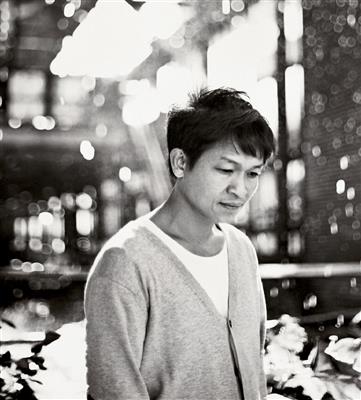
In 1979, when Danh Vō was four years old, his family joined the hundreds of thousands of Vietnamese fleeing the country by boat following the Communist victory. Their vessel broke down in the South China Sea. A Danish Maersk freighter picked them up, and the family was eventually resettled in Denmark, a coincidence that shaped not only Vō's life but much of his subsequent art practice, which circles obsessively around questions of migration, document, and the objects that carry identity across borders.
Biography
Born in Vũng Tàu, South Vietnam[1] in 1975[1], Vō studied at the Royal Danish Academy of Fine Arts in Copenhagen before completing his training at the Städelschule in Frankfurt. He won the Hugo Boss Prize in 2012 and had a major survey at the Solomon R. Guggenheim Museum in New York in 2018.
His most frequently discussed work is an ongoing series begun in 2009: Vō's elderly father slowly transcribes by hand the final letter of Jean-Théophane Vénard, a French Jesuit missionary executed in Vietnam[1] in 1861, writing one sheet at a time. Each sheet is given away or sold. The work accumulates across time and ownership, scattering a historical text about colonial violence and martyrdom through private hands across the world.
We the People (2010–2013[1]) is a full-scale copper replica of the Statue of Liberty, fabricated in sections and exhibited in fragments across venues worldwide but never assembled into a complete figure. The refusal to unify the parts is part of the point. Vō lives and works between Berlin and Mexico City.
Timeline
- 1975Born in Vũng Tàu, South Vietnam.
- 1979At four years old, fled Vietnam with his family by boat after the Communist victory.
- 1979Rescued by a Danish Maersk freighter after their boat broke down in the South China Sea; the family resettled in Denmark.
- 2009Began the ongoing series involving his father transcribing the final letter of Jean-Théophane Vénard.
- 2010Created "We the People", a full-scale copper replica of the Statue of Liberty, exhibited in fragments.
- 2012Won the Hugo Boss Prize.
- 2018Had a major survey exhibition at the Solomon R. Guggenheim Museum in New York.
Notable Works
Tap to view larger.
Next stop
Browse the movements →
Every movement in the collection, from the Renaissance to Pop art.
Related Artists
Frequently Asked Questions
What is Danh Vō's most famous work?
Danh Vō is known for his installations that incorporate found objects, photography, and documents. While it is difficult to isolate a single "most famous" work, some pieces have received considerable attention. One significant project is *We the People* (2011-2016[1]), a full-scale reproduction of the Statue of Liberty. However, rather than assembling the copper sections, Vō fractured and dispersed them. He shipped the individual pieces to different locations worldwide. This challenges notions of unity, freedom, and iconic symbols. Another notable work is his series involving objects acquired from the estate of Robert McNamara, the former US Secretary of Defence. These items, including furniture, photographs, and documents, are presented in arrangements that explore themes of personal history, political power, and the Vietnam[1] War. Vō's practice often engages with his personal history as a Vietnamese refugee in Denmark, exploring themes of identity, displacement, and cultural memory. His work prompts reflection on the complex interplay between personal narratives and broader historical forces.What should I know about Danh Vō's prints?
Danh Vō's prints, like photographs in general, have a complex relationship to originality. A 'vintage print' is made around the time the negative was taken; a 'period print' within 10 to 15 years. Anything printed later is considered an 'old print' or 'modern print'. An 'original print' is made by the artist or under their supervision. A 'facsimile' is a copy made using the original negative, with print base and processing as close as possible to the original. Some older photographic printing methods are more prone to deterioration than media such as graphic art, bronze, or oil paint. Platinum and silver-gelatin prints are considered robust. Photographs should not be hung in direct sunlight. Conservation involves framing them behind museum glass and storing them in acid-free parchment. Prints not sufficiently washed in the laboratory can 'silver out'. Some collectors find this adds to the image.What style or movement did Danh Vō belong to?
It is difficult to assign Danh Vō to a single style or movement. Analysis of style often involves identifying shared characteristics among artists, based on their responses to common artistic aims. Style can be seen as procedures developed in response to shared ideas. Some have associated Vō with Pop and Minimal art, particularly concerning the use of objects and materials. This approach arose from a sense that human actions, as embodied by Action Painting and Abstract Expressionism, had lost value. Pop and Minimal artists embraced objects, reflecting a culture where consumer products became primary objects of fantasy. However, style originates in how a work is created, not the work itself. Style is expressed in rules, not defined by them. It is causally prior to them. Therefore, style is a generative phenomenon, not merely a descriptive label.What techniques or materials did Danh Vō use?
Danh Vō's practice incorporates a range of materials and techniques, often focusing on the historical and personal narratives embedded within them. Some sources mention his use of resin in casting, creating laminated layers with colour effects. The process involves careful control of light penetration and colour balance, using pigments and sometimes metals within the resin. The goal is to achieve clarity and counter-distinction between colour layers, manipulating the way light interacts with the material. Another artist cited in the source texts, David Smith, used metal extensively, particularly steel and iron. Smith's approach was influenced by his factory experience, employing techniques like gas welding and arc welding. He aimed for functional forms, drawing parallels with locomotive construction. Smith also experimented with various surface treatments for steel, including painting, lacquering, and electroplating. Another artist used aluminium filings, scattered as "loose matter" on land, as a means of activating the land visually. Another artist intended to use toxic and poisonous matter, and disinfectants, as artistic mediums.What was Danh Vō known for?
Danh Vō is a contemporary artist known for work addressing themes of personal and group identity. Since 1980, artists have explored identity in diverse ways, considering style, format, content, and technique. Many artists of African descent have addressed issues of concern to Black Americans. Other artists have focused on Native American heritage, while some consider gender and sexuality. National identity is a theme for artists from Iran and Nigeria. Vō's work fits within this context of contemporary artists using their work to explore identity and broader political and economic issues that affect society. He is part of a movement in which contemporary artists treat political and economic issues that affect society at large.When did Danh Vō live and work?
Danh Vō was born in Bà Rịa, Vietnam[1], in 1975[1]. His family fled Vietnam for Denmark when he was four years old. Vō's work often deals with themes of colonialism, identity, and displacement, drawing on his personal history and exploring broader cultural and political issues. Though he grew up in Denmark, Vō later moved to Paris and then to Berlin, indicating a career that has spanned multiple European centres. He studied at the Royal Academy of Fine Arts in Copenhagen and the Städelschule in Frankfurt. Vō received the Hugo Boss Prize in 2012, marking a high point in a career that continues to evolve. He is known for his installations, sculptures, and photographic works.Where can I see Danh Vō's work?
Danh Vō's art has been exhibited in many museums internationally. These include the Solomon R. Guggenheim Museum in New York; the Musée National d’Art Moderne, Paris; the Museum am Ostwall, Dortmund; the San Francisco Museum of Art; the City Art Museum of St. Louis; the Krannert Art Museum, University of Illinois; the Columbus Gallery of Fine Arts; the National Gallery of Canada, Ottawa; and the Albright-Knox Gallery, Buffalo. The Art Gallery of New South Wales (Sydney, Australia), Musées Royaux des Beaux-Arts de Belgique (Brussels), and the Kunsthistorisches Museum (Vienna, Austria) also hold works of art. In the United States, museums that hold art include the Yale University Art Gallery (New Haven, CT), the Metropolitan Museum of Art (New York), and the Museum of Modern Art (New York).Where was Danh Vō from?
Danh Vō was born in Bà Rịa, Vietnam[1], in 1975[1]. When he was four years old, his family fled the country to escape political instability. They were rescued at sea by a Danish freighter, and Vō and his family were granted asylum in Denmark. He grew up in Denmark and is a Danish citizen. Vō's work often deals with themes of identity, displacement, and cultural memory. His personal history of migration and assimilation informs much of his art, as he explores the complexities of cultural heritage and the impact of colonialism. He often incorporates found objects and historical documents into his installations, creating layers of meaning that reflect his own experiences and the broader historical context. His work examines how personal narratives intersect with larger political and historical forces.Who did Danh Vō influence?
Danh Vō's work engages with themes of colonialism, migration, and identity. It is difficult to identify specific artists directly influenced by him. However, we can consider the artistic lineages and conceptual frameworks that Vō's practice engages with. Vō's use of found objects and personal narratives connects with Marcel Duchamp's readymades. Bruce Nauman acknowledged Duchamp's influence, particularly his use of objects to represent ideas. Vō, like Nauman, transforms everyday items into artworks that prompt reflection. Vō's exploration of cultural identity and displacement also resonates with artists such as Shirin Neshat, who examines similar themes in her video installations. Neshat, like Vō, uses art to explore the complexities of cultural heritage and personal experience. Conceptual art prioritises ideas, and Vō's installations often convey complex narratives. His approach to appropriation and re-contextualisation aligns with postmodern strategies. While direct influence is hard to measure, Vō's work participates in broader dialogues within contemporary art.Who influenced Danh Vō?
Danh Vō's influences are diverse and span artistic movements and individual figures. Some sources mention Jan Groth, who was influenced by Sonja Ferlov Mancoba and Ernest Mancoba. Groth regarded the Mancobas as his teachers, admiring their idealism and the continuity within Sonja's work. Groth also drew inspiration from artists such as Morandi, Giacometti, and Henri Michaux. He felt an affinity with the Norwegian artist Olav Stromme, noting the economy of visual means in Stromme's late paintings. Another artist was drawn to Pollock's work, finding it resonated and opened the way for personal expression. This artist also investigated and sought to understand the works of Old Masters, Cubists, Manet, Monet, Miró, and Gorky. One source mentions that Soto was influenced by the Bauhaus spirit and Klee's exploration of perspective. Soto also expressed interest in Mondrian, Malevich, and Albers, whose paintings he saw at the Galerie Denise René. He also found the path taken by Moholy-Nagy very important. Soto also discovered Calder, Marcel Duchamp, and Gabo. One artist mentions Renaissance fresco cycles in the churches of Tuscany as a major influence. This artist also acknowledges Tanaka Sensei, a Japanese Zen master, as a teacher and inspiration.Who was Danh Vō?
Danh Vō is a Vietnamese-Danish conceptual artist. Vō's family fled Vietnam[1] in 1979, when he was four years old, and were rescued at sea by a Danish freighter. He was raised in Denmark and is based in Berlin and Mexico. Much of Vō's art considers themes of colonialism, migration, and cultural identity. He often incorporates found objects and historical materials into his installations. These objects carry their own stories and histories, which Vō then layers with his personal narrative. His work frequently explores the impact of Western influence on Southeast Asia, particularly Vietnam. By appropriating and re-contextualising objects, Vō questions notions of authenticity, authorship, and the ways in which history is constructed and remembered. His practice engages with personal history and broader cultural and political issues.Why are Danh Vō's works important today?
Danh Vō's work is important because it explores themes of identity, displacement, and the legacies of colonialism. His installations and sculptures often incorporate found objects and historical artefacts. These items carry their own stories and histories, which Vō then layers with his personal narrative as a Vietnamese-born artist who immigrated to Denmark as a child. Vō's practice engages with questions of cultural appropriation and the ways in which objects can be imbued with meaning. He prompts viewers to consider the complex relationships between personal experience and broader historical forces. Some critics see Vō as part of a generation of non-Western artists whose work challenges established presumptions about art and its role in political and cultural discourse. By using a variety of media and aesthetic strategies, Vō's art speaks to a diverse audience and reflects the increasing internationalism of the art world.
Sources
Editorial draws on the following primary and tertiary references for Danh Vō.
- [1] wikipedia Wikipedia: Danh Vō Used for: biography, birth dates, death dates, identifiers, movement attribution, nationality.
- [2] book guggenheim-refigur00kren Used for: biography.
- [3] book https://downmagaz.net, https://downmagaz.net Used for: biography.
- [4] book Masterpieces of western art : a history of art in 900 individual studies from the Gothic to the present day Used for: biography.
Editorial overseen by Solis Prints. Sources verified 2026-08-26. Click a source for details, or hover over [N] in the page above to preview.
Editorial standardsMethodologyCorrectionsAI disclosureAbout the editorial team