



Cornelis van Noorde
- landscape painting
Cornelis van Noorde spent most of his life recording the Dutch[1] Republic's built environment with a draughtsman's precision and a landscape painter's eye for atmosphere. Born in Haarlem in 1731[1], he trained first under the engraver Frans Decker before passing to Tako Hajo Jelgersma, under whom he developed his approach to topographical drawing in watercolour, charcoal, and etching.
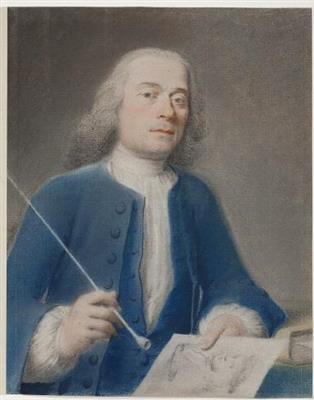
Biography
He joined the Haarlem Guild of St. Luke in 1761[1], and in 1767 produced a set of 85 etchings for publication, among the most sustained print projects of his career. Five years later, in 1772, he co-founded the Haarlemse Teekenacademie alongside Jelgersma and several colleagues, taking on teaching duties and eventually directing the institution. The academy closed three weeks after Van Noorde's death in 1795[1], as though it could not survive without him.
His greatest contribution was documentary rather than inventive. Van Noorde obsessively sketched buildings, streetscapes, and architectural details that were already beginning to disappear from the Dutch[1] townscape. His sketchbook, now held in the North Holland archives, has been published as a historical document for the same reason, it preserves places that no longer exist. He also made copies of old masters, drew portraits, and produced pastoral landscapes in the 18th-century Dutch tradition, but it is his topographical eye that distinguishes his legacy.
Timeline
- 1731Born in Haarlem.
- 1761Joined the Haarlem Guild of St Luke.
- 1767Produced a set of 85 etchings for publication.
- 1772Co-founded the Haarlemse Teekenacademie with Tako Hajo Jelgersma and others.
- 1772Began teaching duties at the Haarlemse Teekenacademie.
- 1795Died in 1795. The Haarlemse Teekenacademie closed three weeks later.
Notable Works
Tap to view larger.
Next stop
Browse the movements →
Every movement in the collection, from the Renaissance to Pop art.
Cornelis van Noorde prints
Hand-finished archival prints from Cornelis van Noorde's body of work.
 Jacob Receiving the Blessing of Isaac - Cornelis van Noorde
From £28.00
Jacob Receiving the Blessing of Isaac - Cornelis van Noorde
From £28.00
 Four Illustrations from the Story of Isaac, Jacob and Esau - Cornelis van Noorde
From £28.00
Four Illustrations from the Story of Isaac, Jacob and Esau - Cornelis van Noorde
From £28.00
 Esau Sells His Birthright to Jacob - Cornelis van Noorde
From £28.00
Esau Sells His Birthright to Jacob - Cornelis van Noorde
From £28.00
 Vier Groenlandse schepen vast in het ijs - Cornelis van Noorde
From £28.00
Vier Groenlandse schepen vast in het ijs - Cornelis van Noorde
From £28.00
 Brand van de schouwburg aan de Keizersgracht te Amsterdam - Cornelis van Noorde
From £28.00
Brand van de schouwburg aan de Keizersgracht te Amsterdam - Cornelis van Noorde
From £28.00
 Gezigt uit het Menniste Boschje by het Maagdenhuis, na de Kleine Hout-weg - Cornelis van Noorde
From £28.00
Gezigt uit het Menniste Boschje by het Maagdenhuis, na de Kleine Hout-weg - Cornelis van Noorde
From £28.00
Related Artists



Take Cornelis van Noorde home.
See all Cornelis van Noorde prints →Frequently Asked Questions
What is Cornelis van Noorde known for?
Cornelis van Noorde is known for his documentary drawings of the Netherlands's built environment. He obsessively sketched buildings, streetscapes, and architectural details that were already beginning to disappear from the Dutch[1] townscape.What is Cornelis van Noorde's most famous work?
It is difficult to name one single work as Cornelis van Noorde's most famous. He was active as an engraver and draughtsman in the 18th century. He is best known for his printmaking after other artists, and for his drawings of buildings and cityscapes in and around Haarlem. He produced a number of prints after paintings by Peter Paul Rubens. These include religious scenes like 'The Last Supper', allegories such as 'The Triumph of Truth', and portraits including 'Thomas Howard, Second Count of Arundel'. Van Noorde also made prints after works by Frans Floris. These include a series of engravings after Floris's paintings of musical subjects, and after his religious scenes. He also produced an engraving after Floris's painting 'Adam and Eve Lament the Death of Abel'. Without a catalogue raisonné of Van Noorde's complete output, it is hard to assess which of these prints achieved the most recognition.What should I know about Cornelis van Noorde's prints?
Cornelis van Noorde (1731[1]-1795[1]) was a Dutch[1] draughtsman and printmaker. He is known for topographical prints and portraits. Van Noorde was born in Haarlem. He trained with his father, Jan van Noorde, who was also an artist. Cornelis became a member of the Haarlem Guild of Saint Luke. This organisation protected the interests of artists in the city. Much of his work consists of prints of buildings and cityscapes. These images provide valuable records of Dutch architecture and urban environments during the 18th century. He also produced a number of portraits, often of prominent citizens. These include clergy, mayors, and other local dignitaries. Van Noorde's prints are characterised by their precise detail and clear lines. He often worked in etching and engraving. These techniques allowed him to create fine, detailed images. His prints were popular during his lifetime and remain sought after by collectors today. They offer a glimpse into the visual culture of the Netherlands during the period.What style or movement did Cornelis van Noorde belong to?
Cornelis van Noorde (1731[1]-1795[1]) was a Dutch[1] draughtsman and painter working in the 18th century. During this period, Dutch art moved away from the naturalism of the previous century. In the 17th century, Dutch artists embraced realism, focusing on faithful depictions of their surroundings. They captured the unique light and atmosphere of the Low Countries, often with low horizons and expansive skies. This contrasted with earlier Mannerist painting, which favoured fantasy and stylised compositions. By the 18th century, a decline in landscape painting[1] occurred, and nature was no longer treated with the same respect. Some artists chose to imitate earlier styles, while others sought escapism in their work. Van Noorde's artistic output reflects this shift, as he produced topographical works and cityscapes.What was Cornelis van Noorde known for?
The provided passages do not contain information about Cornelis van Noorde. They discuss other artists, such as Esaias van de Velde, Anthony van Dyck, Pieter Bruegel, Jacob van Ruisdael, Jan van Goyen, and artists who painted winter scenes, moonlight scenes, seascapes, and city views. Esaias van de Velde, active in Haarlem, painted villages, dunes, woods, meadows, and canals. He depicted hunting scenes, knightly tournaments, folk feasts, and annual fairs. Landscape painting became an independent genre in the Baroque era, with the Netherlands in the lead. Dutch[1] painters concentrated on distance, space, and atmosphere. They often used a low horizon, with the sky and clouds playing a major role. Some painters specialised in Italianate forms, while others favoured the Haarlem style with low horizons. Maritime themes were also common, with artists depicting both calm seas and storms.When did Cornelis van Noorde live and work?
Unfortunately, the provided texts do not contain specific details regarding the life and career of Cornelis van Noorde. The passages mention various historical figures, locations, and events, but they do not offer information about van Noorde's dates of birth and death, or the period when he was active as an artist. The texts do reference various publications and reports from the 18th, 19th, and 20th centuries; these may contain information about the artist, but without direct access to them, it is impossible to determine the exact dates of his life and work. Further research in art historical databases, biographical dictionaries, or specialist literature would be needed to establish a timeline for Cornelis van Noorde's artistic activities.Where can I see Cornelis van Noorde's work?
Works by Cornelis van Noorde can be found in various collections. The Staatliche Museen zu Berlin, Kupferstichkabinett in Berlin holds some of his pieces. Other German museums include the Herzog Anton Ulrich-Museum, Kunstmuseum des Landes Niedersachsen in Braunschweig; the Gemäldegalerie Alte Meister, Staatliche Kunstsammlungen in Dresden; and the Niedersächsisches Landesmuseum in Hanover. In the UK, you can find his work at the National Gallery of Scotland in Edinburgh; the British Library, the British Museum, the National Gallery, the National Portrait Gallery, the Tate, UCL Art Collections, University College, and the Victoria and Albert Museum, all in London. Elsewhere in Europe, see the Galleria degli Uffizi in Florence; the Städel Museum, Städelsches Kunstinstitut und Städtische Galerie in Frankfurt am Main; the Musée du Louvre in Paris; the Royal Cabinet of Paintings, Mauritshuis in The Hague; and the Kunsthistorisches Museum, Gemäldegalerie in Vienna. In the United States, collections include the Metropolitan Museum of Art in New York and the J. Paul Getty Museum in Los Angeles.Where was Cornelis van Noorde from?
Cornelis van Noorde was from the Netherlands, which secured its independence from Spain in the late 16th century. The northern Netherlands achieved official recognition as the United Provinces of the Netherlands (the Dutch[1] Republic) in 1648. The Dutch Republic's rise during the 17th century owed itself to economic prosperity. Amsterdam became the financial centre after the founding of the Bank of Amsterdam in 1609. In that century, the city had the highest per capita income in Europe. The Dutch economy also gained from expertise on the open seas, which facilitated establishing colonies. By 1650, Dutch trade routes went to North and South America, the west coast of Africa, China, Japan, Southeast Asia, and much of the Pacific. Political power passed into the hands of an urban patrician class of merchants and manufacturers, especially in cities such as Amsterdam, Haarlem, and Delft. These cities were in Holland, the largest of the seven United Provinces; historians informally use "Holland" to refer to the entire country.Who did Cornelis van Noorde influence?
Cornelis van Noorde (1731[1]-1795[1]) was a Dutch[1] draughtsman and printmaker. He is known for topographical works, portraits, and genre scenes. His influence is most apparent in the work of his pupils. Among van Noorde's students were Jacques Kuyper (1761[1]-1808[1]), a painter and draughtsman known for his cityscapes and architectural studies. Kuyper's detailed depictions of Amsterdam owe a debt to van Noorde's example. Another pupil was Christiaan Josi (1768-1834), who became a respected printmaker and art dealer. Josi is remembered for his skill in reproducing Old Master drawings. Jan Bulthuis (1750-1801), though older, also studied with van Noorde. Bulthuis is known for his theatrical drawings and portraits. While van Noorde's artistic reach extended through his pupils, his impact is also seen in the broader context of Dutch printmaking during the late 18th century. His detailed approach to representing architecture and urban life set a standard that other artists emulated.Who influenced Cornelis van Noorde?
Cornelis van Noorde (1731[1]-1795[1]) was a Dutch[1] draughtsman and printmaker. He is known for topographical works, portraits, and genre scenes. Van Noorde studied with Jan Punt (1711-1779[1]), a draughtsman and engraver in Amsterdam. Punt was a figure in the Amsterdam theatre world; he co-founded the Amsterdamse Schouwburg, and he produced set designs and illustrations. Punt's work included portraits, allegories, and genre scenes after other artists. Van Noorde's early work shows the influence of Punt's precise style. Both artists favoured clear lines and careful attention to detail. Van Noorde also drew inspiration from other Dutch artists of the period. These include Cornelis Troost (1696-1750[1]), known for his theatrical genre scenes, and Jacobus Buys (1724-1801), a portraitist and history painter. Van Noorde adapted elements from these artists into his own compositions. He developed a distinctive style within the conventions of 18th-century Dutch art.Why are Cornelis van Noorde's works important today?
Cornelis van Noorde (1731[1]-1795[1]) was a Dutch[1] draughtsman and engraver. While not a household name today, his work offers valuable insights into the artistic practices and cultural interests of the 18th century. Van Noorde is known for his detailed topographical prints, portraits, and book illustrations. These works provide a visual record of Dutch cities, architecture, and society during a period of significant change. His prints after other artists, including depictions of mythological and historical subjects, reflect the period's taste for classical themes and its engagement with the past. His importance now lies in his contribution to the documentation of Dutch heritage and the history of printmaking. His images offer valuable information about the appearance of places and people, as well as the circulation of artistic ideas through prints. They are of interest to historians, art historians, and anyone seeking to understand the visual culture of the Netherlands in the 1700s.
Sources
Editorial draws on the following primary and tertiary references for Cornelis van Noorde.
- [1] wikipedia Wikipedia: Cornelis van Noorde Used for: biography, birth dates, death dates, identifiers, movement attribution, nationality.
- [2] book Edward H. Wouk, Frans Floris (1519_20-1570)_ Imagining a Northern Renaissance (Brill's Studies in Intellectual History _ Brill's Studies on) Used for: biography, stylistic analysis.
- [3] book Edward H. Wouk, Frans Floris (1519_20-1570)_ Imagining a Northern Renaissance (Brill's Studies in Intellectual History _ Brill's Studies on) Used for: biography, stylistic analysis.
- [4] book Jennifer D. Milam, Historical Dictionary of Rococo Art Used for: biography.
- [5] book Masterpieces of western art : a history of art in 900 individual studies from the Gothic to the present day Used for: biography.
- [6] book "Michael Brand, Frederik J. Duparc, Ariane van Suchtelen, Anne T. Woollett, Tiarna Doherty, Mark Leonard and Jørgen Wadum", Rubens and Brueghel: A Working Friendship Used for: stylistic analysis.
- [7] book John Michael Montias, Vermeer and His Milieu _ A Web of Social History Used for: biography.
Editorial overseen by Solis Prints. Sources verified 2026-08-30. Click a source for details, or hover over [N] in the page above to preview.
Editorial standardsMethodologyCorrectionsAI disclosureAbout the editorial team