

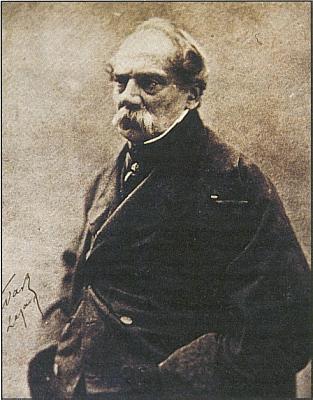
Constantin Guys
Constantin Guys earned his most lasting fame not through galleries but through a single essay. In 1863[1], Charles Baudelaire published "The Painter of Modern Life" in Le Figaro, using Guys as the prototype of the artist uniquely suited to capture the restless energy of contemporary Paris. Baudelaire called his method a "resurrecting and evocative memory" joined to an almost frenzied urgency of hand: Guys would sketch at speed, afraid the moment would escape before the pencil caught it.
Biography
Born in Flushing in the Netherlands in 1802[1], Guys worked for much of his career as a commercial illustrator and pictorial correspondent. He covered the Crimean War for the Illustrated London News, sending back drawings from Bulgaria, Turkey, and Sebastopol that brought the conflict into British drawing rooms. His facility for rapid notation on the spot, the hallmark quality Baudelaire so admired, was developed under genuine deadline pressure.
Back in Paris, Guys turned to the spectacle of city life: the parade of fashionable women in the Bois de Boulogne, soldiers on parade, masked revellers, and prostitutes in carriages. These were not grand history paintings but quick-fire observations in pencil and watercolour, valued precisely because they were immediate. Academic painters of the period scorned his slightness; Baudelaire saw that slightness as the whole point.
His influence on the Impressionists was indirect but real. The idea that speed and incompleteness could be virtues rather than failures, that a hasty line could capture what a polished surface lost, runs through Monet, Degas, and Manet. Guys himself remained a minor figure in market terms, dying in Paris in 1892[1], but as the subject of Baudelaire's theorising he became one of the most discussed artists of modernity without ever quite entering the canon.
Timeline
- 1802Born in Flushing, Netherlands.
- 1854Covered the Crimean War for the Illustrated London News, sending drawings from Bulgaria, Turkey, and Sebastopol.
- 1854Worked as a commercial illustrator and pictorial correspondent during the Crimean War.
- 1863Charles Baudelaire published "The Painter of Modern Life" in Le Figaro, using Guys as the prototype of the modern artist.
- 1863Baudelaire described Guys' method as a "resurrecting and evocative memory" joined to an urgency of hand.
- 1892Died in Paris at 90. He remained a minor figure in market terms, despite Baudelaire's theorising.
Notable Works
Tap to view larger.
Next stop
Browse the movements →
Every movement in the collection, from the Renaissance to Pop art.
Related Artists


Frequently Asked Questions
What is Constantin Guys known for?
Constantin Guys is known for his quick-fire observations of city life in Paris. His subjects included fashionable women, soldiers, masked revellers, and prostitutes, all captured in rapid sketches using pencil and watercolour. These works were valued for their immediacy, a quality admired by Charles Baudelaire.Who was Constantin Guys?
Constantin Guys was a Dutch-born artist who worked as a commercial illustrator and pictorial correspondent. He is best known as the prototype for Charles Baudelaire's essay, "The Painter of Modern Life." Guys developed a method of rapid sketching to capture the energy of contemporary Paris.What was Constantin Guys's art style?
Guys was known for his rapid notation and quick-fire observations, favouring speed and incompleteness in his work. His style involved capturing the spectacle of city life with hasty lines in pencil and watercolour. Academic painters of the period often scorned his slightness of style.How did Constantin Guys die?
Constantin Guys died in 1892[1] at the age of 90.
Sources
Editorial draws on the following primary and tertiary references for Constantin Guys.
- [1] wikipedia Wikipedia: Constantin Guys Used for: biography, birth dates, death dates, identifiers, movement attribution, nationality.
- [2] book Harding, James, Artistes pompiers : French academic art in the 19th century Used for: biography.
- [3] book 1892-1968, Panofsky, Erwin,, Tomb sculpture: four lectures on its changing aspects from ancient Egypt to Bernini Used for: biography, stylistic analysis.
Editorial overseen by Solis Prints. Sources verified 2026-10-15. Click a source for details, or hover over [N] in the page above to preview.
Editorial standardsMethodologyCorrectionsAI disclosureAbout the editorial team