



Claudio Bravo
- hyperrealism
Claudio Bravo painted packages. Brown paper parcels tied with string, folded fabric, wrapped objects with visible creases and knots, rendered with such precision that viewers sometimes questioned whether they were looking at photographs. The subject matter sounds perverse for an artist who came to painting via the Spanish Golden Age masters, but Bravo understood that a convincing rendering of humble brown paper is the hardest possible test of a painter's technical control.
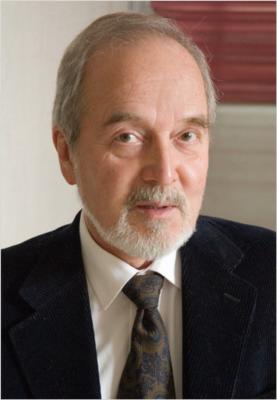
Biography
Born in Valparaíso, Chile on 8 November 1936[1], Bravo trained in Santiago under Miguel Venegas Cienfuegos before establishing himself in Madrid in the 1960s as a portrait painter to European and Latin American aristocracy. It was fashionable work and he was good at it. The decisive shift came in 1972[1], when he left Spain for Tangier, drawn by the quality of Moroccan light and the peculiar freedom of a city that had always attracted people running from somewhere else. He never returned to portraiture.
In Morocco, he painted packages and folded cloth for decades, acknowledging his debts to Zurbarán and Velázquez without apology. His work was represented by Marlborough Gallery across New York, Madrid, and London from the early 1970s, and large wrapped-package canvases were selling for over a million dollars at Christie's New York by 2008[1]. A retrospective at the Museo Nacional de Bellas Artes in Santiago in 2009 cemented his standing in Chilean[1] cultural history.
He died in Taroudant, Morocco on 4 June 2011[1], having donated substantial works to Chilean[1] state collections. The Fundación Claudio Bravo in Tangier manages his estate. His packed-paper canvases remain some of the most technically demanding still-life paintings of the twentieth century.
Timeline
- 1936Born in Valparaíso, Chile on 8 November.
- 1960Established himself in Madrid as a portrait painter to European and Latin American aristocracy.
- 1972Left Spain for Tangier, drawn by the quality of Moroccan light.
- 1972Shifted away from portraiture to painting packages and folded cloth.
- 2008Large wrapped-package canvases sold for over a million dollars at Christie's New York.
- 2009A retrospective was held at the Museo Nacional de Bellas Artes in Santiago.
- 2011Died in Taroudant, Morocco on 4 June. He donated substantial works to Chilean state collections.
Notable Works
Tap to view larger.
Next stop
Browse the movements →
Every movement in the collection, from the Renaissance to Pop art.
Related Artists

Frequently Asked Questions
What is Claudio Bravo known for?
Claudio Bravo is known for his technically precise still-life paintings, particularly those depicting wrapped packages and folded cloth. He gained recognition for his ability to convincingly render humble subjects, such as brown paper, demonstrating a high level of technical control. He moved away from portraiture to focus on these subjects, drawing inspiration from Zurbarán and Velázquez.Who was Claudio Bravo?
Claudio Bravo, born in Valparaíso, Chile, was a painter known for his technically demanding still-life paintings, particularly of wrapped packages. He trained in Santiago before moving to Madrid and later Tangier. He is known for his association with Marlborough Gallery and donations to Chilean[1] state collections.How did Claudio Bravo die?
Claudio Bravo died in 2011[1] at the age of 75.
Sources
Editorial draws on the following primary and tertiary references for Claudio Bravo.
- [1] wikipedia Wikipedia: Claudio Bravo Used for: biography, birth dates, death dates, identifiers, movement attribution, nationality.
- [2] book Annouchka Bayley, Diffracting New Materialisms Used for: stylistic analysis.
- [3] book guggenheim-latinamericanpai00catl Used for: biography.
- [4] book Braun, Emily, 1957-; Asor Rosa, Alberto; Royal Academy of Arts (Great Britain), Italian art in the 20th century : painting and sculpture, 1900-1988 Used for: biography.
- [5] book Patrick Frank, Readings in Latin American Modern Art Used for: biography.
Editorial overseen by Solis Prints. Sources verified 2026-10-08. Click a source for details, or hover over [N] in the page above to preview.
Editorial standardsMethodologyCorrectionsAI disclosureAbout the editorial team