


![Death as Juggler (Revolution) (Tod als Jongleur [Revolution]) by Christian Rohlfs](https://cdn.shopify.com/s/files/1/0833/9292/1935/files/artwork-christian-rohlfs-death-as-juggler-revolution-tod-als-jongleur-revolution.jpg?width=480)


Christian Rohlfs
Christian Rohlfs came to painting under circumstances that would have stopped most people entirely. At the age of fourteen, an infection in his leg led eventually to amputation in 1874[2]; it was during his years of hospitalisation and convalescence that he began to draw seriously. He enrolled at the Weimar Academy in 1870 and spent three decades there developing a careful naturalism, largely out of step with what was happening elsewhere in European art.
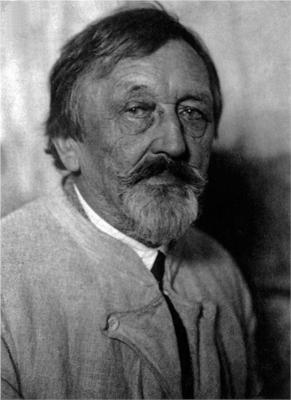
Biography
The rupture came after 1901[2], when he moved to Hagen at the invitation of the collector Karl Ernst Osthaus. Encounters with Die Brücke exhibitions, and with the paintings of Edvard Munch and Vincent van Gogh, sent him in an entirely new direction. At an age when most painters have long since settled into their manner, Rohlfs was overhauling his entirely. By 1908, at sixty years old, he had made his first prints, beginning what would become a body of 185 woodcuts and linocuts distinguished by their raw energy and directness of cut.
His later canvases, with their heightened colour and loosened form, placed him among the central figures of German[2] Expressionism[2], even though he remained independent of any single group. The town of Hagen opened a Christian Rohlfs Museum in his honour in 1929[2]. That recognition counted for little eight years later, when the Nazi regime expelled him from the Prussian Academy of Arts and included seventeen of his paintings in the Entartete Kunst (Degenerate Art) exhibition of 1937. He died in Hagen in January 1938[2], months after that final blow.
Timeline
- 1849Born in Germany.
- 1870Enrolled at the Weimar Academy.
- 1874Leg amputation due to infection.
- 1901Moved to Hagen at the invitation of collector Karl Ernst Osthaus.
- 1908At 60, made his first prints, beginning a body of 185 woodcuts and linocuts.
- 1929The town of Hagen opened a Christian Rohlfs Museum in his honour.
- 1937Expelled from the Prussian Academy of Arts by the Nazi regime; seventeen of his paintings were included in the Entartete Kunst exhibition.
- 1938Died in Hagen in January.
Notable Works
Tap to view larger.
Where to See Christian Rohlfs
1 museum worldwide.
-
21 works
National Gallery of Art
Washington D.C., United States
Mon–Sat 10:00–17:00, Sun 11:00–18:00 · Free

Next stop
Expressionism →
Explore the artists and ideas of Expressionism.
Related Artists


Frequently Asked Questions
What is Christian Rohlfs known for?
Christian Rohlfs is known for his woodcuts and linocuts, which number 185 in total. These are distinguished by their raw energy and directness of cut.What is Christian Rohlfs's most famous work?
It is difficult to name one single work as Christian Rohlfs's most famous, as his long career spanned several styles. He is known both for his earlier landscapes and for his later expressionist woodcuts and paintings. He produced a number of thematically linked prints, such as *The Spirit of God over the Waters*, *Return of the Prodigal Son*, *Sermon on the Mount*, and *Expulsion from Paradise*. All are dated between 1915[2] and 1917. These are held in the Collection Museum Folkwang, Essen. Other woodcuts from the same collection include *The Smoker* (1912), *Songbird* (1912), *Cerberus* (1912), and *The Fallen Man* (1913). Rohlfs was born in Holstein. After an accident that led to an amputation, he began drawing while hospitalised. Theodor Storm saw his drawings, recognised his talent, and arranged for him to study art. He entered the Weimar Kunstakademie in 1870, where he studied until 1880. In 1881, he received a free studio at the academy.What should I know about Christian Rohlfs's prints?
Christian Rohlfs, born in Holstein in 1849[2], was a painter and printmaker associated with German[2] Expressionism[2]. He began formal art studies in Weimar in 1870[2]. Early in his career, Rohlfs painted large-scale works, moving through academic, Naturalist, Impressionist, and Neo-Impressionist styles. In 1901, Rohlfs relocated to Hagen at the suggestion of collector Karl Ernst Osthaus. Exposure to the avant-garde, including encounters with Edvard Munch in 1904 and Emil Nolde a year later, influenced him. He also saw Van Gogh’s brushwork and colouring. This led to his final Expressionist phase. Rohlfs created his first print in 1908 at the age of sixty, after viewing an exhibition of Brücke prints. Almost all of his 185 prints are woodcuts or linoleum cuts (only two are lithographs). He rarely created editions. Instead, he preferred unique or variant impressions, hand-printing his own blocks, inking with a brush, and using rubbing or a weighted cigar box for pressure. His subjects were mostly figurative, with biblical themes becoming important during World War I. He stopped making new designs in 1926, but continued to print from existing blocks. Examples of his prints include "The Smoker" (1912), "Songbird" (1912), and "The Spirit of God over the Waters" (1915). In 1937, the Nazis expelled him from the Prussian Academy of Arts and labelled him degenerate.What style or movement did Christian Rohlfs belong to?
Christian Rohlfs (1849[2]-1938[2]) was associated with several movements during his long career. Initially, he was a significant figure in German[2] open-air painting during the 19th century. However, around the turn of the century, he became affiliated with the Expressionists, despite being three decades older than most artists in that circle. His early work involved landscape painting, finding subjects near Weimar, such as the Kalksteinbruch (Lime Quarry) and Schlossbrücke in Weimar (Castle Bridge in Weimar). These paintings show the influence of French Impressionism, particularly Monet, Sisley, and Pissarro, leading to a brighter palette. However, Rohlfs did not fully adopt the Impressionist dissolution of form. Later, Rohlfs engaged with Pointillism after encountering works by Seurat, Signac, and Rysselberghe. By 1910[2], he was exhibiting alongside younger Expressionists like Kirchner and Nolde. During this time, he explored themes such as figures and architectural subjects, including a series on the towers of Soest. His style evolved, sometimes approaching abstraction, with colour becoming increasingly important for its expressive qualities. He has been called the lyrical poet among the Expressionists.What techniques or materials did Christian Rohlfs use?
Christian Rohlfs was known for his experimentation with a range of materials and techniques. In his early career, Rohlfs worked primarily with oil paints, often applying them in thin washes to achieve a watercolour-like effect. He also used tempera, a fast-drying paint made from pigment mixed with egg yolk, which allowed him to build up layers of colour quickly. As his style evolved, Rohlfs began to incorporate other media into his work, including watercolour, gouache, and printmaking techniques such as woodcuts and linocuts. He often combined these different media in a single artwork, creating varied textures and effects. Rohlfs was also interested in the expressive potential of different supports. He painted on canvas, paper, and board, and he sometimes used unconventional materials such as burlap or cardboard. In his later years, he often worked on a large scale, creating murals and other large-format works.What was Christian Rohlfs known for?
Christian Rohlfs (1849[2]-1938[2]) was a German[2] painter and printmaker. He is known both for his landscape paintings from the late 19th century and for his later association with the Expressionists. Rohlfs began his artistic training relatively late, after an accident led to a leg amputation. He entered the Weimar Kunstakademie in 1870[2], where he studied until about 1880. During the two decades before 1900, Rohlfs focused on depicting the area around Weimar. His paintings from this period show the influence of French Impressionism, particularly Monet, in his use of colour and light. However, Rohlfs did not fully adopt Impressionist techniques; his objects retained their form and weight. Around 1900, Rohlfs encountered the work of Seurat, Signac, Munch and van Gogh. This led to a period of experimentation, and he became associated with younger Expressionist artists. Rohlfs explored the expressiveness of colour and form. He also produced woodcuts, often with religious subjects, such as *The Spirit of God over the Waters* (1915), *Return of the Prodigal Son* (1916), and *Expulsion from Paradise* (1917).When did Christian Rohlfs live and work?
Christian Rohlfs was born in 1849[2] in Holstein and died in 1938[2], living nearly 90 years. His artistic career spanned seven decades, during which he encountered diverse artistic movements. Initially, Rohlfs was expected to take over his father's farm. However, after an accident leading to a leg amputation, he began drawing during his hospital stay. The writer Theodor Storm recognised Rohlfs's talent and facilitated his studies with painter Pietsch in Berlin, and later at the Weimar Kunstakademie in 1870[2]. There, he focused on figurative art and historical themes. Rohlfs's studies lasted until around 1880. In 1881, Rohlfs received a "free studio" at the academy. During the two decades before 1900, he concentrated on painting the area around Weimar. French Impressionism influenced his work; his palette became brighter after seeing paintings by Monet, Sisley, and Pissarro. Around 1901, Rohlfs moved to Hagen after meeting Karl-Ernst Osthaus, founder of the Folkwang Museum. He encountered the work of Seurat, Signac, and Rysselberghe, adopting a pointillist style. He also began a dialogue with Munch and van Gogh.Where can I see Christian Rohlfs's work?
To view works by Christian Rohlfs, you can visit several museums in Germany. These include the Brücke Museum and the Nationalgalerie in Berlin; the Kunsthalle and Sammlung Bottcherstrasse in Bremen; the Ludwig Museum and Wallraf-Richartz Museum in Cologne; the Folkwang Museum in Essen; the Gesellschaft Kruppsche Gemaldesammlung, also in Essen; and the Kunsthalle in Hamburg. Other options are the Niedersachsisches Landesmuseum in Hanover; the Stadtische Kunsthalle in Mannheim; the Bayerische Staatsgemaldesammlungen in Munich; the Stiftung Ada und Emil Nolde in Seebüll; and the Von der Heydt Museum in Wuppertal. Note that museum collections and displays can change. It is always a good idea to check directly with the museum for current exhibitions.Where was Christian Rohlfs from?
Christian Rohlfs was born in 1849[2] in Niendorf bei Leezen, a village in Holstein. His early life suggested a future as a farmer, taking over his father's farm. However, an accident at fifteen led him to drawing during a long hospital stay; this change in direction was prompted by a doctor's suggestion. The writer Theodor Storm recognised Rohlfs's talent and assisted him, enabling studies with a painter, Pietsch, in Berlin. In 1870[2], Rohlfs entered the Weimar Kunstakademie. His studies, which focused on classicism and figurative art, were interrupted by illness and lasted until around 1880. In 1881, Rohlfs received a "free studio" at the academy. During the two decades before 1900, Rohlfs focused on painting, particularly scenes around Weimar, such as Lime Quarry and Castle Bridge in Weimar. He saw works by Monet, Sisley, and Pissarro in Weimar during the 1890s. In 1901, he moved to Hagen at the urging of Karl Ernst Osthaus, who offered him a studio in his modern art museum.Who did Christian Rohlfs influence?
Christian Rohlfs, born in 1849[2], had a long career that saw him engage with various artistic movements. Initially a painter of plein-air works, Rohlfs later became associated with the Expressionists, despite being thirty years their senior. Rohlfs's move towards Expressionism[2] occurred after encountering the work of Seurat, Signac, and Rysselberghe at the Folkwang Museum in Hagen. He adopted Pointillist techniques, and began a dialogue with the works of Munch and van Gogh. At the Sonderbund exhibition in 1910[2] in Dusseldorf, the 61-year-old Rohlfs exhibited alongside younger painters like Kirchner, Nolde, Pechstein, Kandinsky, and Schmidt-Rottluff. Though Rohlfs and Nolde exhibited together, Nolde claimed that they "never spoke about art problems". Rohlfs's engagement with the Expressionist group "Die Brücke" is not well documented. Rohlfs's later work moved away from pure representation, sometimes approaching abstraction. His art focused on colour and form, and he explored themes from fantasy, the Bible, and the impact of World War One. His late paintings often featured simplified forms and a strong linear structure.Who influenced Christian Rohlfs?
Christian Rohlfs's artistic development involved several influences. Early on, while studying at the Weimar Kunstakademie, he was trained in the classicistic tradition, focusing on figurative art and historical themes. However, he later moved away from this academic style. French Impressionism had an impact, particularly the work of Monet, Sisley, and Pissarro. Rohlfs saw their canvases in Weimar around 1890[2]. This exposure led to a brighter palette and an interest in coloured light, though he did not fully adopt the Impressionist principle of dissolving forms. Some critics considered his style "bungling", but he was closer to the realism of Courbet than to Impressionism. Around the turn of the century, Rohlfs met Karl-Ernst Osthaus and Henry van de Velde, which prompted a shift in his artistic direction. He encountered the work of Seurat, Signac, and Rysselberghe in Osthaus's collection, adopting a Pointillist style. Later, he engaged with the art of Munch and van Gogh, becoming associated with the Expressionists, despite being significantly older than them.Who was Christian Rohlfs?
Christian Rohlfs (1849[2]-1938[2]) was a German[2] artist who began his career as an Impressionist and later became associated with Expressionism[2]. Born in Niendorf bei Leezen, Holstein, Rohlfs was originally meant to take over his father's farm. However, after an accident that led to the amputation of his leg, he began drawing during his hospital stay. The writer Theodor Storm recognised Rohlfs's talent and helped him to study art. Rohlfs attended the Weimar Kunstakademie from 1870[2] until around 1880. Initially, Rohlfs focused on figurative art, but he later turned to painting. He found inspiration in the area around Weimar, repeatedly painting subjects such as Lime Quarry and Castle Bridge in Weimar. He was influenced by French Impressionism, adopting a brighter palette after seeing works by Monet, Sisley, and Pissarro. However, he did not fully embrace Impressionist principles, maintaining a focus on the weight and form of objects. Around 1901, Rohlfs met Karl-Ernst Osthaus and Henry van de Velde, which led him to the Folkwang Museum in Hagen. There, he encountered the work of Seurat, Signac, and Rysselberghe and experimented with Pointillism. Later in life, he became associated with the Expressionists.
Sources
Editorial draws on the following primary and tertiary references for Christian Rohlfs.
- [1] museum National Gallery of Art Used for: museum holdings.
- [2] wikipedia Wikipedia: Christian Rohlfs Used for: biography, birth dates, death dates, identifiers, movement attribution, nationality.
- [3] book guggenheim-expger00neug Used for: biography, stylistic analysis.
Editorial overseen by Solis Prints. Sources verified 2026-09-22. Click a source for details, or hover over [N] in the page above to preview.
Editorial standardsMethodologyCorrectionsAI disclosureAbout the editorial team