



Carlos Quizpez Asín
Carlos Quizpez Asín was the less famous of two remarkable brothers. His sibling Alfredo, who published poetry under the name César Moro, became one of Latin America's leading Surrealists. Carlos, four years older, pursued a quieter but equally serious career as a painter, making himself one of the few Peruvian[1] artists of his generation to absorb Cubism directly and translate it into a rigorous pictorial language.
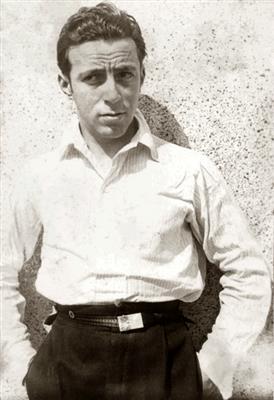
Biography
Born in Lima in 1900[1], he began studying at fifteen under Teofilo Castillo at the Quinta Heeren, then moved through the Academia Concha and a brief period at the National School of Fine Arts. In 1921[1], a bursary sent him to Madrid, where he enrolled at the Real Academia de Bellas Artes de San Fernando. From Spain he travelled to Paris, arriving around 1925 at a moment when the city's postwar mood had turned from experimentation toward a stricter classicism. Through his brother's connections to the avant-garde, Quizpez Asín encountered Cubism's formal discipline at close range; what he took from it was not fractured planes but a commitment to structural clarity and the controlled geometry associated with the rappel à l'ordre.
On returning to Lima, he joined the "Independientes," a loose grouping of painters who argued for modernism against the dominance of Indigenism in Peruvian[1] cultural life. His position was not anti-Peruvian but anti-provincial: he believed local subject matter did not require a folkloric visual language.
In the 1930s he spent time in Los Angeles, where he painted murals and mixed with the city's art world. Back in Lima, he taught for many years at the Escuela de Bellas Artes, shaping a generation of Peruvian[1] painters through the same disciplined approach that had marked his own formation. He died in Lima on 1 April 1983[1].
Timeline
- 1900Born in Lima, Peru.
- 1915Began studying under Teofilo Castillo at the Quinta Heeren, at 15.
- 1921Received a bursary to study in Madrid, enrolling at the Real Academia de Bellas Artes de San Fernando.
- 1925Moved to Paris, where he encountered Cubism through his brother's connections.
- 1925Began developing a commitment to structural clarity and controlled geometry in his work, influenced by Cubism.
- 1930Joined the "Independientes" in Lima, advocating for modernism.
- 1930Argued that local subject matter did not require a folkloric visual language.
- 1930Spent time in Los Angeles, painting murals and engaging with the local art scene.
- 1983Died in Lima on 1 April.
Notable Works
Tap to view larger.
Next stop
Browse the movements →
Every movement in the collection, from the Renaissance to Pop art.
Related Artists
Frequently Asked Questions
What is Carlos Quizpez Asín known for?
Carlos Quizpez Asín is known for being one of the few Peruvian[1] artists of his generation to absorb Cubism directly. He translated Cubism into a rigorous pictorial language and joined the "Independientes," a group that argued for modernism.What should I know about Carlos Quizpez Asín's prints?
Carlos Quizpez Asín was an artist from Peru. He was born in 1900[1] and died in 1983[1]. Information about his prints, specifically, is scarce in the provided texts. The passages discuss topics in art history, such as the tomb of Ilaria del Carretto, the tomb of the Countess of Tendilla in Guadalajara, and the tomb of the Blessed Lodovica Albertoni by Gian Lorenzo Bernini. These examples provide context for the study of art and sculpture across different periods and locations. Without more specific information, it is difficult to provide details about the themes, techniques, or style that Quizpez Asín employed in his prints. Further research into the artist's body of work would be needed to give a complete overview.What techniques or materials did Carlos Quizpez Asín use?
Without specific textual references about Carlos Quizpez Asín's techniques, I can offer general information about artistic methods. Artists use a range of materials, from traditional media such as oils, tempera, watercolours, and pastels to modern acrylics and mixed media. Oil paint, made from pigment suspended in drying oil, is known for its slow drying time, allowing for blending and layering. Watercolours, using pigments in a water-soluble binder, are prized for their transparency and luminosity. Acrylics, a later invention, dry quickly and can mimic the appearance of both oils and watercolours. Drawing media include graphite, charcoal, and ink, each offering different qualities of line and tone. Sculptors work with materials such as stone, wood, bronze, and clay, employing techniques like carving, modelling, and casting. Printmakers create images using methods such as etching, lithography, and screen printing, each producing unique effects. The choice of materials and techniques depends on the artist's vision, skill, and the desired aesthetic.When did Carlos Quizpez Asín live and work?
Carlos Quizpez Asín was born in Lima, Peru, in 1900[1]. He appears to have been active as an artist from the 1940s through the 1970s. Quizpez Asín's work was included in a number of group exhibitions in Valencia, Spain, during the late 1960s and 1970s. These included 'Nuestro Yo' at the Circulo Universitario de Valencia in January 1969[1]; 'Paisajes' at the Sala Mateu, Valencia, in May 1969; 'Bodegones y Paisajes' at the Circulo de Bellas Artes de Valencia in February 1970; and 'Paisajes' at the Caja de Ahorros de Alicante, Valencia, in March 1970. Later exhibitions included 'Personates Iguales' at the Galeria Barandarian, Bilboa, in April 1971; 'Paisajes en Barro' at the Salon National, Tortosa, July-August 1973; and 'Paisaje' at Sala Atenas, Zaragoza, in August 1974.Where can I see Carlos Quizpez Asín's work?
Carlos Quizpez Asín's work can be viewed in several public collections and museums worldwide. These include the Staatliche Museen Preussischer Kulturbesitz in Berlin, the British Museum in London, the Freer Gallery of Art/Arthur M. Sackler Gallery at the Smithsonian Institution in Washington, DC, and the Calouste Gulbenkian Museum in Lisbon. Other locations include the Los Angeles County Museum of Art (LACMA), the Metropolitan Museum of Art in New York, the Minneapolis Institute of Arts, and the Royal Ontario Museum in Toronto. In Spain, you can find art at the Museo Art Nouveau y Art Deco in Salamanca and the Museu d’Art Modern (MNAC) in Barcelona. Several galleries have also displayed his work, such as Galerie (Dr.) Valentíen in Stuttgart and Curt Valentín Gallery in Nueva York.Where was Carlos Quizpez Asín from?
Carlos Quizpez Asín was from Peru, which declared independence from Spain in 1821. Simón Bolivar, El Libertador, led the battle. He visited the university as part of this historic event. Bolivar's goals of intellectual freedom and progress emphasised a Pan-American identity and political unity throughout the former Spanish colonial empire. The Spanish conquest of Peru began in 1532, when Francisco Pizarro landed at Tumbes with fewer than 200 followers. He captured the Inca Atahualpa by treachery, exacted a ransom, and put him to death. By 1536, the last organised resistance was crushed. In 1847, William H. Prescott's *The Conquest of Peru* appeared, focusing public attention on the ancient heritage of that remote land. In 1863, Ephriam George Squier arrived in Peru and travelled throughout the coast and highlands.Who influenced Carlos Quizpez Asín?
Carlos Quizpez Asín's artistic development involved several influences. He was inspired by the spirit of experiment, rather than direct instruction, from teachers in Caracas. He saw a Cubist still life by Braque that made a deep impression on him. Through Braque, he came to understand Picasso, Cézanne, and van Gogh. He was briefly drawn to Gauguin, but was not convinced by his forms or symbolic vision, and was later disappointed by the colours in person. In Paris, Quizpez Asín initially wanted to add dynamism to Mondrian's works, but realised Mondrian had already solved that problem. He found the approach taken by Moholy-Nagy very important, and discovered Calder, Marcel Duchamp, and Gabo. He felt it necessary to take up the elements that these artists had released, but had not been able to bring to completion, and to attempt to find answers to all the questions they had formulated but not resolved. He was also interested in Klee's works, which sought perspective from different points of view, and Albers, whose paintings he saw at the Galerie Denise René.Who was Carlos Quizpez Asín?
Carlos Quizpez Asín was a Peruvian[1] painter and the brother of César Moro, a leading Surrealist poet. Although less famous than his brother, Carlos pursued painting and became one of the few Peruvian artists of his generation to absorb Cubism directly. He translated Cubism into a rigorous pictorial language.Why are Carlos Quizpez Asín's works important today?
It is difficult to assess the importance of Carlos Quizpez Asín's works today based on the passages provided. They concern the architectural restoration of the Alhambra in Granada, and Muslim scholarly practices, with no mention of the artist. However, the passages do discuss the concept of authenticity in historical preservation. They note how interpretations of historical sites and artefacts change over time, influenced by contemporary values. This raises questions about how we engage with art and cultural heritage. The conservator Leopoldo Torres Balbás, working at the Alhambra in the early 20th century, aimed to restore the site in a manner that appeared historically accurate, even if it meant reinventing certain aspects. This approach contrasts with later preservation values that emphasise clearly distinguishing between original and restored elements. This discussion about authenticity and interpretation may provide a framework for analysing Quizpez Asín's work. One might consider how his art reflects or challenges prevailing cultural and artistic values, and how its meaning might evolve over time.What was Carlos Quizpez Asín's art style?
Carlos Quizpez Asín's art style involved absorbing Cubism directly and translating it into a rigorous pictorial language. He committed to structural clarity and the controlled geometry associated with the rappel à l'ordre.How did Carlos Quizpez Asín die?
Carlos Quizpez Asín died in 1983[1] at the age of 83.
Sources
Editorial draws on the following primary and tertiary references for Carlos Quizpez Asín.
- [1] wikipedia Wikipedia: Carlos Quizpez Asín Used for: biography, birth dates, death dates, identifiers, movement attribution, nationality.
- [2] book guggenheim-beforepicassoaft00swee Used for: biography.
- [3] book guggenheim-guggenheimintern1958sven Used for: biography.
- [4] book guggenheim-twopri00weis Used for: biography.
- [5] book Shalev-Eyni, Sarit, Jews among Christians : Hebrew book illumination from Lake Constance Used for: biography.
Editorial overseen by Solis Prints. Sources verified 2026-08-26. Click a source for details, or hover over [N] in the page above to preview.
Editorial standardsMethodologyCorrectionsAI disclosureAbout the editorial team