



Alberto Vargas
For six years Alberto Vargas produced one idealised female figure after another for Esquire magazine. The 180 paintings he completed between 1940[1] and 1946 became so embedded in American wartime culture that servicemen painted them onto aircraft nose art. The name beneath each image read Varga rather than Vargas: Esquire had quietly dropped the final letter as a contractual matter, a detail that would prove disastrous.
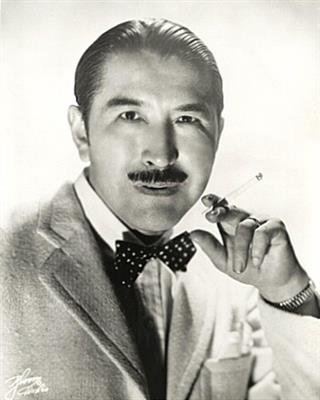
Biography
Vargas was born in Arequipa, Peru in 1896[1], the son of photographer Max T. Vargas. He studied in Zurich and Geneva before the First World War, absorbing influences from French illustration in magazines such as La Vie Parisienne, and arrived in the United States in 1916[1]. Work for the Ziegfeld Follies followed, and through the 1920s and 1930s he built a commercial illustration career in New York. His 1933 film poster for The Sin of Nora Moran, depicting actress Zita Johann in a dramatically foreshortened pose, has since been cited as one of the finest American movie posters ever made.
When the Esquire arrangement ended in 1946[1], the magazine retained the Varga trademark. Vargas contested it, lost in court, and spent much of the following decade in financial difficulty. The recovery came in 1959 when Playboy commissioned him to resume his pin-up work; over sixteen years he produced 152 paintings for the magazine, working in his characteristic watercolour-and-airbrush method, with slender fingers and red-painted nails functioning as recurring signatures.
His wife Anna Mae modelled for and managed his career until her death in 1974[1]. Vargas died on 30 December 1982[1], aged eighty-six.
Timeline
- 1896Born in Arequipa, Peru
- 1916Arrived in the United States
- 1933Created 'The Sin of Nora Moran' film poster
- 1940Began producing pin-ups for Esquire magazine
- 1946Esquire arrangement ended; trademark dispute began
- 1959Commissioned by Playboy to resume pin-up work
- 1974Wife Anna Mae died
- 1982Died on December 30, aged eighty-six
Notable Works
Tap to view larger.
Next stop
Browse the movements →
Every movement in the collection, from the Renaissance to Pop art.
Related Artists
Frequently Asked Questions
What is Alberto Vargas known for?
Alberto Vargas is known for his paintings of idealised female figures, particularly those created for Esquire magazine between 1940[1] and 1946. These images became popular as nose art on American aircraft during the Second World War; later in his career, he produced similar works for Playboy.What is Alberto Vargas's most famous work?
Alberto Vargas is best known for his "Vargas Girls", pin-up images produced for *Esquire* magazine during the Second World War. These paintings and drawings of women became popular with American troops, who used them as morale boosters. The images were shipped to soldiers and decorated Quonset huts. Some were even painted on the noses of aeroplanes. The "Vargas Girl" is typically depicted as overtly sexual and flirtatious. She gazes directly at the viewer, often displaying her legs or revealing cleavage. The images are intended to be inviting, reflecting the elemental nature of war, which reduces life to basic instincts: life, death, and sex. Although Vargas's pin-ups were popular during the war, some critics have argued that they objectified women. Later artists, such as Ralph Burke Tyree, resisted this trend by portraying women as unique individuals with contemplative expressions, inviting viewers to know them on a deeper level, rather than simply as objects of desire.What should I know about Alberto Vargas's prints?
Alberto Vargas was a painter and illustrator, not a printmaker. His images are more likely to appear as reproductions, also known as posters or image prints. These are produced by photochemical means. The number of prints isn't physically limited, unlike hand-pulled prints. However, publishers may set limits to increase the edition's value. Original prints, in contrast, are produced by hand. These include woodcuts, engravings, linocuts, mezzotints, etchings, lithographs and serigraphs. The artist creates the artwork directly on the plate, block or screen. Each print is considered an original because of this direct involvement. Original prints are sold through specialist galleries, frame shops and fine-art galleries. When buying any print, check whether it is an original print or a reproduction. Also, note if it is a vintage print (made around the time the image was created), a period print (made within 10 to 15 years of the image's creation), or a modern print (recently printed from the original negative).What style or movement did Alberto Vargas belong to?
Alberto Vargas is associated with pin-up art, especially the 'Vargas Girls' popularised in *Esquire* magazine and during the Second World War. These images were overtly sexualised and flirtatious, designed to boost morale among troops. The pin-up style generally features women gazing directly at the viewer, displaying shapely legs and revealing cleavage. The 'Vargas Girl' offers an invitation to the viewer. However, some artists working during this period resisted the objectification of women. They presented female figures as unique individuals, inviting viewers to know them beyond their physical appearance. The Art Deco movement also influenced the depiction of women in art, often portraying them in erotic poses or engaged in Jazz Age activities. During the 1930s, figures became increasingly stylised, with elongated limbs to enhance elegance.What was Alberto Vargas known for?
Alberto Vargas (1896[1]-1982[1]) was a Peruvian[1]-American artist, best known for his pin-up girl art. He used watercolour and airbrush techniques to create glamorous images of women. Vargas began his career as a portrait painter. He moved to the United States around 1916[1] and found work in Hollywood. There, he painted portraits of actresses for film studios. His work gained wider recognition during the Second World War. He created pin-ups for *Esquire* magazine, which were popular among servicemen. These "Vargas Girls" became iconic images of American popular culture. After a dispute with *Esquire*, Vargas worked for *Playboy* magazine from the 1960s to the 1970s. His work continued to be popular, and he produced a significant body of paintings for the magazine. Vargas's art is characterised by its idealised depictions of the female form and its association with glamour and wartime nostalgia. He is remembered for his contribution to the pin-up genre and his influence on subsequent generations of artists.When did Alberto Vargas live and work?
Alberto Vargas was born in Peru on 9 February 1896[1] and died on 30 December 1982[1]. Vargas started his career as a painter of pin-up girls and glamour art, achieving recognition in the United States. He is best known for his work for *Esquire* magazine during the Second World War. His "Vargas Girls" became popular with American servicemen. After a dispute with *Esquire*, Vargas moved to *Playboy* magazine in the mid-1940s. He continued to produce pin-up art for them. His work often depicted elegant, sensual women, and it had a distinctive watercolour style. In later life, Vargas experienced periods of relative obscurity, but he enjoyed a revival of interest in his art in the 1960s and 1970s. This was partly due to changing attitudes towards sexuality and the rediscovery of his earlier work. He continued to paint and exhibit until his death in Los Angeles, California, leaving behind a substantial body of work that is still admired today.Where can I see Alberto Vargas's work?
Alberto Vargas's artworks appear in various public and private collections. The largest single holding of his work is at the Kinsey Institute for Research in Sex, Gender, and Reproduction at Indiana University; this collection resulted from a 1967[1] donation. Smaller selections of Vargas's drawings and paintings are held by institutions such as the Smithsonian in Washington, D.C. These holdings often include examples of his commercial pin-up work, as well as some of his earlier paintings. Because Vargas worked as a commercial artist for much of his career, many pieces are still in private hands. Auction houses such as Christie's and Sotheby's regularly feature Vargas's work in their sales of illustration art and pin-up art. These sales provide another avenue for viewing, and potentially acquiring, his creations. Catalogues raisonnés of Vargas's work have not been published, so tracking all current locations is difficult. However, major museum collections and auction records offer a good overview of his artistic output.Where was Alberto Vargas from?
Alberto Vargas was Peruvian[1]. Peru is a country in South America with a long history of civilisation. In the early 16th century, Spanish conquistadors invaded, seeking wealth. They looted precious objects, melting down gold and silver artefacts. They disregarded or destroyed textiles and ceramics. Francisco Pizarro landed in 1532 with fewer than 200 men. He captured the Inca Atahualpa by treachery, demanded a ransom, and then killed him. Reinforced, Pizarro's men routed the native armies and looted the Inca Empire. By 1536, organised resistance was crushed. In 1820, Peru revolted against Spain. The country was controlled by landowners. In 1911[1], Hiram Bingham discovered Machu Picchu. Two years later, the Peruvian government created the National Museum of Anthropology and Archeology.Who did Alberto Vargas influence?
Alberto Vargas's work, with its roots in popular imagery, had some impact on later artists associated with Pop Art. Pop Art's origins involved the use of popular art sources and an acceptance of the city as a subject. Artists like Roy Lichtenstein and Andy Warhol engaged with mass-produced imagery and commercial vocabulary, sharing some common ground with Vargas. Lichtenstein, for example, drew inspiration from comic strip artists and commercial artists. Warhol collaborated with Campbell's packaging department. These artists, like Vargas, appropriated and transformed pre-existing images, albeit with different cultural and aesthetic aims. While Vargas's influence is not always directly acknowledged, the broader context of Pop Art reveals a shared interest in popular culture and its potential as a source for fine art.Who influenced Alberto Vargas?
Alberto Vargas, born Alberto Vargas y Chávez in Peru, moved to the United States by way of Europe. He had a long career as a commercial artist, and several artists influenced his style. Vargas's early work shows the influence of European academic painters, especially Jean-Jacques Henner. Henner was known for his portraits and figure studies, often featuring soft lighting and a focus on the sitter's features. Vargas adopted a similar approach in his early portraits, emphasising delicate skin tones and graceful poses. Upon his arrival in the US, Vargas found inspiration in the work of illustrators such as Charles Dana Gibson, creator of the "Gibson Girl". These artists developed a style of idealised female beauty that captured the American imagination. Vargas adapted this approach to his own work, creating the "Vargas Girl", a glamorous and sophisticated figure that became his trademark. He also cited influences such as Raphael Kirchner, a Viennese artist known for his depictions of fashionable women. These influences helped Vargas develop his distinctive style, blending European techniques with American sensibilities.Who was Alberto Vargas?
Alberto Vargas (1896[1]-1982[1]) was a Peruvian[1]-born artist, known for his pin-up art, especially his work for *Esquire* magazine. The 'Vargas Girl' images were shipped to troops during World War II to boost morale, decorating Quonset hut walls and aircraft. These pin-ups often presented a sexualised image of women. Vargas's style typically featured shapely, idealised female figures. Unlike some artists who resisted objectifying women, Vargas embraced the flirtatious nature of the pin-up, with his models gazing directly at the viewer, displaying legs, and revealing cleavage. These images offered an invitation, reflecting the elemental nature of wartime, which reduced life to basics: life, death, and sex. His work gained considerable popularity during this period, becoming an iconic representation of American pin-up art. After the war, Vargas continued to produce similar works, maintaining his reputation as a leading pin-up artist.Why are Alberto Vargas's works important today?
Alberto Vargas (1896[1]-1982[1]) was a Peruvian[1] artist best known for his pin-up art, often published in magazines such as *Esquire* and *Playboy*. His work established many of the conventions of the genre. Vargas's early career included painting portraits of Hollywood stars. He gained wider recognition during the Second World War. His "Vargas Girls", published in *Esquire*, were morale boosters for American servicemen. These images presented an idealised vision of the feminine form; they became hugely popular. Vargas's style is characterised by its elegant lines, delicate airbrushing, and an emphasis on glamour. After a contract dispute with *Esquire*, Vargas joined *Playboy* in the 1960s. His association with *Playboy* further cemented his reputation as a leading pin-up artist. Vargas's images continue to be influential; they are collected and celebrated for their artistic skill and historical significance. His work provides insight into the cultural attitudes towards women and beauty in the mid-20th century. He helped to shape the visual language of pin-up art.
Sources
Editorial draws on the following primary and tertiary references for Alberto Vargas.
- [1] wikipedia Wikipedia: Alberto Vargas Used for: biography, birth dates, death dates, identifiers, movement attribution, nationality.
- [2] book Landauer, Susan, The not-so-still life : a century of California painting and sculpture Used for: biography.
- [3] book CJ Cook, Tyree Used for: biography.
Editorial overseen by Solis Prints. Sources verified 2026-09-30. Click a source for details, or hover over [N] in the page above to preview.
Editorial standardsMethodologyCorrectionsAI disclosureAbout the editorial team