



Bernardino Luini
The most popular Milanese painter of the early sixteenth century owed nearly everything to a man he may never have directly worked for. Born in the village of Luino on Lake Maggiore around 1480[4].html","used_for":"museum holdings"}">[12]","author":null,"year":null,"publisher":null,"type":"wikipedia","url":"https://en.wikipedia.org/wiki/Bernardino_Luini","used_for":"biography, birth dates, death dates, identifiers, movement attribution, nationality"}">[4], Bernardino Luini trained under Vincenzo Foppa and Ambrogio Bergognone before Leonardo da Vinci's presence in Milan reshaped his entire approach to painting. He adopted Leonardo's sfumato, his figure types, his compositional arrangements; but where Leonardo analysed character and psychology with rigour, Luini settled for harmony. A contemporary critic put it plainly: he was "better suited to painting tender Madonnas and saints in rich colours, using his subtle skill to create soft, smoky contours."
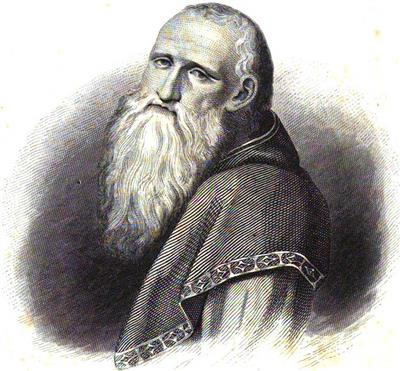
Biography
The results were, nonetheless, among the most admired paintings in northern Italy for three centuries. According to the theorist Lomazzo, Luini likely owned Leonardo's cartoon of The Virgin and Child with Saint Anne, now in the National Gallery, London. His "Christ Teaching" (c. 1520[4]), also in the National Gallery, was once attributed to Leonardo himself; scholars now understand it as a realisation of a design Leonardo had prepared for Isabella d'Este between 1504 and 1506. His Salome panel at the Uffizi (51 x 58 cm) shows Herod's daughter gently averting her eyes from the Baptist's head on a dish: the calm decorum that was both his limitation and his particular strength.
His career was built largely on fresco. The first documented work dates from 1512[4] at the Abbey of Chiaravalle; the major cycle at the Corpus Domini chapel in San Giorgio al Palazzo followed in 1516. Between 1518 and 1520 he painted large narrative frescoes for Santa Maria della Pace, now in the Pinacoteca di Brera. The 1520s brought extensive programmes at San Maurizio in Milan, the Sanctuary of the Beata Vergine dei Miracoli at Saronno, and Santa Maria degli Angeli in Lugano.
Cardinal Federico Borromeo, founder of the Pinacoteca Ambrosiana, was among his most prominent admirers. Luini died in 1532[4].html","used_for":"museum holdings"}">[12]","author":null,"year":null,"publisher":null,"type":"wikipedia","url":"https://en.wikipedia.org/wiki/Bernardino_Luini","used_for":"biography, birth dates, death dates, identifiers, movement attribution, nationality"}">[4]; his reputation reached its peak in the nineteenth century, when English collectors particularly prized his work.
Timeline
- 1480Born in Luino on Lake Maggiore.
- 1512First documented work at the Abbey of Chiaravalle.
- 1516Painted the major cycle at the Corpus Domini chapel in San Giorgio al Palazzo.
- 1520Painted large narrative frescoes for Santa Maria della Pace; these are now in the Pinacoteca di Brera.
- 1520Painted "Christ Teaching", now in the National Gallery, London.
- 1520Undertook extensive programmes at San Maurizio in Milan, the Sanctuary of the Beata Vergine dei Miracoli at Saronno, and Santa Maria degli Angeli in Lugano.
- 1532Died at 52.
Notable Works
Tap to view larger.
Where to See Bernardino Luini
2 museums worldwide.
-
 1 works
Liechtenstein Museum
Vienna, Austria
-
 1 works
National Gallery of Armenia
Yerevan, Armenia
Next stop
Browse the movements →
Every movement in the collection, from the Renaissance to Pop art.
Bernardino Luini prints
Hand-finished archival prints from Bernardino Luini's body of work.


Related Artists


Take Bernardino Luini home.
See all Bernardino Luini prints →Frequently Asked Questions
What is Bernardino Luini's most famous work?
Bernardino Luini[4].html","used_for":"museum holdings"}">[12], born around 1480[4], was a Lombard painter active primarily in Milan and the surrounding areas. While it is difficult to name one single "most famous" work, several of his pieces are particularly well known and representative of his style. Luini's large fresco cycles are significant. These include the cycle for the Chapel of Saint Joseph in Santa Maria della Pace (c. 1518-20, now in the Brera, Pinacoteca), the frescoes for the Casa Rabia (c. 1523, now in Washington and Berlin), and the extensive wall decoration of the Benedictine monastery of San Maurizio (1525-1530[4]). Also notable are his fresco programs in the sanctuary of the Beata Vergine dei Miracoli at Saronno and the church of Santa Maria degli Angeli in Lugano, both executed during the same five-year period. Panel paintings such as *The Executioner Presents John the Baptist’s Head to Herod* (Galleria degli Uffizi, Florence) are well known. The *Pieta*, now in the Museum of Fine Arts, Houston, has also been recognised as an important work. The composition addresses the presentation of Christ's body and blood.What should I know about Bernardino Luini's prints?
Bernardino Luini[4].html","used_for":"museum holdings"}">[12] (circa 1480[4]-1532[4]) was a north Italian painter from what is now Lombardy. He is known for paintings, not prints; information about his prints is scarce. He was a follower of Leonardo da Vinci, and his paintings often show a Leonardesque sweetness. To learn more about Italian prints of this period, it may be useful to broaden your search. Consider researching contemporary printmakers or focusing on the workshops active in Milan during Luini's lifetime. Milan was a significant artistic centre, and prints were being produced there. Also, museum catalogues can be a good source of information. Catalogues often include detailed entries on individual prints, discussing their historical context, technique, and significance. These resources might provide a clearer picture of printmaking during Luini's era and region.What style or movement did Bernardino Luini belong to?
Bernardino Luini[4].html","used_for":"museum holdings"}">[12] was a Milanese painter whose style was heavily influenced by Leonardo da Vinci; Leonardo had arrived in Milan by 1483. Luini adopted Leonardesque forms and compositions. Although Luini could not match Leonardo’s analysis of character, his imitations made him a popular painter in Milan. Luini's work also reflects the influence of Foppa, Bergognone, and Zenale. He may have travelled to Rome around 1507-08, and perhaps knew early works by Raphael. A stay in Venice has also been suggested. From 1512 until his death, Luini executed many frescoes and panel paintings in Milan and the regions of Lakes Como and Lugano. His popularity is confirmed by the importance of his commissions and the many contemporary copies of his works. Examples of his commissions are the pictorial cycle for the Corpus Domini chapel in the basilica of San Giorgio al Palazzo (documented to 1516), a fresco cycle for the Chapel of Saint Joseph in Santa Maria della Pace (circa 1518-20), and wall decorations for the Benedictine monastery of San Maurizio (1525 and 1530).What techniques or materials did Bernardino Luini use?
Luini's techniques involved the application of colour in multiple layers. When working on cloth, he often applied colour twice, using size as a binder for the initial layers. For the final layer, he employed white or egg as a binder. This multi-layered approach was necessary because cloth and sindone were porous and absorbent. Luini burnished the surface of the canvas after the first layer to prepare it for subsequent layers. This process involved polishing the surface with a tooth or hard stone to smooth out any roughness. He then repainted the same areas, using a mordant or colour tempered with white or egg for the final coat. Luini sometimes used linseed oil as a paint binder. In some instances, he combined drying oils with egg, creating a mixed-media approach. He also used azurite, lead white, carbon black, red lacquer, and transparent verdigris.What was Bernardino Luini known for?
Bernardino Luini[4].html","used_for":"museum holdings"}">[12], born circa 1480[4]-85 in Luino, was a painter active in Milan and the areas around Lakes Como and Lugano. His career extended from 1512 until his death. Although details of his early life remain scarce, his work shows the impact of Foppa, Bergognone, and Zenale. Luini adopted Leonardesque styles and compositions, influenced by Bramantino and Solario. Historical accounts suggest he possibly owned Leonardo da Vinci's cartoon of *The Virgin and Child with Saint Anne*. He may have visited Rome around 1507-08 and Venice, though this is debated. His earliest works include a *Madonna and Child with Saints* (Musée Jacquemart-André, Paris) and a fresco at Geranzano. His first documented painting is a fresco from 1512 in the Abbey of Chiaravalle. Other Milanese works include fresco cycles for the Corpus Domini chapel in San Giorgio al Palazzo (1516), the Chapel of Saint Joseph in Santa Maria della Pace (1518-20), and the Casa Rabia (circa 1523). He also completed wall decorations for the Benedictine monastery of San Maurizio (1525-1530[4]), the sanctuary of the Beata Vergine dei Miracoli at Saronno, and the church of Santa Maria degli Angeli in Lugano. Luini's religious paintings were esteemed in Milan, particularly by Cardinal Federico Borromeo.When did Bernardino Luini live and work?
Bernardino Luini[4].html","used_for":"museum holdings"}">[12] was probably born in Luino around 1480[4]-1485. He died in or before 1532[4]. From 1512 until his death, Luini completed many frescoes and panel paintings in Milan and around Lakes Como and Lugano. His paintings show the influence of Foppa, Bergognone, and Zenale. He also adopted elements from Bramantino, Solario, and Leonardo da Vinci. According to a reference, Luini may have owned Leonardo’s cartoon of *The Virgin and Child with Saint Anne*. Luini is recorded in Rome in 1521. Some believe he travelled there around 1507-08, where he saw early works by Raphael. Others have argued for a period in Venice. Two paintings dated 1507 have been considered examples of Luini’s early style. These are *Madonna and Child with Saints* (Musée Jacquemart-André, Paris) and a fresco in the church of the Beata Vergine del Soccorso at Geranzano. The latter is more generally accepted as his work. His first documented painting is a fresco of 1512 in the Abbey of Chiaravalle. Between 1525 and 1530, Luini decorated the Benedictine monastery of San Maurizio. During this time, he also worked at the sanctuary of the Beata Vergine dei Miracoli at Saronno and the church of Santa Maria degli Angeli in Lugano.Where can I see Bernardino Luini's work?
Bernardino Luini[4].html","used_for":"museum holdings"}">[12]'s paintings can be found in several European museums. In Florence, the Galleria degli Uffizi holds his painting, *The Executioner Presents John the Baptist’s Head to Herod*. In Milan, the Pinacoteca di Brera has examples of his work. Other museums with paintings by Luini include: the Musée Fesch (Ajaccio, Corsica), The Baltimore Museum of Art, Staatliche Museen (Berlin, East), Staatliche Museen (Berlin, West), Barber Institute of Fine Arts, University of Birmingham, Museum of Fine Arts (Boston), Musée des Beaux-Arts (Caen), Fogg Art Museum, Harvard University (Cambridge, Massachusetts), Musée Condé (Chantilly), Devonshire Collection (Chatsworth, Derbyshire), Musée des Beaux-Arts (Cherbourg), The Art Institute of Chicago, The Royal Museum of Fine Arts (Copenhagen), The Detroit Institute of Arts, Collection Mrs. Derek Schreiber (Dorking, Surrey), and Staatliche Kunstsammlungen (Dresden).Where was Bernardino Luini from?
Bernardino Luini[4].html","used_for":"museum holdings"}">[12] was likely from Luino, a town near Lake Maggiore in the Lombardy region of northern Italy. It is estimated he was born there around 1480[4]-1485. Active primarily in Milan and the surrounding areas, including Lakes Como and Lugano, Luini produced many frescoes and panel paintings. While details of his early life and training remain scarce, his art shows the influence of painters such as Foppa, Bergognone, and Zenale. He also adopted elements from Bramantino, Solario, and Leonardo da Vinci, particularly Leonardesque figures and compositions. Luini's presence in Rome is documented in 1521, and some believe he travelled there around 1507-1508[4]. This trip may have allowed him to study early works by Raphael. A period in Venice has also been suggested by some scholars. His earliest known works include a fresco at Geranzano, signed "BAZERNARDINO DE [V]JAGIS", and a Madonna and Child with Saints signed "BERNARDINUS MEDIOLANENSIS". The former is generally accepted as his work, while the attribution of the latter has been debated.Who did Bernardino Luini influence?
Bernardino Luini[4].html","used_for":"museum holdings"}">[12] (c. 1480[4]-85 to 1532[4]) was part of the Milanese group that included Ambrogio de’ Predis and Bernardino de’ Conti. His work shows the influence of Foppa, Bergognone, and Zenale. Luini adopted Leonardesque styles and compositions, and he may have owned Leonardo da Vinci’s cartoon of *The Virgin and Child with Saint Anne*. Luini’s religious works were prized in Milan during the later sixteenth century, especially by Archbishop Cardinal Federico Borromeo, founder of the Pinacoteca Ambrosiana. His popularity is confirmed by the many contemporary copies of his paintings. Although Luini could not match Leonardo’s analysis of character, his imitations of Leonardo’s work made him one of the most popular Milanese painters of his time.Who influenced Bernardino Luini?
Bernardino Luini[4].html","used_for":"museum holdings"}">[12] (c. 1480[4]-85 to 1532[4]) was an Italian painter active in Milan and the surrounding areas. The precise details of his early life and training remain uncertain; however, his artistic style shows the influence of several artists. Foppa, Bergognone, and Zenale are considered formative influences. Luini also adopted elements from Bramantino and Solario. Leonardo da Vinci had a significant impact, with Luini adopting Leonardesque compositions. Some scholars suggest Luini owned Leonardo’s cartoon of *The Virgin and Child with Saint Anne*. Luini’s paintings of sacred subjects have been connected to the ecclesiastic reform movement based at the Augustinian convent of Santa Marta in Milan during the 1510s. His religious works were highly prized in Milan during the later sixteenth century, especially by Archbishop Cardinal Federico Borromeo.Who was Bernardino Luini?
Bernardino Luini[4].html","used_for":"museum holdings"}">[12] (c. 1480[4]-1532[4]) was a north Italian painter, active in Milan and the surrounding areas. Art historians consider him among the foremost members of the Leonardeschi: artists who followed Leonardo da Vinci. His early training is unclear. Some scholars suggest he trained with Stefano Scotto, others with Ambrogio Bergognone. His early style suggests the influence of Vincenzo Foppa and Bramantino. Around 1509, after Leonardo's return to Milan, Luini adopted elements of Leonardo's style. He softened his colours, used sfumato (smoky shading), and adopted Leonardesque figure types. Luini's paintings include both fresco cycles and oil on panel. Noteworthy works include the frescoes in the Villa Pelucca (now in the Brera, Milan), and the frescoes in Santa Maria dei Miracoli in Saronno. Other significant paintings are the altarpiece at Legnano, and "Christ among the Doctors" at the National Gallery, London. Although highly regarded in his time, Luini's reputation declined somewhat in later centuries. Some critics considered him an imitator of Leonardo, lacking originality. More recent scholarship recognises his individual qualities: his narrative skill, his decorative sense, and his ability to adapt Leonardo's style to Lombard taste. He had several sons who were also painters.
Sources
Editorial draws on the following primary and tertiary references for Bernardino Luini.
- [1] museum Liechtenstein Museum Used for: museum holdings.
- [2] museum National Gallery of Armenia Used for: museum holdings.
- [3] academic The Editors of Encyclopaedia Britannica, Bernardino Luini Used for: biography.
- [4] wikipedia Wikipedia: Bernardino Luini Used for: biography, birth dates, death dates, identifiers, movement attribution, nationality.
- [5] book Beard, Lee, 1973- author, Butler, Adam, author; Van Cleave, Claire, author; Fortenberry, Diane, author; Stirling, Susan, author, Beard, Lee, 1973- author, Butler, Adam, author; Van Cleave, Claire, author; Fortenberry, Diane, author; Stirling, Susan, author - The Art Book_ New Edition, Mini Format Used for: biography.
- [6] book Museum of Fine Arts, Houston, Italian paintings XIV-XVI centuries in the Museum of Fine Arts, Houston Used for: biography.
- [7] book Masterpieces of western art : a history of art in 900 individual studies from the Gothic to the present day Used for: biography.
- [8] book Cuttler, Charles D, Northern painting from Pucelle to Bruegel: fourteenth, fifteenth, and sixteenth centuries Used for: stylistic analysis.
- [9] book Charles D. Cuttler, Northern Painting From Pucelle to Bruegel Fourteenth, Fifteenth, and Sixteenth Centuries Used for: stylistic analysis.
- [10] book Snyder, James, 1928-1990, Northern Renaissance art : painting, sculpture, the graphic arts from 1350 to 1575 Used for: stylistic analysis.
- [11] book Givens, Jean A.,Reeds, Karen M.,Touwaide, Alain., Visualizing Medieval Medicine and Natural History, 1200–1550 Used for: biography.
- [12] museum Bernardino Luini Used for: museum holdings.
- [13] museum Bernardino Luini (about 1480 - 1532) Used for: biography.
- [14] museum Luini, Bernardino - Colección - Museo Nacional del Prado Used for: museum holdings.
- [15] museum Salomè di Bernardino Luini Used for: notable works.
Editorial overseen by Solis Prints. Sources verified 2026-09-22. Click a source for details, or hover over [N] in the page above to preview.
Editorial standardsMethodologyCorrectionsAI disclosureAbout the editorial team