



Benjamin Brown
- landscape painting
Benjamin Brown arrived in Pasadena in 1896[1] with a solid academic formation: training at the St. Louis School of Fine Arts under Paul Harney and John Hemming Fry, followed by the Académie Julian in Paris in 1890 under Jean-Paul Laurens and Benjamin-Constant. He had spent his earlier career in portraiture and still life. California changed all that. Within a decade he had become, in the words of a contemporary account, 'famous for his paintings of poppies.'
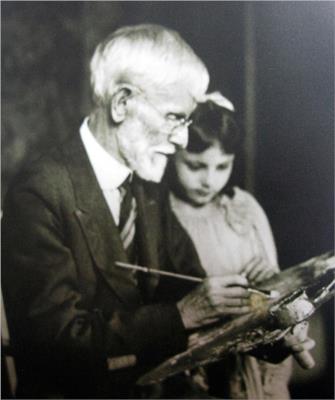
Biography
His first Pasadena exhibition, held at the Hotel Green, sold nothing. The lean years followed. By 1905[1] he had a bronze medal from the Portland Expo and a reputation for field and mountain landscapes that no one had built in Pasadena before him; he was among the first artists to paint seriously in the area. He took to signing his name on canvases with 'California' written beneath it, a pointed gesture toward a market that still treated New York as the only valid address.
Brown was also a printmaker. In 1914[1] he cut his first etchings and co-founded the Print Makers of Los Angeles with his brother Howell; a bronze medal for etching followed at the Panama Pacific International Exposition in San Diego in 1915. He had three solo exhibitions at the Los Angeles County Museum of Art between 1915 and 1918, and in 1932 competed in the painting event at the Summer Olympics in Los Angeles, an art competition that no longer exists. His work is held by the Smithsonian Institution, the Library of Congress, and the Oakland Museum of California. He died in Pasadena on 19 January 1942[1].
Timeline
- 1865Born in the United States.
- 1890Studied at the Académie Julian in Paris under Jean-Paul Laurens and Benjamin-Constant.
- 1896Arrived in Pasadena, California.
- 1905Won a bronze medal at the Portland Expo for his field and mountain paintings.
- 1914Created his first etchings and co-founded the Print Makers of Los Angeles with his brother Howell.
- 1915Received a bronze medal for etching at the Panama Pacific International Exposition in San Diego.
- 1915Held the first of three solo exhibitions at the Los Angeles County Museum of Art; the others occurred by 1918.
- 1932Competed in the painting event at the Summer Olympics in Los Angeles.
- 1942Died in Pasadena, California, on 19 January, aged 76.
Notable Works
Tap to view larger.
Next stop
Browse the movements →
Every movement in the collection, from the Renaissance to Pop art.
Related Artists



Frequently Asked Questions
What is Benjamin Brown known for?
Benjamin Brown is known for his paintings of poppies. He also gained a reputation for his field and mountain paintings.What is Benjamin Brown's most famous work?
Benjamin Brown (1865[1]-1942[1]) was an American[1] Impressionist painter, known for depictions of the California countryside. Although he produced a substantial body of work during his career, no single piece has achieved singular fame above all others. Brown studied at the Académie Julian in Paris during the 1890s. He then returned to the United States, settling in Pasadena, California, in 1896[1]. He became a prominent figure in the Southern California art scene. Brown was a founding member of the California Art Club, and he served as its president for several years. His paintings often feature eucalyptus groves, rolling hills, and blossoming trees, rendered in a style that blends Impressionistic techniques with a distinctly Californian light and atmosphere. His work captured the beauty of the region and contributed to the development of a unique artistic identity for Southern California. Brown's paintings are held in many public and private collections, including the Los Angeles County Museum of Art and the Laguna Art Museum.What should I know about Benjamin Brown's prints?
Benjamin Brown prints are relatively scarce. While he experimented with etching and lithography, most reproductions of his work are photographs of his paintings, often printed in sepia. The English Picture Publishing Co. issued signed sepia prints in 1877[1], including *The English Boy* and *Romeo and Juliet*. Later, in 1914, the Medici Society released a colour print of *Christ Washing St Peter’s Feet*. These, however, were considered poor-quality photographic reproductions. An exception is the set of three etchings of Brown's paintings by his pupil George Wooliscroft Rhead. These include *The Dream of Sardanopolus*, after Brown’s watercolour version of a Byron poem, and two designs for the Manchester Town Hall frescos: *Crabtree making the first observation of the traces of Venus* and *The Building of Manchester by the Romans*. These were large, competent reproductive etchings printed in sepia ink on Japan paper, signed by both Brown and Rhead. Brown was more successful as a book illustrator.What style or movement did Benjamin Brown belong to?
Benjamin Brown's work can be categorised within the broad tradition of painting. Style emerges from an artist's individual interpretation and handling of their subject matter, with personality influencing choices from colour to realism. Within painting, artists may explore similar ideas but arrive at unique conclusions. Style is reflected in how an artist interprets form; a realistic painting makes a different statement from one where forms are exaggerated. Some artists apply stylisation to shapes, simplifying or distorting them to explore geometry or make a conceptual statement. Even a seemingly simple subject like trees can be rendered in many ways, from realistic depictions capturing every leaf to ultra-simplified forms reduced to a few smears of paint. The key is often economy of information, paying attention to the outer contour and dividing the structure into patterns of light and dark.What techniques or materials did Benjamin Brown use?
Benjamin Brown (1865[1]-1942[1]) was an American[1] Impressionist painter known for depictions of California. He employed techniques typical of the style, such as visible brushstrokes and attention to the effects of light. Brown studied at the Académie Julian in Paris during the 1890s. There, he would have been trained in academic painting methods. He adapted these to an outdoor practice, influenced by French Impressionism. Brown often painted en plein air, directly from nature. This approach allowed him to capture the immediate qualities of light and atmosphere. Brown worked primarily in oils. He built up surfaces with layers of paint. These layers created texture and depth. His subject matter included scenes of the California coast, eucalyptus groves, and the Sierra Nevada mountains. Brown's style is characterised by a soft, diffused light and a harmonious colour palette. He aimed to convey the beauty and serenity of the California environment.What was Benjamin Brown known for?
Benjamin Brown (1865[1]-1942[1]) was an American[1] Impressionist painter, known for depictions of the Southern California landscape. He moved to Pasadena, California, in 1896[1], establishing a studio there. Brown became one of the region's most successful and prolific artists. Brown's early artistic training occurred at the St Louis School of Fine Arts. Later, he studied at the Académie Julian in Paris. His style blends academic training with Impressionistic colour and light. He frequently painted eucalyptus groves, orange orchards, and scenes of the Sierra Nevada mountains. Brown was a member of several art organisations, including the California Art Club, which he helped found in 1909. He exhibited widely during his career, including at the Panama-Pacific International Exposition in San Francisco in 1915. His work captured the beauty of the California environment, contributing to the image of the state as a sunny, Eden-like destination. Today, his paintings are held in many public and private collections.When did Benjamin Brown live and work?
Benjamin Brown (1865[1]-1942[1]) was an American[1] Impressionist painter. He is best known for depictions of the Southern Californian landscape. Born in Marion, Arkansas, Brown moved to Pasadena, California, in 1886[1]. He initially worked as a commercial artist. He studied at the St Louis School of Fine Art in 1888 and later at the Académie Julian in Paris during the 1890s. Upon his return to California, Brown became a fixture in the local art scene. He taught at the Stickney Memorial School of Art in Pasadena. He also became president of the California Art Club. Brown exhibited widely, including at the Panama-California Exposition in San Diego (1915) and the Los Angeles County Museum of Art. Brown's style is characterised by its loose brushwork and emphasis on light and atmosphere. He captured the beauty of the Californian countryside. His work provides a view into the early 20th-century aesthetic of the American West.Where can I see Benjamin Brown's work?
Benjamin Brown's work can be viewed in several museums. In the United States, these include the Los Angeles County Museum of Art (LACMA); the Metropolitan Museum of Art, New York; the Minneapolis Institute of Arts; the Museum of Modern Art, New York; the Virginia Museum of Fine Arts, Richmond; the Wolfsonian at Florida International University, Miami Beach; the Yale University Art Gallery, New Haven; the Philadelphia Museum of Art; the Carnegie Museum of Art, Pittsburgh; the Hirshhorn Museum and Sculpture Garden, Washington DC; and the National Gallery of Art, Washington DC. In the UK, his work can be seen at the Bakelite Museum, Williton; the Brighton Museum & Art Gallery; the Geffrye Museum, London; the Manchester Art Gallery; the National Museums of Scotland, Royal Museum, Edinburgh; the Victoria & Albert Museum, London; the Maidstone Museum and Art Gallery; the Laing Art Gallery, Newcastle upon Tyne; the Sheffield City Art Galleries, Graves Art Gallery; and the York City Art Gallery. There is also work at the Royal Ontario Museum in Toronto.Where was Benjamin Brown from?
Benjamin Brown was an American[1] Impressionist painter. He was born in Marion, Arkansas, on 14 July 1865[1]. Brown's family relocated to Kansas in his youth. He began his art training at the St. Louis School of Fine Art, and continued at the Académie Julian in Paris. He studied with Jean-Paul Laurens and Benjamin Constant, among others. After his time in Paris, Brown moved to Pasadena, California, in 1896[1]. He became a prominent figure in the California art scene. He is particularly known for his paintings of the California countryside; his style captured the light and atmosphere of the region. Brown was an active member of several art organisations, including the California Art Club, and he exhibited his work widely. He died in Pasadena on 5 January 1942[1].Who influenced Benjamin Brown?
Benjamin Brown (1865[1]-1942[1]) was an American[1] Impressionist painter, known for depictions of the California countryside. Brown was born in Marion, Arkansas, and his family relocated to Kansas in 1874[1]. He studied at the St. Louis School of Fine Art, then travelled to Paris in 1890. In Paris, Brown attended the Académie Julian, where he studied with Jean-Joseph Benjamin-Constant and Jules Lefebvre. These instructors were academic painters, but Brown soon moved toward Impressionism. He was particularly influenced by the work of Claude Monet. Brown's colour palette became lighter, and his brushstrokes looser, after his exposure to Impressionism. Brown returned to the United States in 1896, settling in Pasadena, California. He became a prominent figure in the California art scene, helping to found the California Art Club. Brown continued to paint in an Impressionistic style, often depicting scenes of the Sierra Nevada mountains and the California coast. He adapted Impressionism to the specific qualities of the California light and environment.Who was Benjamin Brown?
Benjamin Brown (1865[1]-1942[1]) was an American[1] Impressionist painter, known for depictions of the Southern Californian countryside. Born in Marion, Arkansas, he moved to Pasadena, California, in 1886[1]. Brown studied at the St. Louis School of Fine Arts, then in Paris at the Académie Julian. He returned to the United States and settled in California, where he became a fixture of the local art scene. He maintained studios in both Los Angeles and Pasadena. Brown helped found the California Art Club in 1909. He served as its president for several years. His work received recognition, including a bronze medal at the 1915 Panama-California Exposition in San Diego. He exhibited widely during his career, including shows at the Art Institute of Chicago and the National Academy of Design. His paintings often feature eucalyptus groves, orange orchards, and the rolling hills of the region. Brown's style is characterised by its use of light and colour to capture the atmosphere of the Californian landscape. He is considered an important figure in the development of Californian Impressionism.Why are Benjamin Brown's works important today?
Benjamin Brown, born in Calais in 1821, is significant for his association with the Pre-Raphaelite Brotherhood, although he never formally joined it. He was an advisor to the group and later adopted their detailed style and focus on contemporary subjects. Brown's prints are relatively scarce, with most being reproductions of his paintings. His early work included contributions to the Pre-Raphaelite journal *The Germ*, where he published an etching, a sonnet, and an essay. Despite Gambart buying the copyright to his painting *Work*, it was never engraved. Later, the Medici Society issued a colour print of his religious painting *Christ Washing St Peter’s Feet*. George Wooliscroft Rhead, a student of Brown, created three etchings after Brown's work, including *The Dream of Sardanopolus* and two designs for the Manchester Town Hall frescos. Brown also worked on murals for the Manchester Town Hall until his death in 1893[1]. His importance lies in his connection to the Pre-Raphaelites and his contribution to book illustration.
Sources
Editorial draws on the following primary and tertiary references for Benjamin Brown.
- [1] wikipedia Wikipedia: Benjamin Brown Used for: biography, birth dates, death dates, identifiers, movement attribution, nationality.
- [2] book Henry G. Abbott, Abbott's American Watchmaker Used for: biography.
- [3] book guggenheim-robertmangold00mang Used for: biography, stylistic analysis.
- [4] book Engen, Rodney K, Pre-Raphaelite prints : the graphic art of Millais, Holman Hunt, Rossetti and their followers Used for: biography.
- [5] book Chandler, Robert J.; Tyler, Ron; Moore, Shirley Ann Wilson, San Francisco Lithographer Used for: biography.
- [6] book Landauer, Susan, The not-so-still life : a century of California painting and sculpture Used for: biography.
Editorial overseen by Solis Prints. Sources verified 2026-10-15. Click a source for details, or hover over [N] in the page above to preview.
Editorial standardsMethodologyCorrectionsAI disclosureAbout the editorial team