



Antonietta Brandeis
- landscape painting
In 1877[1] Antonietta Brandeis exhibited at a show in Budapest under the name "Antonio Brandeis." Her biographer recorded that she was not trying to conceal her identity; she was annoyed at being praised specifically as a female painter rather than evaluated on the painting alone. The pseudonym was a protest against the condescension built into the compliment.
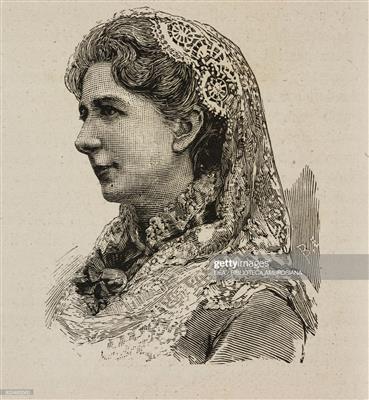
Biography
Brandeis was born in Miskovice, Bohemia, in 1848[1]. After her mother remarried a Venetian nobleman, the family moved to Venice, where she enrolled at the Accademia di Belle Arti in 1867[1] as one of the first women to receive formal academic training in Italy. She studied landscape under Domenico Bresolin, won prizes in perspective, life drawing, and art history, and first exhibited publicly in 1870 while still a student.
Her commercial success rested on the Grand Tour. British, German, and American travellers arriving in Italy wanted precisely rendered views of the landmarks they had visited: the Bridge of Sighs, the Riva degli Schiavoni, the Ponte Vecchio. Brandeis supplied these with exceptional luminosity, working in oils on board in small portable formats that sold readily. She revisited and replicated her most successful compositions across her career. In 2021, Venice: A View of the Piazza San Marco sold at Sotheby's New York for $441,000, her auction record.
She married a Venetian knight, Antonio Zamboni, in 1897[1] and reduced her public exhibitions. After his death in 1909 she relocated to Florence, where she continued painting and worked as a copyist at the Uffizi. She died in Florence on 20 March 1926[1] and bequeathed her sketchbooks and a substantial group of oils to the Istituto degli Innocenti.
Timeline
- 1848Born in Miskovice, Bohemia.
- 1867Enrolled at the Accademia di Belle Arti in Venice, at 19, as one of the first women to receive formal academic training in Italy.
- 1870Exhibited publicly for the first time while still a student in Venice.
- 1877Exhibited at a show in Budapest under the pseudonym "Antonio Brandeis".
- 1897Married Antonio Zamboni, a Venetian knight.
- 1909Relocated to Florence after the death of her husband.
- 1926Died in Florence on 20 March, bequeathing her sketchbooks and a substantial group of oils to the Istituto degli Innocenti.
Notable Works
Tap to view larger.
Next stop
Browse the movements →
Every movement in the collection, from the Renaissance to Pop art.
Related Artists




Frequently Asked Questions
What is Antonietta Brandeis known for?
Antonietta Brandeis is known for precisely rendered views of Italian[1] landmarks that were popular with British, German, and American travellers on the Grand Tour. She supplied these views with exceptional luminosity, working in oils on board in small, portable formats. She would often revisit and replicate her most successful compositions.What is Antonietta Brandeis's most famous work?
It is difficult to identify one single "most famous" work by Antonietta Brandeis, as her popularity has fluctuated since her death. She was very productive, and her paintings are similar in subject matter and style; this makes it harder to single out one particular piece. Brandeis is best known for her views of Venice. These paintings often depict scenes along the canals, such as the Grand Canal, or landmarks like the Doge's Palace. She also painted views of other Italian[1] cities, including Florence. Her paintings were popular with tourists during her lifetime, and she produced many of them for sale to visitors. Brandeis's style is characterised by its attention to detail and realistic depiction of architecture. She often used bright colours and a high level of finish, which made her work appealing to a commercial market. While she exhibited her works in exhibitions, much of her output was sold privately through dealers. This makes it difficult to track the locations and sales of individual paintings today.What should I know about Antonietta Brandeis's prints?
Antonietta Brandeis (1848[1]-1926[1]) was a Czech-Italian[1] painter, mainly of genre scenes and cityscapes. Although little specific information about her prints is available, some general guidelines about fine art prints may be useful. When considering a fine art print, determine whether it is a reproduction or an original print. A reproduction is a copy of an existing artwork (for example, a painting). An original print is created as a print, using techniques such as woodcut, etching, or aquatint. If you are purchasing a limited edition print, check the numbering. The standard method is to number all prints, such as 35/100. The larger number is the total number of prints in the edition; the smaller number is the sequential number of that particular print. Some artists hold back a percentage as artist's proofs, marking them "AP". It is common to sign and number prints in pencil. Research the market to see where the artwork fits in, and examine print quality.What style or movement did Antonietta Brandeis belong to?
Antonietta Brandeis (1848[1]-1926[1]) is best known for her cityscapes, particularly those depicting Venice. Although she is not strongly associated with one particular movement, some scholars link her work to late-period Impressionism because of her interest in light and atmosphere. However, other art historians place Brandeis within the tradition of academic painting, or possibly the Macchiaioli movement. The Macchiaioli were Italian[1] painters active in Tuscany during the second half of the 19th century; they rejected the academic conventions of the art academies, and their style has points in common with Impressionism. Brandeis's paintings often feature precise architectural details and a clear, bright palette. She captured the atmosphere of Venice and other European cities, producing works that were popular with tourists and collectors. Her style blends elements of realism with an interest in capturing the effects of light and colour, aligning her loosely with the broader European landscape tradition of the late 19th century.What techniques or materials did Antonietta Brandeis use?
Antonietta Brandeis (1848[1]-1926[1]) was a Prague-born Italian[1] painter, mainly of genre scenes and city views. She is known for her detailed paintings of Venice. Brandeis worked primarily in oil paint on canvas. Her technique involved careful observation and precise brushwork. She built up layers of colour to create depth and realism in her depictions of Venetian architecture and daily life. She paid close attention to detail, accurately rendering the textures of stone, water, and fabric. Her training at the Academy of Fine Arts in Venice provided her with a solid foundation in traditional painting methods. She often painted en plein air, capturing the light and atmosphere of Venice directly. Her paintings display a mastery of perspective and composition, drawing the viewer into the scene. She also produced smaller works, often for the tourist market. These were typically painted on panel.What was Antonietta Brandeis known for?
Antonietta Brandeis (1848[1]-1926[1]) was a Czech-Italian[1] painter, known for detailed cityscapes of Venice and other Italian locations. She also produced genre scenes and portraits. Brandeis's paintings often feature precise architectural details and a bright palette, appealing to tourists and collectors. After studies with private tutors, Brandeis enrolled at the Accademia di Belle Arti in Venice in 1867[1], an unusual step for a woman at the time. Venice, with its unique cityscape and thriving art market, provided ample subject matter for her work. She capitalised on the demand for vedute (view paintings), catering to foreign visitors who desired picturesque souvenirs of their travels. Brandeis's skill in capturing the atmosphere and architectural character of Venice made her successful during her lifetime.When did Antonietta Brandeis live and work?
Antonietta Brandeis (1848[1]-1926[1]) was a painter, primarily of genre scenes and cityscapes. She was born in Austria, but she spent much of her career in Venice. Brandeis's early life is somewhat obscure. It is believed she studied art in Prague before moving to Venice in 1867[1]. There, she enrolled at the Accademia di Belle Arti. She trained under several teachers, including Michelangelo Grigoletti. Brandeis's paintings often feature detailed depictions of Venetian life and architecture. She capitalised on the tourist market, producing many works for sale to visitors. These paintings are characterised by their bright colours and attention to detail. She also created paintings of interiors and portraits. Brandeis exhibited her work in various venues, including the Società Veneta Promotrice di Belle Arti. She achieved considerable commercial success during her lifetime. Her paintings remain popular with collectors today. She died in Venice in 1926.Where can I see Antonietta Brandeis's work?
Antonietta Brandeis's work can be viewed in several museums. These include institutions in both the United States and Europe. In the US, you can find her paintings at the Metropolitan Museum of Art in New York, the Los Angeles County Museum of Art (LACMA), the Minneapolis Institute of Arts, the Charles Hosmer Morse Museum of American Art in Winter Park, Florida, and the Museum of Fine Arts, Boston. In Canada, her work is held at the Royal Ontario Museum in Toronto and the Art Gallery of Ontario. European locations include the Museo Egizio in Turin, the Museo della Sindone (Holy Shroud Museum) also in Turin, and the Rijksmuseum in Amsterdam. These museums all hold collections that may include works by Brandeis; contact them for specific details about current exhibitions.Where was Antonietta Brandeis from?
Antonietta Brandeis was born in 1848[1] in Miskovice, Bohemia, which is now part of the Czech Republic. Her father, a businessman, died when she was young. Subsequently, she moved with her mother to Venice. Brandeis received artistic training at the Academy of Fine Arts in Venice. She studied under several teachers, including Michelangelo Grigoletti. She is known for her detailed paintings, often depicting Venetian scenes. Although born in Bohemia, Brandeis spent much of her life in Venice, and she is considered part of the Venetian artistic community. She died in Venice in 1926[1]. Her work provides a view into the city's appearance during the late 19th and early 20th centuries.Who did Antonietta Brandeis influence?
It is difficult to identify specific individuals who were directly influenced by Antonietta Brandeis. However, it is possible to discuss artistic influence in a broader sense. Titian, for example, had a wide-ranging effect on artists. Many absorbed his style through direct contact with his paintings or indirectly through the work of other painters. Antoine Watteau, arguably the greatest artist of 18th-century France, encountered Titian's art in this way. Tintoretto claimed to be a student of Titian and aspired to combine Titian's colour with Michelangelo's drawing. Veronese was swayed by Titian's use of compositional elements, figure types, and colour. For later generations of artists, the paintings of Tintoretto and Veronese were sometimes the first point of contact with Titian. Annibale Carracci was also highly indebted to Titian and his followers. His Venus Adorned by the Graces displays stylistic and interpretive elements derived from Titian, such as the atmospheric setting, the figures' bodies, and the suggestive landscape.Who influenced Antonietta Brandeis?
Antonietta Brandeis (1848[1]-1926[1]) was an Italian[1] painter, born in what is now the Czech Republic. She moved to Venice in 1867[1] and trained at the Accademia di Belle Arti. Brandeis's work shows the influence of the Venetian cityscape painters of the eighteenth century, such as Canaletto and Guardi. These artists created detailed and picturesque views of Venice, often for wealthy foreign visitors. Brandeis adopted a similar approach, producing numerous small-scale paintings of Venetian scenes. These were popular with tourists and collectors. Her paintings also reflect the influence of the Macchiaioli school, a group of Italian painters active in Tuscany during the mid-19th century. The Macchiaioli reacted against the academic painting style of the time, favouring a more naturalistic and spontaneous approach. Brandeis's use of colour and light, and her attention to everyday details, suggest an awareness of their artistic innovations. She combined the traditions of Venetian vedute painting with aspects of plein-air naturalism.Who was Antonietta Brandeis?
Information regarding Antonietta Brandeis is scarce in the provided texts. The passages focus instead on Italian[1] painters such as Gaetano Previati (1852[1]-1920[1]) and Giovanni Segantini (1858-99). Previati, born in Ferrara, studied in Florence and at the Brera in Milan. His early artistic output included historical, patriotic, and Romantic themes. Later, from the 1880s, he created religious works; these culminated in Via Crucis (1901-2) and grand Symbolist triptychs after 1900. By 1890, he had been oriented towards Divisionism. Segantini studied at the Brera c. 1875-9. His career is usually divided into three periods, corresponding to his locations in the Swiss Alps: Brianza (1881-6); Savognin (1886-94); and Maloja (1894-9). He exhibited widely and became a member of the Vienna Secession in 1898. He died while working on the Triptych of Nature. A letter written by Mason Perkins mentions Antonio Vivarini, founder of the Murano school.
Sources
Editorial draws on the following primary and tertiary references for Antonietta Brandeis.
- [1] wikipedia Wikipedia: Antonietta Brandeis Used for: biography, birth dates, death dates, identifiers, movement attribution, nationality.
- [2] book guggenheim-annialbers00webe Used for: biography, stylistic analysis.
- [3] book Masterpieces of western art : a history of art in 900 individual studies from the Gothic to the present day Used for: biography.
- [4] book Bauhaus-Archiv Berlin Museum für Gestaltung, Stiftung Bauhaus Dessau, and Klassik Stiftung Weimar (editor), Modell Bauhaus_ A Conceptual Model. 1919-2009 Used for: biography.
- [5] book Bauhaus-Archiv Berlin Museum für Gestaltung, Stiftung Bauhaus Dessau, and Klassik Stiftung Weimar (editor), Modell Bauhaus_ A Conceptual Model. 1919-2009 Used for: biography.
- [6] book Post-impressionism : cross-currents in European painting Used for: biography.
- [7] book Post-impressionism : cross-currents in European painting Used for: biography.
Editorial overseen by Solis Prints. Sources verified 2026-08-30. Click a source for details, or hover over [N] in the page above to preview.
Editorial standardsMethodologyCorrectionsAI disclosureAbout the editorial team