



Anton Prinner
- Constructivism
Anton Prinner lived in Paris for over five decades, producing sculpture, engraving, and painting that resisted the dominant currents of the School of Paris. Born in Budapest in 1902[1], Prinner moved to Paris in the 1920s and remained there, working at the margins of the avant-garde without fully belonging to any single movement.
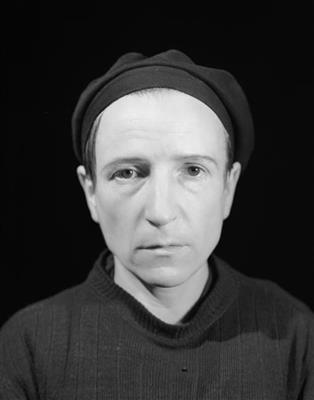
Biography
Prinner's sculptural work includes abstract forms in wood and stone influenced by African and Oceanian art. The carvings have a totemic quality: vertical, frontal, and stripped of naturalistic detail. The engravings demonstrate a command of the burin that connects to the European printmaking tradition while remaining formally independent.
During the Second World War, Prinner produced a hand-printed edition of the Song of Songs, combining engraved illustrations with hand-set text. The book is considered one of the finest artist's books of the wartime period.
Prinner exhibited in Paris galleries and was associated with several avant-garde circles without settling into any. Prinner died in Paris in 1983[1].
Timeline
- 1902Born in Budapest, Hungary
- 1920Moved to Paris
- 1940Produced hand-printed edition of the Song of Songs
- 1983Died in Paris
Notable Works
Tap to view larger.
Next stop
Browse the movements →
Every movement in the collection, from the Renaissance to Pop art.
Related Artists


Frequently Asked Questions
What is Anton Prinner known for?
Anton Prinner is known for sculpture, engraving, and painting that resisted the dominant currents of the School of Paris. His sculptural work includes abstract forms in wood and stone influenced by African and Oceanian art. During the Second World War, he produced a hand-printed edition of the Song of Songs, combining engraved illustrations with hand-set text, which is considered one of the finest artist's books of the wartime period.Who was Anton Prinner?
Anton Prinner was a sculptor, engraver, and painter who lived in Paris for over five decades. Born in Budapest in 1902[1], he moved to Paris in the 1920s. He worked at the margins of the avant-garde without fully belonging to any single movement.What was Anton Prinner's art style?
Prinner's sculptural work includes abstract forms in wood and stone influenced by African and Oceanian art. The carvings have a totemic quality: vertical, frontal, and stripped of naturalistic detail. His engravings demonstrate a command of the burin that connects to the European printmaking tradition while remaining formally independent.How did Anton Prinner die?
Anton Prinner died in 1983[1] at the age of 81.
Sources
Editorial draws on the following primary and tertiary references for Anton Prinner.
- [1] wikipedia Wikipedia: Anton Prinner Used for: biography, birth dates, death dates, identifiers, movement attribution, nationality.
- [2] book guggenheim-refigur00kren Used for: biography.
- [3] book Husslein-Arco, Agnes, editor; Koja, Stephan, editor; Law, Rebecca (Translator), translator; McInnes, Robert (Translator), translator; Somers, Nick, translator; Monet, Claude, 1840-1926. Paintings. Selections; Österreichische Galerie Belvedere, h Used for: biography.
- [4] book Masterpieces of western art : a history of art in 900 individual studies from the Gothic to the present day Used for: biography.
Editorial overseen by Solis Prints. Sources verified 2026-10-08. Click a source for details, or hover over [N] in the page above to preview.
Editorial standardsMethodologyCorrectionsAI disclosureAbout the editorial team