



Alexis Gritchenko
After Gritchenko left Russia following the revolution, Soviet authorities confiscated his remaining canvases and cut them into pieces for Vkhutemas students to practise on. His name was removed from art history. The destruction only underscores how significant his contribution had been: a painter, theorist, and one of the first artists to argue that Cubism and Byzantine icon painting were answering the same formal questions.
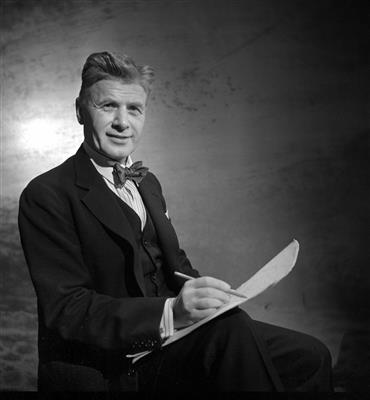
Biography
Born in Ukraine in 1883[1], he studied biology at universities in Kyiv and Moscow before turning to art. A brief stay in Paris in 1911[1] brought him into contact with André Lhote, Archipenko, and Le Fauconnier; a subsequent trip to Italy sharpened his thinking on the early Renaissance. He published two monographs pursuing his central thesis: On the Links of Russian[1] Painting with Byzantium and the West (1913) and The Russian Icon as an Art of Painting (1917). In 1919, with Aleksandr Shevchenko, he mounted the exhibition Colordynamos and Tekhtonic Primitivism in Moscow, declaring that only colour, composition, and texture interested them.
From 1919[1] to 1921 he lived in Istanbul, producing hundreds of watercolours. He then settled in France, where he became known for what scholars described as 'exotic streams of oriental colour', placing him in the lineage of Eastern colourists alongside Alexandra Exter and Sonia Delaunay. He exhibited at leading Parisian galleries, showed in Lviv in the 1930s, and held personal exhibitions in New York and Philadelphia. In 1963 he donated seventy works to the Ukrainian Institute of America in New York; they have since been transferred to Kyiv. He died in 1977[1], aged ninety-three.
Timeline
- 1883Born in Ukraine
- 1911Brief stay in Paris; met Lhote, Archipenko, and Le Fauconnier
- 1913Published 'On the Links of Russian Painting with Byzantium and the West'
- 1917Published 'The Russian Icon as an Art of Painting'
- 1919Exhibition 'Colordynamos and Tekhtonic Primitivism' with Shevchenko
- 1919Lived in Istanbul, produced hundreds of watercolours
- 1921Settled in France
- 1930Exhibited in Lviv
- 1963Donated seventy works to Ukrainian Institute of America
- 1977Died at age ninety-three
Notable Works
Tap to view larger.
Next stop
Browse the movements →
Every movement in the collection, from the Renaissance to Pop art.
Related Artists


Frequently Asked Questions
What is Alexis Gritchenko known for?
Alexis Gritchenko is known for his painting, theory, and writing on the connections between Cubism and Byzantine art. He is also known for his association with Eastern colourism, placing him alongside Alexandra Exter and Sonia Delaunay. After living in Istanbul, he became known for what scholars described as 'exotic streams of oriental colour'.Who was Alexis Gritchenko?
Alexis Gritchenko was a painter and theorist who argued that Cubism and Byzantine icon painting addressed similar formal questions. Born in Ukraine in 1883[1], he also published monographs on the links between Russian[1] painting, Byzantium, and the West. Soviet authorities later confiscated and destroyed his remaining canvases after he left Russia.How did Alexis Gritchenko die?
Alexis Gritchenko died in 1977[1] at the age of 94.
Sources
Editorial draws on the following primary and tertiary references for Alexis Gritchenko.
- [1] wikipedia Wikipedia: Alexis Gritchenko Used for: biography, birth dates, death dates, identifiers, movement attribution, nationality.
- [2] book guggenheim-futurismmodernfo00solo Used for: biography.
- [3] book guggenheim-guhe00solo Used for: biography.
- [4] book Yevgenia Petrova (editor), Origins of the Russian avant-garde_ celebrating the 300th anniversary of St. Petersburg_ the Walters Art Museum, Baltimore (13 February-25 May 2003), Fine Arts Museums of San Francisco (29 June-21 September 2003) Used for: biography.
Editorial overseen by Solis Prints. Sources verified 2026-10-14. Click a source for details, or hover over [N] in the page above to preview.
Editorial standardsMethodologyCorrectionsAI disclosureAbout the editorial team