



Albert Namatjira
- landscape painting
In 1957[1], Albert Namatjira became one of the first Aboriginal Australians to be granted full citizenship rights. Two years later, he was dead, having been convicted, imprisoned, and subjected to a public humiliation that cut short his health and career. The sequence of events that followed his 1957 citizenship stands as one of the more documented failures of Australian[1] welfare law: a bottle of rum left in his car was taken by another man who then killed an Aboriginal woman, and under the Welfare Ordinance 1953, Namatjira was held legally responsible. He served two months at Papunya Native Reserve before humanitarian intervention secured his early release. He died at Alice Springs on 8 August 1959[1], aged 57.
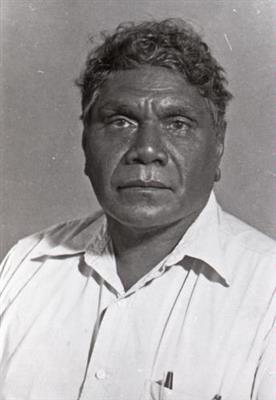
Biography
He had been painting for less than twenty-five years. Born at the Hermannsburg Lutheran Mission on 28 July 1902[1], a Western Arrernte man, Namatjira encountered the Melbourne watercolourist Rex Battarbee in 1934[1], and by 1936 had developed a technique of his own: large-scale watercolour landscapes that mapped the baked interior of central Australia with geological precision, depicting the ochre bluffs, ghost gums, and dry watercourses of his Country. His first solo exhibition in Melbourne in 1938 drew immediate public attention, and by 1944 he appeared in Who's Who in Australia. He received the Queen's Coronation Medal in 1953 and met Queen Elizabeth II in Canberra the following year.
The Hermannsburg School he inspired, a tradition of watercolour landscape produced by Western Arrernte artists, outlasted him by decades. He is estimated to have painted approximately 2,000 works in his lifetime. William Dargie's 1956[1] Archibald Prize-winning portrait of Namatjira was the first Archibald winner depicting an Aboriginal person. His great-grandson Vincent Namatjira won the same prize in 2020.
Timeline
- 1902Born at Hermannsburg Lutheran Mission, Australia
- 1934Encountered watercolourist Rex Battarbee
- 1936Developed unique watercolour landscape technique
- 1938First solo exhibition in Melbourne
- 1944Appeared in Who's Who in Australia
- 1953Received the Queen's Coronation Medal
- 1954Met Queen Elizabeth II in Canberra
- 1956William Dargie won Archibald Prize for Namatjira's portrait
- 1957Granted full Australian citizenship rights
- 1959Died in Alice Springs, Australia
Notable Works
Tap to view larger.
Next stop
Browse the movements →
Every movement in the collection, from the Renaissance to Pop art.
Related Artists



Frequently Asked Questions
What is Albert Namatjira known for?
Albert Namatjira is known for his watercolour depictions of the Australian[1] interior. His paintings mapped the baked interior of central Australia with geological precision, showing the ochre bluffs, ghost gums, and dry watercourses of his Country.What is Albert Namatjira's most famous work?
Albert Namatjira (1902[1]-1959[1]) was an Aboriginal artist, Western Arrernte speaker, and watercolour painter. Although it is difficult to name one single work as his 'most famous', Namatjira is celebrated for his many watercolour paintings depicting the Australian[1] outback. He is today considered one of Australia's most significant artists. Namatjira's paintings typically feature depictions of the natural environment around his home territory of Hermannsburg, near Alice Springs, Northern Territory. His style combines Western painting techniques with his own cultural perspective and deep connection to the land. He is known for his skill in capturing the colours and textures of the Australian desert, as well as his ability to convey a sense of depth and distance in his compositions. His relatives, including his great-granddaughter Joanne Napangardi Wheeler, continue to paint in similar styles, often depicting the same locations.What should I know about Albert Namatjira's prints?
Albert Namatjira (1902[1]-1959[1]) was an Aboriginal artist, famous for his watercolour paintings of the Australian[1] outback. He was born at Hermannsburg Mission, near Alice Springs. Namatjira began painting in a Western style after contact with the artist Rex Battarbee in the 1930s. His works often depict the landscapes of Central Australia, using a distinctive colour palette to capture the region's light and atmosphere. The paintings gained popularity during the 1940s and 1950s, and Namatjira became a household name in Australia. Prints of Namatjira's paintings made his art accessible to a wider audience. Commercially produced prints allowed people to own reproductions of his iconic images. These prints contributed to the popularisation of his art and the romantic vision of the Australian interior. It is worth noting that copyright issues have surrounded Namatjira's work. After his death, the copyright to his paintings was acquired by a company, which limited the Aboriginal community's ability to reproduce and profit from his art. This situation has generated considerable debate and legal challenges over the years.What style or movement did Albert Namatjira belong to?
Albert Namatjira (1902[1]-1959[1]) was an Australian[1] artist of the Arrernte people, known for his watercolour paintings. His work is often associated with the Hermannsburg School, an Australian movement that blended Western-style painting techniques with Indigenous perspectives. Namatjira developed a style that captured the distinctive colours and forms of the Australian outback. His paintings typically feature depictions of the MacDonnell Ranges, ghost gums, and desert landscapes, rendered with a strong sense of light and atmosphere. He employed techniques such as layering and glazing to create depth and texture in his watercolours. Although his style was representational, Namatjira's unique vision and connection to his subject matter set him apart. His art gained popularity during his lifetime, and he is recognised as a significant figure in Australian art history.What techniques or materials did Albert Namatjira use?
Albert Namatjira (1902[1]-1959[1]) was an Indigenous Australian[1] artist, known for his watercolour paintings. His great granddaughter, Joanne Napangardi Wheeler, born in 1969, continues the family tradition, using acrylic paint on linen with brushes and punu (sticks). She combines traditional techniques with personal historical narratives. Before using oil paints, J.M.W. Turner (1775-1851[1]) spent at least ten years as a watercolourist, developing techniques he later used in oils. In his earlier watercolours, transparent washes overlay the white paper, except where he reserved highlights. He mixed greens by overlaying washes of brown and blue, sometimes physically mixing with his fingers. Turner produced over 20,000 pencil sketches and watercolours. He utilised new application techniques and pigments in both media at about the same time. His early work in watercolour gave him an understanding of light-toned, absorbent surfaces, and honed his skills in the application of optical greens and blacks.What was Albert Namatjira known for?
Albert Namatjira (1902[1]-1959[1]) was an Arrernte artist known for his watercolour paintings of the Australian[1] outback. He is often cited as an icon of Aboriginal self-determination, and he became the first Aboriginal artist to achieve widespread celebrity. In 1934[1], Namatjira met Rex Battarbee, a Melbourne watercolourist, and this encounter is seen as important in changing cultural views and acknowledging Aboriginal art's modernity. Namatjira's watercolours, which depicted the baked interior of Australia, gained popularity. His work offered a new perspective on the Australian interior. Namatjira's art and story exist within the postcolonial ambivalence of cross-cultural exchange. He spent his final days in a government settlement west of Alice Springs. Though his life was marked by challenges, his artistic achievements opened doors for future generations of Aboriginal artists.When did Albert Namatjira live and work?
Albert Namatjira was an Indigenous Australian[1] artist, specifically of the Arrernte people. He was born in 1902[1] and died in 1959[1]. Namatjira is known for his watercolour paintings. He met Rex Battarbee, a Melbourne watercolourist, in 1934[1]. This meeting is considered important in the history of Australian art, as it helped to acknowledge the modernity of Indigenous art and its authority. Namatjira painted picturesque views. His great granddaughter, Joanne Napangardi Wheeler, born in 1969, is also a painter. She paints out of Tangentyere Artists, the Aboriginal-owned Art Centre in Alice Springs. Wheeler's paintings often depict her Country of Ntaria, Palm Valley, and the Hermannsburg Community. She combines Tjukurrpa (the Dreaming) with personal narratives.Where can I see Albert Namatjira's work?
To view paintings by Albert Namatjira, a good starting point is the Araluen Arts Centre in Alice Springs. The Araluen Art Centre's collection includes a number of works associated with the Western Desert art movement. Other institutions with relevant holdings include the National Gallery of Victoria in Melbourne, the Newcastle Art Gallery in New South Wales, and the Queensland Art Gallery and the Gallery of Modern Art (also in Brisbane). Additionally, many art centres throughout the Northern Territory support and promote Indigenous artists; these include the Aboriginal Art Association of Australia, ANKA (Arnhem, Northern and Kimberley Artists), and Desart (Association of Central Australian[1] Aboriginal Art and Craft Centres). Outstation Gallery in Darwin also works directly with art centres in the presentation and promotion of Indigenous art from the Tiwi Islands, Arnhem Land, the Western Desert, the Kimberley and Central and South Australia.Where was Albert Namatjira from?
Albert Namatjira was an Arrernte man from the Hermannsburg region of Australia. Hermannsburg is a community near Ntaria, also known as Palm Valley, west of Alice Springs in the Northern Territory. Namatjira spent his final days in a government settlement 240 kilometres west of Alice Springs. His paintings often depict the baked interior of Australia. Namatjira's artistic lineage continues through his great-granddaughter, Joanne Napangardi Wheeler, who paints out of Tangentyere Artists, an Aboriginal-owned art centre in Mparntwe/Alice Springs. Wheeler's work often focuses on her Country of Ntaria, Palm Valley, the Hermannsburg Community, Hermannsburg Mountain, and the Finke River. Namatjira's legacy is upheld by his descendants, who continue to create art inspired by their cultural heritage and the Australian[1] landscape.Who did Albert Namatjira influence?
Albert Namatjira's influence can be seen in the work of later Indigenous Australian[1] artists. His meeting with Rex Battarbee, a Melbourne watercolourist, in 1934[1] is regarded as important in changing cultural ideas and acknowledging Aboriginal art's modernity. Namatjira is seen as an icon of Aboriginal self-determination, and as the first Aboriginal artist celebrity. However, he also existed as a tragic figure, unsuccessfully straddling two worlds. His cross-cultural vision has been eclipsed by that of his contemporary, the Arrernte man Albert Namatjira. Twelve years after Namatjira's death, Geoffrey Bardon moved to Papunya. He went down in history as a central figure in the Western Desert/Papunya Tula painting movement for encouraging Aboriginal men to translate narratives onto boards for an outside audience. In the 1970s, traditional Aboriginal art began to be painted on canvases and exported. There was concern that the Dreaming would be weakened by sharing its stories in this way, but many artists created new permanent works.Who influenced Albert Namatjira?
The question of artistic influence on Albert Namatjira is complex. It is known that Namatjira gained technical skills and knowledge of Western painting techniques from the Australian[1] artist Rex Battarbee. Battarbee taught Namatjira watercolour painting, which became his signature medium. Namatjira learned about perspective, colour mixing, and composition from Battarbee, adapting these techniques to depict the Australian outback. However, Namatjira's artistic vision was also shaped by his own cultural background and connection to the land. His paintings reflect his deep understanding of the landscape, its colours, and its forms, interpreted through his own unique lens. While Battarbee provided the technical foundation, Namatjira's individual style and artistic expression were rooted in his Aboriginal heritage and his personal relationship with the environment he portrayed.Who was Albert Namatjira?
Albert Namatjira (1902[1]-1959[1]) was an Arrernte artist known for his watercolour paintings. He is often cited as an icon of Aboriginal self-determination, and as the first Aboriginal artist to achieve celebrity status. Namatjira's meeting with Rex Battarbee, a Melbourne watercolourist, in 1934[1] is now recognised as important in changing cultural ideas and in acknowledging Aboriginal art's modernity and authority of place. Namatjira's paintings depict the Australian[1] outback. His work gained popularity, but it was not until the 1970s that traditional Aboriginal art began to be painted on canvases and distributed internationally. Joanne Napangardi Wheeler, a Western Arrernte-speaking painter born in 1969, is Namatjira's great granddaughter. She aims to continue the artistic legacy of her family, painting her Country of Ntaria, Palm Valley, and the Hermannsburg Community.
Sources
Editorial draws on the following primary and tertiary references for Albert Namatjira.
- [1] wikipedia Wikipedia: Albert Namatjira Used for: biography, birth dates, death dates, identifiers, movement attribution, nationality.
- [2] book Charlotte Mullins, A Little History of Art Used for: biography.
- [3] book McLean, Ian; , Double Desire Used for: biography.
- [4] book downmagaz.net, downmagaz.net Used for: biography.
Editorial overseen by Solis Prints. Sources verified 2026-10-07. Click a source for details, or hover over [N] in the page above to preview.
Editorial standardsMethodologyCorrectionsAI disclosureAbout the editorial team