



Agnolo Bronzino
Agnolo di Cosimo, known as Bronzino, lived from 1503 to 1572. He was a pupil and adopted son of the Mannerist painter Pontormo. Bronzino spent much of his life as court painter to the Medici family in Florence. From 1539, he began working for Duke Cosimo de' Medici and became the leading painter in Florence. His work is associated with the Mannerism movement.

Biography
Bronzino produced many portraits of aristocratic figures. He also created religious works and designs. His painting style involved a crisp and stylized approach. Solis Prints offers fine art prints of his work, including Alessandro de' Medici, Allegorical Portrait of Dante, Allegory of Happiness, Christ in Limbo, and Deposition from the Cross.
Timeline
- 1503Born
- 1503Born on 17 November in Monticello, near Florence, to a poor family. His father was a butcher.
- 1515Apprenticed at about 12 to Jacopo Pontormo in Florence, beginning a master-pupil bond that would shape his entire artistic language.
- 1522Fled plague-stricken Florence at 19 with Pontormo, taking refuge at the Certosa di Galluzzo, a Carthusian monastery three miles outside the city.
- 1529Painted "Martyrdom of Saint Maurice and the Theban Legion"
- 1539Appointed official court painter to Cosimo I de' Medici at 36 in Florence, a position he would hold for the rest of his life. Executed decorations for Cosimo's wedding to Eleonora di Toledo.
- 1543Painted "Deposition of Christ"
- 1543Painted "Eleonora of Toledo"
- 1544Painted "Portrait of Eleanor of Toledo and her son Giovanni de' Medici"
- 1545Painted the Allegory with Venus and Cupid at about 42 in Florence, a defining work of Mannerism now in the National Gallery, London. Also began designing tapestries of the Story of Joseph for the new Medici manufactory.
- 1545Painted "Portrait of Andrea Doria as Neptune"
- 1545Painted "Andrea Doria as Neptune"
- 1551Painted "Maria (di Cosimo I) de' Medici"
- 1553Completed the Chapel of Eleonora di Toledo frescoes in the Palazzo Vecchio at 50, consolidating his role as the pre-eminent painter of Medici Florence.
- 1553Painted "Portrait of the Dwarf Nano Morgante"
- 1560Painted "Martyrdom of Saint Lawrence"
- 1572Died on 23 November at 69 in Florence, leaving unfinished frescoes in the Basilica of San Lorenzo that he had begun in 1569.
- 1572Died
Notable Works
Tap a work to read about it, or to view it larger.
Where to See Agnolo Bronzino
48 museums worldwide.
-

-

-

-
 4 works
National Gallery
London, United Kingdom
Daily 10:00–18:00 (Fri until 21:00) · Free
-
 3 works
Detroit Institute of Arts
Detroit, United States
Tue-Thu 09:00-16:00, Fri 09:00-21:00, Sat-Sun 10:00-17:00, closed Mon · Free
-
 3 works
Louvre
Paris, France
Wed–Mon 09:00–18:00 (Fri until 21:45); closed Tue · €22 adults, free under-18
Next stop
Mannerism →
Explore the artists and ideas of Mannerism.
Agnolo Bronzino prints
Hand-finished archival prints from Agnolo Bronzino's body of work.
 Portrait of Giovanni de' Medici - Agnolo Bronzino
From £28.00
Portrait of Giovanni de' Medici - Agnolo Bronzino
From £28.00
 Portrait of a Woman - Agnolo Bronzino
From £28.00
Portrait of a Woman - Agnolo Bronzino
From £28.00
 Portrait of Stefano IV Colonna - Agnolo Bronzino
From £28.00
Portrait of Stefano IV Colonna - Agnolo Bronzino
From £28.00
 Portrait of Maria de' Medici - Agnolo Bronzino
From £28.00
Portrait of Maria de' Medici - Agnolo Bronzino
From £28.00
 Lucrezia Panciatichi - Agnolo Bronzino
From £28.00
Lucrezia Panciatichi - Agnolo Bronzino
From £28.00
 Allegorical Portrait of Dante - Agnolo Bronzino
From £37.00
Allegorical Portrait of Dante - Agnolo Bronzino
From £37.00
Related Artists
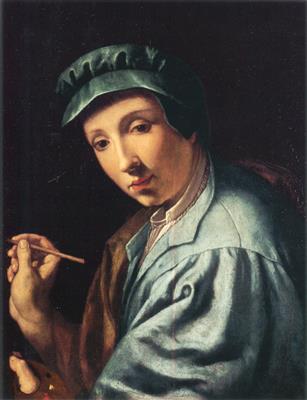


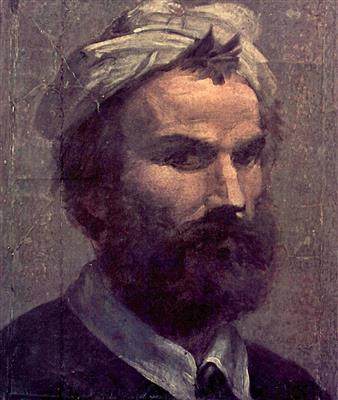


Take Agnolo Bronzino home.
See all Agnolo Bronzino prints →Frequently Asked Questions
What is Agnolo Bronzino's most famous work?
Agnolo Bronzino was a prolific painter for the Medici court in Florence. He is best known for his portraits of the Medici family and other members of Florentine high society. Among his most celebrated works is the *Allegory of Venus and Cupid*, also known as *An Allegory of Love*. This complex, Mannerist painting is held at the National Gallery, London. It presents a scene filled with symbolic figures and ambiguous meanings, characteristic of Bronzino's intellectual and stylised approach. Other notable works include his portraits of Eleonora di Toledo and her son Giovanni de' Medici, as well as portraits of Cosimo I de' Medici. Bronzino's skill as a portraitist and his sophisticated allegorical compositions have secured his place as a major figure in 16th-century Italian art.What should I know about Agnolo Bronzino's prints?
Agnolo Bronzino was a prolific Florentine painter during the High Renaissance and Mannerist periods. While he is best known for his paintings, particularly his portraits of the Medici court, prints related to his work circulated during and after his lifetime. Printmakers often reproduced paintings by significant artists like Bronzino to disseminate their designs to a wider audience. These prints after Bronzino allowed individuals outside the elite circles of Florence to engage with his artistic inventions. The prints could take the form of single-sheet images or book illustrations. One example of Bronzino's work appearing in print is his fresco, *The Miraculous Spring of Moses*. However, it is important to note that Bronzino himself was not a printmaker. The prints associated with his name are reproductive engravings or etchings made by other artists after his paintings. These prints offer valuable insight into the reception and circulation of Bronzino's art.What style or movement did Agnolo Bronzino belong to?
Agnolo Bronzino (1503-1572) is usually categorised as a Florentine Mannerist. Mannerism, which emerged in the High Renaissance and lasted until the beginning of the Baroque period, is characterised by stylistic exaggeration, self-conscious artifice, and a display of technical accomplishment. Bronzino trained with Raffaellino del Garbo, and later became a pupil of Jacopo Pontormo. Pontormo's influence is clear in Bronzino's early works; however, Bronzino developed his own distinct style. He became known for his elegant, stylised portraits of the Florentine elite, particularly the Medici family. These paintings often feature elongated figures, smooth surfaces, and cool colour palettes. Bronzino's sitters are typically posed in elaborate costumes and set against dark backgrounds, which adds to the sense of formality and detachment. His other important works include religious paintings, such as "Descent into Limbo" (1552) and allegorical paintings, such as "Venus, Cupid, Folly and Time" (c. 1546). These paintings are characterised by their complex compositions, ambiguous meanings, and highly polished surfaces, all typical of the Mannerist aesthetic. Bronzino's work represents the sophistication and artificiality of the Mannerist style.What techniques or materials did Agnolo Bronzino use?
Bronzino was a Florentine painter whose techniques aligned with the Mannerist style. This involved a high degree of technical skill, combined with artificiality and elegance. For his paintings, Bronzino employed careful preparatory drawings. The underdrawing would establish the composition, and he then applied layers of paint with precision. Bronzino favoured smooth, enamel-like surfaces, avoiding visible brushstrokes. This was achieved through meticulous blending and glazing, creating a polished appearance. His colours are often cool and refined, with subtle gradations of tone. While little is known about his sculptural methods, Renaissance sculptors generally began with drawings or painted outlines on stone or wood. Assistants would cut away surplus material using axes and chisels. Fine details were achieved with flat chisels, rasps, and pumice. Wood sculptures were often painted in bright colours and incorporated materials such as glass, stone, and cloth stiffened with gesso.What was Agnolo Bronzino known for?
Agnolo Bronzino (1503-1572) was an Italian Mannerist painter active in Florence. Bronzino, whose nickname likely came from his dark complexion, trained with Pontormo and became his adopted son. Bronzino is known for his elegant, stylised portraits of aristocratic figures, particularly his work for the Medici family, for whom he became court painter in 1539. His portraits present his subjects as calm, aloof, and flawless, favouring grandeur over naturalism. He conveyed the confidence and pride of his sitters through pearlescent skin, sumptuous clothing, and jewellery. Bronzino's portraits influenced European court portraiture for a century. He also produced religious and mythological paintings, such as *An Allegory with Venus and Cupid* (c.1550). These works often feature elongated figures in contorted poses, drawing inspiration from Michelangelo and Raphael. Bronzino was also a poet, and he painted portraits of literary figures such as Dante and Petrarch. In 1563, he was a founding member of the Accademia delle Arti del Disegno, the first academy of drawing in Europe.When did Agnolo Bronzino live and work?
Agnolo Bronzino (born Agnolo di Cosimo di Mariano) was an Italian Mannerist painter from Florence. He lived from 1503 to 1572. Giorgio Vasari's *Lives of the Artists* (second edition, 1568) is a major source of information about Bronzino's career. Bronzino trained with Raffaellino del Garbo, and then became a pupil of Jacopo Pontormo. Pontormo's influence is clear in Bronzino's early work. He worked primarily in Florence. From 1539, Bronzino was court painter to Cosimo I de' Medici, Grand Duke of Tuscany, and his family. He painted portraits of Cosimo, his wife Eleonora di Toledo, and their children. These paintings established Bronzino's reputation for refined, somewhat aloof, depictions of the aristocracy. Bronzino also painted religious subjects, such as his *Descent into Limbo* (c. 1552), and mythological allegories, such as *Venus, Cupid, Folly and Time* (c. 1546). Bronzino was a poet as well as a painter. He was a member of the Florentine Academy. His paintings are known for their smooth surfaces, careful attention to detail, and sophisticated use of colour.Where can I see Agnolo Bronzino's work?
Bronzino's paintings are held in numerous collections, mostly in Europe. As a court painter, many of his works were commissions for the Medici family and remain in Florence. The Uffizi Gallery holds a substantial collection of his paintings, including portraits of Cosimo I de' Medici, Eleonora di Toledo, and their children. The Palazzo Pitti, another significant Florentine museum, also displays several Bronzino portraits. Outside Florence, significant works can be found in other European museums. The Louvre in Paris has Bronzino's "Allegory of Venus and Cupid". The National Gallery in London holds his "Allegory with Venus, Cupid, Folly and Time". The Kunsthistorisches Museum in Vienna possesses several portraits, including one of Giovanni de' Medici as a child. Smaller collections can be found in galleries and museums throughout Europe and North America, but Florence remains the central place to view his art.Where was Agnolo Bronzino from?
Agnolo Bronzino, also known as Agnolo di Cosimo, was from Florence. Born there in 1503, he died there in 1572. Much of his career was spent as court painter for the Medici family in Florence, beginning in 1539. As a painter working in the Mannerist style, Bronzino's approach was crisp and stylised. His elegant portraits of aristocratic figures seemed real but aloof, calm and flawless, with tightly controlled colouristic effects. Bronzino's style was cultivated from the later paintings of Michelangelo: composed and dignified, with elongated proportions subtly suffused with bright or deep colours and textural details, and cool, smooth, alabaster-like skin tones portrayed with assurance and sophistication. In 1563, he became a founder member of the Accademia delle Arti del Disegno; the first academy of drawing in Europe.Who did Agnolo Bronzino influence?
Agnolo Bronzino's crisp, aloof Mannerist style had a considerable effect on European court portraiture for a century. His approach, cultivated from Michelangelo's later paintings, favoured composed and dignified figures, elongated proportions, bright colours, textural details, and smooth skin tones. Bronzino conveyed the confidence and pride of his noble sitters, creating pearlescent skin, sumptuous clothes, and jewellery. Grandeur and perfection were favoured over naturalism. Bronzino's influence can be seen in the work of Alessandro Allori, who was his pupil. Bronzino's style is quite different from that of Francesco Salviati, even though both artists worked in Florence at the same time. Salviati's approach to large-scale murals, with its multiple levels of reality and rich ornament, differed from the characteristically Florentine manner that Bronzino represented in the 1540s.Who influenced Agnolo Bronzino?
Agnolo Bronzino, an Italian Mannerist painter, was born in Florence in 1503. He spent much of his career as court painter for the Medici family. Bronzino's artistic style was influenced by several artists of the High Renaissance. As a pupil, he was heavily indebted to his master Pontormo; however, Bronzino's style became more detached than that of his teacher. Bronzino's style was also cultivated from the later paintings of Michelangelo. His religious and mythological paintings often feature elongated and contorted poses, inspired by Michelangelo and Raphael. Bronzino's Mannerist style is clear in his distortion of natural poses, exaggeration of expressions, and emphasis on movement. Bronzino became a founder member of the Accademia delle Arti del Disegno, the first academy of drawing in Europe, in 1563. He died in Florence in 1572.Who is agnolo bronzino?
Agnolo di Cosimo, known as Bronzino, spent much of his life as a court painter.Who was Agnolo Bronzino?
Agnolo di Cosimo (1503-1572), known as Bronzino, was a Florentine Mannerist painter. His nickname probably came from his dark complexion. He was a pupil, and later adopted son, of Pontormo; his style was heavily influenced by his master, but more detached. Bronzino's paintings often feature elongated figures in artificial poses, set against staggered backgrounds. From 1539, Bronzino worked for Duke Cosimo de’ Medici. He spent almost his entire career in the Duke's service, becoming the leading painter in Florence. He is best known for his portraits of the Medici family and other aristocratic figures. These paintings are characterised by formal severity, minute attention to detail, and a cool sophistication. Bronzino's portraits seemed real yet aloof, calm, and flawless, with tightly controlled colouristic effects. Examples of his work include *An Allegory with Venus and Cupid* and *The Dead Christ between the Virgin and Mary Magdalene*.
Sources
Editorial draws on the following primary and tertiary references for Agnolo Bronzino.
- [1] museum Toledo Museum of Art Used for: museum holdings.
- [2] museum Pushkin Museum of Fine Arts Used for: museum holdings.
- [3] museum Casa Buonarroti Used for: museum holdings.
- [4] museum Basilica of Santa Maria Novella Used for: museum holdings.
- [5] museum Städel Museum Used for: museum holdings.
- [6] museum Galleria Palatina Used for: museum holdings.
- [7] academic Bronzino Used for: stylistic analysis.
- [8] academic Il Bronzino | Biography, Paintings, Style, & Facts Used for: biography.
- [9] wikidata Wikidata: Q7803 Used for: identifiers.
- [10] book Susie Hodge, Art Used for: biography.
- [11] book Beard, Lee, 1973- author, Butler, Adam, author; Van Cleave, Claire, author; Fortenberry, Diane, author; Stirling, Susan, author, Beard, Lee, 1973- author, Butler, Adam, author; Van Cleave, Claire, author; Fortenberry, Diane, author; Stirling, Susan, author - The Art Book_ New Edition, Mini Format Used for: biography.
- [12] book Masterpieces of western art : a history of art in 900 individual studies from the Gothic to the present day Used for: biography.
- [13] museum Bronzino (Agnolo di Cosimo di Mariano) - Portrait of a Young Man Used for: notable works.
- [14] museum Ritratto di Eleonora di Toledo con il figlio Giovanni, Agnolo Bronzino Used for: museum holdings.
- [15] museum Virgin and Child with Saint Elizabeth and Saint John the Baptist Used for: museum holdings.
Editorial overseen by Solis Prints. Sources verified 2026-09-19. Click a source for details, or hover over [N] in the page above to preview.
Editorial standardsMethodologyCorrectionsAI disclosureAbout the editorial team