

Collection
Kurt Schwitters
Explore curated art prints selected for distinctive homes and considered interiors.
Suggested filters
-

 Merz Picture 25A: The Star Picture - Kurt Schwitters
Print · Framed
Regular price From £28.00 GBPSale price From £28.00 GBP Regular price -

 Elikan - Kurt Schwitters
Print · Framed
Regular price From £28.00 GBPSale price From £28.00 GBP Regular price -

 New Merzpicture - Kurt Schwitters
Print · Framed
Regular price From £28.00 GBPSale price From £28.00 GBP Regular price -

 Aphorism - Kurt Schwitters
Print · Framed
Regular price From £28.00 GBPSale price From £28.00 GBP Regular price -

 Mz 231. Miss Blanche - Kurt Schwitters
Print · Framed
Regular price From £28.00 GBPSale price From £28.00 GBP Regular price -

 N Watercolor 1. (The Heart Goes from Sugar to Coffee) - Kurt Schwitters
Print · Framed
Regular price From £28.00 GBPSale price From £28.00 GBP Regular price -

 Small Sailors' Home - Kurt Schwitters
Print · Framed
Regular price From £28.00 GBPSale price From £28.00 GBP Regular price -

 Revolving - Kurt Schwitters
Print · Framed
Regular price From £28.00 GBPSale price From £28.00 GBP Regular price -

 For Kate - Kurt Schwitters
Print · Framed
Regular price From £28.00 GBPSale price From £28.00 GBP Regular price -

 Oorlog - Kurt Schwitters
Print · Framed
Regular price From £28.00 GBPSale price From £28.00 GBP Regular price -

 Untitled (D’Cily) - Kurt Schwitters
Print · Framed
Regular price From £28.00 GBPSale price From £28.00 GBP Regular price -

 Cherry Picture (Das Kirschbild) - Kurt Schwitters
Print · Framed
Regular price From £28.00 GBPSale price From £28.00 GBP Regular price -

 Heavy Relief - Kurt Schwitters
Print · Framed
Regular price From £28.00 GBPSale price From £28.00 GBP Regular price -

 Mountain Graveyard - Kurt Schwitters
Print · Framed
Regular price From £28.00 GBPSale price From £28.00 GBP Regular price -

 Man soll nicht asen mit Phrasen - Kurt Schwitters
Print · Framed
Regular price From £28.00 GBPSale price From £28.00 GBP Regular price -

 Merzpicture Thirty-One - Kurt Schwitters
Print · Framed
Regular price From £28.00 GBPSale price From £28.00 GBP Regular price -

 Relief in Relief - Kurt Schwitters
Print · Framed
Regular price From £37.00 GBPSale price From £37.00 GBP Regular price -

 Santa Claus (Der Weihnachtsmann) - Kurt Schwitters
Print · Framed
Regular price From £28.00 GBPSale price From £28.00 GBP Regular price -

 Merzbild Alf - Kurt Schwitters
Print · Framed
Regular price From £37.00 GBPSale price From £37.00 GBP Regular price -

 Forms in Space - Kurt Schwitters
Print · Framed
Regular price From £28.00 GBPSale price From £28.00 GBP Regular price -

 The And-Picture - Kurt Schwitters
Print · Framed
Regular price From £28.00 GBPSale price From £28.00 GBP Regular price -

 Little Dance - Kurt Schwitters
Print · Framed
Regular price From £28.00 GBPSale price From £28.00 GBP Regular price -

 Fruit of a Long Experience - Kurt Schwitters
Print · Framed · Canvas
Regular price From £28.00 GBPSale price From £28.00 GBP Regular price -
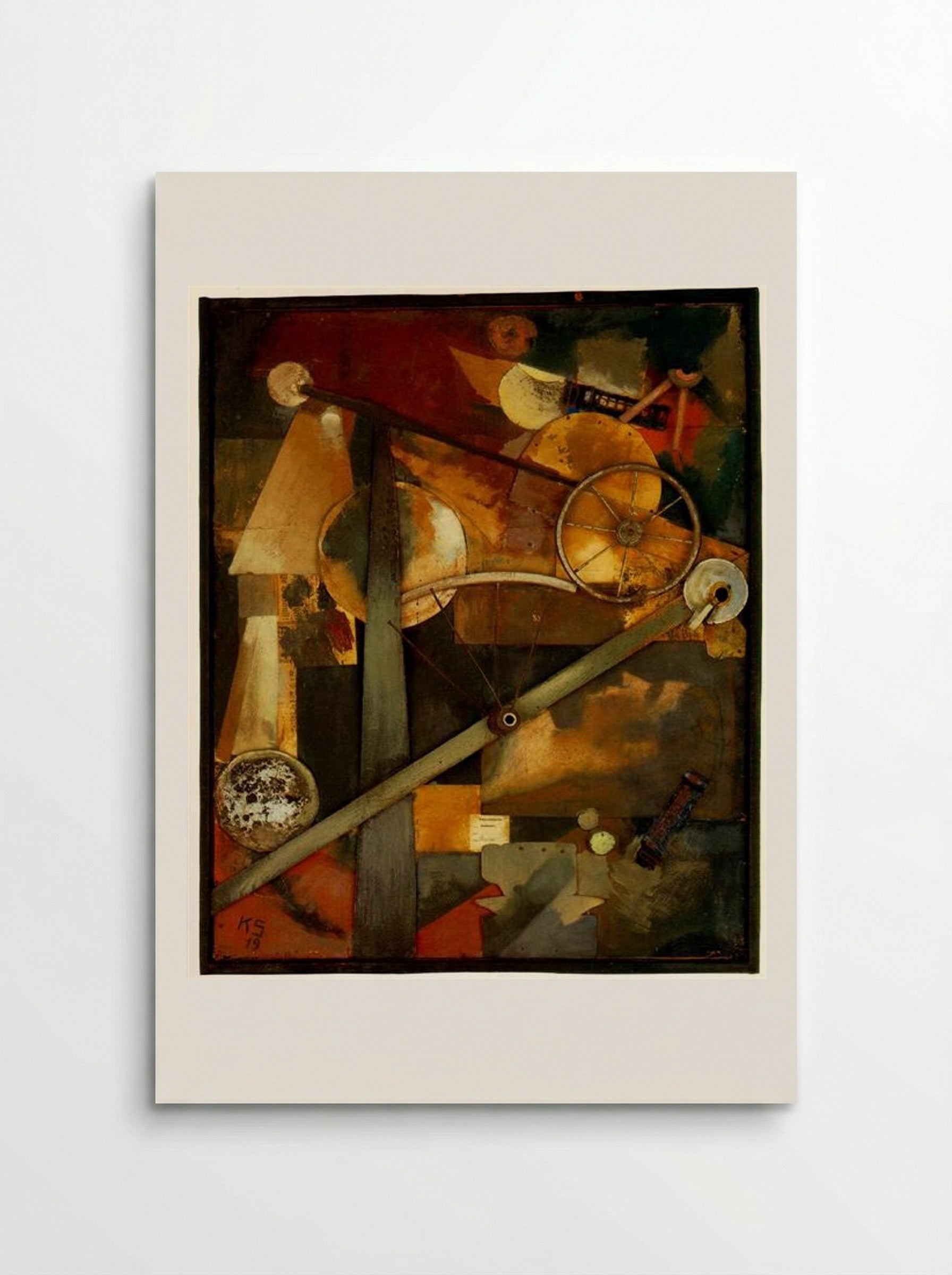
 Construction for Noble Ladies - Kurt Schwitters
Print · Framed · Canvas
Regular price From £28.00 GBPSale price From £28.00 GBP Regular price


Artist Biography
Kurt Schwitters
Schwitters built an artwork inside his house in Hanover. Starting around 1923, the Merzbau grew outward from a column of collaged objects in his studio until there was barely room to live. He worked on it for sixteen years. Allied bombing destroyed it in 1943. He built a second Merzbau in Lysaker, Norway. The Nazis invaded; he abandoned it. It burned down in 1951. He started a third at Cylinders Farm in the English Lake District. He died in January 1948, leaving it unfinished.
He was born in Hanover in 1887, an only child whose father ran a ladies' clothing shop. He suffered from epilepsy throughout his life. He fled to Norway in 1937, then to Scotland in 1940, where he was classified as an enemy alien and interned in camps including Hutchinson Camp on the Isle of Man. While interned, he allegedly made small sculptures from leftover oatmeal.
His art, which he called Merz (a fragment of the word Kommerz), used collage, found objects, poetry, sound art, typography, and installation. He worked across Dadaism, Constructivism, and Surrealism, often simultaneously. He was largely neglected by the time he died.
He was born in Hanover in 1887, an only child whose father ran a ladies' clothing shop. He suffered from epilepsy throughout his life. He fled to Norway in 1937, then to Scotland in 1940, where he was classified as an enemy alien and interned in camps including Hutchinson Camp on the Isle of Man. While interned, he allegedly made small sculptures from leftover oatmeal.
His art, which he called Merz (a fragment of the word Kommerz), used collage, found objects, poetry, sound art, typography, and installation. He worked across Dadaism, Constructivism, and Surrealism, often simultaneously. He was largely neglected by the time he died.
Related Artists


Why Choose Us ?