

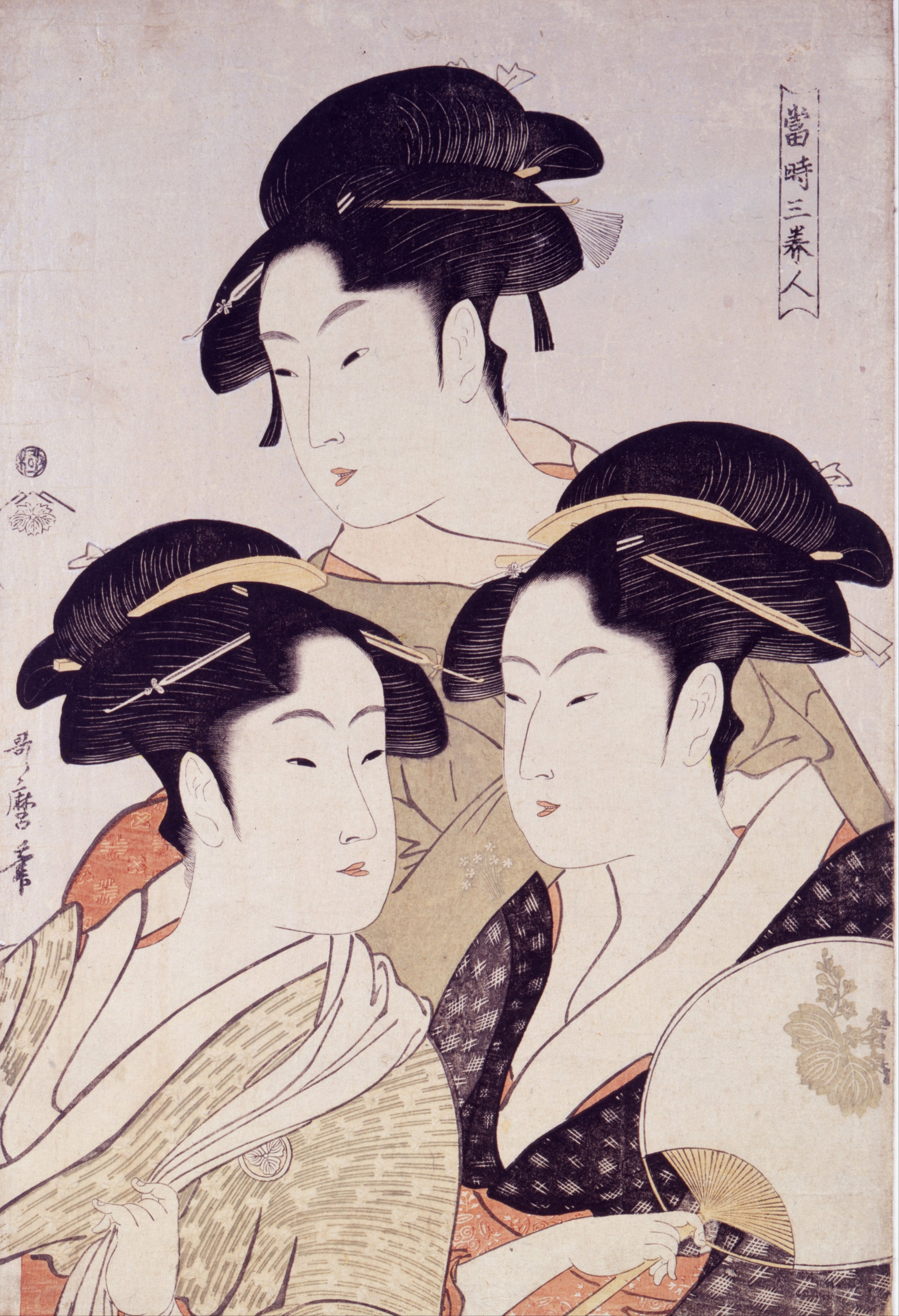
Ukiyo-e means "pictures of the floating world." The floating world was Edo-period Japan's entertainment culture: kabuki theatres, pleasure quarters, sumo tournaments, and the street life of a city that grew to be one of the largest in the world. Woodblock prints made images of this world cheap enough for ordinary people to own. A single print cost roughly the same as a bowl of noodles.
The genre evolved over more than two centuries, from simple black-and-white images in the 1660s to the sophisticated colour prints of the late 1700s and the landscapes of Hokusai and Hiroshige in the 1830s. It was a commercial art form, driven by publishers who commissioned artists, employed specialist carvers and printers, and calculated print runs based on expected sales. A popular design would be reprinted until the woodblocks wore out, then recut if demand continued.
How a Woodblock Print Was Made
The process involved three specialists working in sequence. The artist drew the design in ink on thin paper. The carver pasted this drawing face-down onto a block of cherry wood and carved away everything except the lines, destroying the original drawing in the process. For colour prints, a separate block was carved for each colour. The printer then inked each block, laid dampened paper over it, and rubbed the back with a baren (a flat, round pad) to transfer the image. Registration marks on each block ensured the colours aligned.
A skilled carver could cut lines finer than a human hair. A skilled printer could achieve gradations of colour (called bokashi) by wiping ink from parts of the block before printing. The coordination required between all three was considerable, and the quality of a print depended as much on the carver and printer as on the artist who designed it.
Harunobu and the Colour Revolution
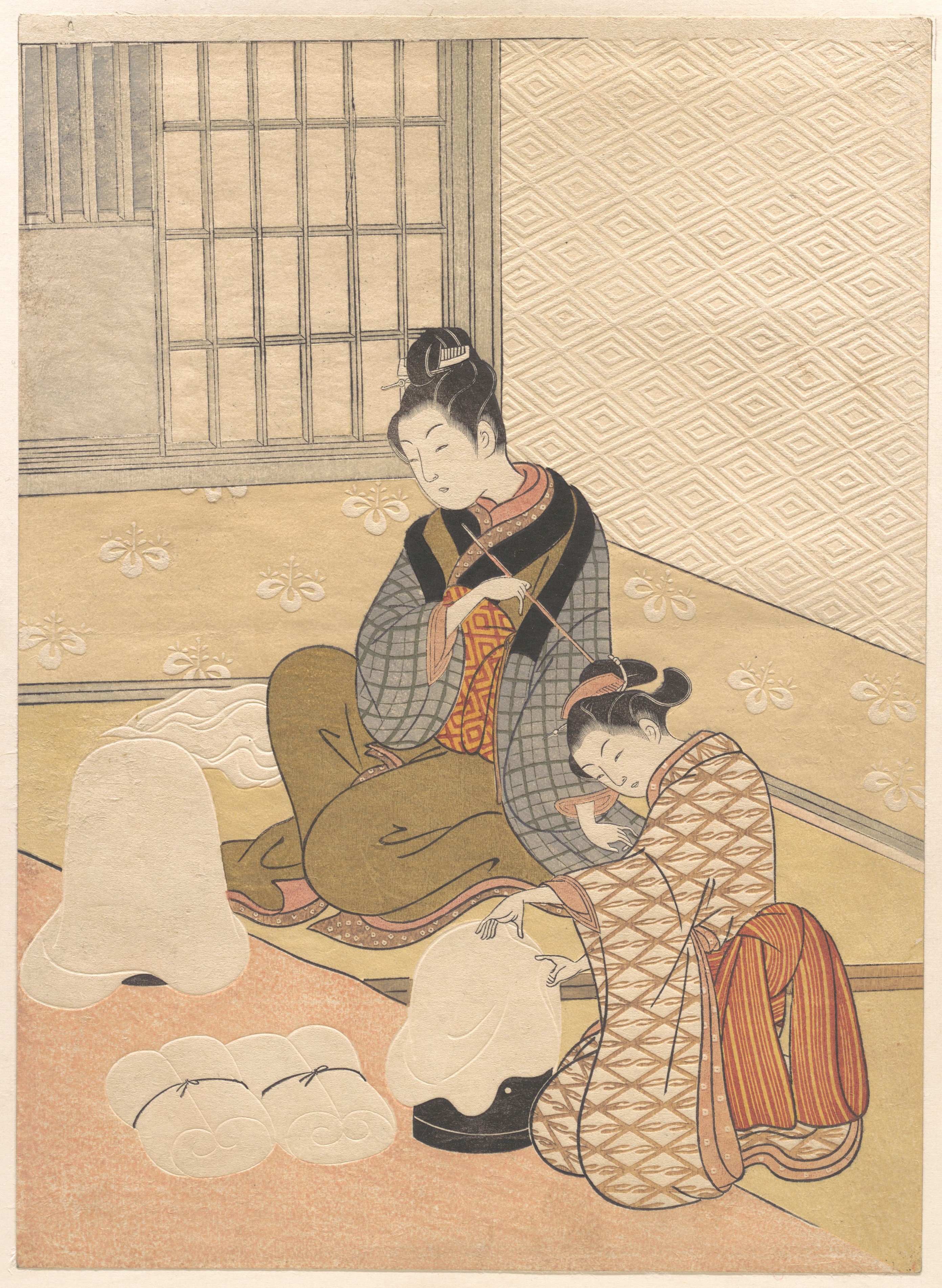
Suzuki Harunobu (c. 1725 to 1770) is credited with developing the full-colour woodblock print, known as nishiki-e ("brocade pictures"), around 1765. Earlier prints used two or three colours; Harunobu used ten or more, printed from separate blocks with exact registration. His prints of slender, idealised women in domestic settings had a delicacy and colour range that previous techniques could not achieve.
Utamaro: The Beauty Print
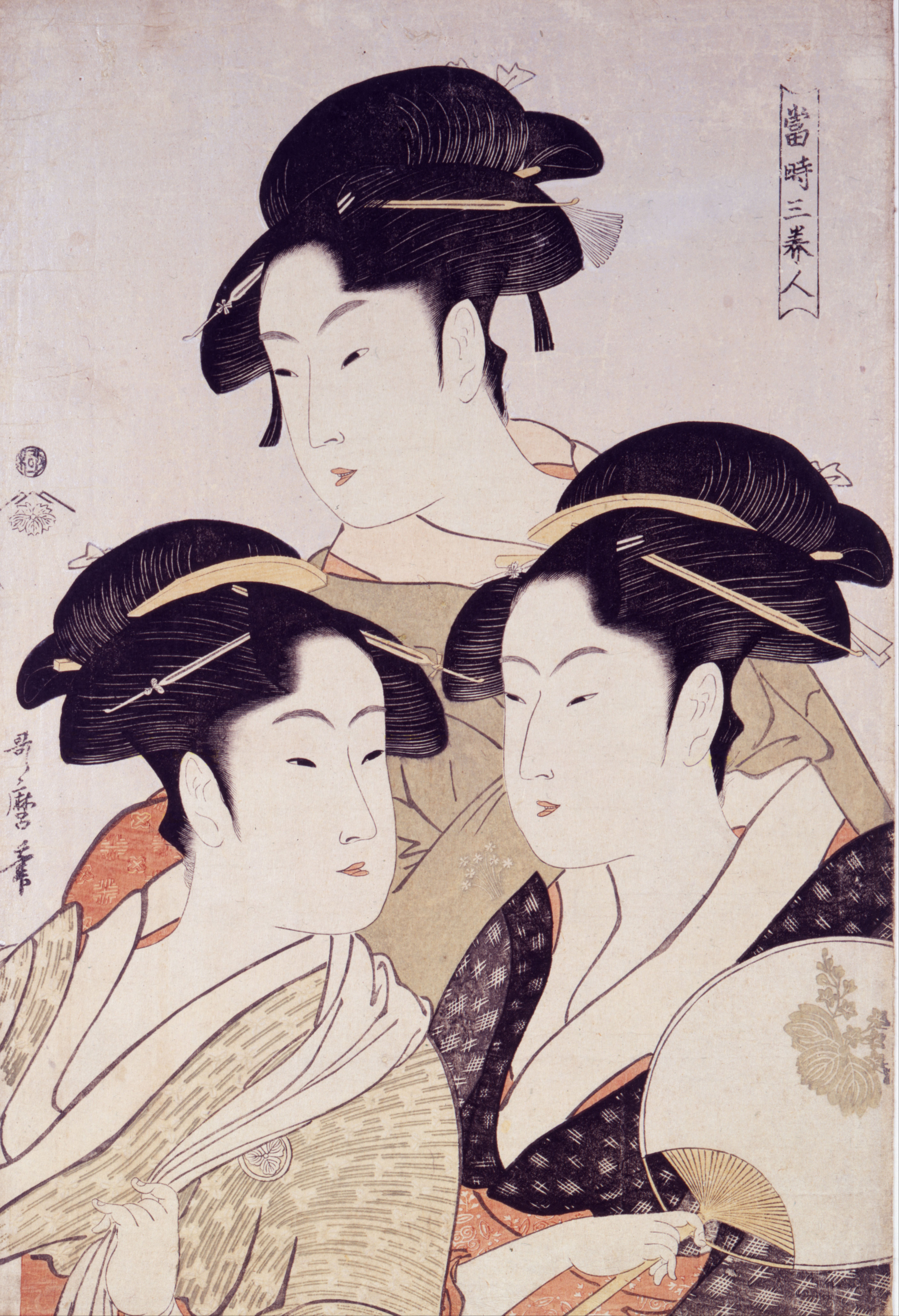
Kitagawa Utamaro (c. 1753 to 1806) became the master of the bijin-ga, or beauty print. His innovation was the close-up portrait: women shown from the bust up, with attention focused on facial expression, hairstyle, and the fall of fabric. Three Beauties of the Present Day shows three named women from Edo's entertainment world, each differentiated by subtle differences in expression and bearing.
Sharaku: The Actor, Unmasked
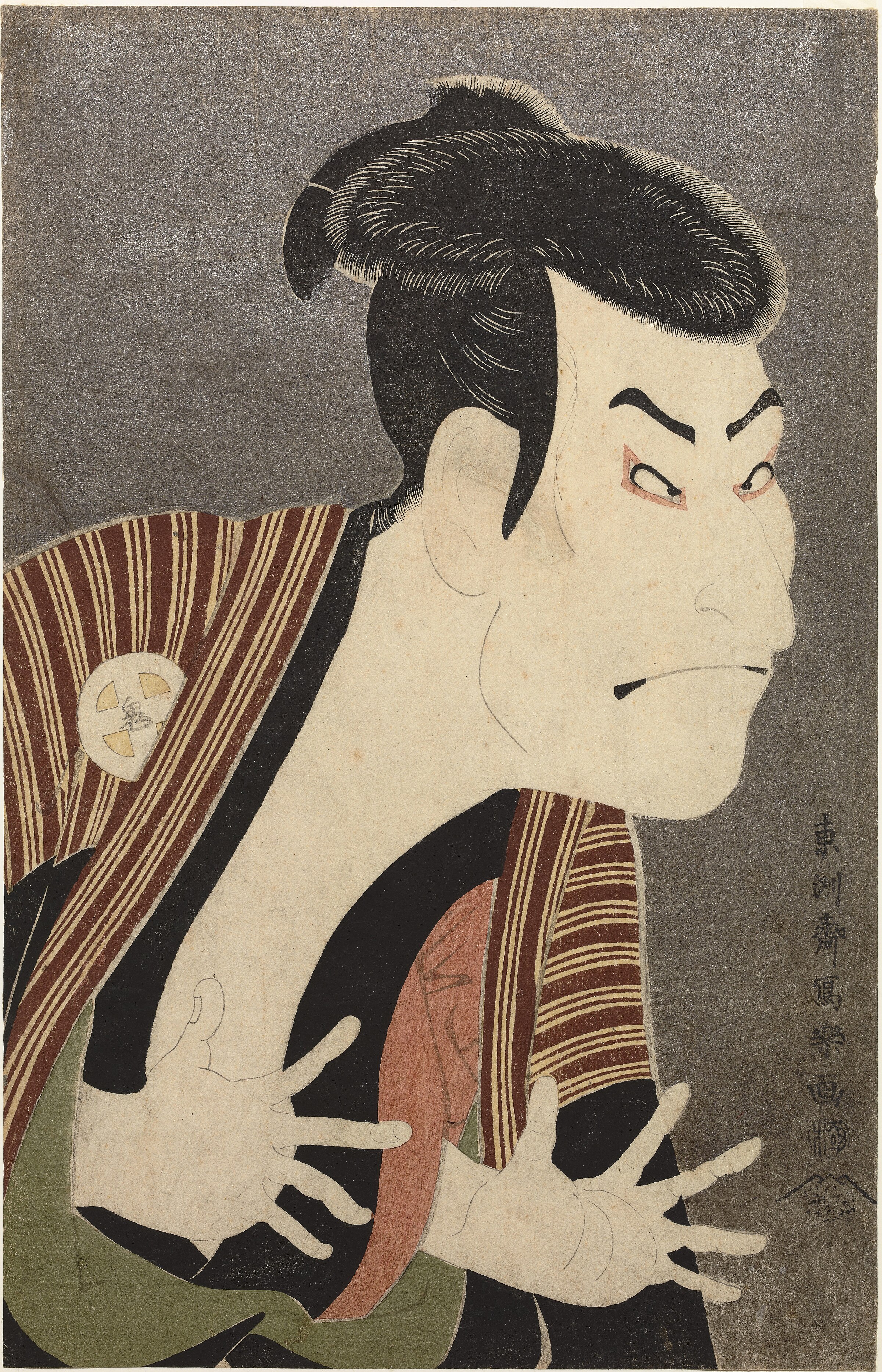
Toshusai Sharaku is one of the most mysterious figures in art history. He appeared in 1794, produced approximately 145 prints of kabuki actors over ten months, and then vanished. His identity has never been confirmed. Sharaku's actor portraits were unlike anything produced before. Where other artists idealised their subjects, Sharaku exaggerated: bulging eyes, clenched jaws, fingers splayed in theatrical gestures. The prints captured the actors not as they wished to be seen but as they appeared in the heightened reality of the stage.
Ukiyo-e was a popular art form that reached its audience through commerce, not patronage. When those prints reached Europe in the 1850s, they changed Western art. Monet, Degas, Van Gogh, and Whistler all collected them. The floating world floated further than anyone in Edo could have imagined.


