

Fine Art Poster
From £28
A giclée print on 200gsm matte fine art paper, using a twelve-colour process for accurate, fade-resistant colour. Supplied unframed, delivered flat or rolled.



Archival giclée
Frames arrive ready to hang
Secure checkout
Made to order
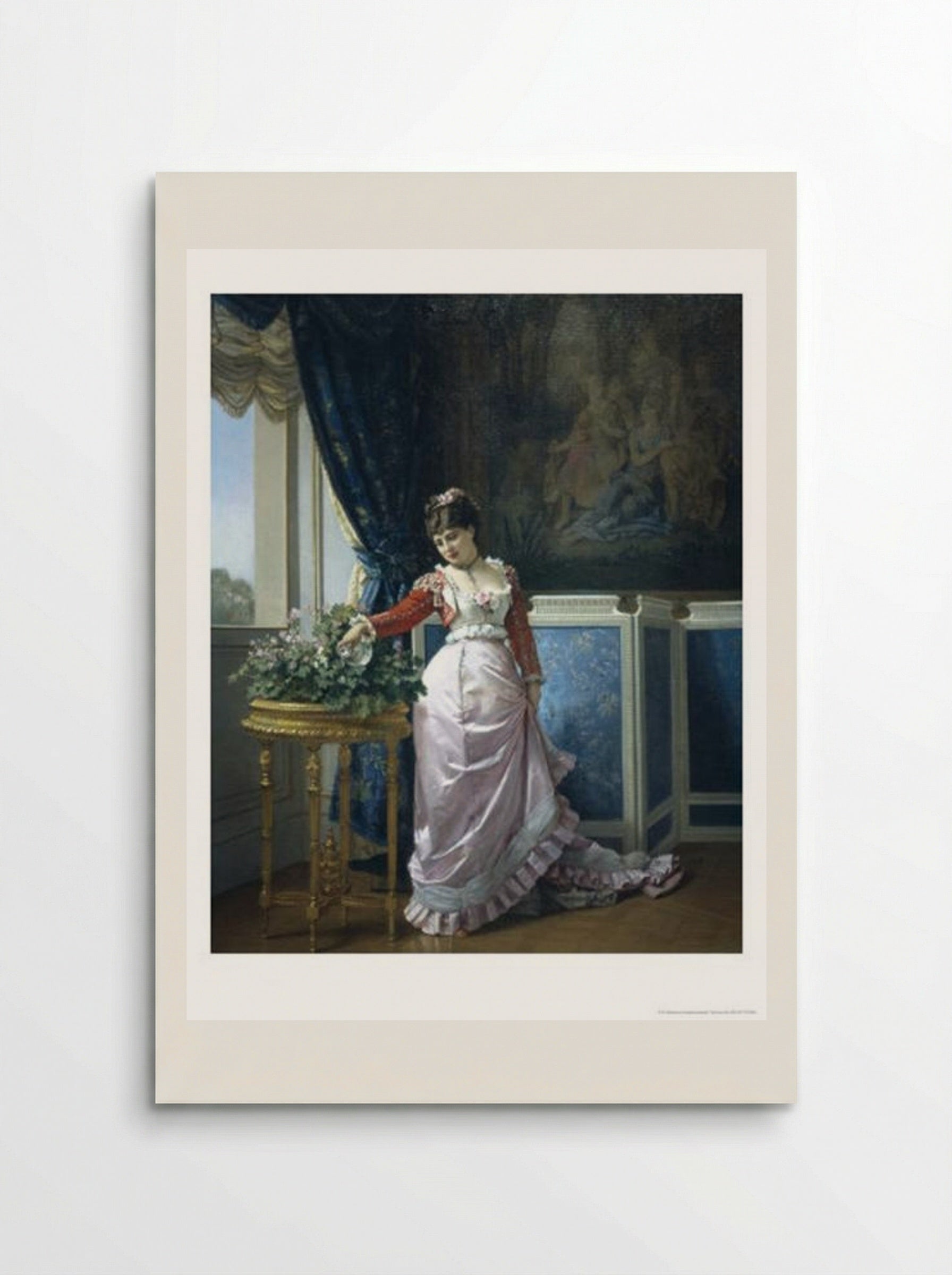
A refined genre painting by Auguste Toulmouche, capturing a woman in a domestic interior with meticulous attention to period fashion and decor.
Auguste Toulmouche, a French painter associated with the Academic tradition, produced this work during the height of the Second Empire. The painting depicts a woman in a domestic interior, engaged in the quiet activity of tending to a potted plant. Toulmouche gained recognition for his depictions of Parisian women, often focusing on the material culture of the era, including fashion, furniture, and interior decoration. The composition centres on the figure, who wears a gown featuring a pale pink skirt and a contrasting red bodice. Her posture is relaxed, and her attention is directed towards the small glass vessel she holds. The setting includes a gilded pedestal table, heavy blue drapery, and a folding screen decorated with floral motifs. Behind the figure, a large wall hanging or painting adds depth to the room, suggesting a space of comfort and refinement. Toulmouche employed a precise technique, characteristic of the École des Beaux-Arts training. The textures of the silk fabric, the metallic sheen of the table, and the soft petals of the flowers are rendered with careful attention to light and shadow. The colour palette is dominated by cool blues and warm pinks, creating a balanced visual harmony. This work reflects the interest of the period in capturing the private lives of the bourgeoisie, presenting a scene of leisure and domesticity. The artist avoids overt narrative, preferring to focus on the aesthetic qualities of the environment and the grace of the subject. The result is a polished image that documents the sartorial and decorative tastes of late nineteenth-century France.
Because every print is made to order, we don't offer change-of-mind returns, refunds or exchanges. If your order arrives faulty, damaged or incorrect, we'll replace it free of charge — just contact us within 48 hours of delivery. See our refunds page for full details.
We ship worldwide, printing at the production hub nearest to your delivery address. Delivery times and costs vary by destination — you'll see the options available to you at checkout.
Each print is produced to order using 12-colour giclée printing on FSC-certified archival paper. Designed in Britain and printed at your nearest production hub to reduce waste and speed up delivery.
Specific Features
Every Solis piece is made to order with archival, gallery-quality materials built to last.
Care & Cleaning
To keep your artwork looking its best:
Materials & Sizing
Museum-grade giclée on FSC-certified archival matte paper, with framed and canvas options.

Artist Biography
Made to order
Every piece is printed to order. These are the five finishes, and what makes each one different.
From £28
A giclée print on 200gsm matte fine art paper, using a twelve-colour process for accurate, fade-resistant colour. Supplied unframed, delivered flat or rolled.

From £45
The same fine art print in a solid wood frame with UV-protective acrylic glaze and rigid backing. Five frame colours. Arrives ready to hang.

From £85
A deeper solid wood frame: 33mm deep with a 20mm face and Perspex glaze. The print sits unmounted for a clean gallery presentation. Black, white or natural.

From £30
Hand-stretched canvas with neat gallery-wrapped edges, giving the artwork surface texture and depth. Arrives ready to hang.

From £135
Stretched canvas set in a floating wood frame, our most substantial finish. Arrives ready to hang.
Why Choose Us ?
Damage-free delivery guarantee
Fast Shipping
Museum-Quality Materials
You May Also Like
We use cookies to measure our marketing and see which prints people love.We use cookies to measure our marketing.
By continuing to browse, you agree · Privacy Policy