

Venus Epithalamia - Edward Burne-Jones
Archival giclée
Ready to hang
Secure checkout
Made to order
Description
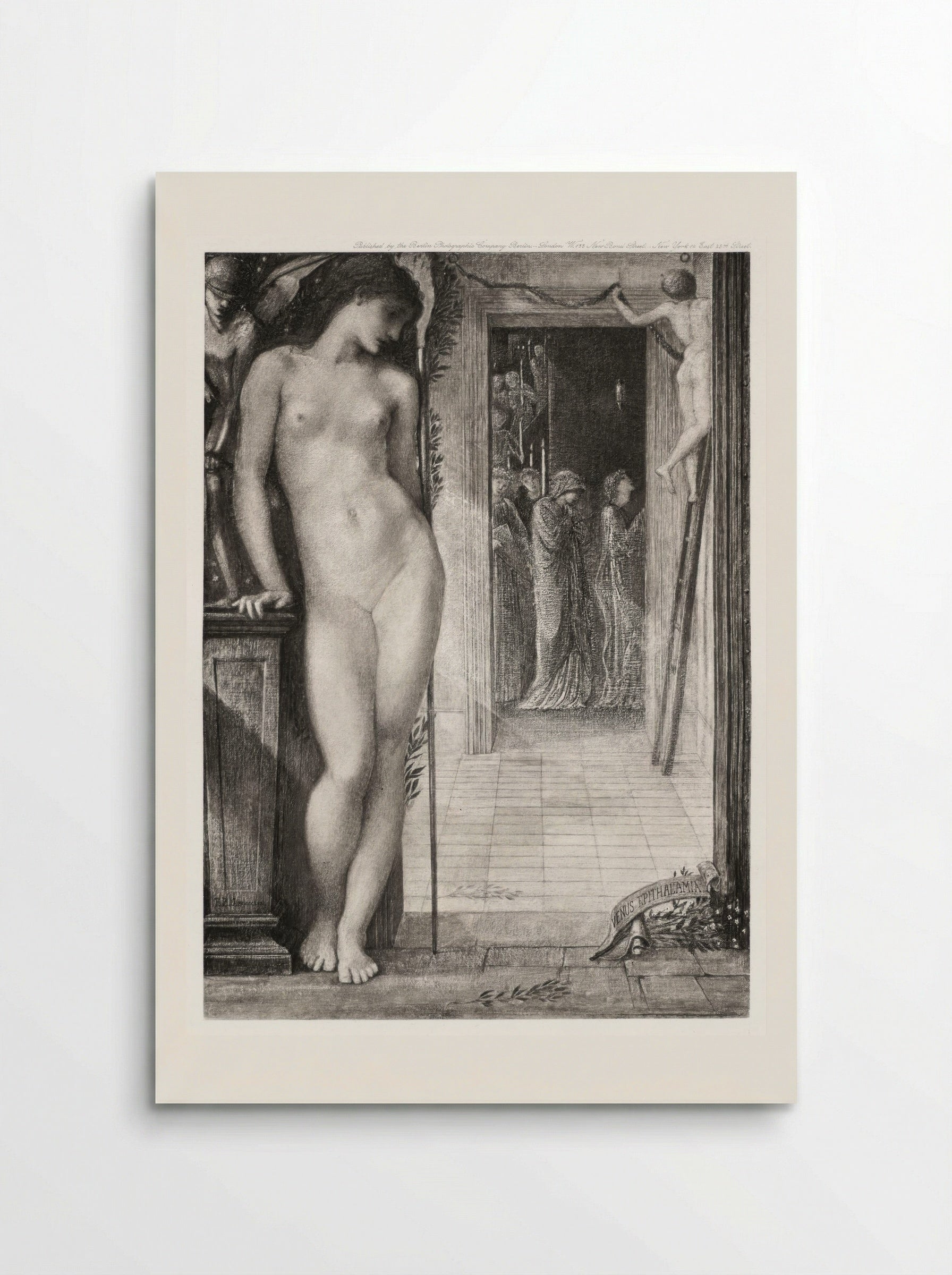
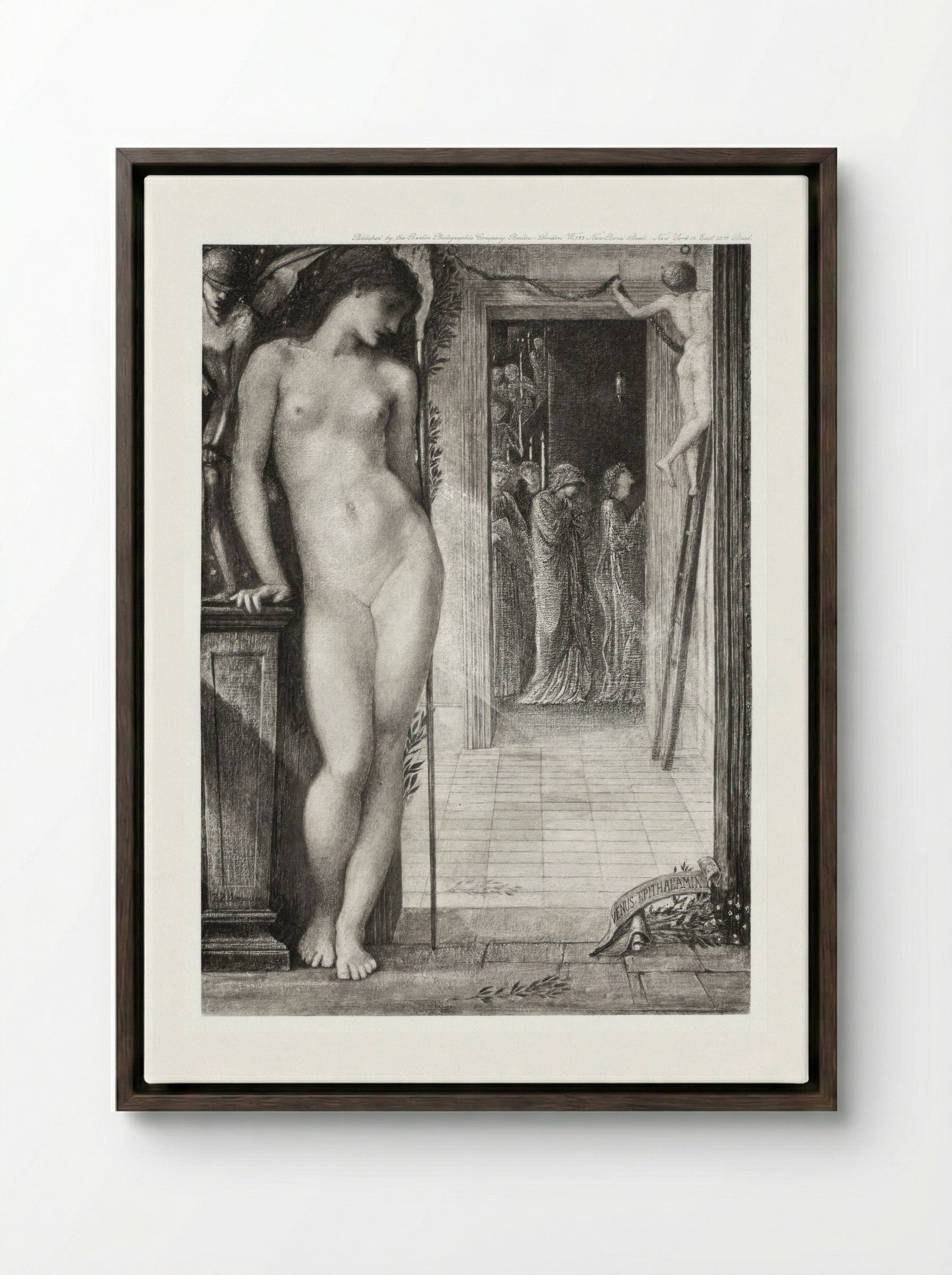
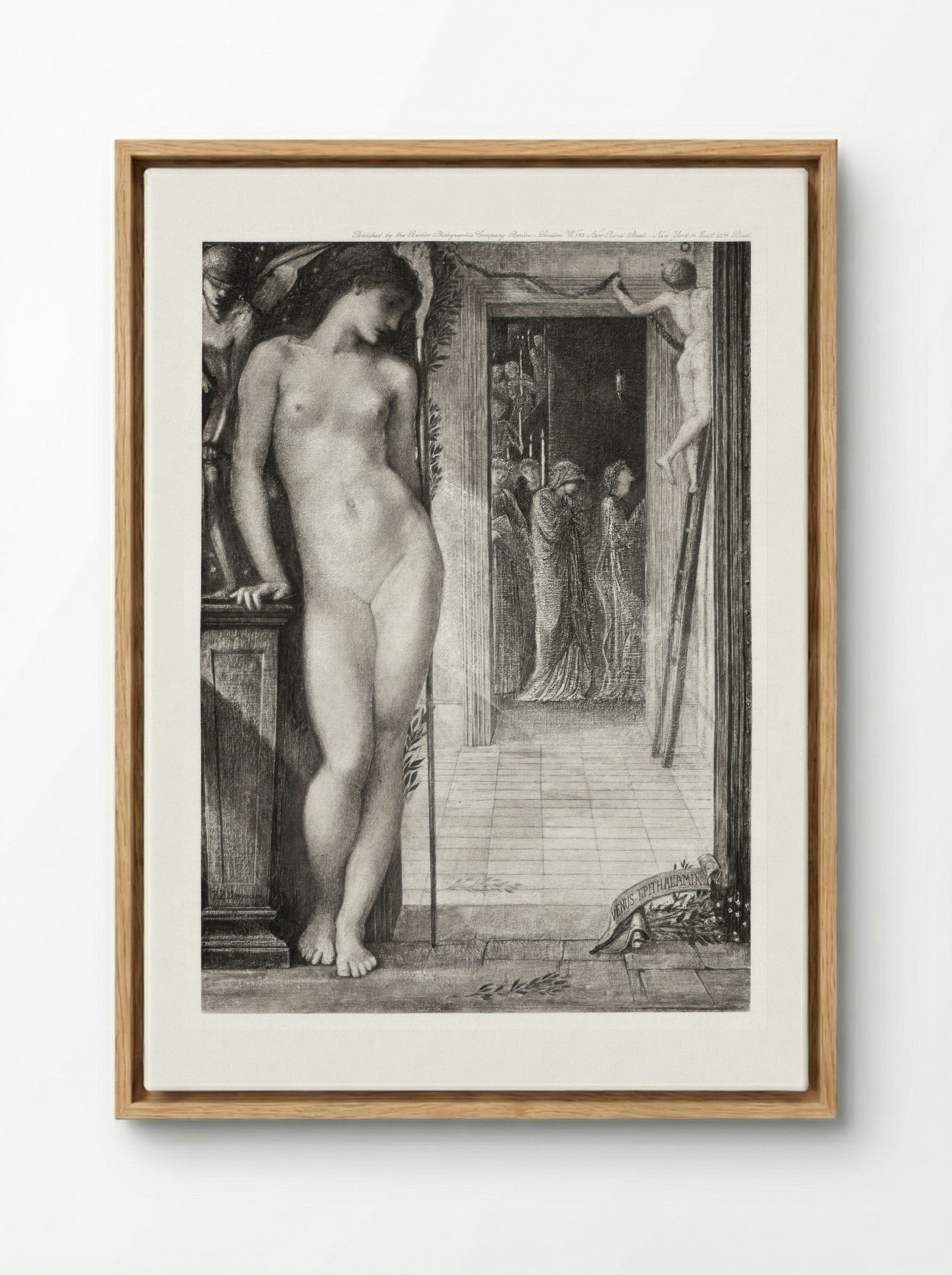
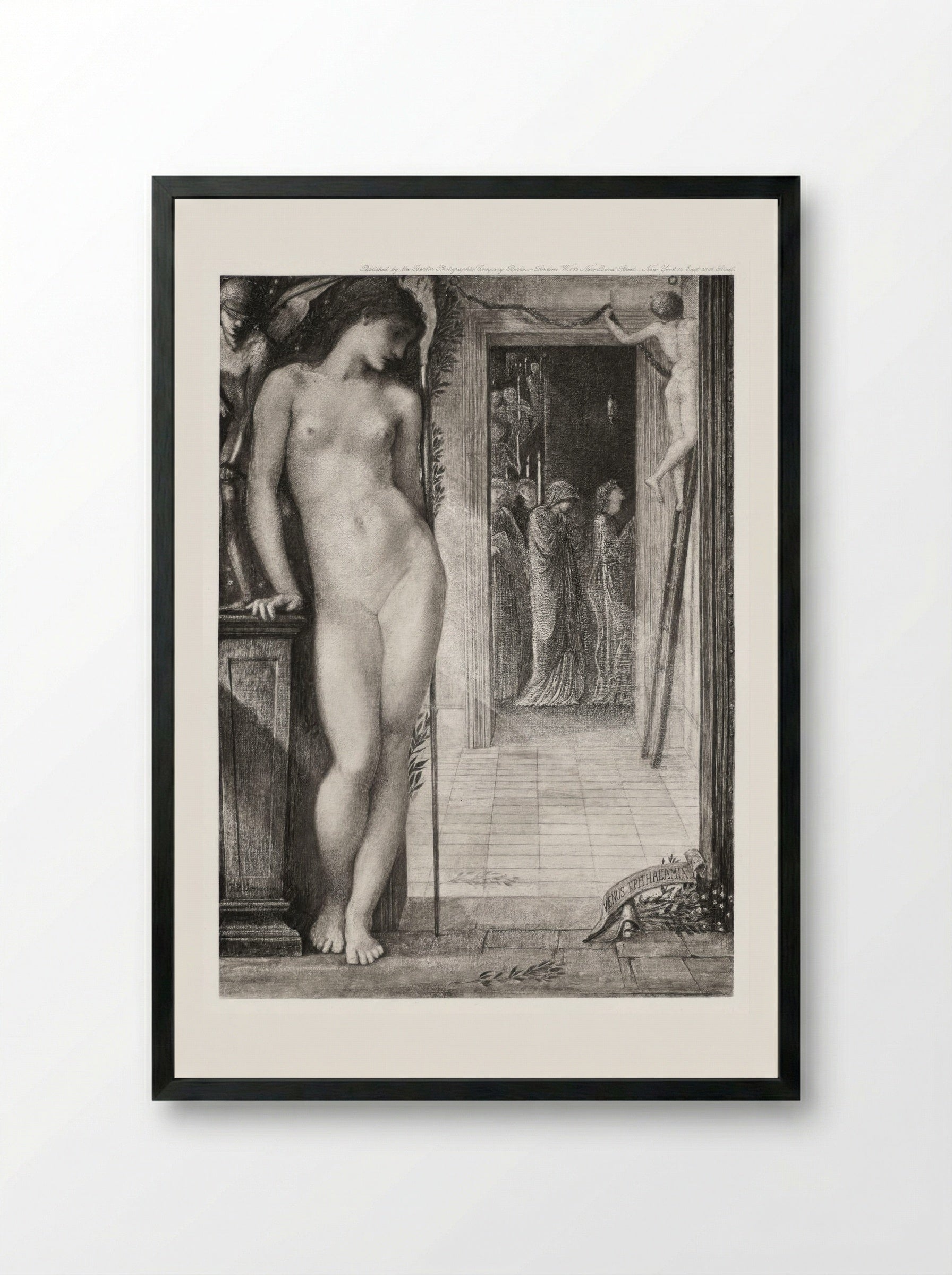
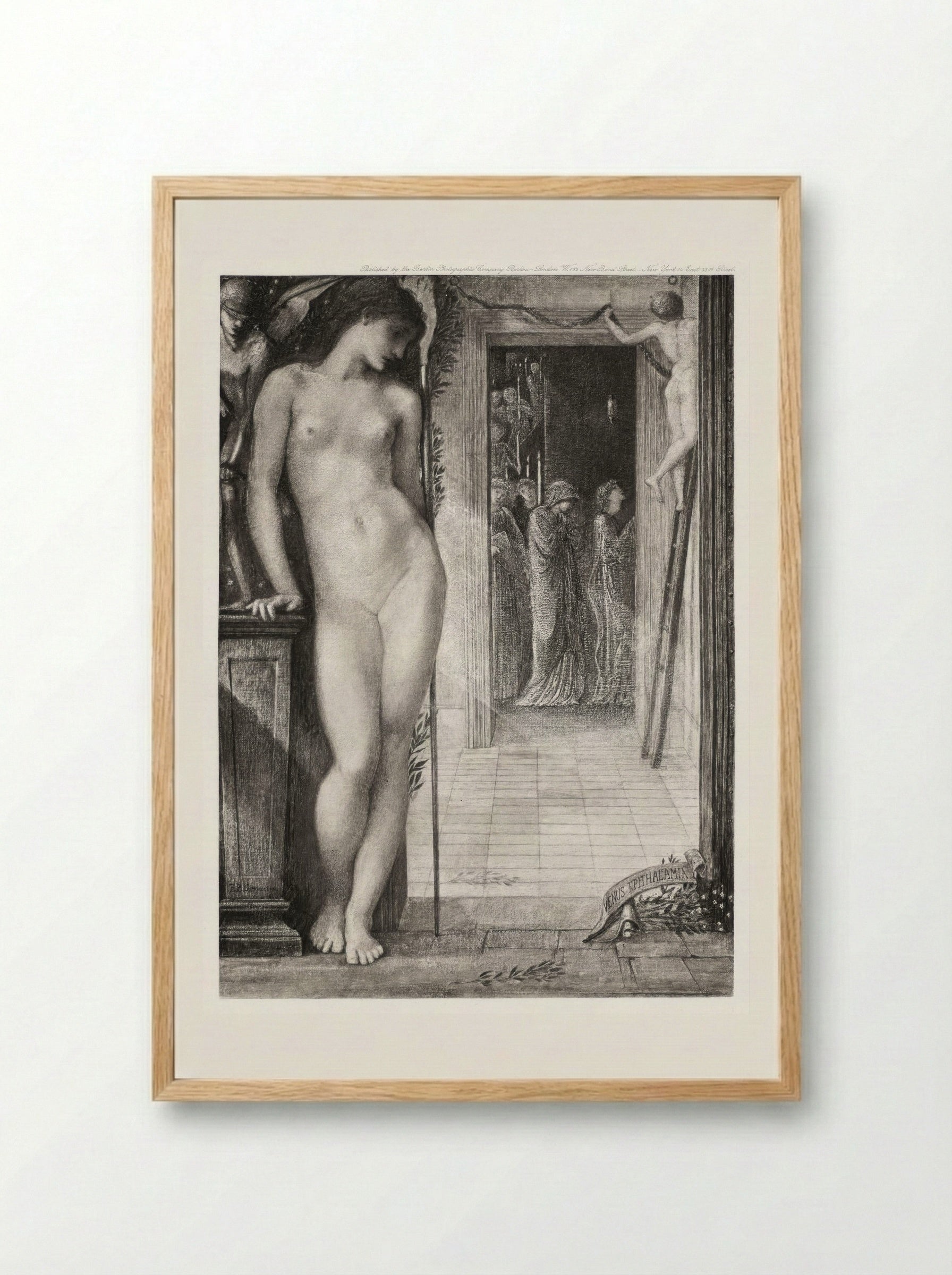
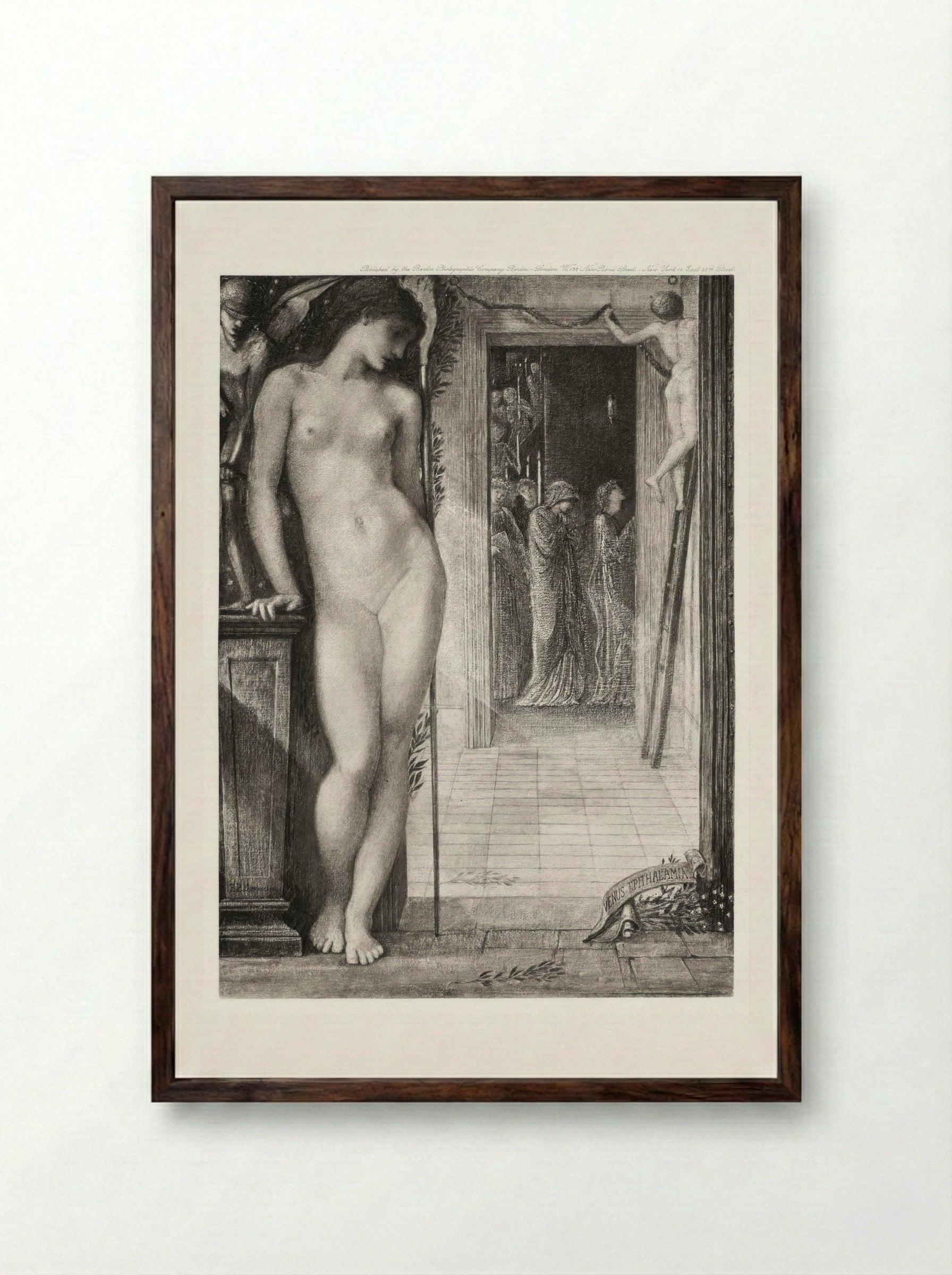
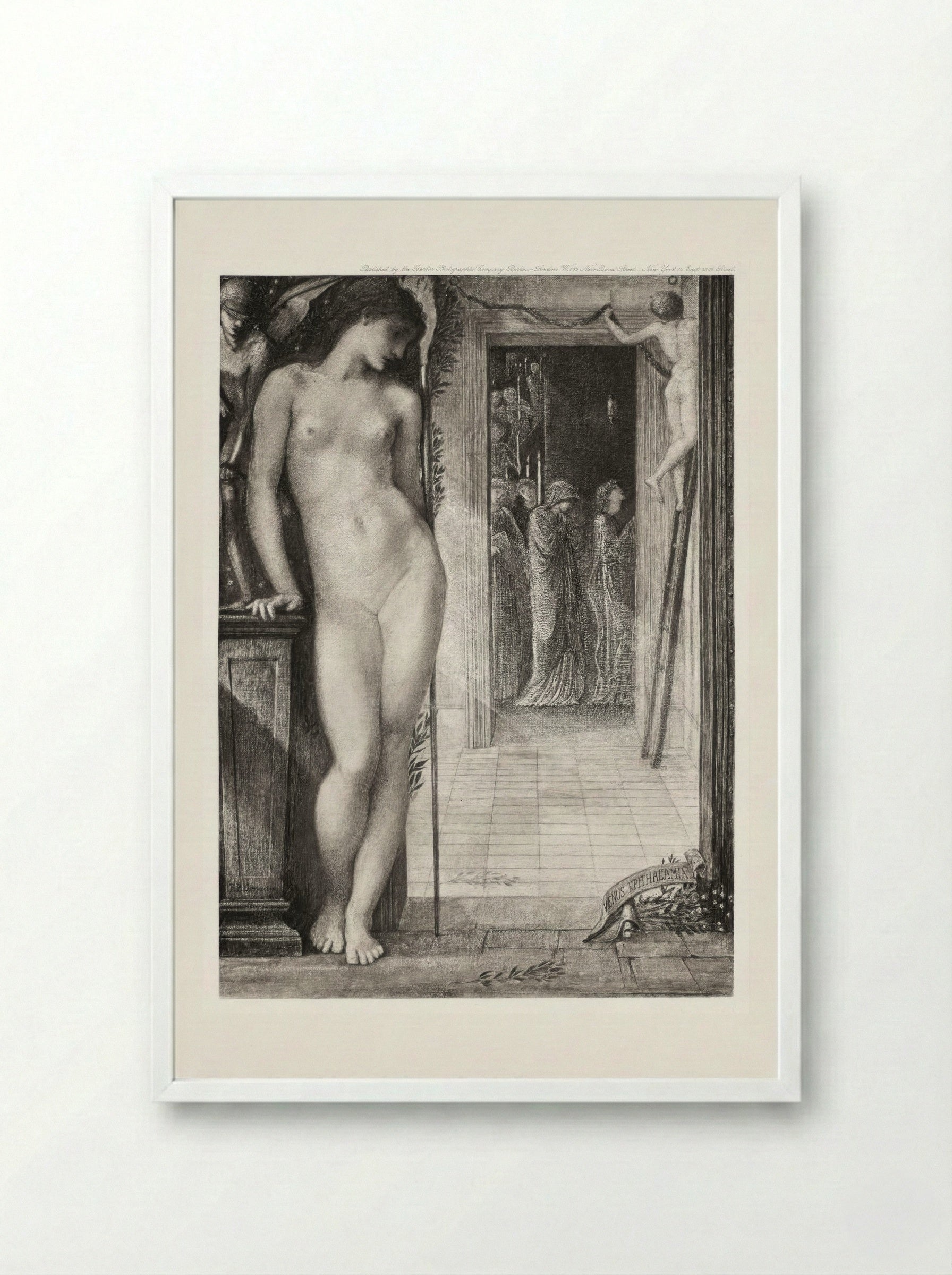
Edward Burne-Jones's 'Venus Epithalamia' (1871) captures the essence of Aestheticism with its depiction of Venus and a bridal procession. This fine art print brings classical elegance and Pre-Raphaelite beauty to any space.
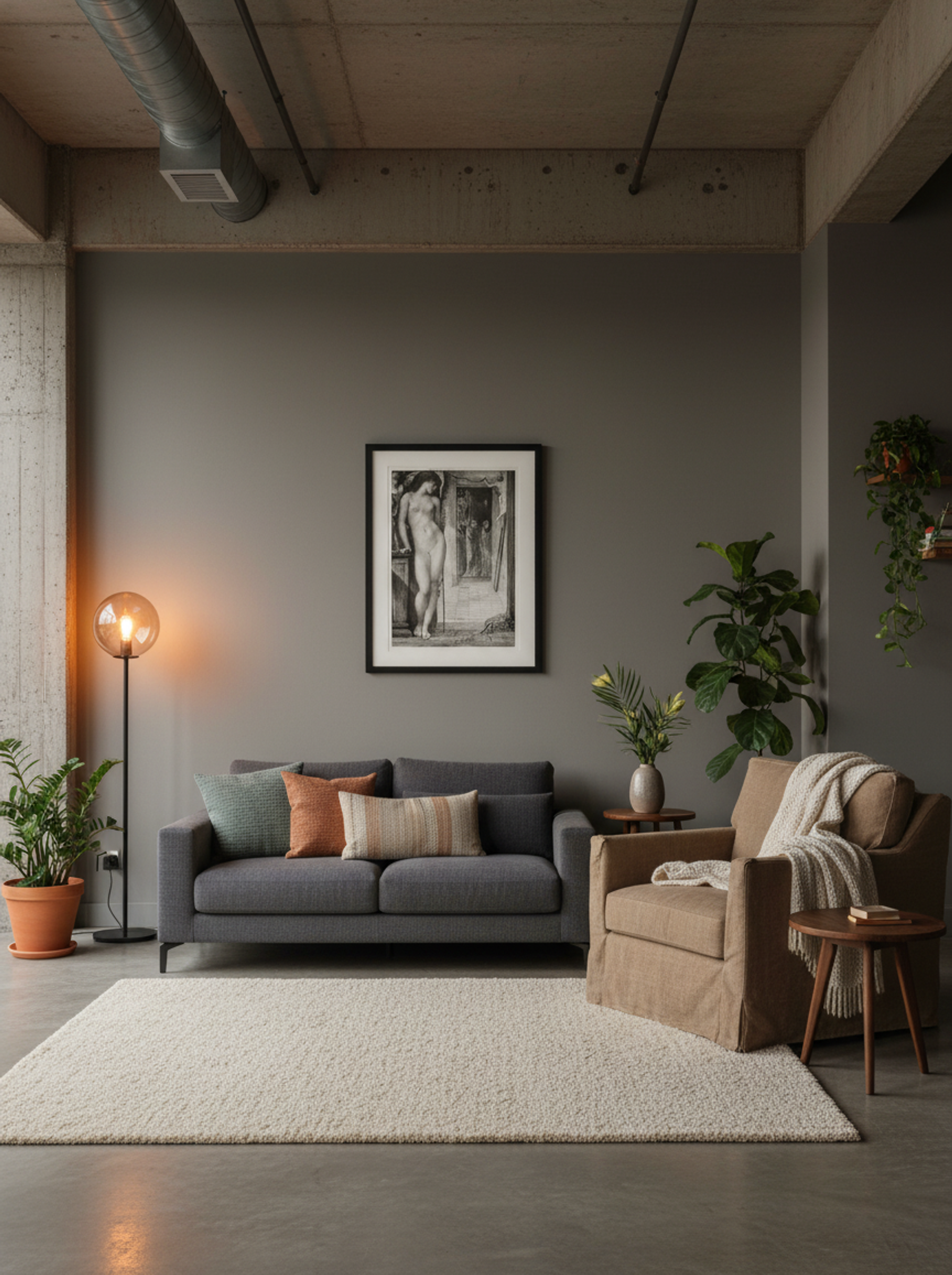
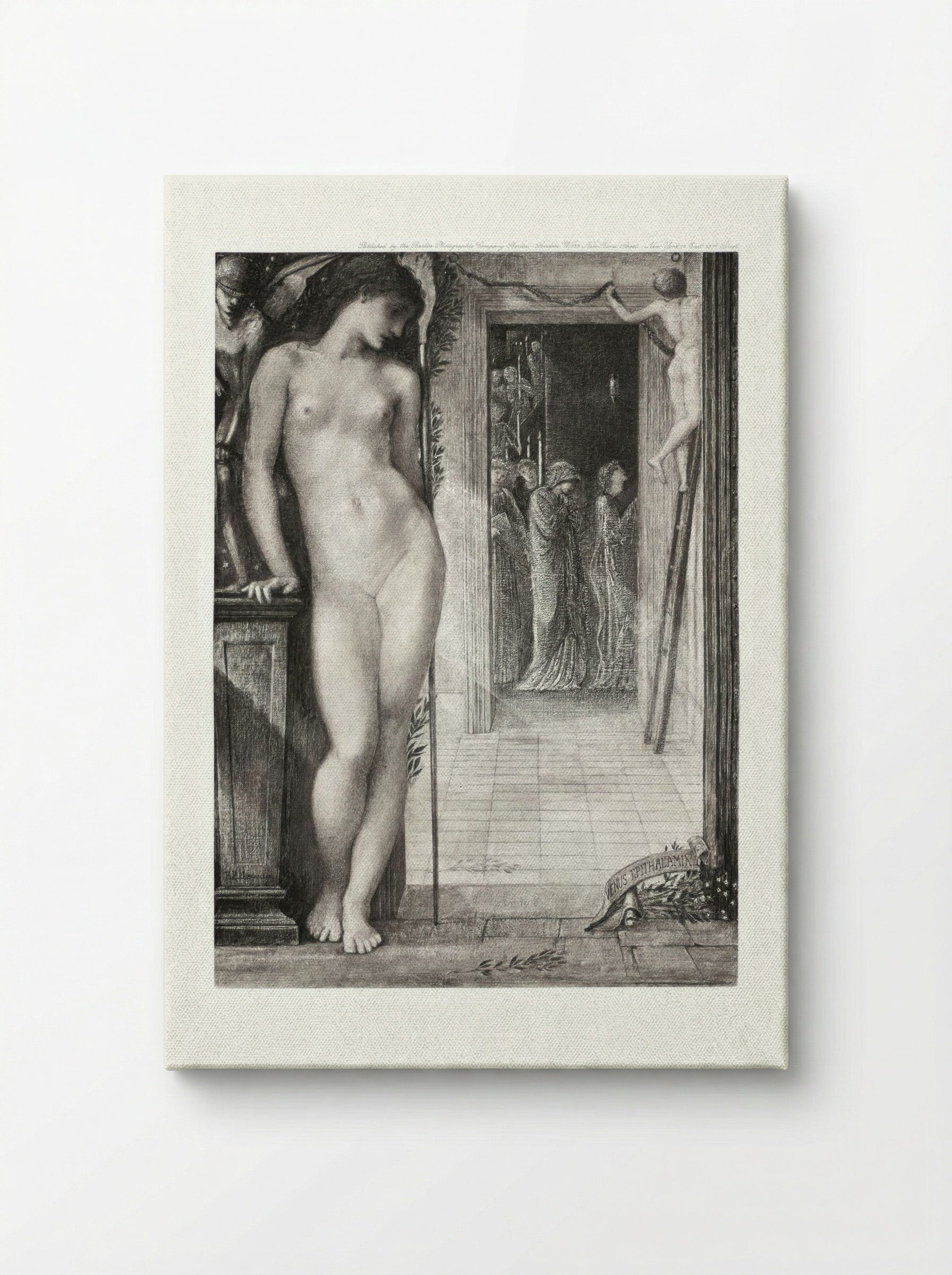
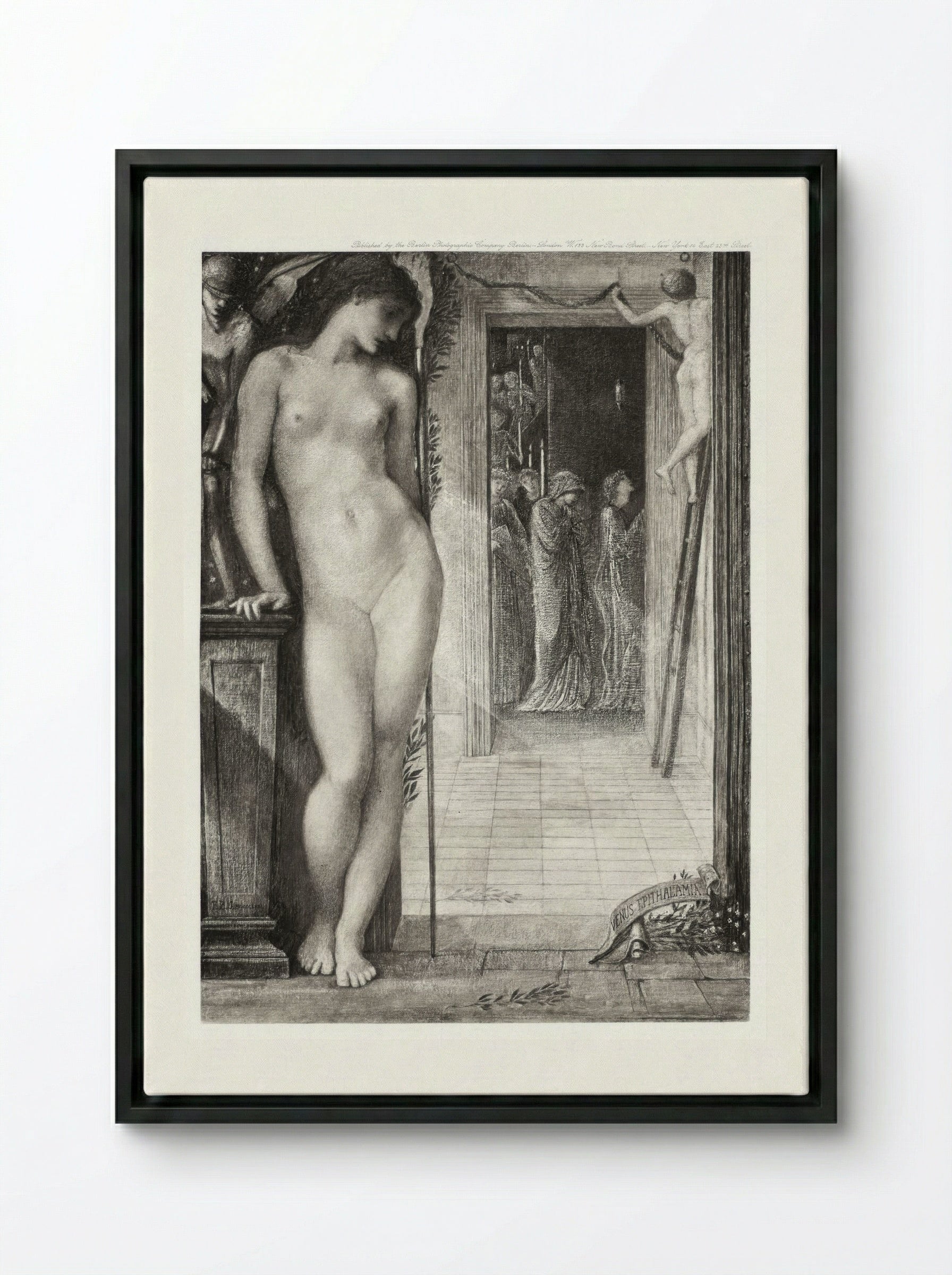
Edward Burne-Jones's 'Venus Epithalamia', created in 1871, exemplifies the Aesthetic movement's focus on beauty and classical themes. The work depicts Venus, the Roman goddess of love, in a scene suggestive of a wedding or bridal procession. The composition is divided into two distinct spaces: in the foreground, a nude Venus stands gracefully, while in the background, a procession of figures moves through a doorway, hinting at a ceremonial event. The inclusion of a cherubic figure on a ladder further enhances the allegorical nature of the piece. Burne-Jones's meticulous attention to detail and his use of soft, muted tones create a dreamlike atmosphere, characteristic of his style. This print offers a glimpse into the artist's fascination with mythology and his commitment to creating visually stunning and emotionally resonant works. As a fine art print, 'Venus Epithalamia' brings a touch of classical elegance and Pre-Raphaelite sensibility to any interior, making it a sophisticated addition to a living room, study, or hallway. Its subtle colour palette and intricate details invite contemplation, offering a timeless aesthetic appeal.
Return policy
Because every print is made to order, we don't offer change-of-mind returns, refunds or exchanges. If your order arrives faulty, damaged or incorrect, we'll replace it free of charge — just contact us within 48 hours of delivery. EU customers have a 14-day cooling-off right. See our refunds page for full details.
Shipping
We ship worldwide, printing at the production hub nearest to your delivery address. Delivery times and costs vary by destination — you'll see the options available to you at checkout.
Manufacturing
Each print is produced to order using 12-colour giclée printing on FSC-certified archival paper. Designed in Britain and printed at your nearest production hub to reduce waste and speed up delivery.
Venus Epithalamia - Edward Burne-Jones
Our Features
Designed for Lasting Impact
Specific Features
Every Solis piece is made to order with archival, gallery-quality materials built to last.
- Museum-grade giclée printing for rich, fade-resistant colour
- Archival matte fine-art paper, FSC-certified
- Choose poster, framed print, canvas or framed canvas
- Frames in black, natural wood, dark wood or white
- Framed prints arrive ready to hang
Care & Cleaning
To keep your artwork looking its best:
- Dust gently with a soft, dry cloth
- Avoid prolonged direct sunlight
- Never use liquid cleaners on the print or canvas surface
- Keep in a dry, room-temperature space
- Handle prints with clean, dry hands
Materials & Sizing
Museum-grade giclée on FSC-certified archival matte paper, with framed and canvas options.
- Paper sizes: A4, A3, A2, A1, A0 and B2 (50×70 cm)
- Canvas: XS (20×30 cm) to Large (60×90 cm)
- Frames: black, natural wood, dark wood or white
Why Choose Us ?
100% Satisfaction Guarantee
Fast Shipping
Museum-Quality Materials

Artist Biography
Edward Burne-Jones
Though closely associated with Rossetti, Burne-Jones forged his own distinct path, drawing inspiration from Arthurian romances, classical mythology, and the burgeoning Symbolist movement. His works, such as 'The Beguiling of Merlin' and 'King Cophetua and the Beggar Maid', are not mere illustrations but rather explorations of complex emotional states and timeless human dramas. He embraced decorative arts, designing stained glass, tapestries, and mosaics, believing in the unity of art and life.
Burne-Jones's influence extended far beyond his own lifetime. His emphasis on beauty, imagination, and the evocative power of art paved the way for the Aesthetic movement and later Symbolist painters. Collecting a Burne-Jones print allows one to bring a touch of medieval romance and ethereal beauty into the everyday, a reminder of the power of art to transport and transform.
You May Also Like