

Fine Art Poster
From £28
A giclée print on 200gsm matte fine art paper, using a twelve-colour process for accurate, fade-resistant colour. Supplied unframed, delivered flat or rolled.



Archival giclée
Frames arrive ready to hang
Secure checkout
Made to order
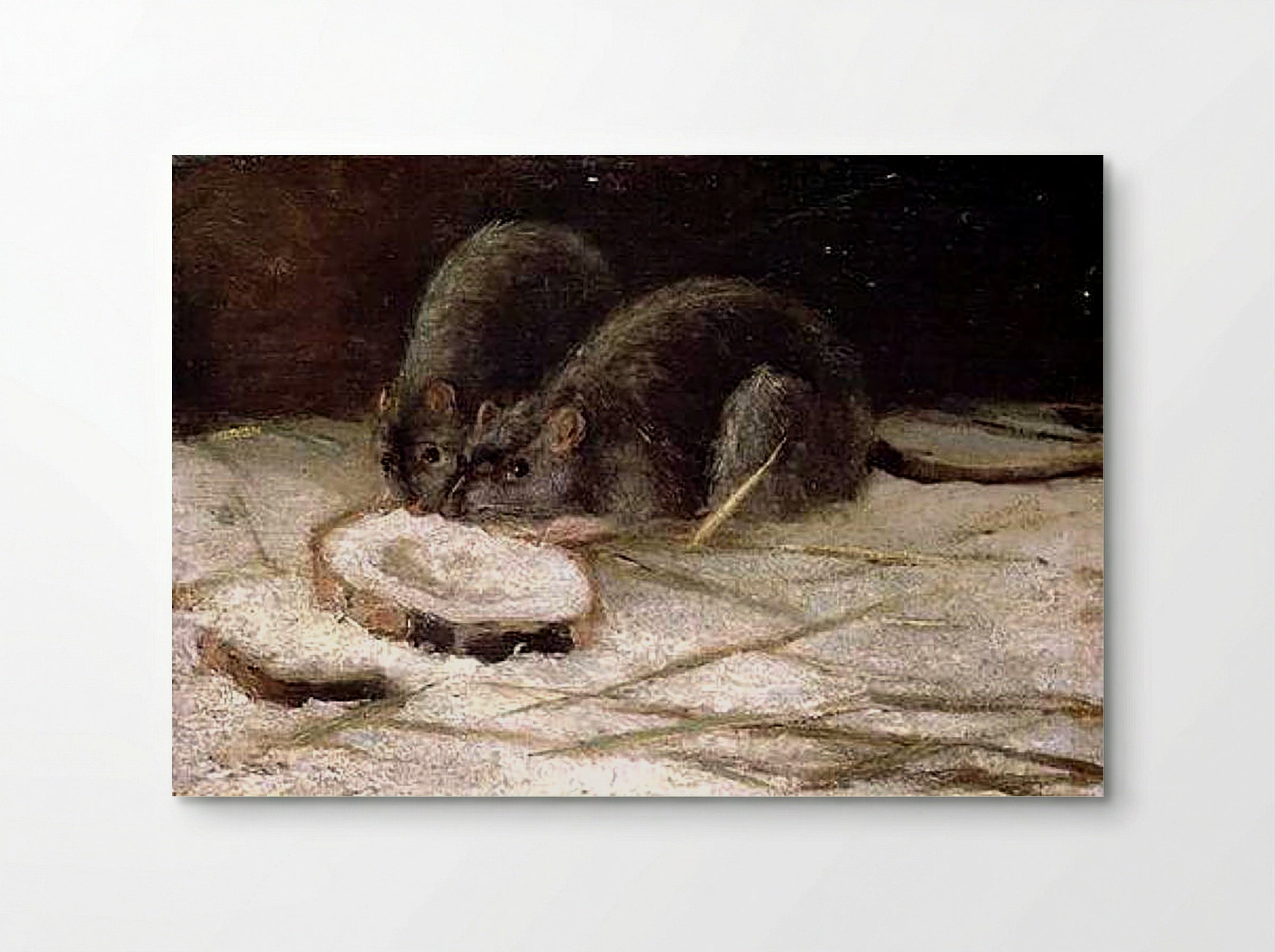
A study in muted tones, this painting depicts two rats sharing a meal. The artist's attention to detail brings these often-overlooked creatures into sharp focus.
This oil painting presents a close-up view of two rats consuming food. The composition is simple, with the animals as the central subject against a dark, indistinct background. The rats are rendered with attention to detail, their fur appearing soft and their forms solid. One rat is positioned slightly behind the other, creating a sense of depth within the confined space. The food, possibly bread or grain, is depicted in a lighter tone, contrasting with the darker hues of the rats and the background. The artist employs a muted palette, dominated by browns, greys, and creams, which contributes to the painting's overall subdued mood. The brushwork is visible, adding texture to the surfaces and suggesting a sense of movement, particularly in the rats' fur and the scattered debris around them. Animal paintings, especially those featuring rodents, were not uncommon in earlier periods, often serving as studies of nature or carrying symbolic meanings related to mortality or the transience of life. This particular work captures a moment of everyday existence, inviting the viewer to observe the creatures in their natural behaviour.
Because every print is made to order, we don't offer change-of-mind returns, refunds or exchanges. If your order arrives faulty, damaged or incorrect, we'll replace it free of charge — just contact us within 48 hours of delivery. See our refunds page for full details.
We ship worldwide, printing at the production hub nearest to your delivery address. Delivery times and costs vary by destination — you'll see the options available to you at checkout.
Each print is produced to order using 12-colour giclée printing on FSC-certified archival paper. Designed in Britain and printed at your nearest production hub to reduce waste and speed up delivery.

Artist Biography
Our Features
Designed for Lasting Impact
Every Solis piece is made to order with archival, gallery-quality materials built to last.
To keep your artwork looking its best:
Museum-grade giclée on FSC-certified archival matte paper, with framed and canvas options.
Made to order
Every piece is printed to order. These are the five finishes, and what makes each one different.
From £28
A giclée print on 200gsm matte fine art paper, using a twelve-colour process for accurate, fade-resistant colour. Supplied unframed, delivered flat or rolled.

From £45
The same fine art print in a solid wood frame with UV-protective acrylic glaze and rigid backing. Five frame colours. Arrives ready to hang.
Why Choose Us ?
Damage-free delivery guarantee
Fast Shipping
Museum-Quality Materials
Artist Biography
You May Also Like
We use cookies to measure our marketing and see which prints people love.We use cookies to measure our marketing.
By continuing to browse, you agree · Privacy Policy