

Fine Art Poster
From £28
A giclée print on 200gsm matte fine art paper, using a twelve-colour process for accurate, fade-resistant colour. Supplied unframed, delivered flat or rolled.



Archival giclée
Frames arrive ready to hang
Secure checkout
Made to order
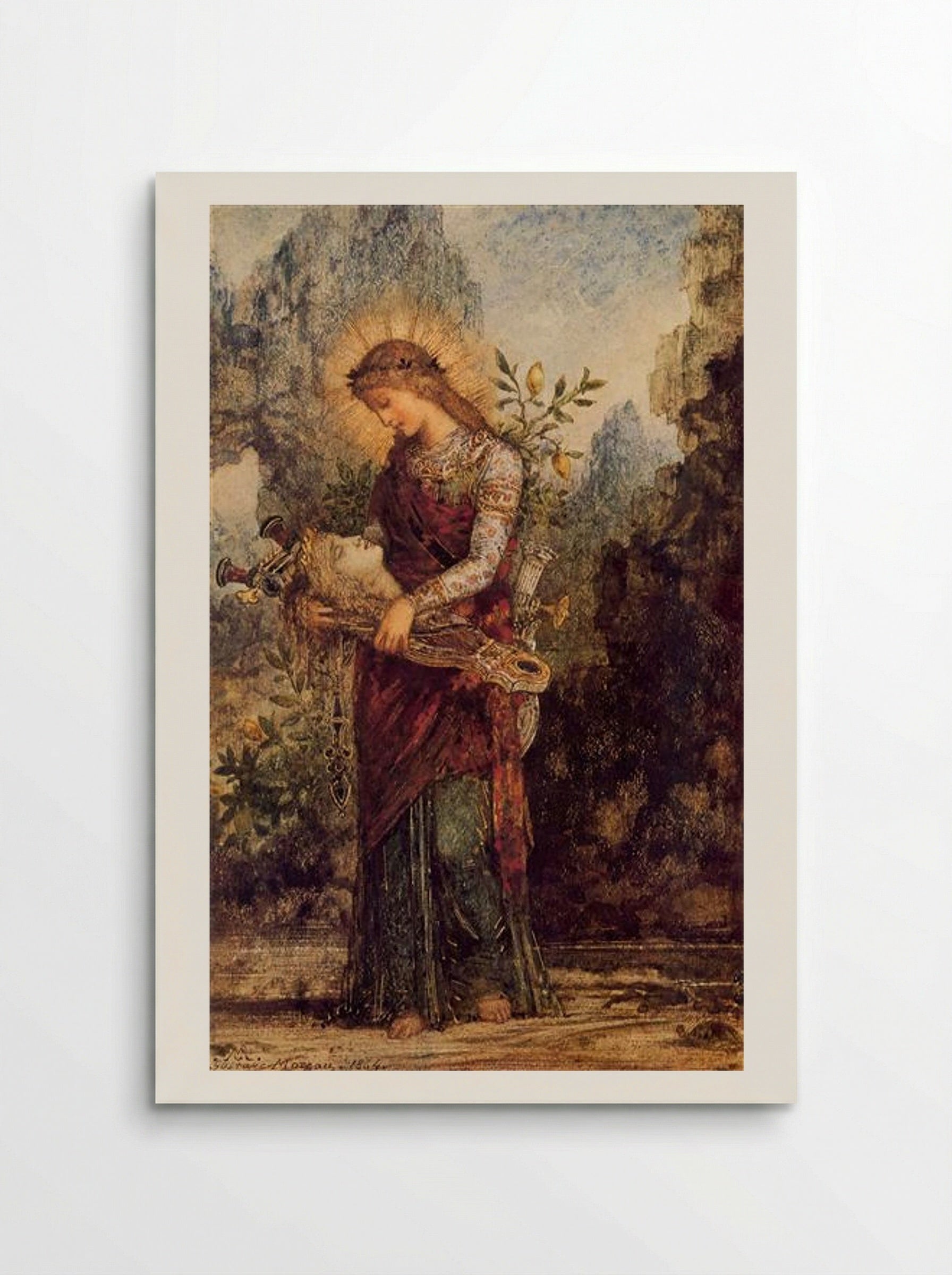
Gustave Moreau's 'Thracian Girl Carrying the Head of Orpheus' (1865) depicts a poignant scene from Greek mythology, rendered in the artist's signature Symbolist style. The painting captures a Thracian girl holding the severed head of Orpheus, conveying a sense of sorrow and contemplation.
Gustave Moreau's 1865 painting, 'Thracian Girl Carrying the Head of Orpheus', presents a haunting scene drawn from Greek mythology. Moreau, a central figure in the Symbolist movement, often explored themes of mythology, religion, and the exotic in his art. This particular work depicts the aftermath of Orpheus's death, the legendary musician slain by Thracian women. The painting captures a young woman, identified as Thracian, tenderly carrying Orpheus's severed head and his lyre. The composition is striking, with the girl positioned centrally, her gaze lowered in a mixture of sorrow and contemplation. The head of Orpheus, still crowned with a laurel wreath, is rendered with delicate detail, contrasting with the rougher textures of the surrounding environment. The colour palette is subdued, dominated by earthy tones of red, green, and brown, which adds to the painting's melancholic atmosphere. The background features a misty, dreamlike setting, typical of Moreau's Symbolist style, further enhancing the sense of mystery and otherworldliness. The painting is a meditation on loss, beauty, and the power of art, reflecting the Symbolist movement's interest in exploring inner emotional states and the darker aspects of the human condition.
Because every print is made to order, we don't offer change-of-mind returns, refunds or exchanges. If your order arrives faulty, damaged or incorrect, we'll replace it free of charge — just contact us within 48 hours of delivery. See our refunds page for full details.
We ship worldwide, printing at the production hub nearest to your delivery address. Delivery times and costs vary by destination — you'll see the options available to you at checkout.
Each print is produced to order using 12-colour giclée printing on FSC-certified archival paper. Designed in Britain and printed at your nearest production hub to reduce waste and speed up delivery.

Artist Biography
Our Features
Designed for Lasting Impact
Every Solis piece is made to order with archival, gallery-quality materials built to last.
To keep your artwork looking its best:
Museum-grade giclée on FSC-certified archival matte paper, with framed and canvas options.
Made to order
Every piece is printed to order. These are the five finishes, and what makes each one different.
From £28
A giclée print on 200gsm matte fine art paper, using a twelve-colour process for accurate, fade-resistant colour. Supplied unframed, delivered flat or rolled.

From £45
The same fine art print in a solid wood frame with UV-protective acrylic glaze and rigid backing. Five frame colours. Arrives ready to hang.
Why Choose Us ?
Damage-free delivery guarantee
Fast Shipping
Museum-Quality Materials
Artist Biography
Gustave Moreau
You May Also Like
Cookies show us which prints people love, so we hang the right art. Help us fill it?
Essential cookies only if you prefer · Privacy Policy