

Fine Art Poster
From £37
A giclée print on 200gsm matte fine art paper, using a twelve-colour process for accurate, fade-resistant colour. Supplied unframed, delivered flat or rolled.



Archival giclée
Frames arrive ready to hang
Secure checkout
Made to order
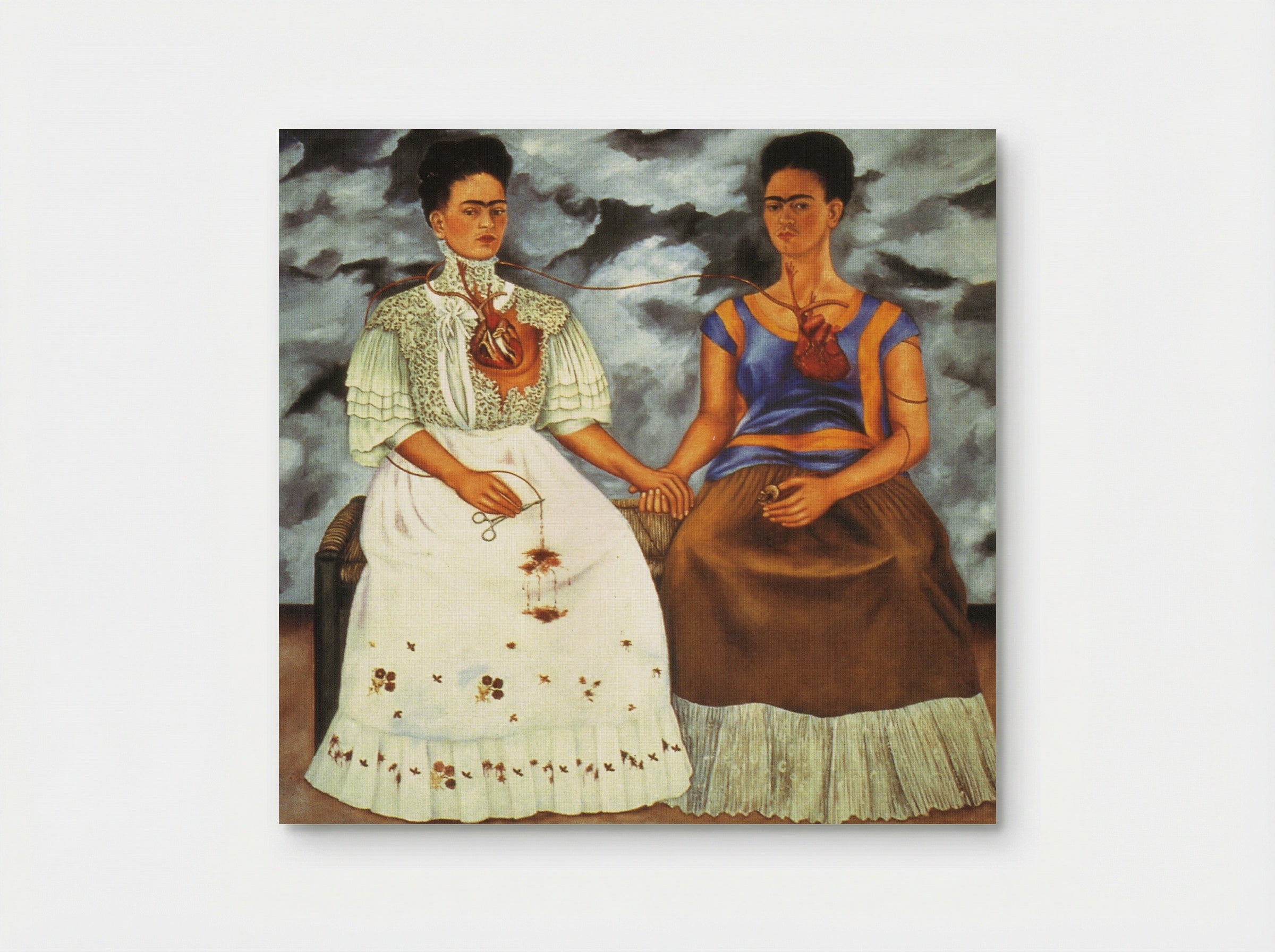
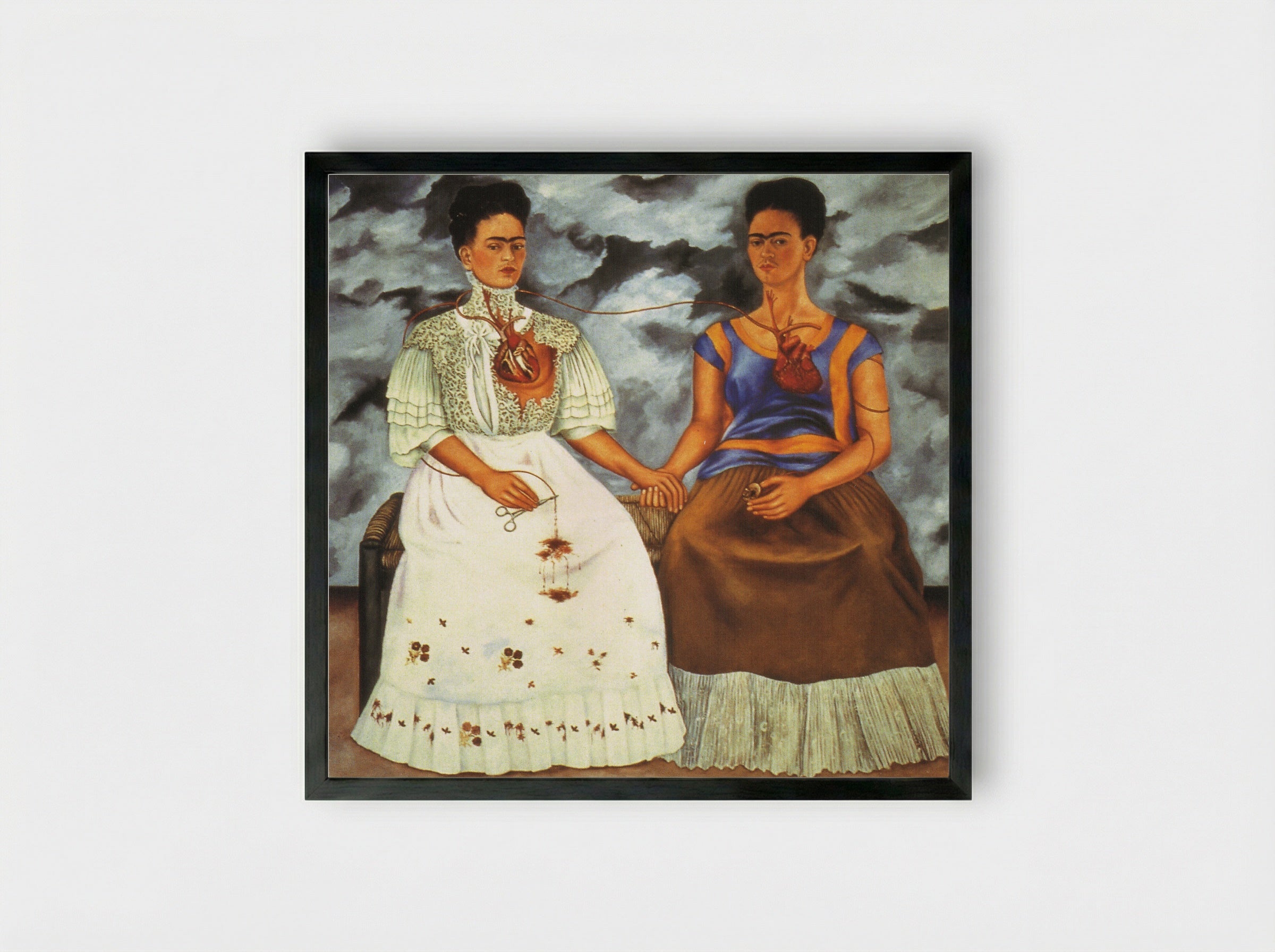
Frida Kahlo's 'The Two Fridas', painted in 1939, is a double self-portrait exploring her identity and emotional pain following her divorce from Diego Rivera. It depicts two versions of Kahlo connected by a visible artery, each representing a different aspect of her heritage.
Painted in 1939, 'The Two Fridas' is a double self-portrait by Mexican artist Frida Kahlo. It depicts two distinct versions of Kahlo seated side by side, connected by a visible artery. On the left, Frida is dressed in a European-style dress, reflecting her European heritage. Her exposed heart is wounded, and she holds scissors, suggesting a painful separation. On the right, she wears traditional Mexican clothing, representing her Mexican identity. Her heart is intact, symbolising wholeness and connection to her cultural roots. The painting was created shortly after Kahlo's divorce from Diego Rivera, and it is often interpreted as an exploration of her complex identity and emotional turmoil. The stormy sky in the background adds to the painting's dramatic atmosphere. The visible hearts and connecting artery emphasise the emotional and physical pain Kahlo experienced. The contrast between the two Fridas highlights the artist's internal conflict and her search for self-acceptance. 'The Two Fridas' remains one of Kahlo's most iconic and personal works, offering insight into her life and artistic vision.
Because every print is made to order, we don't offer change-of-mind returns, refunds or exchanges. If your order arrives faulty, damaged or incorrect, we'll replace it free of charge — just contact us within 48 hours of delivery. See our refunds page for full details.
We ship worldwide, printing at the production hub nearest to your delivery address. Delivery times and costs vary by destination — you'll see the options available to you at checkout.
Each print is produced to order using 12-colour giclée printing on FSC-certified archival paper. Designed in Britain and printed at your nearest production hub to reduce waste and speed up delivery.
Specific Features
Every Solis piece is made to order with archival, gallery-quality materials built to last.
Care & Cleaning
To keep your artwork looking its best:
Materials & Sizing
Museum-grade giclée on FSC-certified archival matte paper, with framed and canvas options.

Artist Biography
Made to order
Every piece is printed to order. These are the five finishes, and what makes each one different.
From £37
A giclée print on 200gsm matte fine art paper, using a twelve-colour process for accurate, fade-resistant colour. Supplied unframed, delivered flat or rolled.

From £59
The same fine art print in a solid wood frame with UV-protective acrylic glaze and rigid backing. Five frame colours. Arrives ready to hang.
Why Choose Us ?
Damage-free delivery guarantee
Fast Shipping
Museum-Quality Materials
You May Also Like
We use cookies to measure our marketing and see which prints people love.We use cookies to measure our marketing.
By continuing to browse, you agree · Privacy Policy