

Fine Art Poster
From £28
A giclée print on 200gsm matte fine art paper, using a twelve-colour process for accurate, fade-resistant colour. Supplied unframed, delivered flat or rolled.

Archival giclée
Frames arrive ready to hang
Secure checkout
Made to order
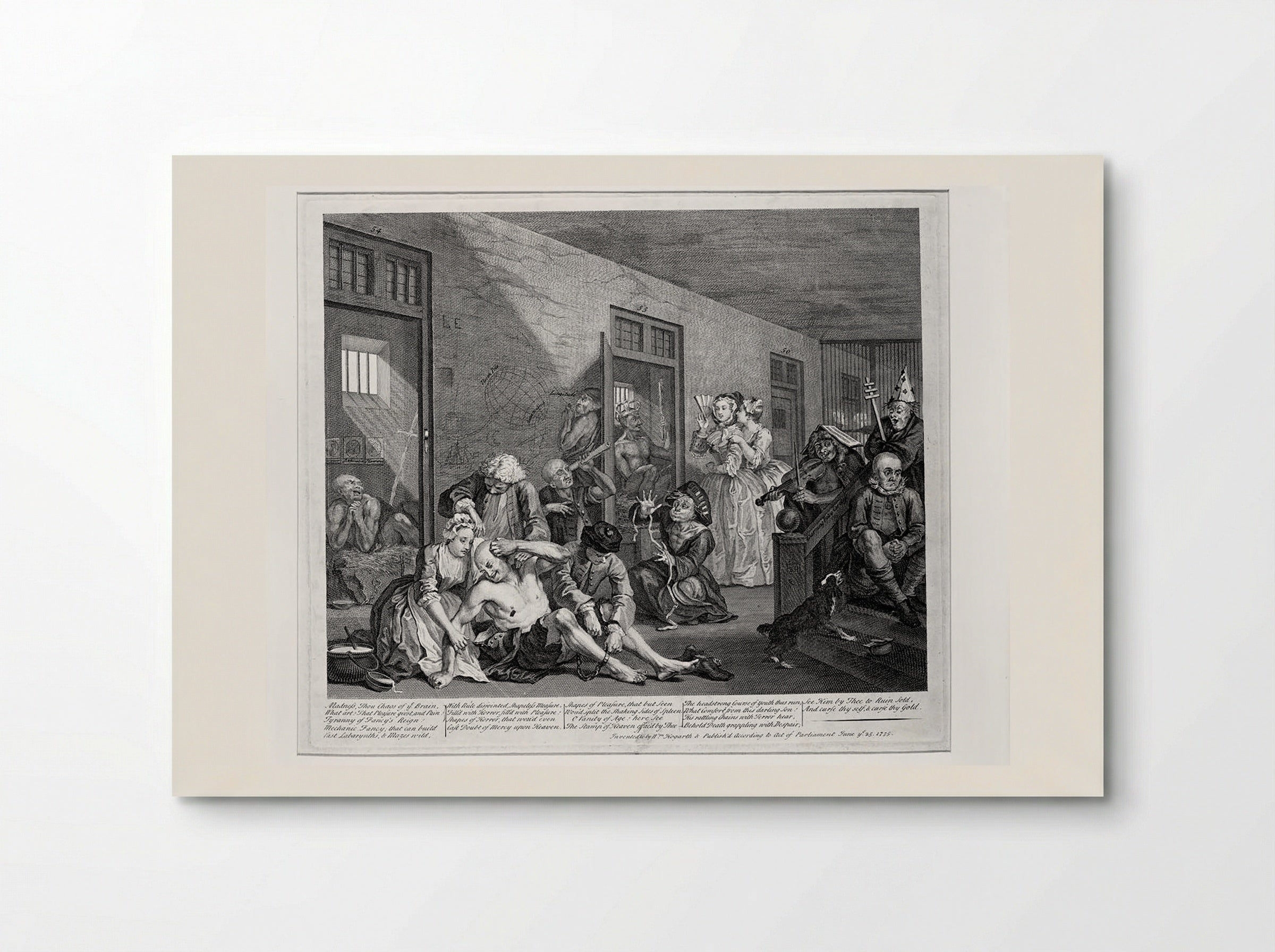
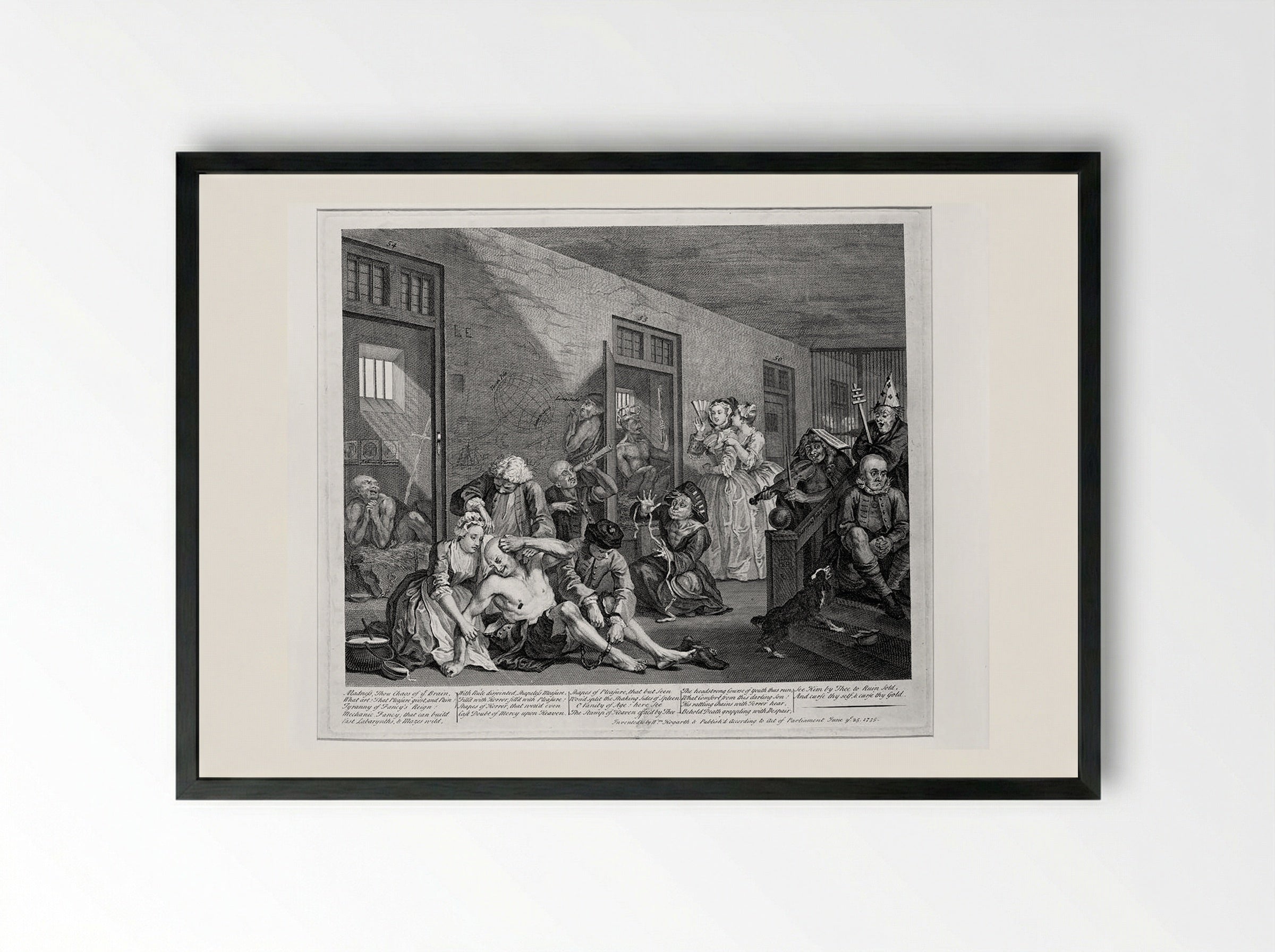
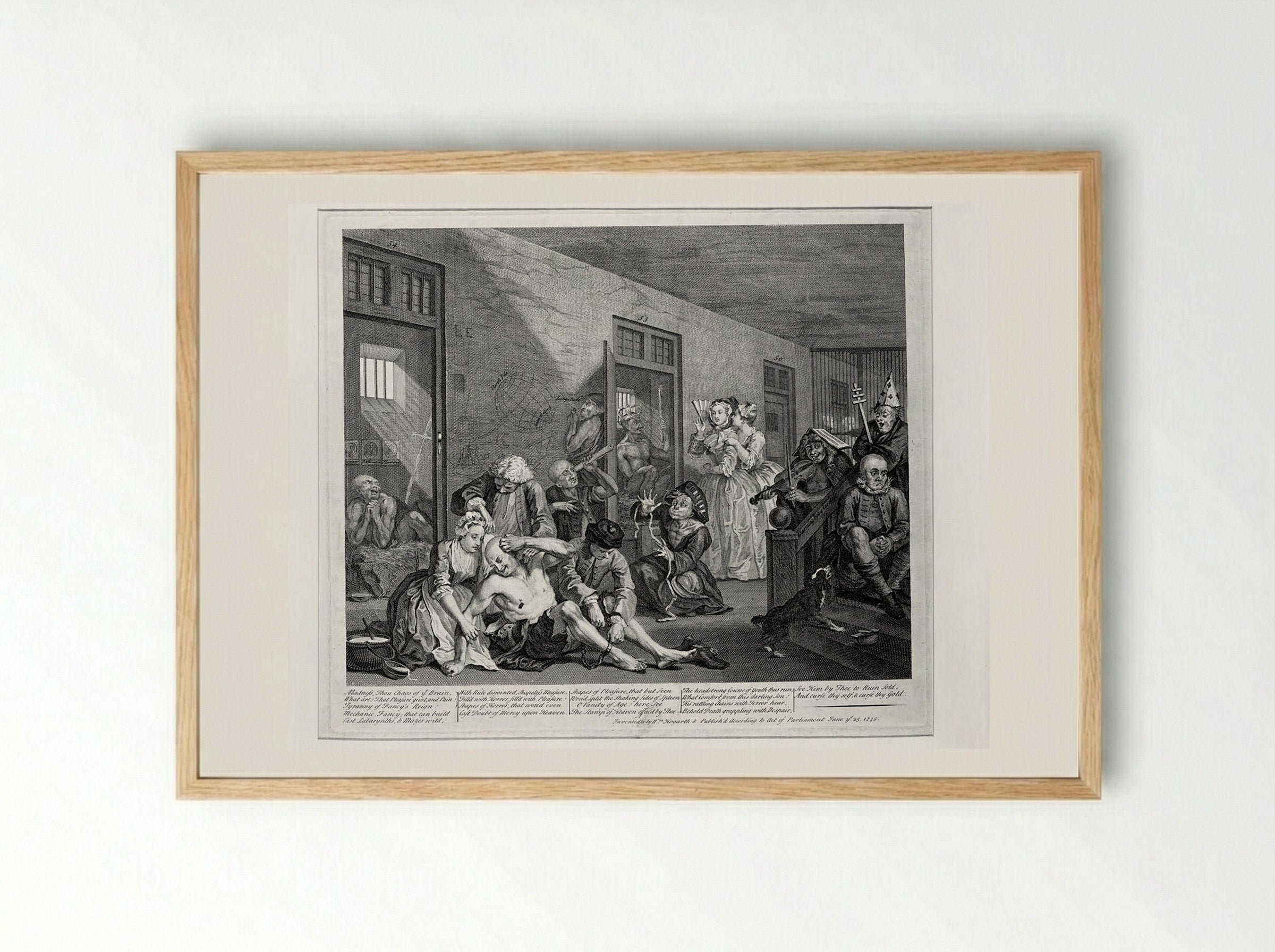
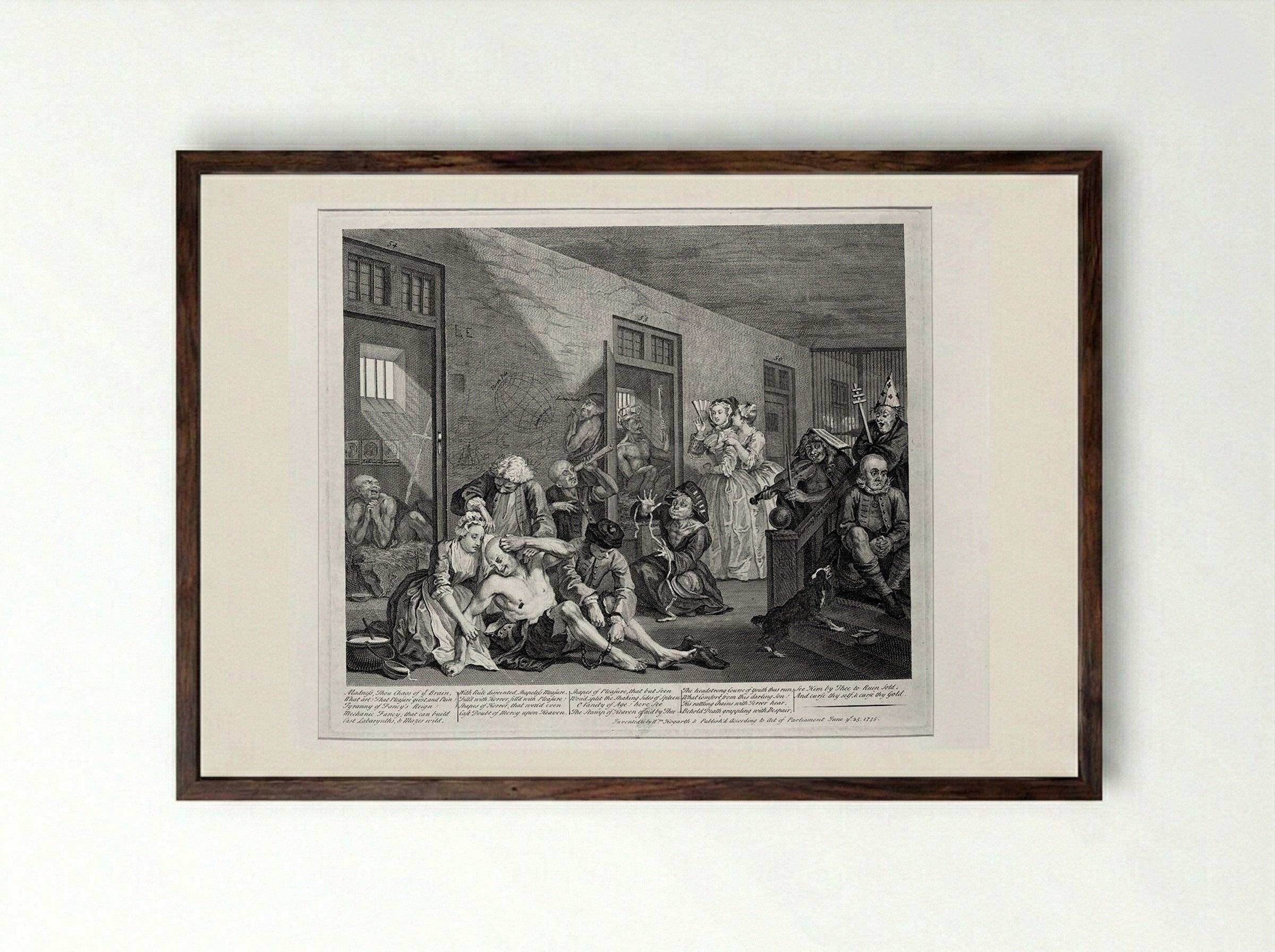
William Hogarth's 1735 engraving, "The Rake in Bedlam", depicts the final scene from *A Rake's Progress*, showing the protagonist in a mental asylum. The print serves as a satirical commentary on the consequences of moral and financial excess in 18th-century London.
William Hogarth's "The Rake in Bedlam" (1735) is the eighth and final print in the series *A Rake's Progress*. It depicts Tom Rakewell, the protagonist, in Bedlam, a notorious London mental asylum. This engraving captures the culmination of Rakewell's descent into madness and ruin, a consequence of his profligate lifestyle and moral failings. The scene is filled with a cast of characters, each representing different forms of mental derangement. Rakewell is shown in the centre, naked and manacled, surrounded by doctors, concerned women, and fellow inmates exhibiting various eccentric behaviours. The composition is carefully arranged to convey a sense of chaos and confinement. The architecture of Bedlam, with its barred windows and stark walls, reinforces the theme of imprisonment, both physical and mental. Hogarth uses detailed line work to render the expressions and gestures of the figures, conveying a range of emotions from despair to delusion. The print is a commentary on the social and moral decay of 18th-century London, offering a cautionary tale about the dangers of vice and excess. Hogarth's work provides insight into the attitudes towards mental illness during this period.
Explore more from our William Hogarth collection.
Because every print is made to order, we don't offer change-of-mind returns, refunds or exchanges. If your order arrives faulty, damaged or incorrect, we'll replace it free of charge — just contact us within 48 hours of delivery. See our refunds page for full details.
We ship worldwide, printing at the production hub nearest to your delivery address. Delivery times and costs vary by destination — you'll see the options available to you at checkout.
Each print is produced to order using 12-colour giclée printing on FSC-certified archival paper. Designed in Britain and printed at your nearest production hub to reduce waste and speed up delivery.

Artist Biography
Our Features
Designed for Lasting Impact
Every Solis piece is made to order with archival, gallery-quality materials built to last.
To keep your artwork looking its best:
Museum-grade giclée on FSC-certified archival matte paper, with framed and canvas options.
Made to order
Every piece is printed to order. These are the five finishes, and what makes each one different.
From £28
A giclée print on 200gsm matte fine art paper, using a twelve-colour process for accurate, fade-resistant colour. Supplied unframed, delivered flat or rolled.

From £45
The same fine art print in a solid wood frame with UV-protective acrylic glaze and rigid backing. Five frame colours. Arrives ready to hang.
Why Choose Us ?
Damage-free delivery guarantee
Fast Shipping
Museum-Quality Materials
Artist Biography
William Hogarth
You May Also Like
We use cookies to measure our marketing and see which prints people love.We use cookies to measure our marketing.
By continuing to browse, you agree · Privacy Policy