

Fine Art Poster
From £28
A giclée print on 200gsm matte fine art paper, using a twelve-colour process for accurate, fade-resistant colour. Supplied unframed, delivered flat or rolled.

Archival giclée
Frames arrive ready to hang
Secure checkout
Made to order
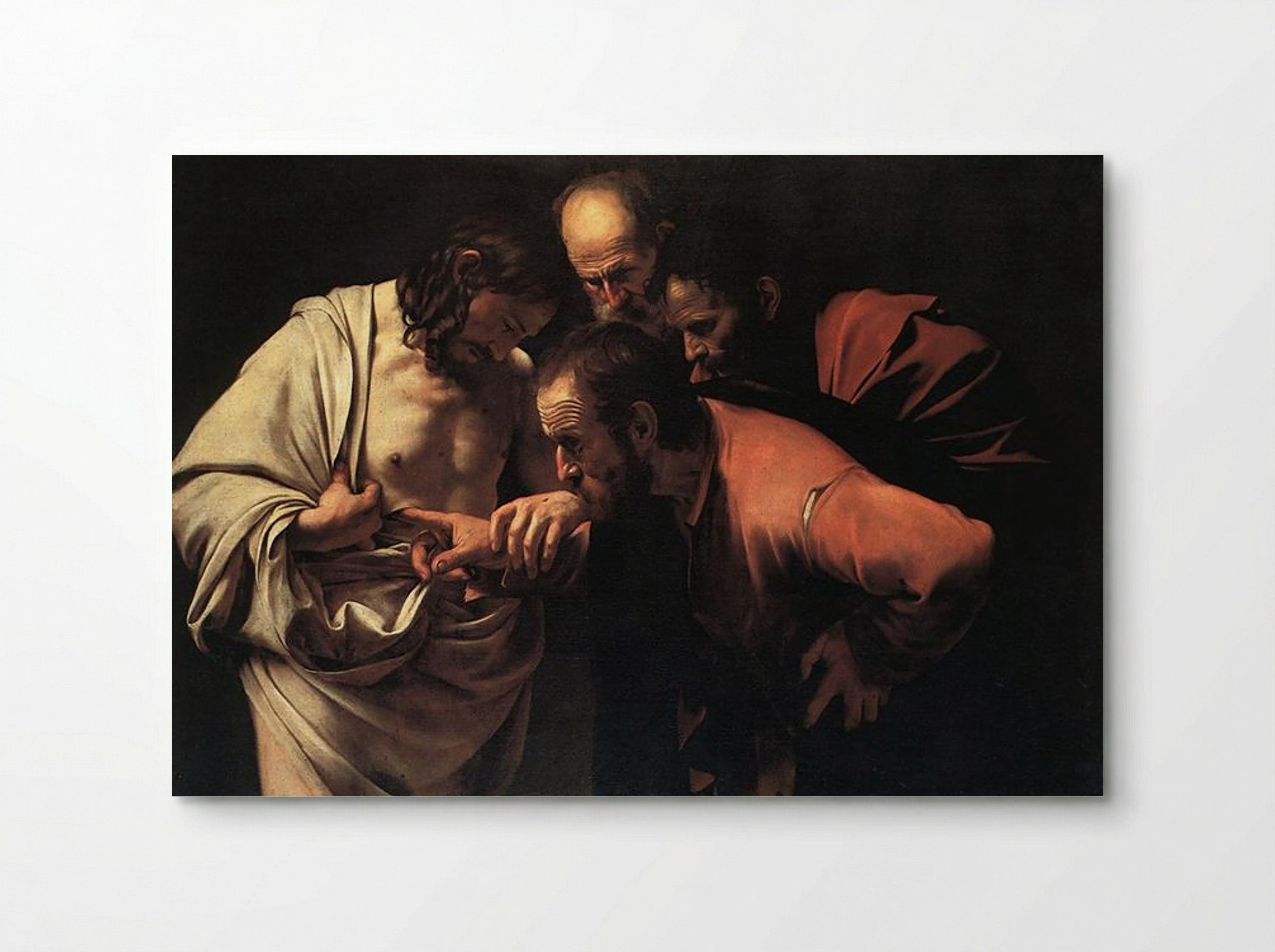
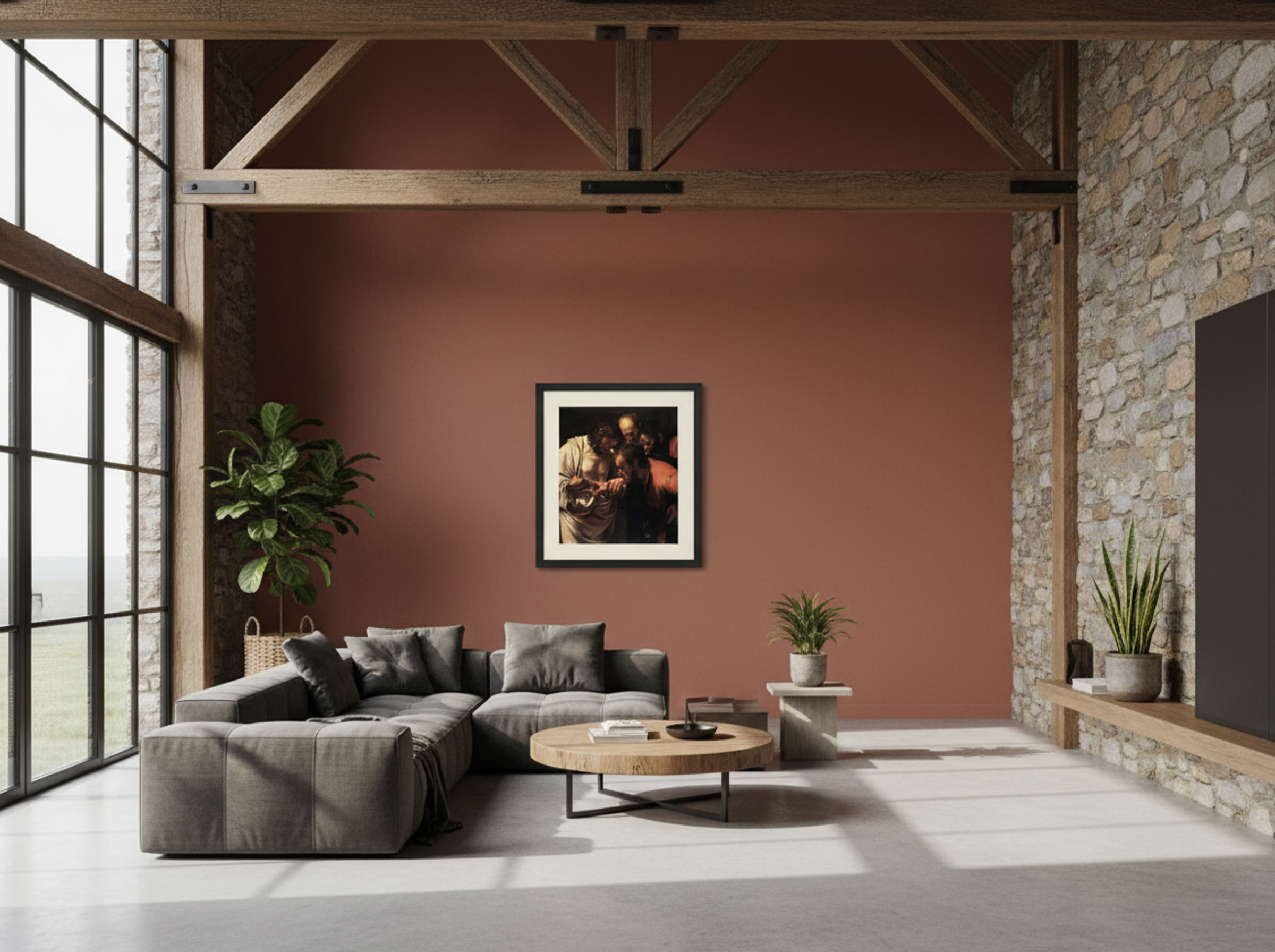
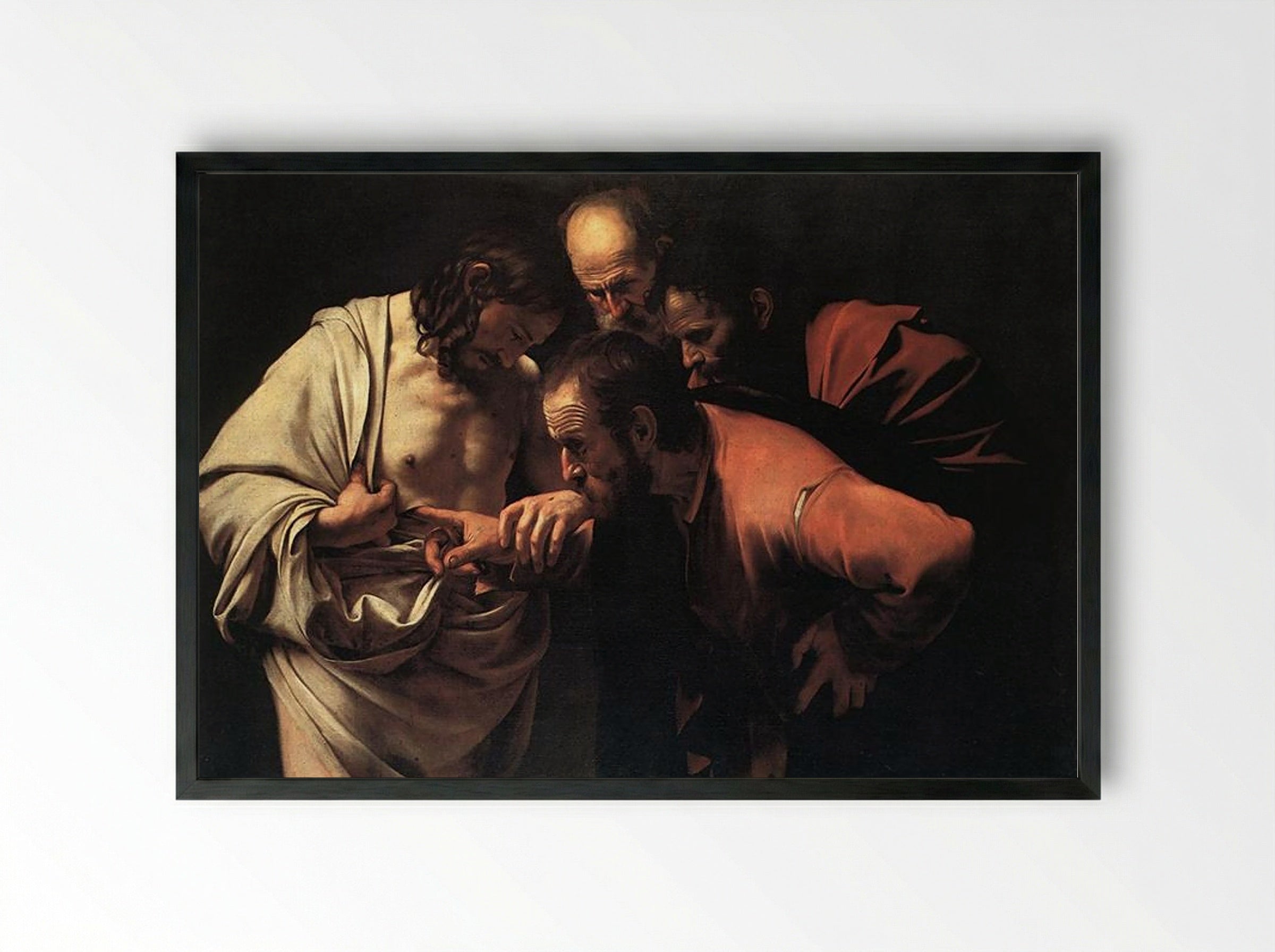
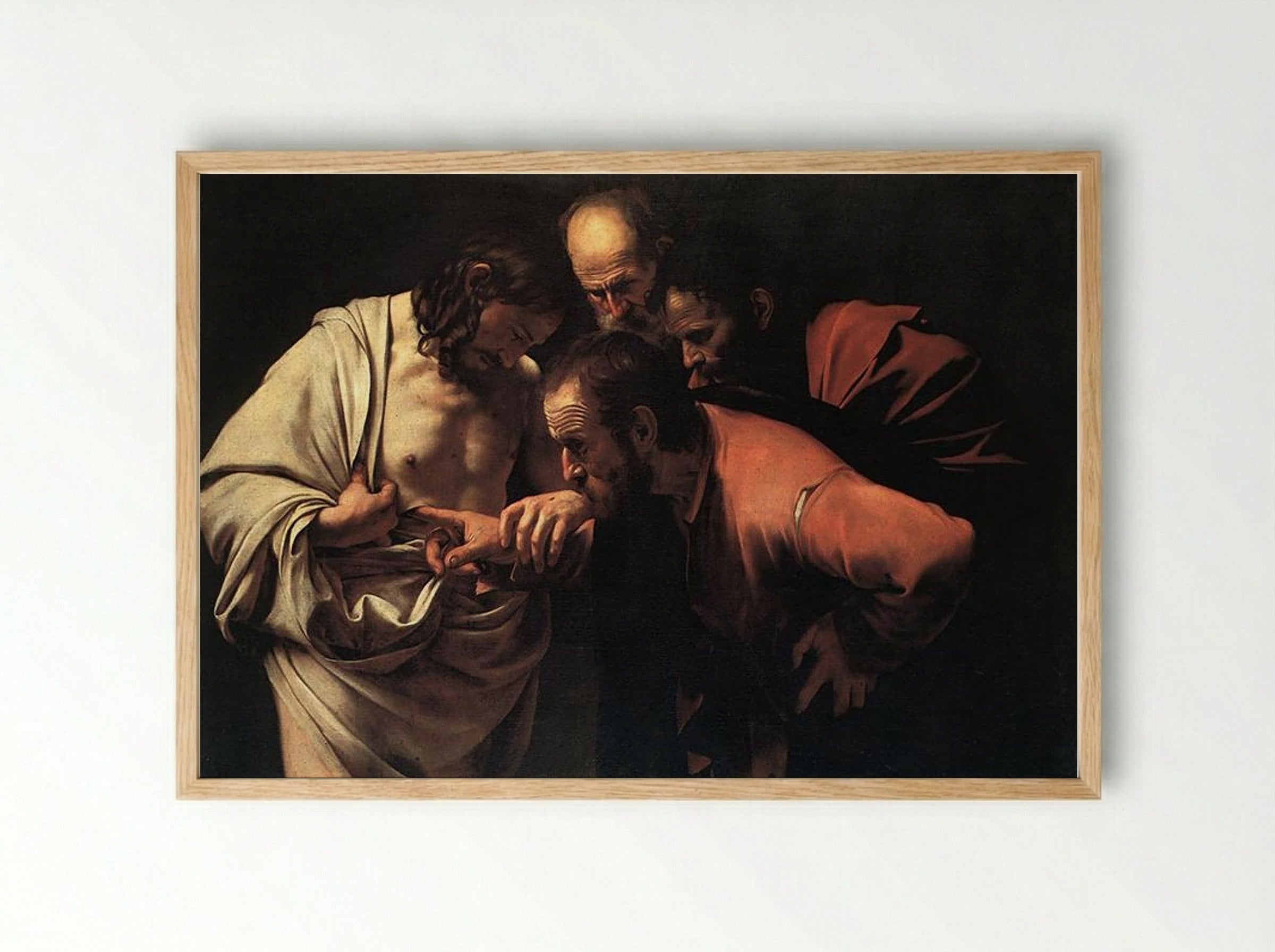
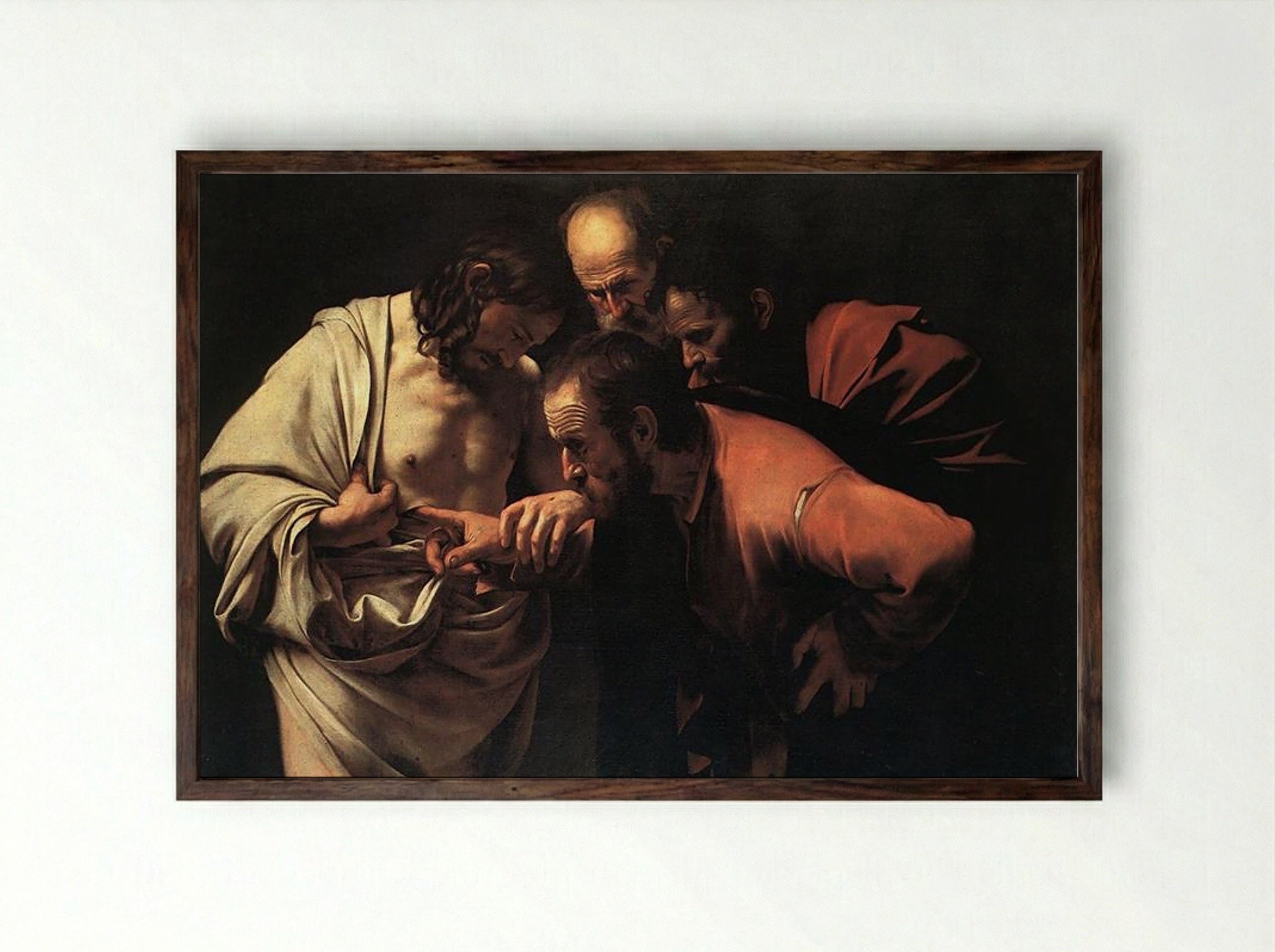
Caravaggio's *The Incredulity of Saint Thomas* captures the Apostle Thomas's moment of doubt and subsequent confirmation of Christ's resurrection. The dramatic use of light and shadow, combined with realistic figures, creates an intimate and compelling religious scene.
Painted by the Italian master Caravaggio around 1601-1602, *The Incredulity of Saint Thomas* depicts a scene from the New Testament. The painting illustrates the moment when the Apostle Thomas, initially doubtful of Jesus' resurrection, is invited to touch the wounds Christ sustained during his crucifixion. This encounter is meant to dispel Thomas's disbelief and affirm the reality of the resurrection. The work is currently held at Sanssouci Palace, Potsdam. Caravaggio's use of tenebrism, a dramatic contrast between light and dark, heightens the emotional intensity of the scene. The figures emerge from a dark background, with light focused on their faces and hands, guiding the viewer's eye to the central action. Jesus gently guides Thomas's hand towards the wound in his side, while the faces of the other apostles reflect a mixture of curiosity and concern. The realism in the depiction of the figures, with their weathered faces and ordinary features, is characteristic of Caravaggio's style, which sought to bring religious subjects closer to the everyday experience of the viewer. The composition is tightly cropped, creating a sense of intimacy and immediacy, drawing the viewer into the heart of the event.
Because every print is made to order, we don't offer change-of-mind returns, refunds or exchanges. If your order arrives faulty, damaged or incorrect, we'll replace it free of charge — just contact us within 48 hours of delivery. See our refunds page for full details.
We ship worldwide, printing at the production hub nearest to your delivery address. Delivery times and costs vary by destination — you'll see the options available to you at checkout.
Each print is produced to order using 12-colour giclée printing on FSC-certified archival paper. Designed in Britain and printed at your nearest production hub to reduce waste and speed up delivery.

Artist Biography
Our Features
Designed for Lasting Impact
Every Solis piece is made to order with archival, gallery-quality materials built to last.
To keep your artwork looking its best:
Museum-grade giclée on FSC-certified archival matte paper, with framed and canvas options.
Made to order
Every piece is printed to order. These are the five finishes, and what makes each one different.
From £28
A giclée print on 200gsm matte fine art paper, using a twelve-colour process for accurate, fade-resistant colour. Supplied unframed, delivered flat or rolled.

From £45
The same fine art print in a solid wood frame with UV-protective acrylic glaze and rigid backing. Five frame colours. Arrives ready to hang.
Why Choose Us ?
Damage-free delivery guarantee
Fast Shipping
Museum-Quality Materials
Artist Biography
Caravaggio
You May Also Like
Cookies show us which prints people love, so we hang the right art. Help us fill it?
Essential cookies only if you prefer · Privacy Policy