

Fine Art Poster
From £28
A giclée print on 200gsm matte fine art paper, using a twelve-colour process for accurate, fade-resistant colour. Supplied unframed, delivered flat or rolled.



Archival giclée
Frames arrive ready to hang
Secure checkout
Made to order
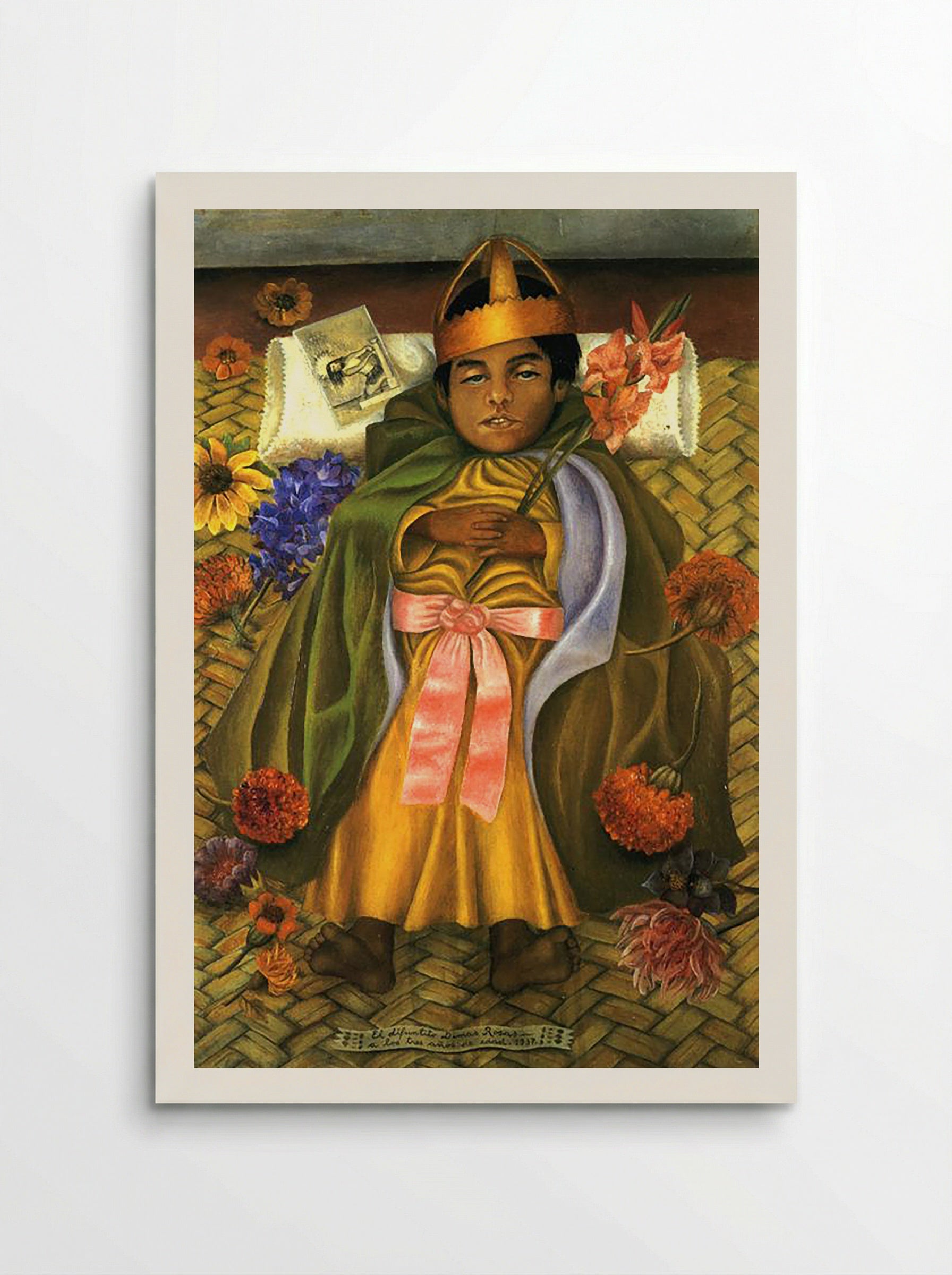
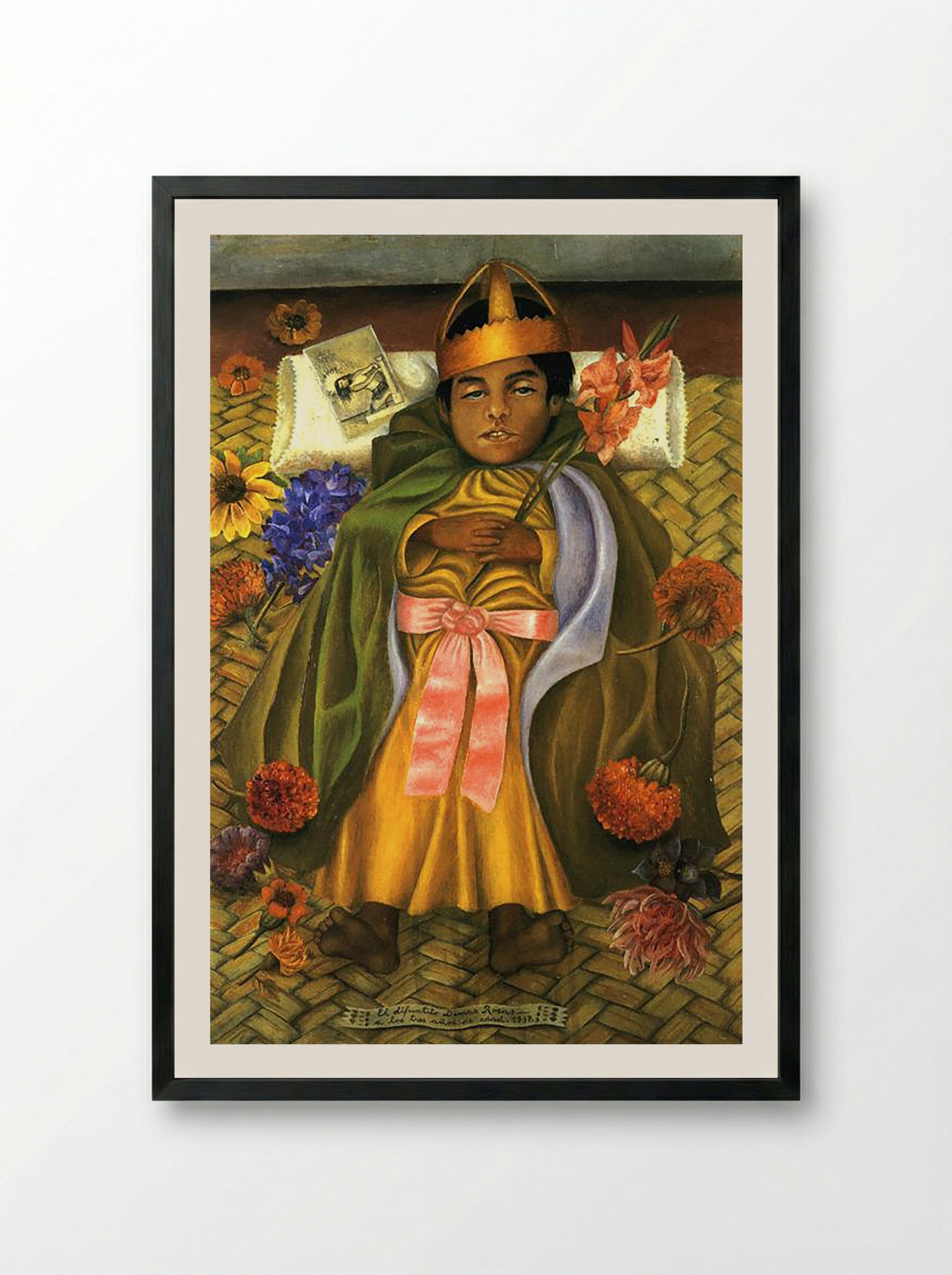
Painted in 1937, Frida Kahlo's "The Deceased Dimas Rosas at Three Years Old" is a moving portrait of a deceased child in ceremonial attire, surrounded by symbolic floral offerings, reflecting Mexican folk traditions and Kahlo's exploration of death and cultural memory.
Frida Kahlo's 1937 painting, "The Deceased Dimas Rosas at Three Years Old", is a poignant portrait rendered in oil on metal. The work depicts a deceased child, Dimas Rosas, adorned in ceremonial attire and surrounded by flowers, lying on what appears to be a woven mat. The child wears a gold crown and a yellow robe cinched with a pink sash, draped with a green cloak lined in lavender. His hands are crossed over his chest, holding thin branches. The composition includes symbolic elements, such as a small photograph resting on a pillow behind the child's head, and various flowers scattered around the figure, including sunflowers, marigolds, and other blooms. These floral offerings are traditional in Mexican Day of the Dead celebrations, which honour deceased loved ones. Kahlo's style blends realism with surrealist elements, creating a powerful and emotionally charged image. The painting reflects Kahlo's interest in Mexican folk traditions and her exploration of themes such as death, identity, and cultural memory. The flat perspective and the direct gaze of the child contribute to the work's intimate and unsettling atmosphere. The inscription at the bottom of the painting identifies the subject and his age at the time of death.
Because every print is made to order, we don't offer change-of-mind returns, refunds or exchanges. If your order arrives faulty, damaged or incorrect, we'll replace it free of charge — just contact us within 48 hours of delivery. See our refunds page for full details.
We ship worldwide, printing at the production hub nearest to your delivery address. Delivery times and costs vary by destination — you'll see the options available to you at checkout.
Each print is produced to order using 12-colour giclée printing on FSC-certified archival paper. Designed in Britain and printed at your nearest production hub to reduce waste and speed up delivery.
Specific Features
Every Solis piece is made to order with archival, gallery-quality materials built to last.
Care & Cleaning
To keep your artwork looking its best:
Materials & Sizing
Museum-grade giclée on FSC-certified archival matte paper, with framed and canvas options.

Artist Biography
Made to order
Every piece is printed to order. These are the five finishes, and what makes each one different.
From £28
A giclée print on 200gsm matte fine art paper, using a twelve-colour process for accurate, fade-resistant colour. Supplied unframed, delivered flat or rolled.

From £45
The same fine art print in a solid wood frame with UV-protective acrylic glaze and rigid backing. Five frame colours. Arrives ready to hang.
Why Choose Us ?
Damage-free delivery guarantee
Fast Shipping
Museum-Quality Materials
You May Also Like
We use cookies to measure our marketing and see which prints people love.We use cookies to measure our marketing.
By continuing to browse, you agree · Privacy Policy