

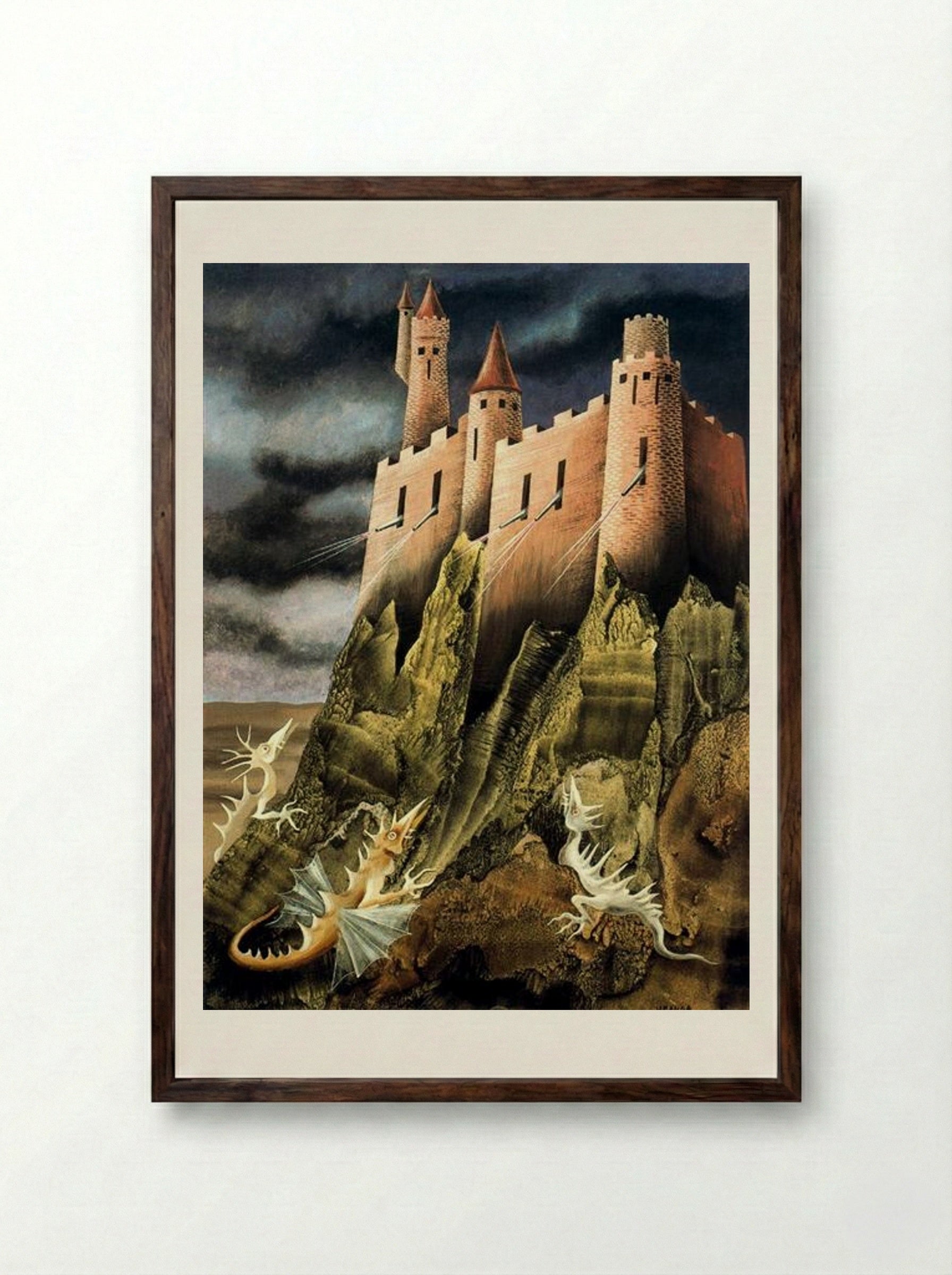
The Battle - Remedios Varo
Archival giclée
Ready to hang
Secure checkout
Made to order
Description
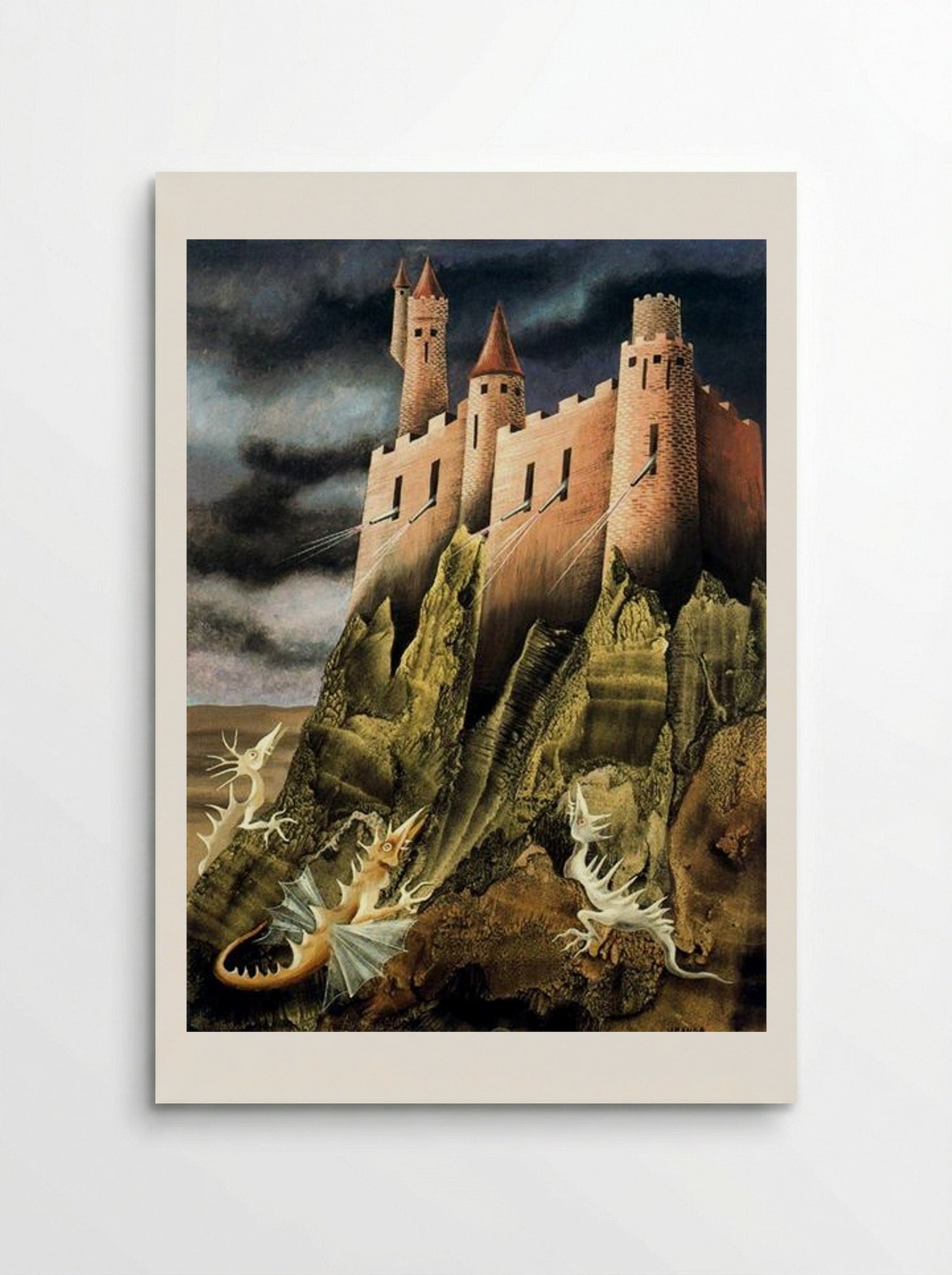
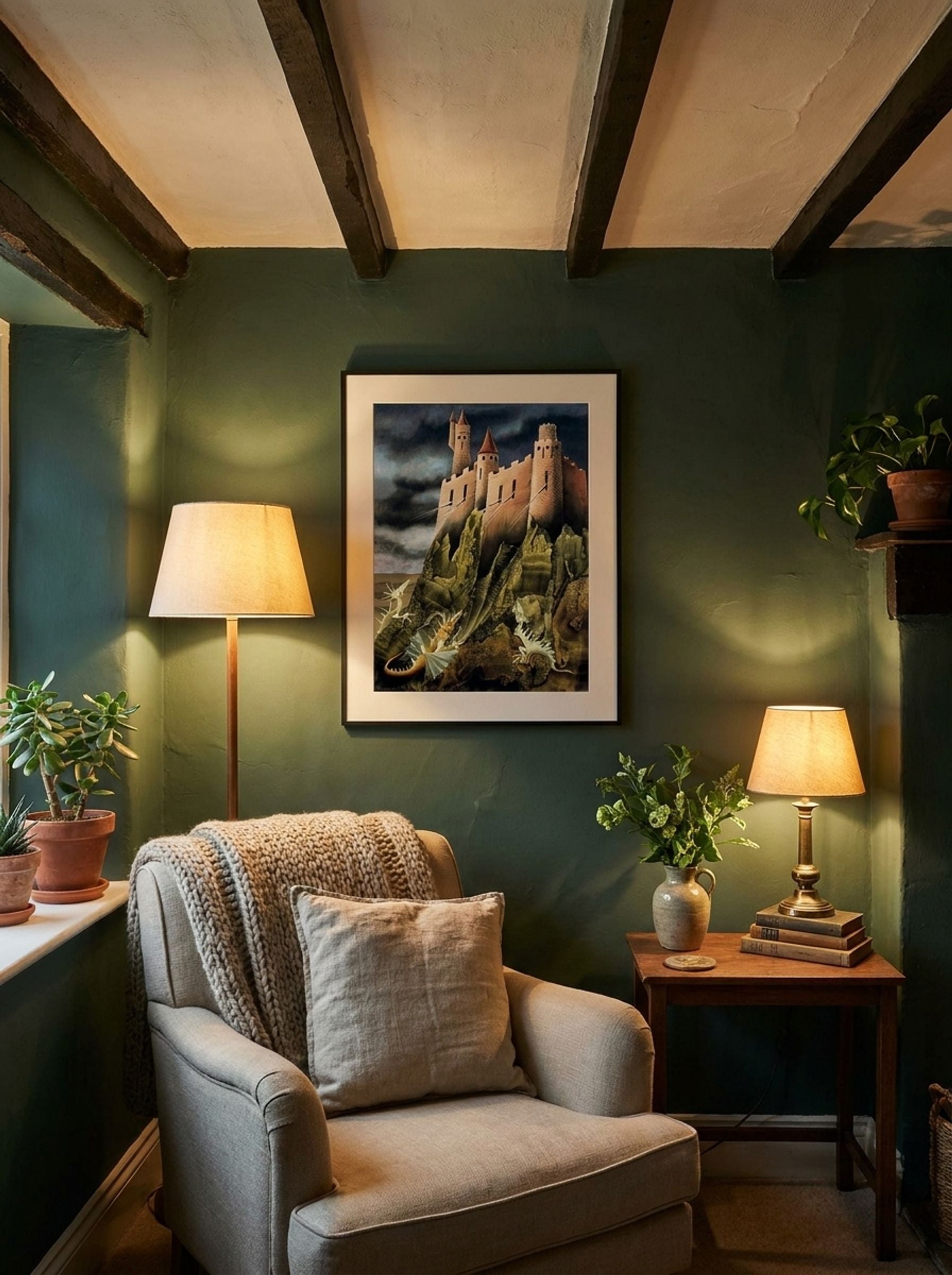
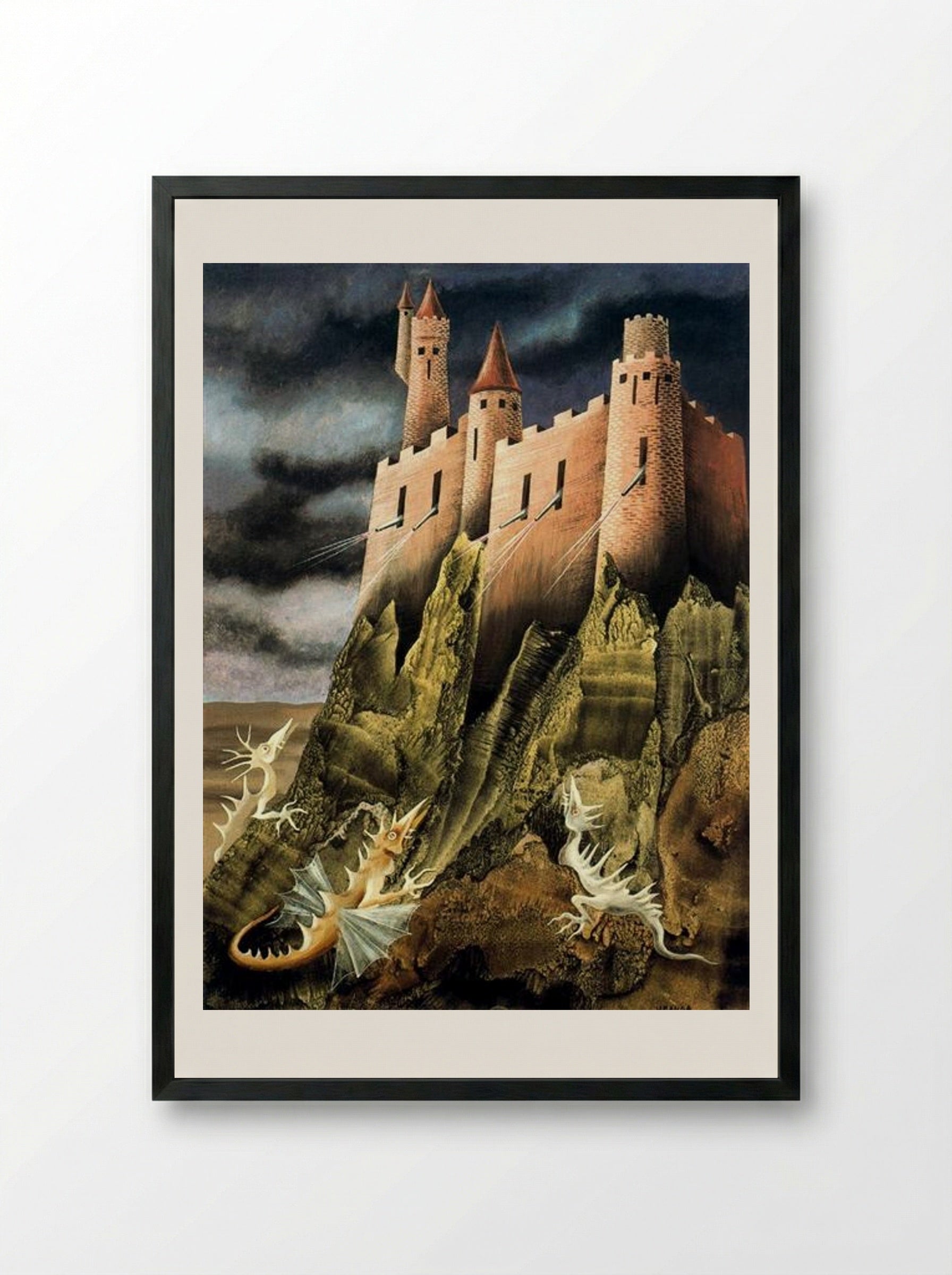
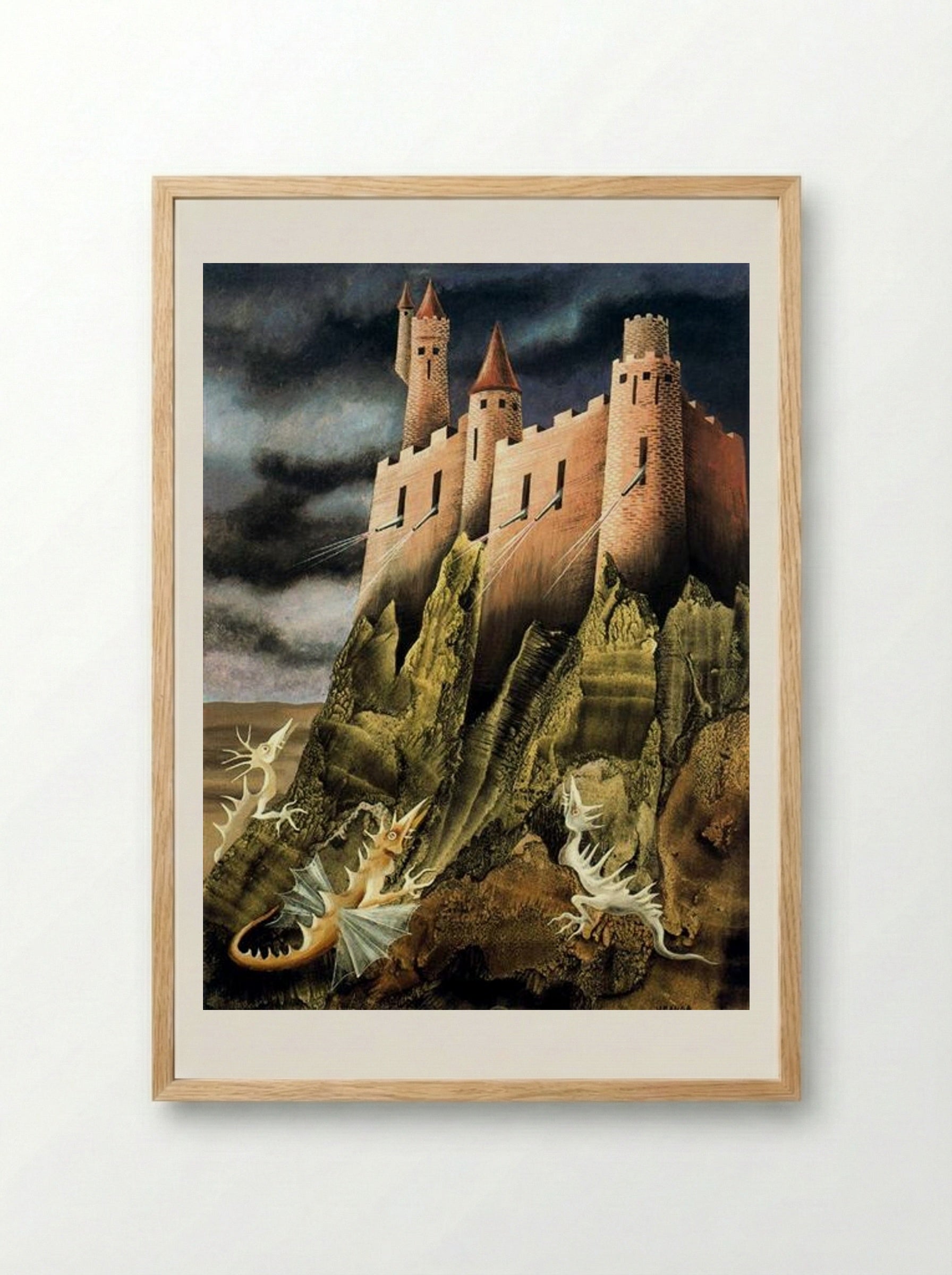
A surreal scene by Remedios Varo depicts a castle under siege, with fantastical creatures at its base and a stormy sky above. This oil painting blends dreamlike imagery with meticulous detail, characteristic of Varo's unique style.
Remedios Varo (1908-1963) was a Spanish-Mexican Surrealist painter. Born in Spain, she later emigrated to Mexico, where she produced the bulk of her mature work. Varo's paintings often feature dreamlike imagery, combining scientific, mystical, and allegorical elements. Her style is characterised by meticulous detail and a distinctive personal symbolism. She is associated with other Surrealist and exile artists in Mexico, such as Leonora Carrington. Her work explores themes of identity, transformation, and the search for knowledge. In "The Battle", a formidable castle dominates the composition, perched atop a craggy, mountainous landscape. The castle, rendered in shades of ochre and brown, appears to be under siege, with thin white lines emanating from its windows, suggesting either defensive fire or perhaps a more symbolic form of resistance. At the base of the structure, fantastical creatures, resembling dragons or mythical beasts, populate the foreground. Some are pale and skeletal, while others are tinged with gold, adding to the painting's otherworldly atmosphere. The sky above is a turbulent mix of dark blues and greys, hinting at an impending storm or a sense of unease.
Return policy
Because every print is made to order, we don't offer change-of-mind returns, refunds or exchanges. If your order arrives faulty, damaged or incorrect, we'll replace it free of charge — just contact us within 48 hours of delivery. EU customers have a 14-day cooling-off right. See our refunds page for full details.
Shipping
We ship worldwide, printing at the production hub nearest to your delivery address. Delivery times and costs vary by destination — you'll see the options available to you at checkout.
Manufacturing
Each print is produced to order using 12-colour giclée printing on FSC-certified archival paper. Designed in Britain and printed at your nearest production hub to reduce waste and speed up delivery.
The Battle - Remedios Varo
Our Features
Designed for Lasting Impact
Specific Features
Every Solis piece is made to order with archival, gallery-quality materials built to last.
- Museum-grade giclée printing for rich, fade-resistant colour
- Archival matte fine-art paper, FSC-certified
- Choose poster, framed print, canvas or framed canvas
- Frames in black, natural wood, dark wood or white
- Framed prints arrive ready to hang
Care & Cleaning
To keep your artwork looking its best:
- Dust gently with a soft, dry cloth
- Avoid prolonged direct sunlight
- Never use liquid cleaners on the print or canvas surface
- Keep in a dry, room-temperature space
- Handle prints with clean, dry hands
Materials & Sizing
Museum-grade giclée on FSC-certified archival matte paper, with framed and canvas options.
- Paper sizes: A4, A3, A2, A1, A0 and B2 (50×70 cm)
- Canvas: XS (20×30 cm) to Large (60×90 cm)
- Frames: black, natural wood, dark wood or white
Why Choose Us ?
100% Satisfaction Guarantee
Fast Shipping
Museum-Quality Materials

Artist Biography
Remedios Varo
She graduated from the Royal Academy of Fine Arts of San Fernando in 1930, one of the few women in her class. In Barcelona she fell in with the Surrealists and, through them, with the poet Benjamin Peret, who became her partner. When Paris fell, she was jailed on suspicion of espionage. After her release she and Peret boarded one of the last ships allowed to leave France, arriving in Mexico in 1941.
In Mexico City she became inseparable from the English Surrealist Leonora Carrington. Together with the photographer Kati Horna, the three were called the Three Witches. They attended meetings of Gurdjieff and Ouspensky followers, studied alchemy and Jungian dream theory, and put ink in tapioca pearls to serve as caviar at dinner parties for Octavio Paz.
She did not paint prolifically until the last thirteen years of her life, once she was financially stable and free of wartime displacement. The paintings from this period are meticulous: tiny figures in architectural spaces that obey their own physics, conducting experiments with starlight or weaving the fabric of the universe from threads pulled out of the air.
Her posthumous retrospective at the Museum of Modern Art in Mexico City in 1971 drew more visitors than shows by Diego Rivera or David Alfaro Siqueiros. She had died of a heart attack in 1963, at fifty-four, at the peak of her working life.
You May Also Like