



Remedios Varo
Varo was named after the Virgin of Remedies, as a remedy for an older sister who had died. Her full name was Maria de los Remedios Alicia Rodriga Varo y Uranga. Her father was an engineer who taught her to draw using his technical drafting tools. Her mother enrolled her in Catholic school in Madrid, which she spent most of her time rebelling against. Both influences appear in the paintings: precision engineering inhabited by mystics.
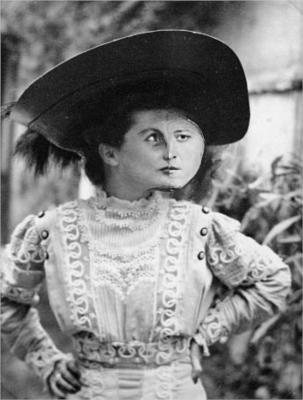
Biography
She graduated from the Royal Academy of Fine Arts of San Fernando in 1930, one of the few women in her class. In Barcelona she fell in with the Surrealists and, through them, with the poet Benjamin Peret, who became her partner. When Paris fell, she was jailed on suspicion of espionage. After her release she and Peret boarded one of the last ships allowed to leave France, arriving in Mexico in 1941.
In Mexico City she became inseparable from the English Surrealist Leonora Carrington. Together with the photographer Kati Horna, the three were called the Three Witches. They attended meetings of Gurdjieff and Ouspensky followers, studied alchemy and Jungian dream theory, and put ink in tapioca pearls to serve as caviar at dinner parties for Octavio Paz.
She did not paint prolifically until the last thirteen years of her life, once she was financially stable and free of wartime displacement. The paintings from this period are meticulous: tiny figures in architectural spaces that obey their own physics, conducting experiments with starlight or weaving the fabric of the universe from threads pulled out of the air.
Her posthumous retrospective at the Museum of Modern Art in Mexico City in 1971 drew more visitors than shows by Diego Rivera or David Alfaro Siqueiros. She had died of a heart attack in 1963, at fifty-four, at the peak of her working life.
Timeline
- 1908Born on 16 December in Angles, Girona, Spain, the second of three children. Her father, a hydraulic engineer, encouraged her early drawing ability and insisted she study technical subjects alongside art.
- 1924Entered the Real Academia de Bellas Artes de San Fernando in Madrid at age 15, one of the first women admitted to the institution. She studied there for six years, graduating with a drawing teacher's diploma in 1930.
- 1935Joined the Logicophobista group of avant-garde artists in Barcelona at age 27. Her early Surrealist experiments combined automatic drawing with an interest in alchemy and science that would define her mature style.
- 1937Fled Spain for Paris at age 29 with the Surrealist poet Benjamin Peret as the Civil War intensified. She became part of Andre Breton's Surrealist circle and exhibited alongside the group.
- 1941Escaped Nazi-occupied France and arrived in Mexico City at age 33, where she would spend the rest of her life. She formed a close friendship with fellow exile Leonora Carrington, and the two artists became inseparable creative companions.
- 1955Held her first solo exhibition in Mexico City at age 47, showing just four paintings to immediate critical and commercial success. The show marked her emergence as one of Mexico's most original painters after years spent working in commercial illustration.
- 1962Completed some of her most celebrated canvases at age 54 in Mexico City, including Still Life Reviving (1963), which blended mysticism, science and feminism. Her paintings from this period feature solitary figures engaged in alchemical or mechanical rituals.
- 1963Died of a heart attack on 8 October in Mexico City at age 55, at the height of her creative powers. Her final painting, Still Life Reviving, depicts objects levitating from a table in a spiral of cosmic energy.
Notable Works
Tap to view larger.
Next stop
Surrealism →
Explore the artists and ideas of Surrealism.
Remedios Varo prints
Hand-finished archival prints from Remedios Varo's body of work.
 Alchemy or the Useless Science - Remedios Varo
From £28.00
Alchemy or the Useless Science - Remedios Varo
From £28.00
 Portrait of Grandmother Doña Josefa Zejalvo - Remedios Varo
From £28.00
Portrait of Grandmother Doña Josefa Zejalvo - Remedios Varo
From £28.00
 By Aquarium - Remedios Varo
From £28.00
By Aquarium - Remedios Varo
From £28.00
 Floral bouquet with birds - Remedios Varo
From £28.00
Floral bouquet with birds - Remedios Varo
From £28.00
 Ladies' Suit - Remedios Varo
From £28.00
Ladies' Suit - Remedios Varo
From £28.00
 Tightrope Walkers - Remedios Varo
From £28.00
Tightrope Walkers - Remedios Varo
From £28.00
Related Artists


Take Remedios Varo home.
See all Remedios Varo prints →Frequently Asked Questions
Remedios varo art movement?
Remedios Varo had an interest in Surrealism dating back to her school years in Madrid. In Barcelona and Paris in the 1930s, she formed close friendships with Marcel Jean, Esteban Francés, and Óscar Domínguez.Was remedios varo a surrealist?
Remedios Varo was involved with the Surrealist movement. In Barcelona, she fell in with the Surrealists and, through them, with the poet Benjamin Peret, who became her partner.What was remedios varo known for?
Remedios Varo is known for her meticulous paintings from the last thirteen years of her life. These paintings feature tiny figures in architectural spaces that obey their own physics, conducting experiments with starlight or weaving the fabric of the universe from threads pulled out of the air.Where can i see remedios varo paintings?
Remedios Varo's works can be seen at Museo de Arte Moderno, Museum of Modern Art, Museum of Fine Arts Boston, and 2 other museums worldwide.Where did remedios varo live?
Remedios Varo lived in multiple locations throughout her life. She was born in Catalonia, spent time in Madrid, Barcelona, and Paris, and eventually settled permanently in Mexico.Who is remedios varo?
Remedios Varo was a painter who combined philosophical speculation with the profundity of a child's question "why?". She was born in Catalonia and lived in Mexico for a long time.Why did remedios varo die?
Remedios Varo died in 1963 at the age of 55.Why was remedios varo exiled?
Remedios Varo was jailed on suspicion of espionage when Paris fell. After her release, she and Peret boarded one of the last ships allowed to leave France.When was remedios varo born?
Remedios Varo was born in 1908 in Spain. Remedios Varo died in 1963, aged 55.Who was remedios varo?
Remedios Varo was a painter who settled in Mexico permanently and produced work profoundly influenced by Mexican culture. Her interest in Surrealism dates to her school years in Madrid.
Sources
Editorial draws on the following primary and tertiary references for Remedios Varo.
- [1] book guggenheim-twopri00weis Used for: biography.
- [2] book Tessel M. Bauduin, Victoria Ferentinou and Daniel Zamani, Surrealism, Occultism And Politics_ In Search Of The Marvellous (studies In Surrealism) Used for: biography.
- [3] book Penelope Rosemont, Surrealist Women Used for: biography, museum holdings, stylistic analysis.
- [4] book Kirsten Strom;, The Routledge Companion to Surrealism Used for: biography, museum holdings, stylistic analysis.
- [5] book Hodge, Susie, 1960- author, The short story of women artists : a pocket guide to movements, works, breakthroughs, & themes Used for: biography, museum holdings.
- [6] book Charlene Spretnak (auth.), The Spiritual Dynamic in Modern Art _ Art History Reconsidered, 1800 to the Present Used for: biography, stylistic analysis.
Editorial overseen by Solis Prints. Sources verified 2026-08-29. Click a source for details, or hover over [N] in the page above to preview.
Editorial standardsMethodologyCorrectionsAI disclosureAbout the editorial team