

Fine Art Poster
From £28
A giclée print on 200gsm matte fine art paper, using a twelve-colour process for accurate, fade-resistant colour. Supplied unframed, delivered flat or rolled.


Archival giclée
Frames arrive ready to hang
Secure checkout
Made to order
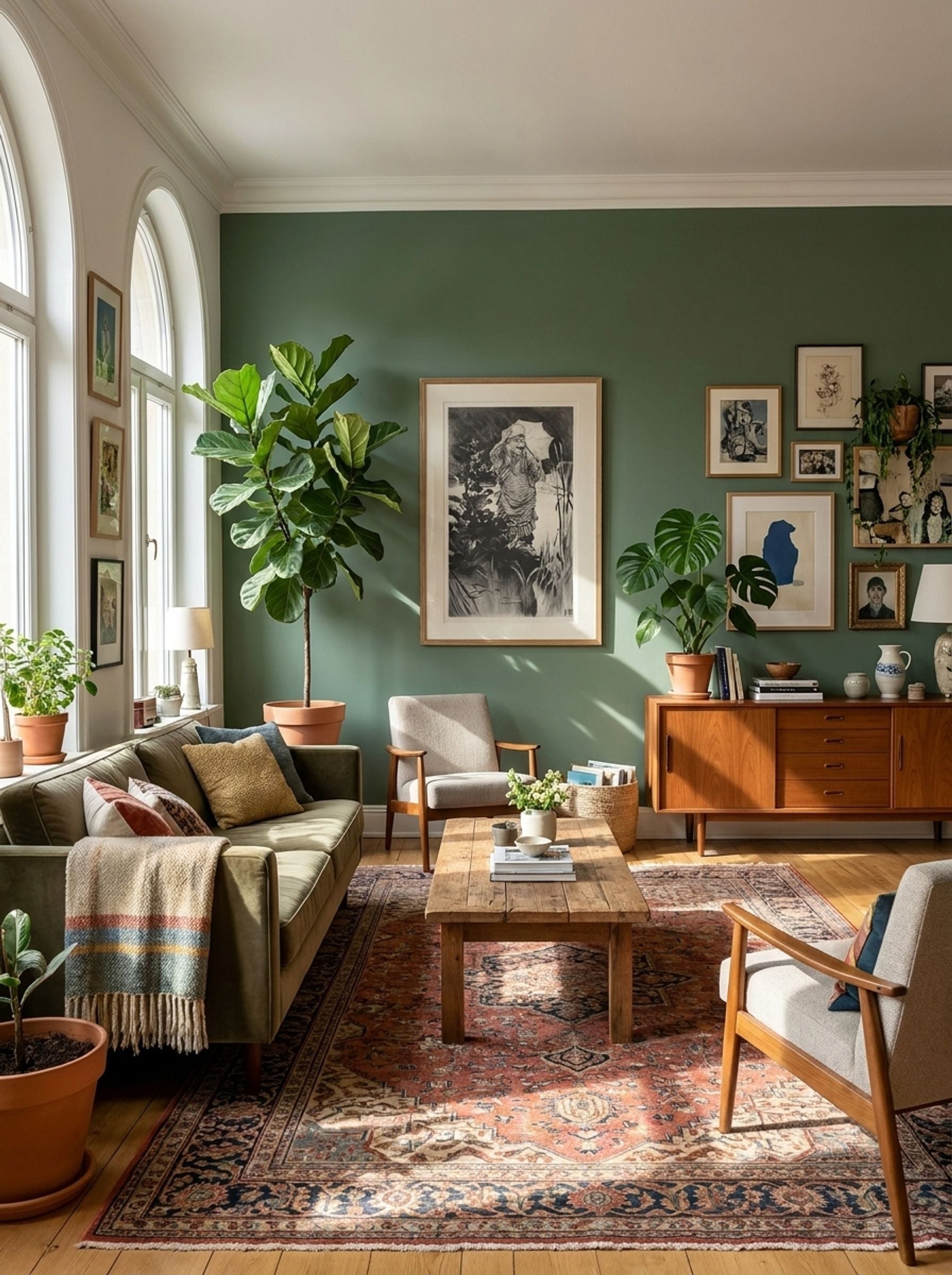
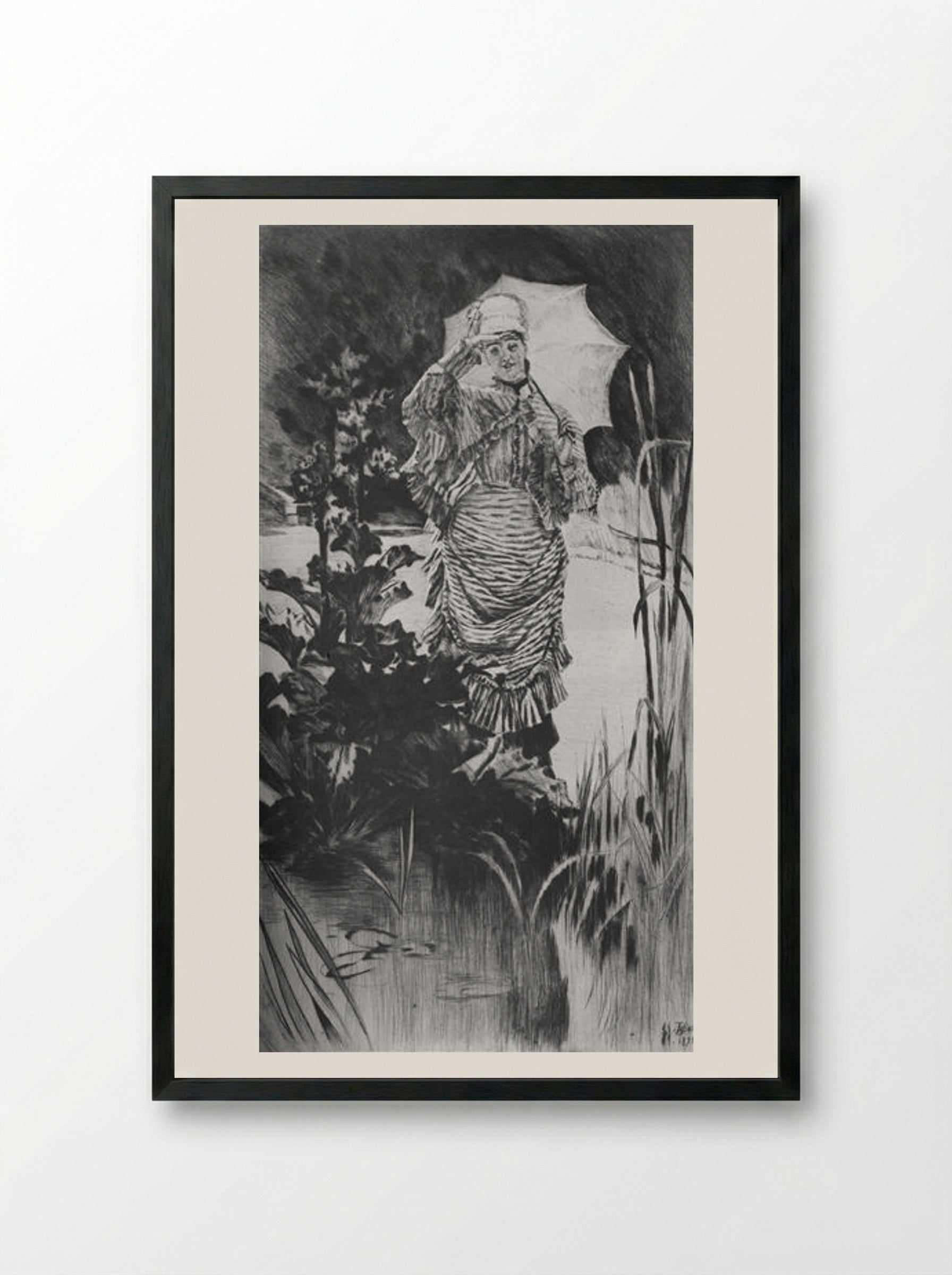
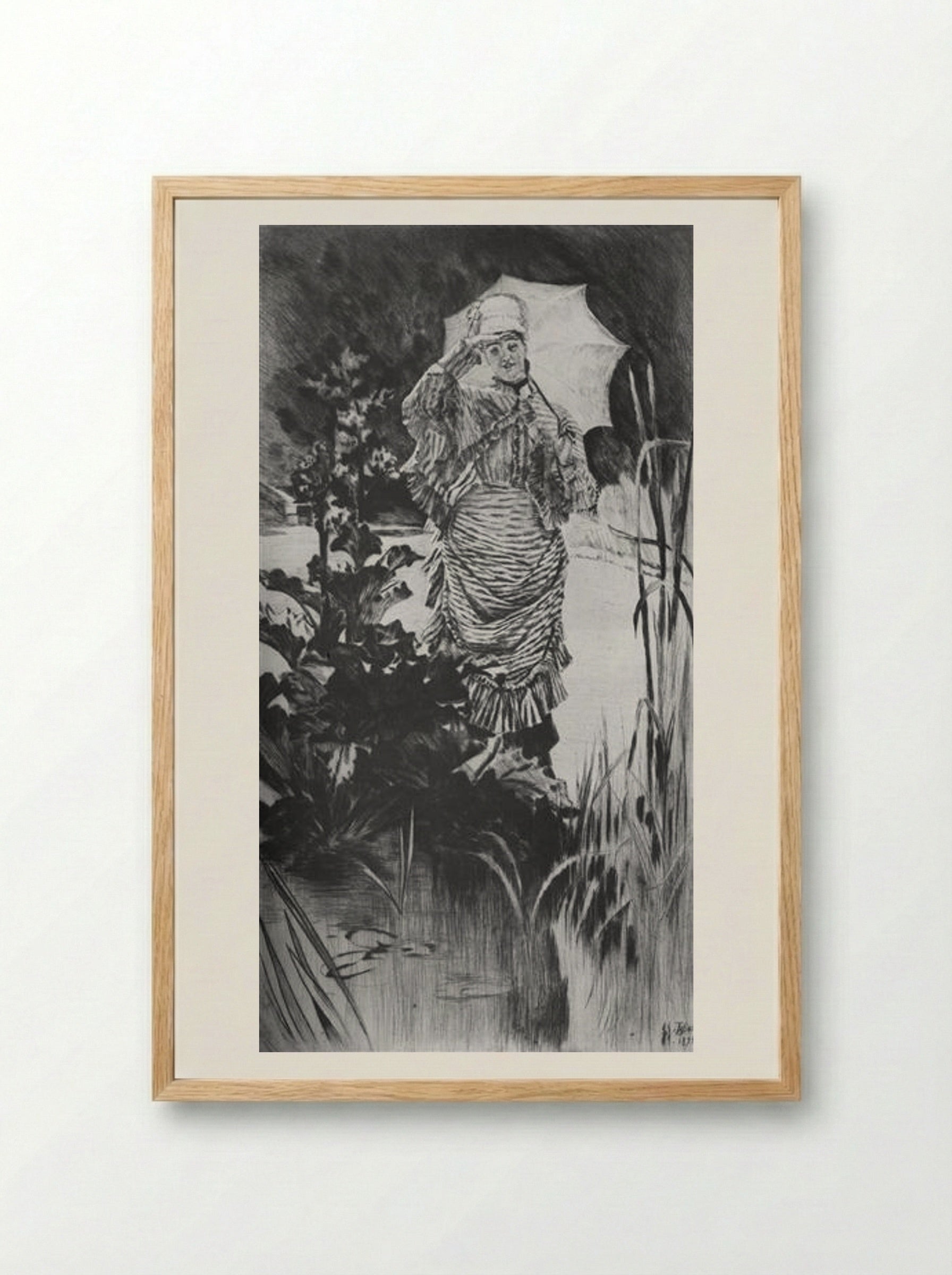
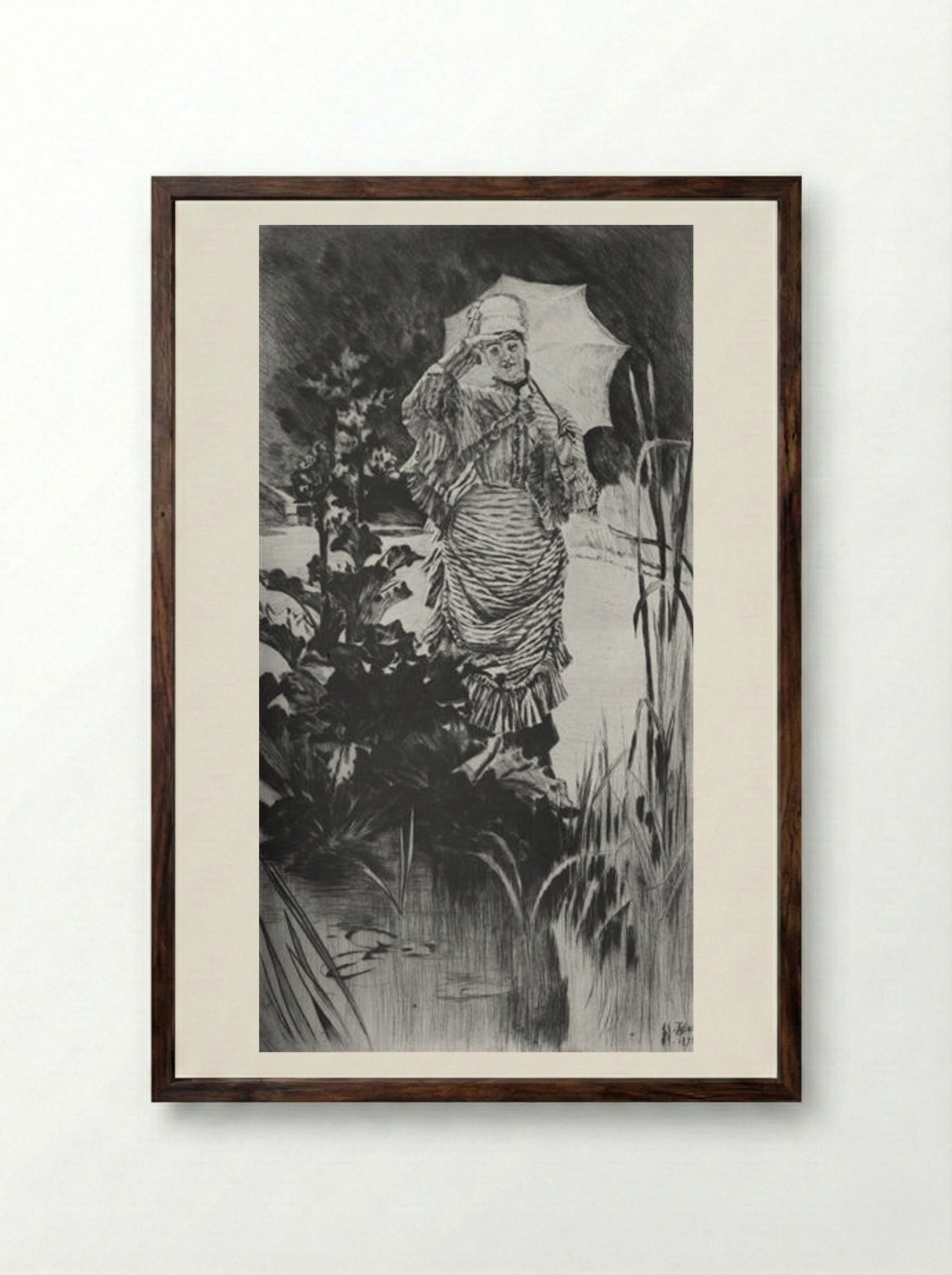
This etching by James Tissot, titled Spring Morning, depicts a fashionable woman standing near a body of water, rendered in fine lines characteristic of the etching technique.
James Tissot's etching, Spring Morning, captures a fashionable woman standing near a body of water. The scene is rendered in fine lines, characteristic of the etching technique. The woman, dressed in a horizontally striped dress with ruffles, holds a parasol and wears a hat. Her gaze is directed to the left, adding a sense of narrative to the composition. The etching's composition balances the figure with the surrounding environment. Reeds and foliage frame the woman, while a building is visible in the background. The reflection of light on the water adds depth and texture to the scene. Tissot's attention to detail is evident in the rendering of the woman's clothing and the surrounding vegetation. Born in France, Tissot spent a significant portion of his career in England, where he gained recognition for his depictions of contemporary life. His work often focused on the social customs and fashions of the Victorian era. Spring Morning reflects Tissot's interest in capturing the nuances of everyday life, combining portraiture with elements of the natural world.
Because every print is made to order, we don't offer change-of-mind returns, refunds or exchanges. If your order arrives faulty, damaged or incorrect, we'll replace it free of charge — just contact us within 48 hours of delivery. See our refunds page for full details.
We ship worldwide, printing at the production hub nearest to your delivery address. Delivery times and costs vary by destination — you'll see the options available to you at checkout.
Each print is produced to order using 12-colour giclée printing on FSC-certified archival paper. Designed in Britain and printed at your nearest production hub to reduce waste and speed up delivery.
Specific Features
Every Solis piece is made to order with archival, gallery-quality materials built to last.
Care & Cleaning
To keep your artwork looking its best:
Materials & Sizing
Museum-grade giclée on FSC-certified archival matte paper, with framed and canvas options.

Artist Biography
Made to order
Every piece is printed to order. These are the five finishes, and what makes each one different.
From £28
A giclée print on 200gsm matte fine art paper, using a twelve-colour process for accurate, fade-resistant colour. Supplied unframed, delivered flat or rolled.

From £45
The same fine art print in a solid wood frame with UV-protective acrylic glaze and rigid backing. Five frame colours. Arrives ready to hang.
Why Choose Us ?
Damage-free delivery guarantee
Fast Shipping
Museum-Quality Materials
You May Also Like
We use cookies to measure our marketing and see which prints people love.We use cookies to measure our marketing.
By continuing to browse, you agree · Privacy Policy