

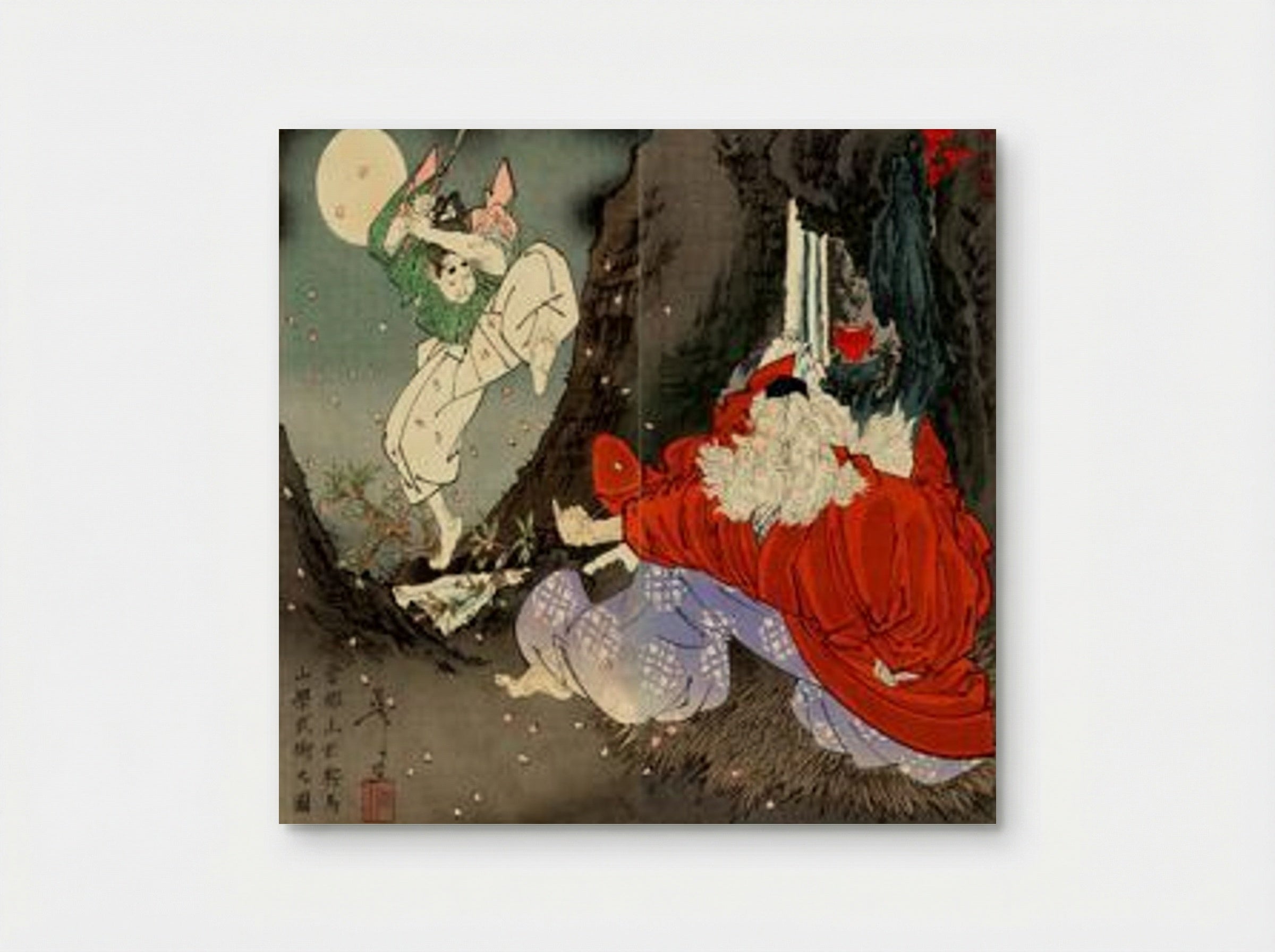
Sojobo Instructs Yoshitsune in the Sword - Tsukioka Yoshitoshi
Archival giclée
Frames arrive ready to hang
Secure checkout
Made to order
Description
A woodblock print by Tsukioka Yoshitoshi depicting Sojobo, king of the tengu, instructing Minamoto no Yoshitsune in swordsmanship. The scene is set in a mountainous region with cherry blossoms falling around the figures.
This woodblock print by Tsukioka Yoshitoshi (1839-1892) depicts a scene of Sojobo, king of the tengu (a type of supernatural being), instructing Minamoto no Yoshitsune in swordsmanship. Yoshitoshi was a prominent Japanese print artist of the late Edo and early Meiji periods, known for his innovative approach to ukiyo-e and his depictions of historical and mythical subjects. His work often incorporated elements of both traditional Japanese art and Western influences. The print shows Yoshitsune, youthful and agile, leaping with a sword in hand, while Sojobo, with his long white beard and red robes, observes. The setting appears to be a mountainous region, suggested by the rocky terrain and waterfall in the background. Cherry blossoms fall around the figures, adding a touch of ephemeral beauty to the scene. The moon is visible in the upper-left corner. The composition is dynamic, capturing the energy of the sword-fighting lesson. The colours are muted, with a focus on reds, blues, and greens, typical of ukiyo-e prints.
Return policy
Because every print is made to order, we don't offer change-of-mind returns, refunds or exchanges. If your order arrives faulty, damaged or incorrect, we'll replace it free of charge — just contact us within 48 hours of delivery. See our refunds page for full details.
Shipping
We ship worldwide, printing at the production hub nearest to your delivery address. Delivery times and costs vary by destination — you'll see the options available to you at checkout.
Manufacturing
Each print is produced to order using 12-colour giclée printing on FSC-certified archival paper. Designed in Britain and printed at your nearest production hub to reduce waste and speed up delivery.
Care and materials
Specific Features
Every Solis piece is made to order with archival, gallery-quality materials built to last.
- Museum-grade giclée printing for rich, fade-resistant colour
- Archival matte fine-art paper, FSC-certified
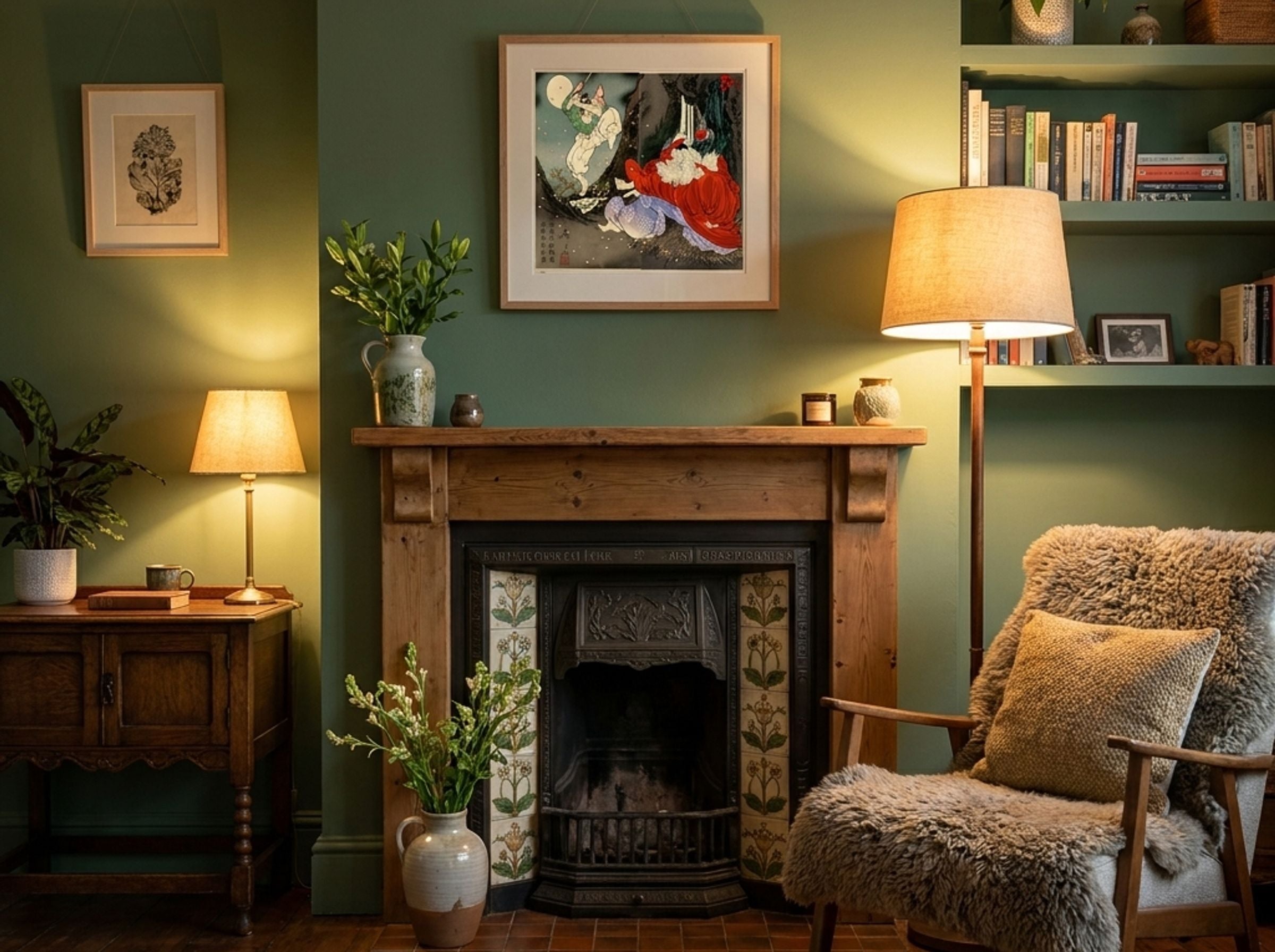
- Multiple sizes and framing options available
- Frames in black, natural wood, dark wood or white
- Framed prints arrive ready to hang
Care & Cleaning
To keep your artwork looking its best:
- Dust gently with a soft, dry cloth
- Avoid prolonged direct sunlight
- Never use liquid cleaners on the print or canvas surface
- Keep in a dry, room-temperature space
- Handle prints with clean, dry hands
Materials & Sizing
Museum-grade giclée on FSC-certified archival matte paper, with framed and canvas options.
- Paper sizes: A4, A3, A2, A1, A0 and B2 (50×70 cm)
- Canvas: XS (20×30 cm) to Large (60×90 cm)
- Frames: black, natural wood, dark wood or white
Sojobo Instructs Yoshitsune in the Sword - Tsukioka Yoshitoshi

Artist Biography
Yoshitoshi
Yoshitoshi's art is characterised by its dramatic intensity and historical themes. He was fascinated by the supernatural, often depicting ghosts, demons, and scenes of violence. His mentor was Utagawa Kuniyoshi, who also explored similar themes. Yoshitoshi's skill in portraying emotion and movement, combined with his mastery of colour and composition, made his prints stand out. His work reflects a turbulent period in Japanese history, capturing the anxieties and uncertainties of a society undergoing rapid change.
Collectors are drawn to Yoshitoshi's prints for their striking imagery and historical value. His works offer a glimpse into a transitional period in Japan, blending traditional artistic techniques with modern sensibilities. His prints appeal to those who appreciate art that is both visually stunning and intellectually stimulating, preserving a vital part of Japanese cultural heritage.
Why Choose Us ?
Damage-free delivery guarantee
Fast Shipping
Museum-Quality Materials
You May Also Like