

Fine Art Poster
From £28
A giclée print on 200gsm matte fine art paper, using a twelve-colour process for accurate, fade-resistant colour. Supplied unframed, delivered flat or rolled.



Archival giclée
Frames arrive ready to hang
Secure checkout
Made to order
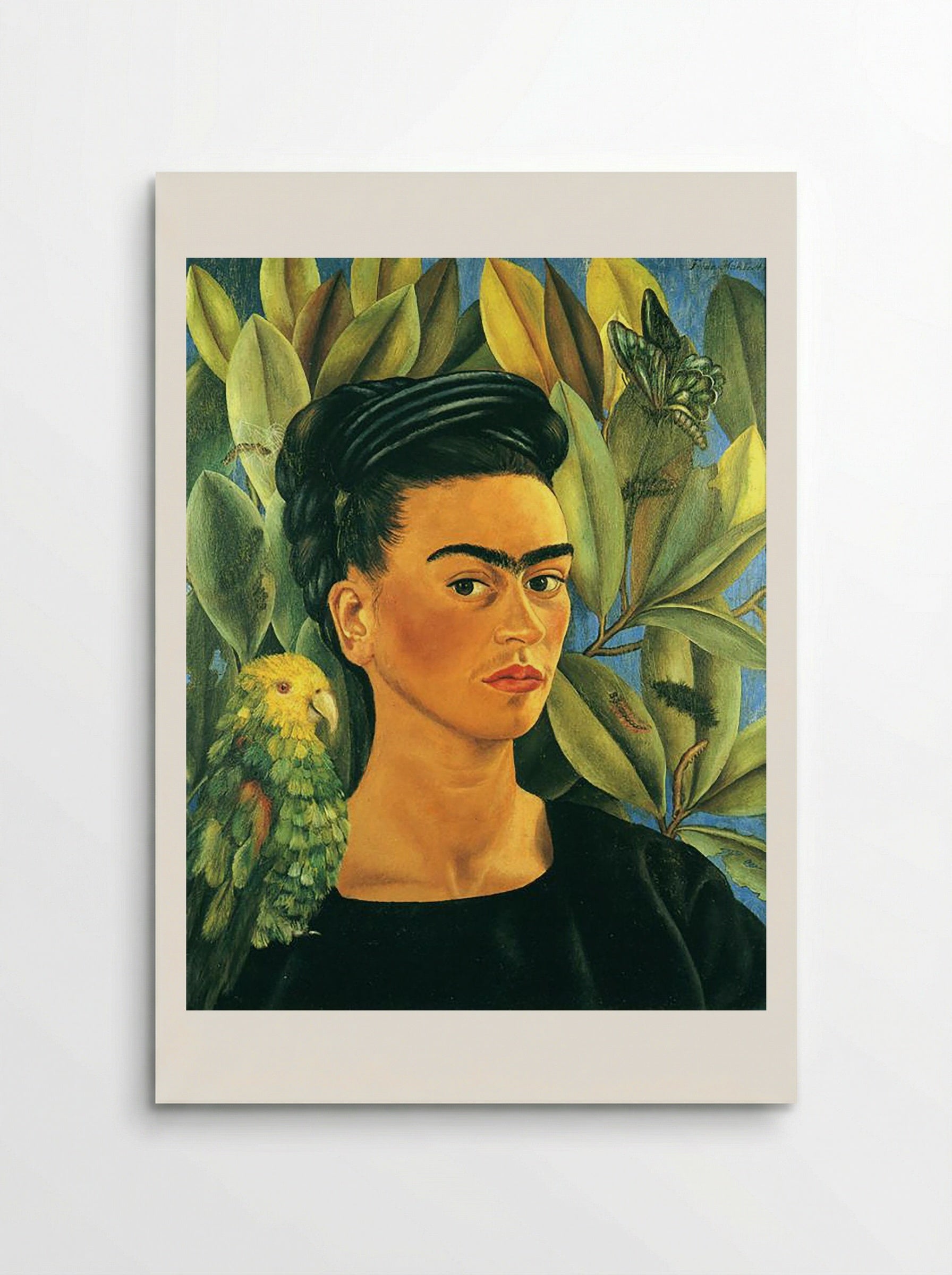
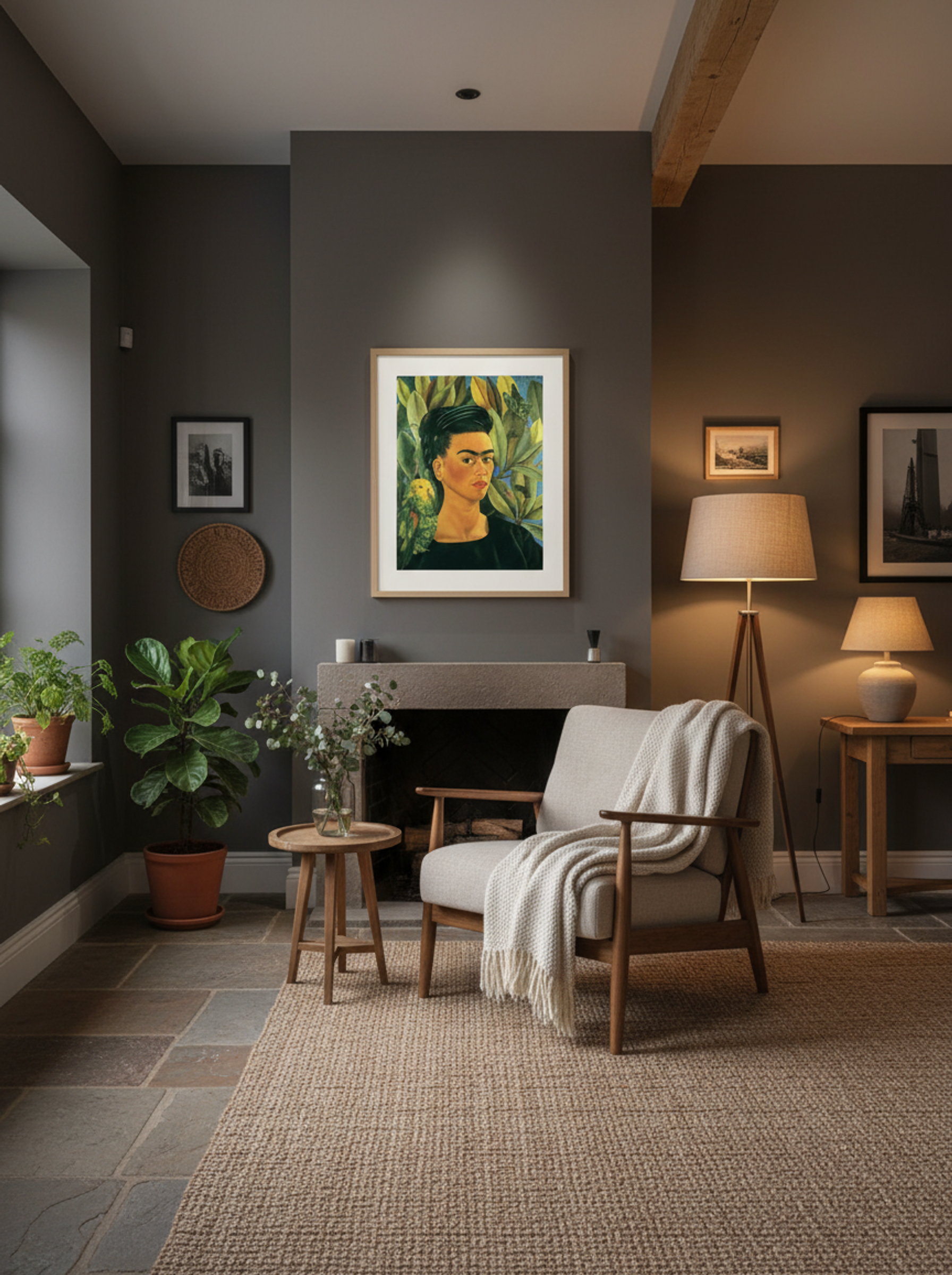
Frida Kahlo's "Self-Portrait with Bonito", painted in 1941, features the artist with her pet parrot amid dense foliage, reflecting themes of identity and Mexican heritage. The work exemplifies Kahlo's distinctive style and personal symbolism.
Painted in 1941, Frida Kahlo's "Self-Portrait with Bonito" presents the artist in a characteristic frontal pose, surrounded by lush foliage and accompanied by a yellow-headed parrot, known as a Bonito. Kahlo's direct gaze engages the viewer, while the parrot perched on her shoulder adds a touch of the exotic and personal. The leaves behind her create a dense, almost claustrophobic backdrop, typical of her self-portraits that often incorporate elements of nature and Mexican identity. Kahlo's self-portraits are explorations of her identity, pain, and resilience. This work is no exception, blending personal symbolism with broader cultural references. The Bonito parrot, native to Central and South America, may represent companionship or a connection to her heritage. The leaves, possibly depicting tropical plants, further root the painting in a specific geographical and emotional context. Kahlo's unibrow and slight moustache are rendered with unflinching honesty, challenging conventional beauty standards and asserting her unique presence. The painting's composition is relatively simple, with a focus on Kahlo's face and the surrounding elements. The colour palette is restrained, with earthy greens and browns contrasting with the bright yellow of the parrot and the blue background. This creates a sense of balance and harmony, even as the painting hints at deeper emotional complexities.
Because every print is made to order, we don't offer change-of-mind returns, refunds or exchanges. If your order arrives faulty, damaged or incorrect, we'll replace it free of charge — just contact us within 48 hours of delivery. See our refunds page for full details.
We ship worldwide, printing at the production hub nearest to your delivery address. Delivery times and costs vary by destination — you'll see the options available to you at checkout.
Each print is produced to order using 12-colour giclée printing on FSC-certified archival paper. Designed in Britain and printed at your nearest production hub to reduce waste and speed up delivery.
Specific Features
Every Solis piece is made to order with archival, gallery-quality materials built to last.
Care & Cleaning
To keep your artwork looking its best:
Materials & Sizing
Museum-grade giclée on FSC-certified archival matte paper, with framed and canvas options.

Artist Biography
Made to order
Every piece is printed to order. These are the five finishes, and what makes each one different.
From £28
A giclée print on 200gsm matte fine art paper, using a twelve-colour process for accurate, fade-resistant colour. Supplied unframed, delivered flat or rolled.

From £45
The same fine art print in a solid wood frame with UV-protective acrylic glaze and rigid backing. Five frame colours. Arrives ready to hang.
Why Choose Us ?
Damage-free delivery guarantee
Fast Shipping
Museum-Quality Materials
You May Also Like
We use cookies to measure our marketing and see which prints people love.We use cookies to measure our marketing.
By continuing to browse, you agree · Privacy Policy