

Fine Art Poster
From £28
A giclée print on 200gsm matte fine art paper, using a twelve-colour process for accurate, fade-resistant colour. Supplied unframed, delivered flat or rolled.



Archival giclée
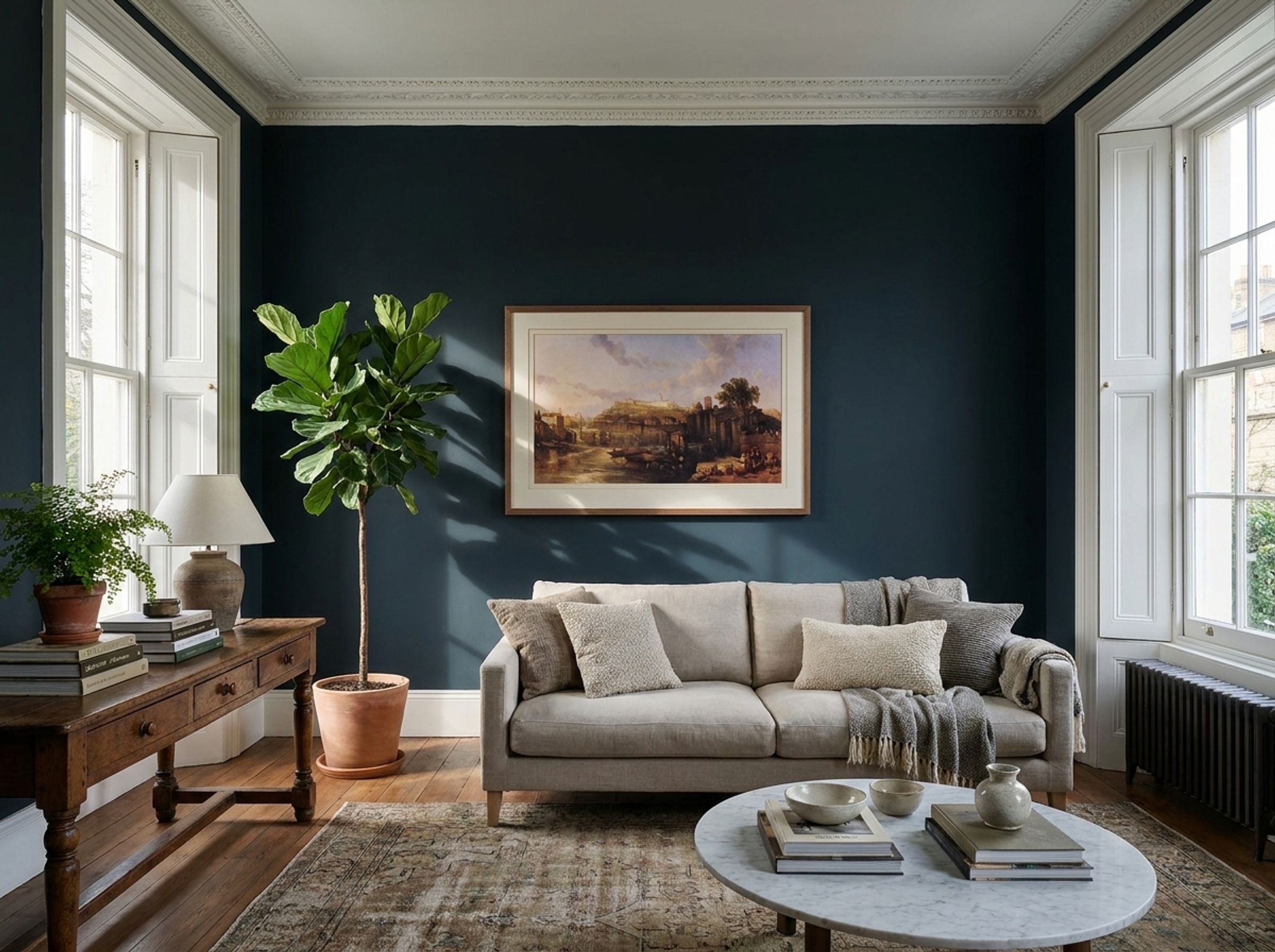
Frames arrive ready to hang
Secure checkout
Made to order
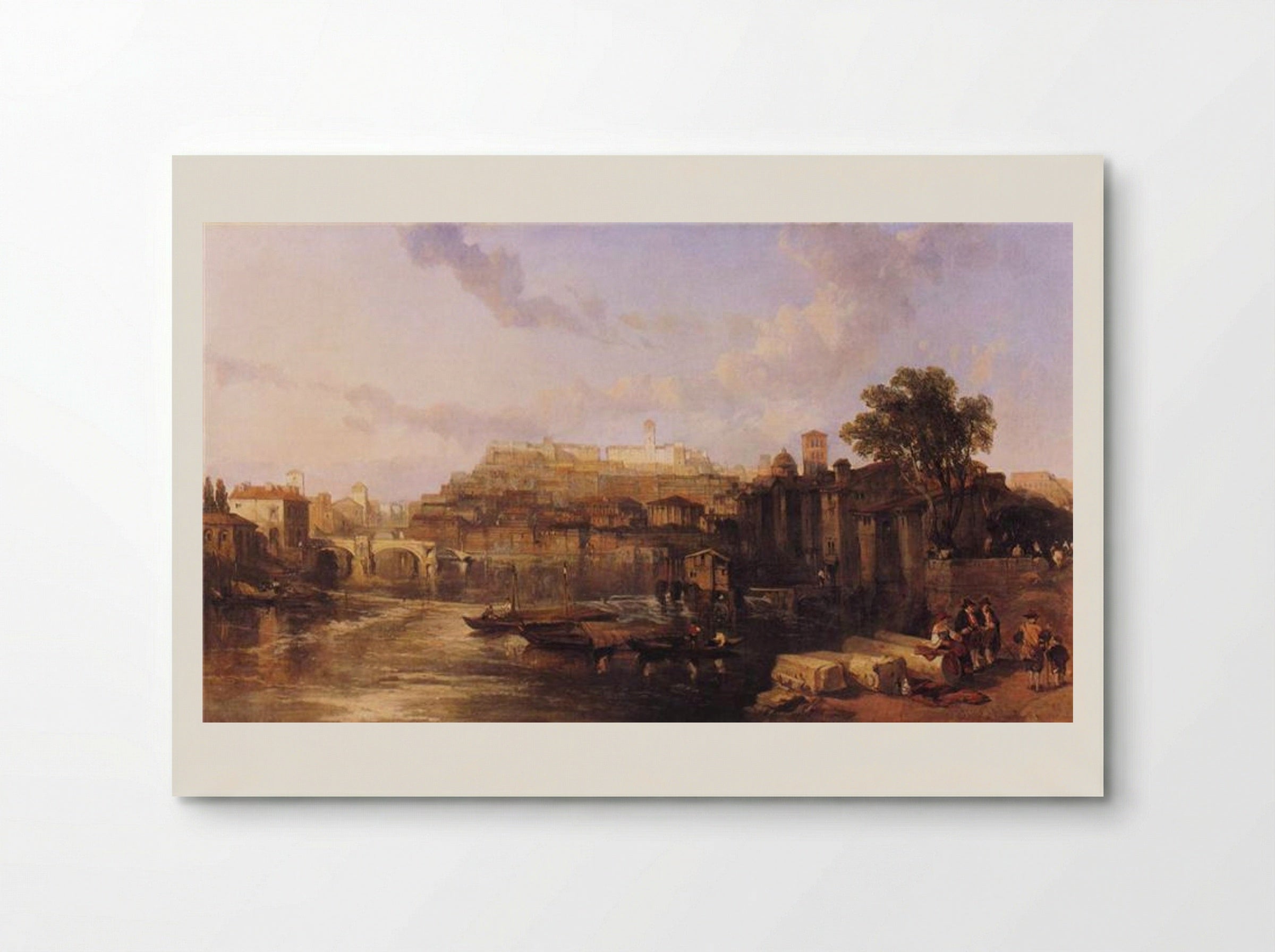
David Roberts' 'Rome, View on the Tiber Looking Towards Mounts Palatine and Aventine' captures a panoramic view of Rome from the river, showcasing the city's architecture under a soft, diffused light.
This oil on canvas painting by David Roberts (1796-1864), titled 'Rome, View on the Tiber Looking Towards Mounts Palatine and Aventine', presents a panoramic vista of the Italian capital. Roberts, a Scottish painter known for his detailed architectural depictions and travel scenes, captures the city from a low vantage point along the Tiber River. The composition is divided into three distinct horizontal bands: the river in the foreground, the city in the middle ground, and the sky above. The Tiber flows from left to right, its surface reflecting the muted tones of the buildings and sky. Several small boats are visible, adding a sense of scale and activity to the scene. The city rises gradually from the riverbank, a dense collection of buildings punctuated by towers and domes. The architectural details are rendered with precision, showcasing Roberts' skill in capturing the character of urban environments. Mounts Palatine and Aventine are visible in the distance, providing a backdrop to the urban sprawl. The sky is filled with soft, diffused light, creating a hazy atmosphere that softens the edges of the buildings. The colour palette is dominated by earth tones, with shades of brown, ochre, and grey predominating. Touches of green and blue are present in the foliage and sky, adding subtle contrast to the overall composition. Figures are sparsely placed along the riverbank, providing a sense of human presence within the expansive cityscape.
Because every print is made to order, we don't offer change-of-mind returns, refunds or exchanges. If your order arrives faulty, damaged or incorrect, we'll replace it free of charge — just contact us within 48 hours of delivery. See our refunds page for full details.
We ship worldwide, printing at the production hub nearest to your delivery address. Delivery times and costs vary by destination — you'll see the options available to you at checkout.
Each print is produced to order using 12-colour giclée printing on FSC-certified archival paper. Designed in Britain and printed at your nearest production hub to reduce waste and speed up delivery.
Specific Features
Every Solis piece is made to order with archival, gallery-quality materials built to last.
Care & Cleaning
To keep your artwork looking its best:
Materials & Sizing
Museum-grade giclée on FSC-certified archival matte paper, with framed and canvas options.

Artist Biography
Made to order
Every piece is printed to order. These are the five finishes, and what makes each one different.
From £28
A giclée print on 200gsm matte fine art paper, using a twelve-colour process for accurate, fade-resistant colour. Supplied unframed, delivered flat or rolled.

From £45
The same fine art print in a solid wood frame with UV-protective acrylic glaze and rigid backing. Five frame colours. Arrives ready to hang.
Why Choose Us ?
Damage-free delivery guarantee
Fast Shipping
Museum-Quality Materials
You May Also Like
We use cookies to measure our marketing and see which prints people love.We use cookies to measure our marketing.
By continuing to browse, you agree · Privacy Policy