

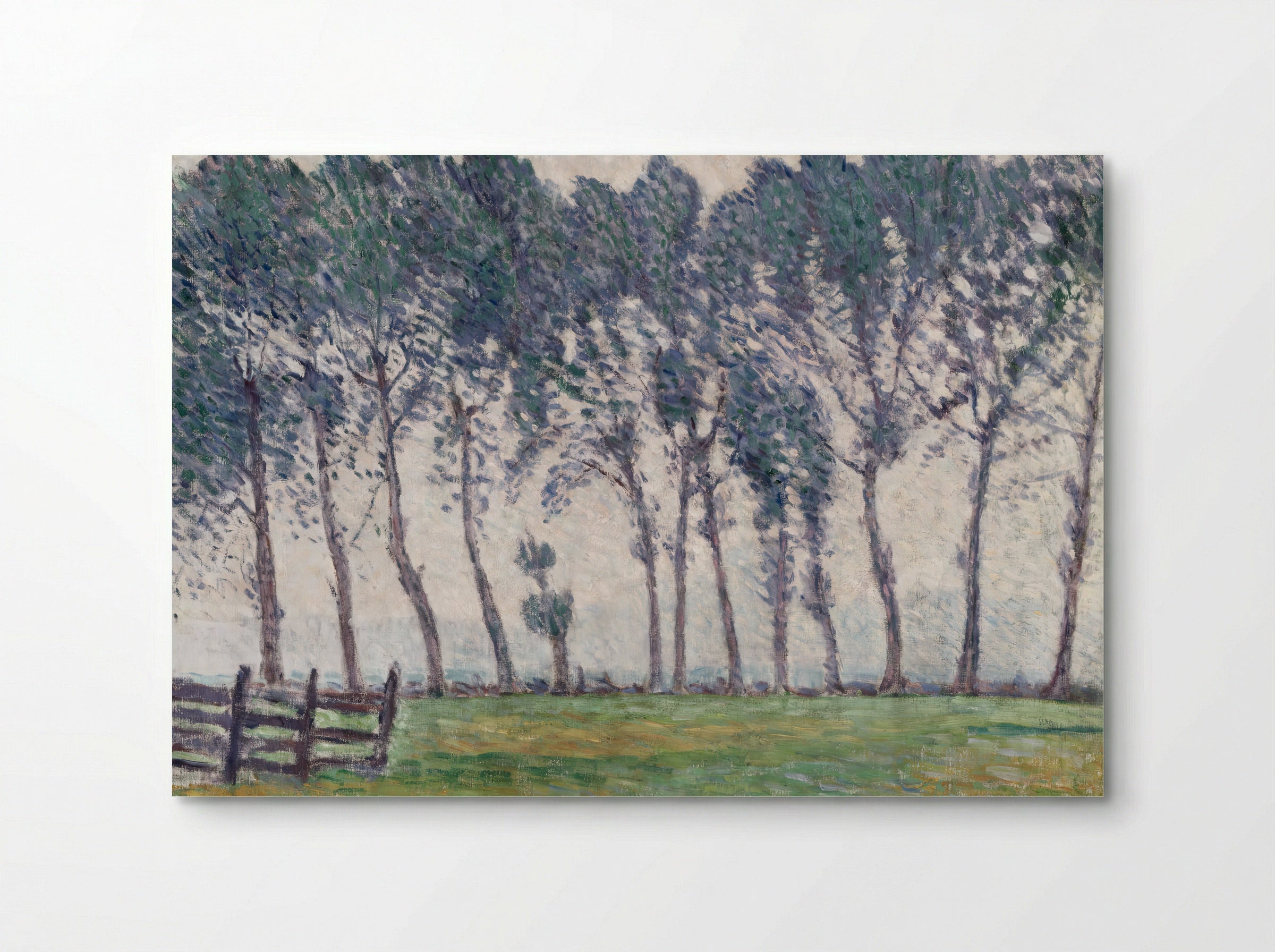

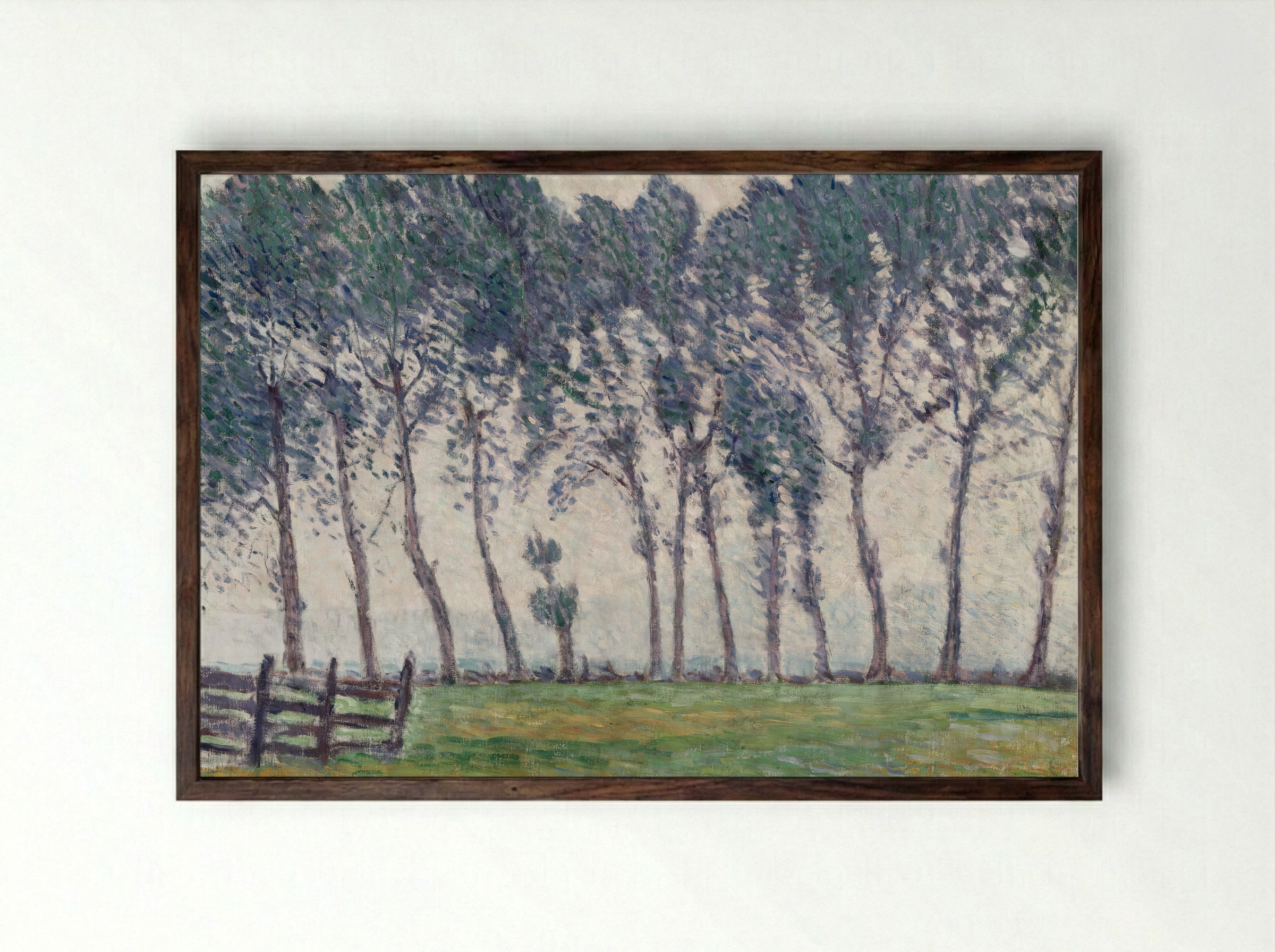
Rainy Weather at Hampton Court - Alfred William Finch
Archival giclée
Ready to hang
Secure checkout
Made to order
Description
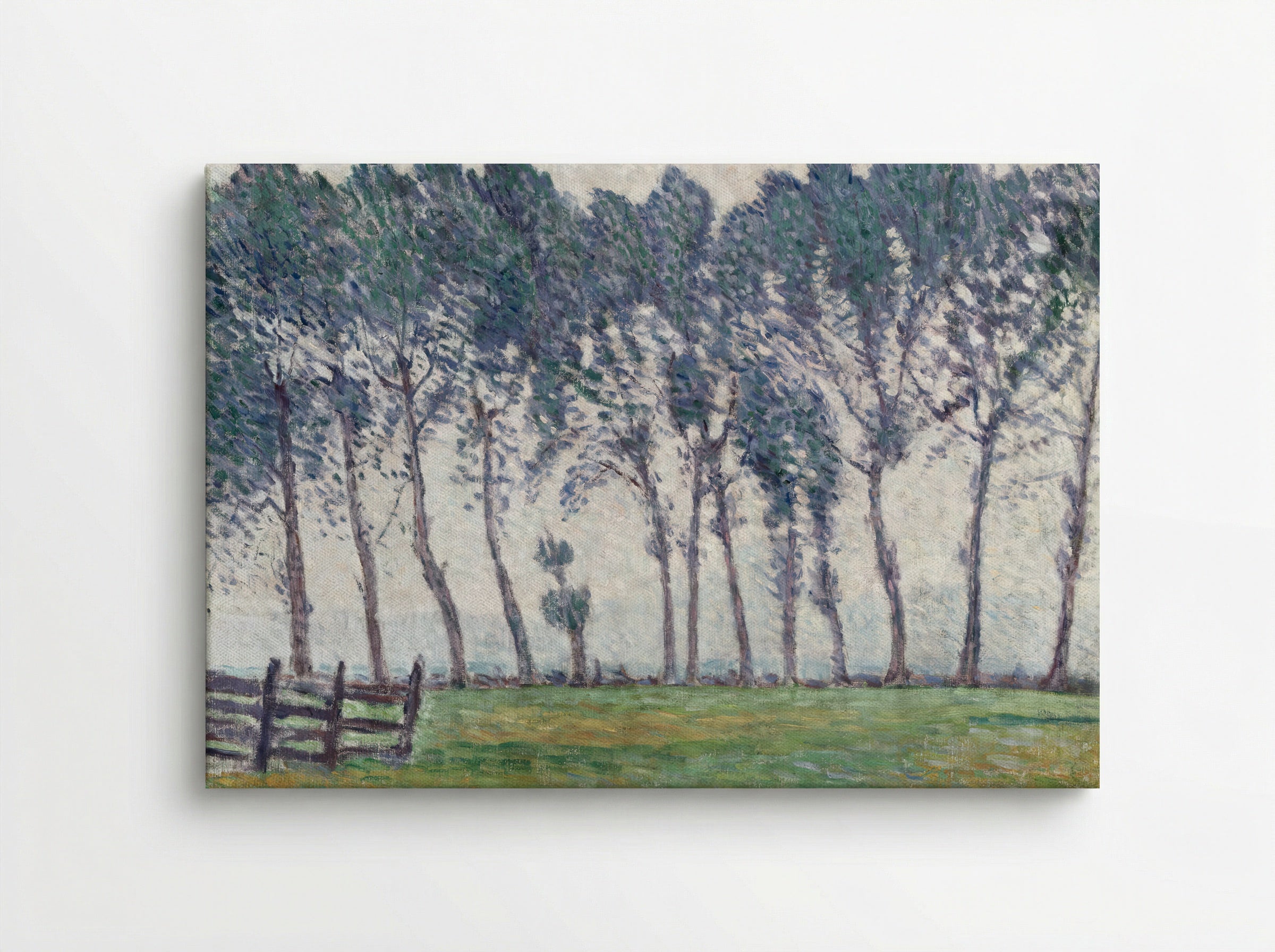
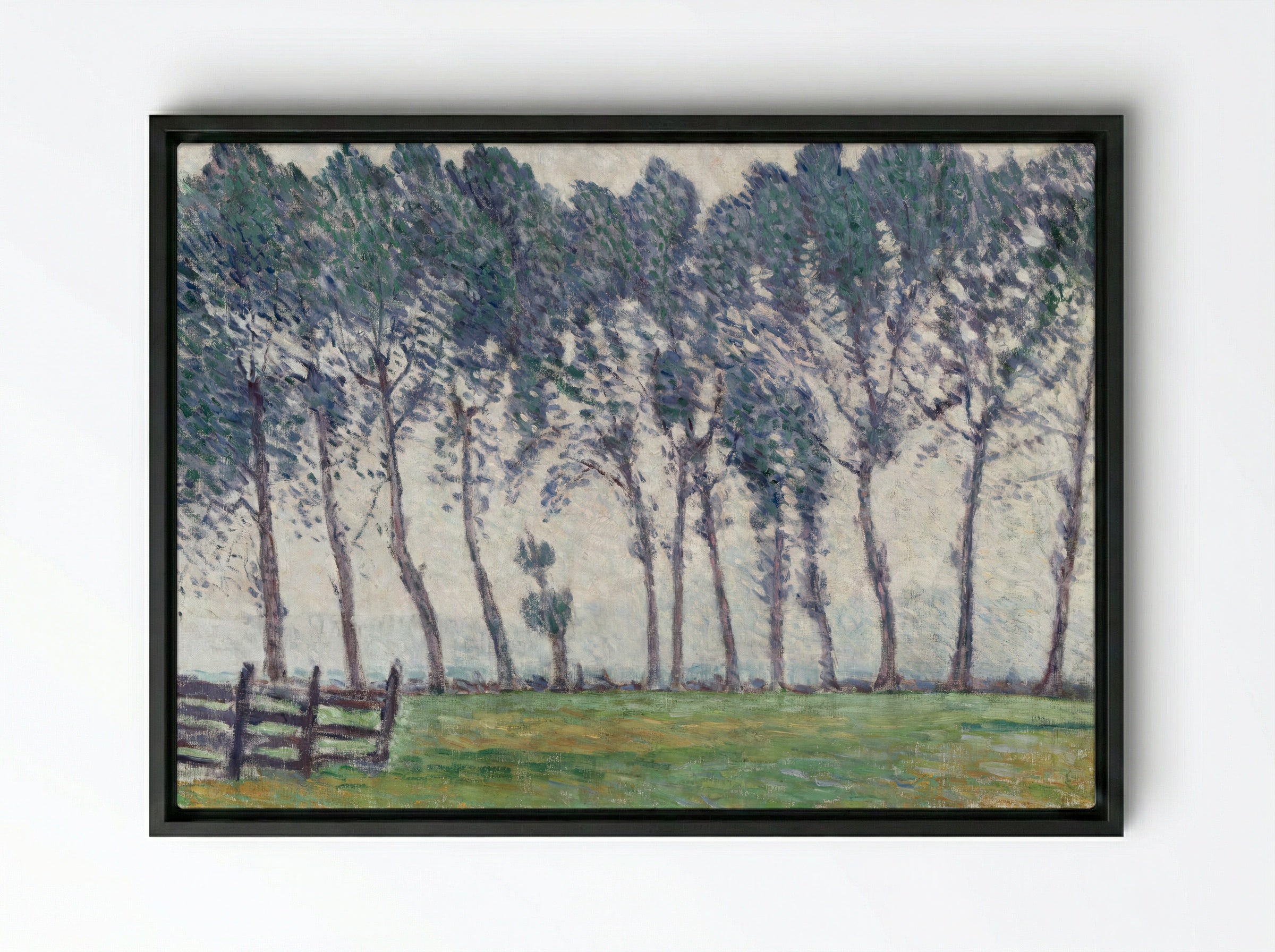
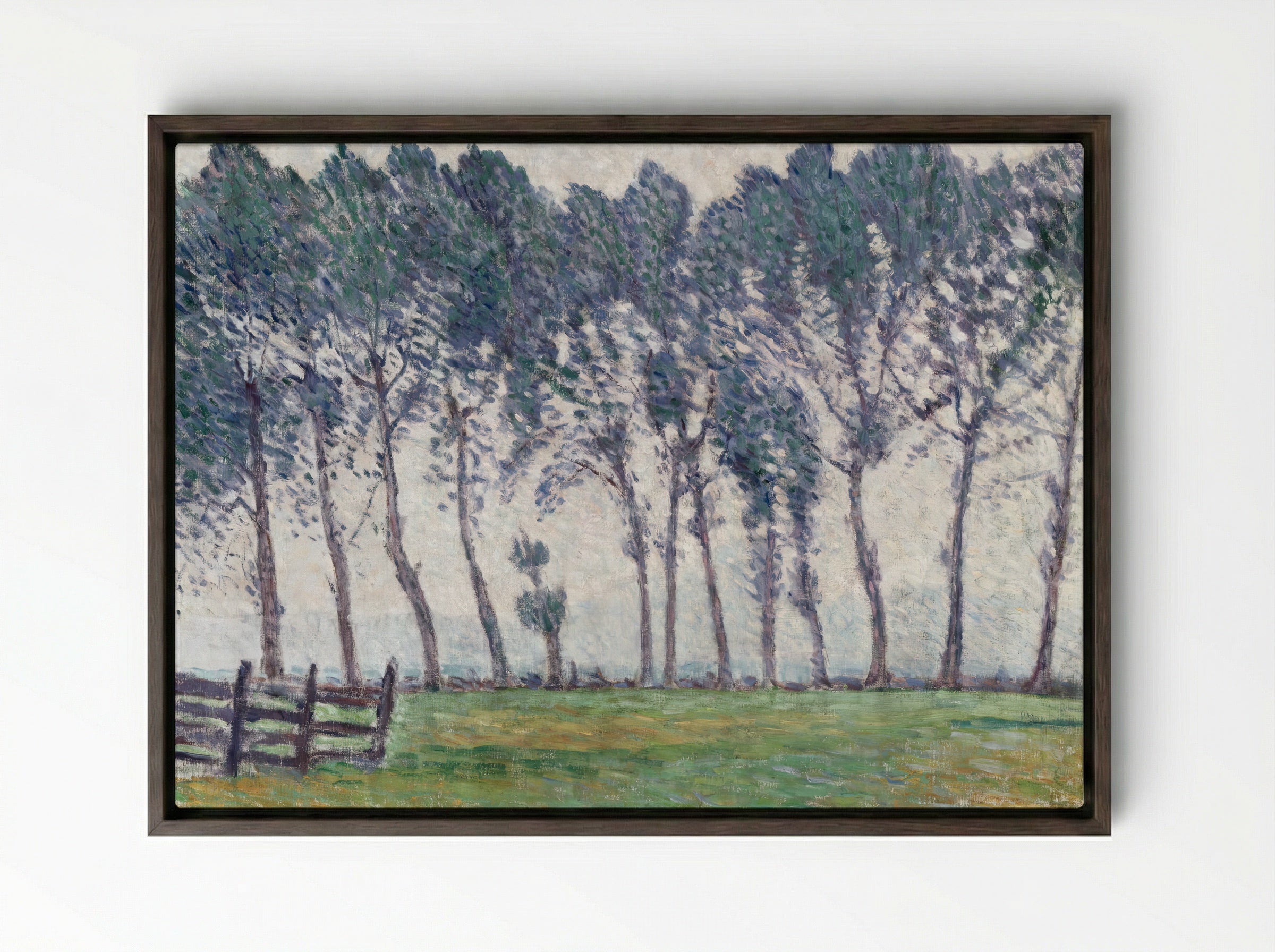
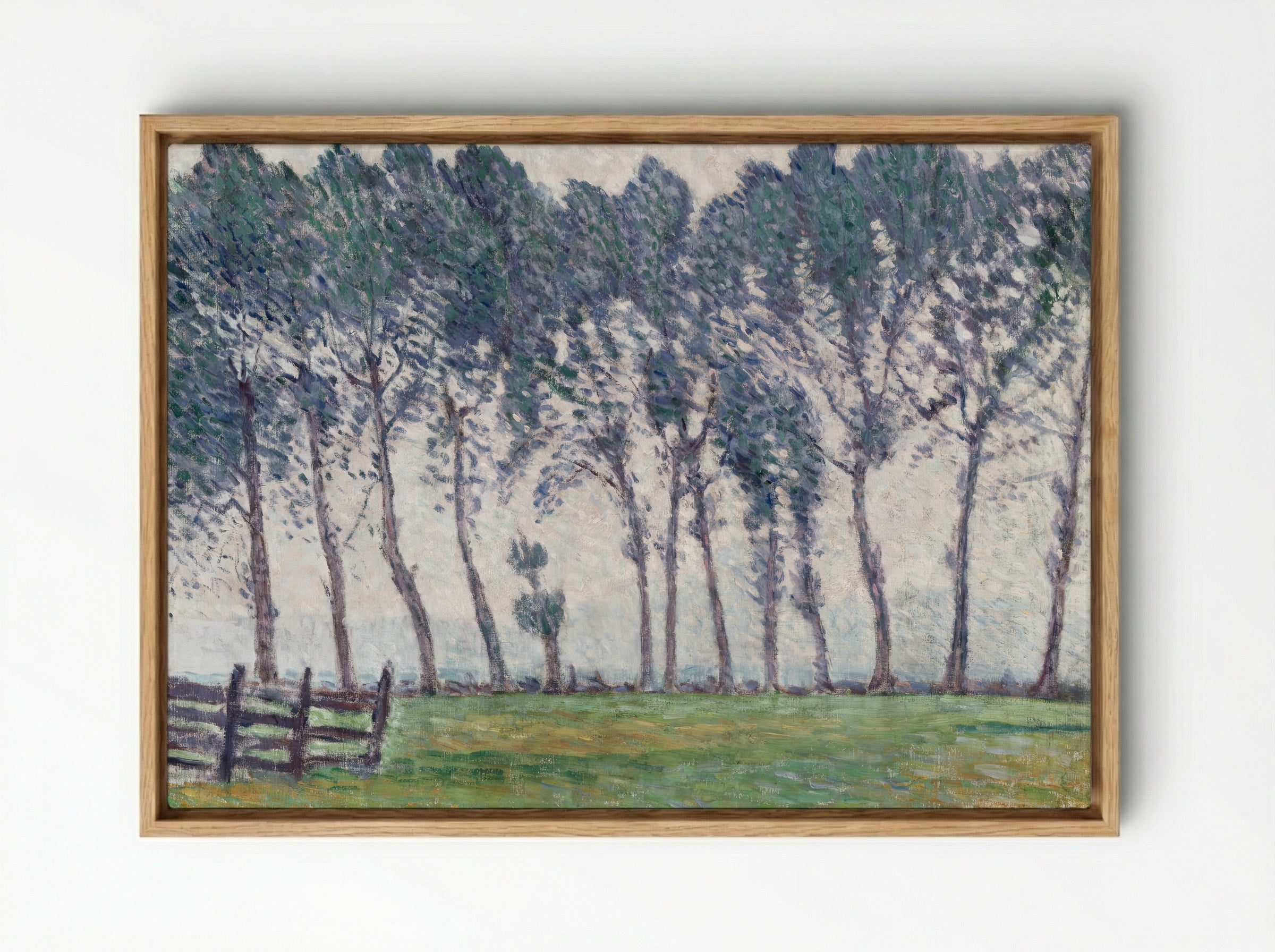
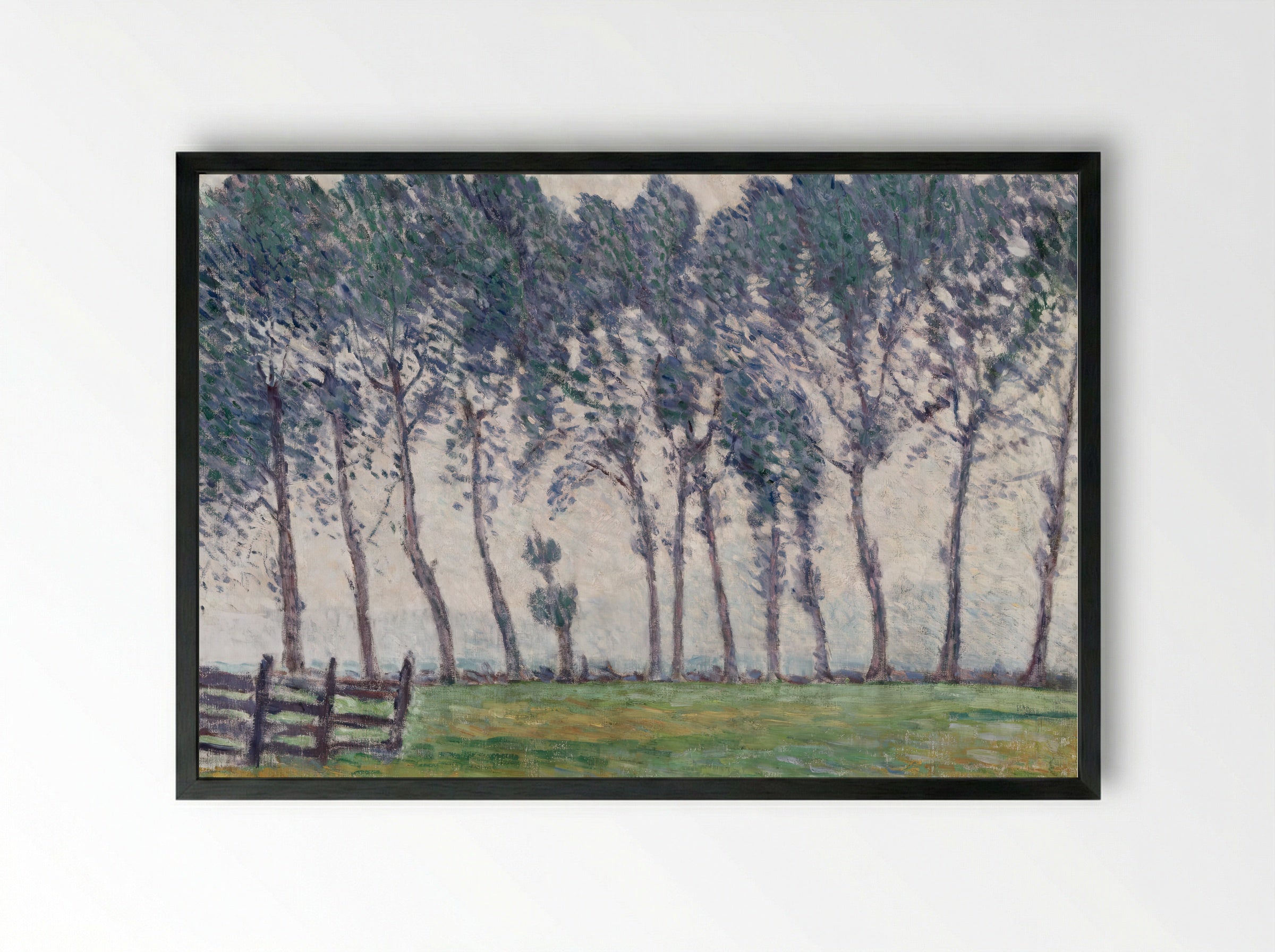
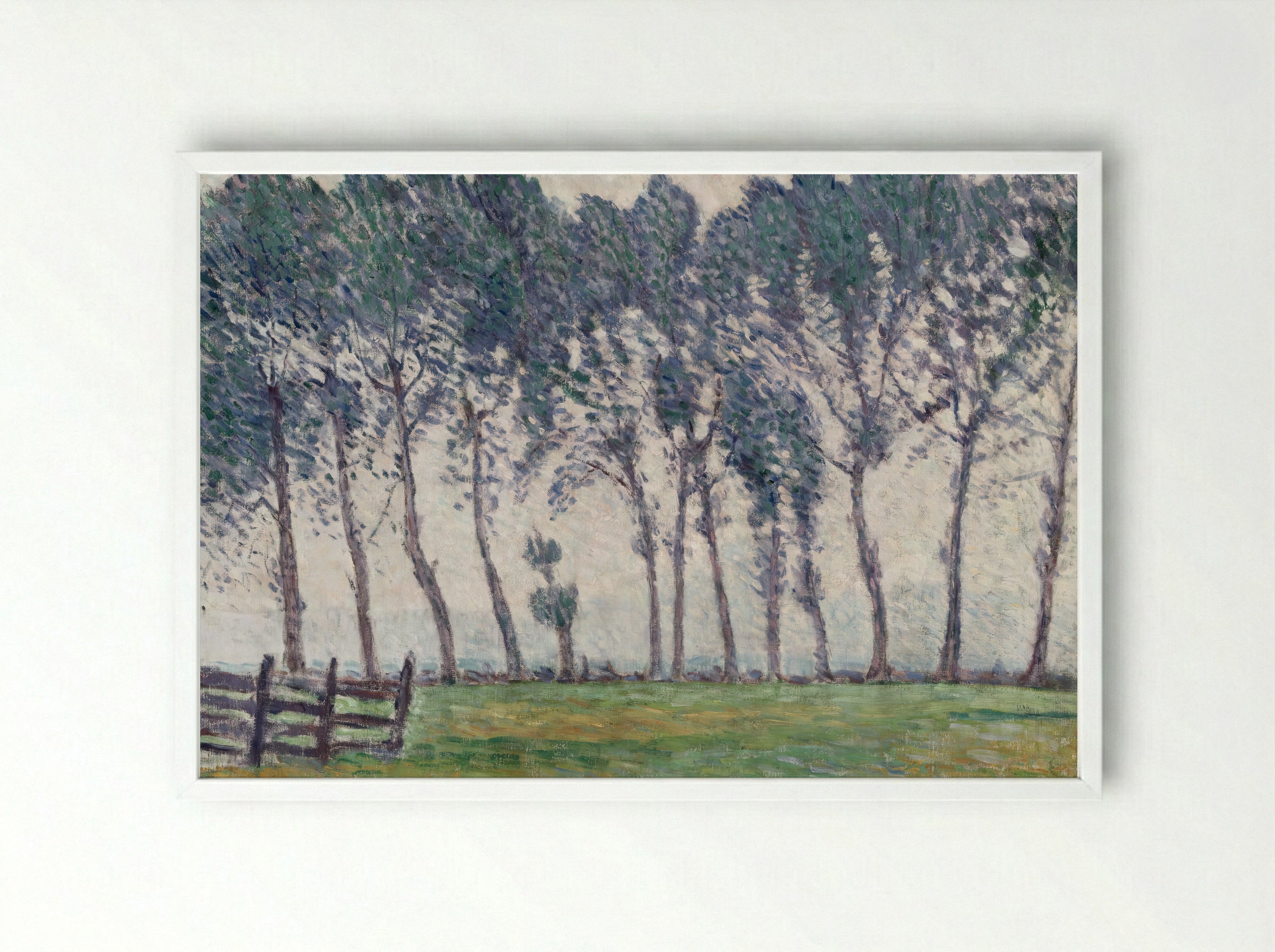
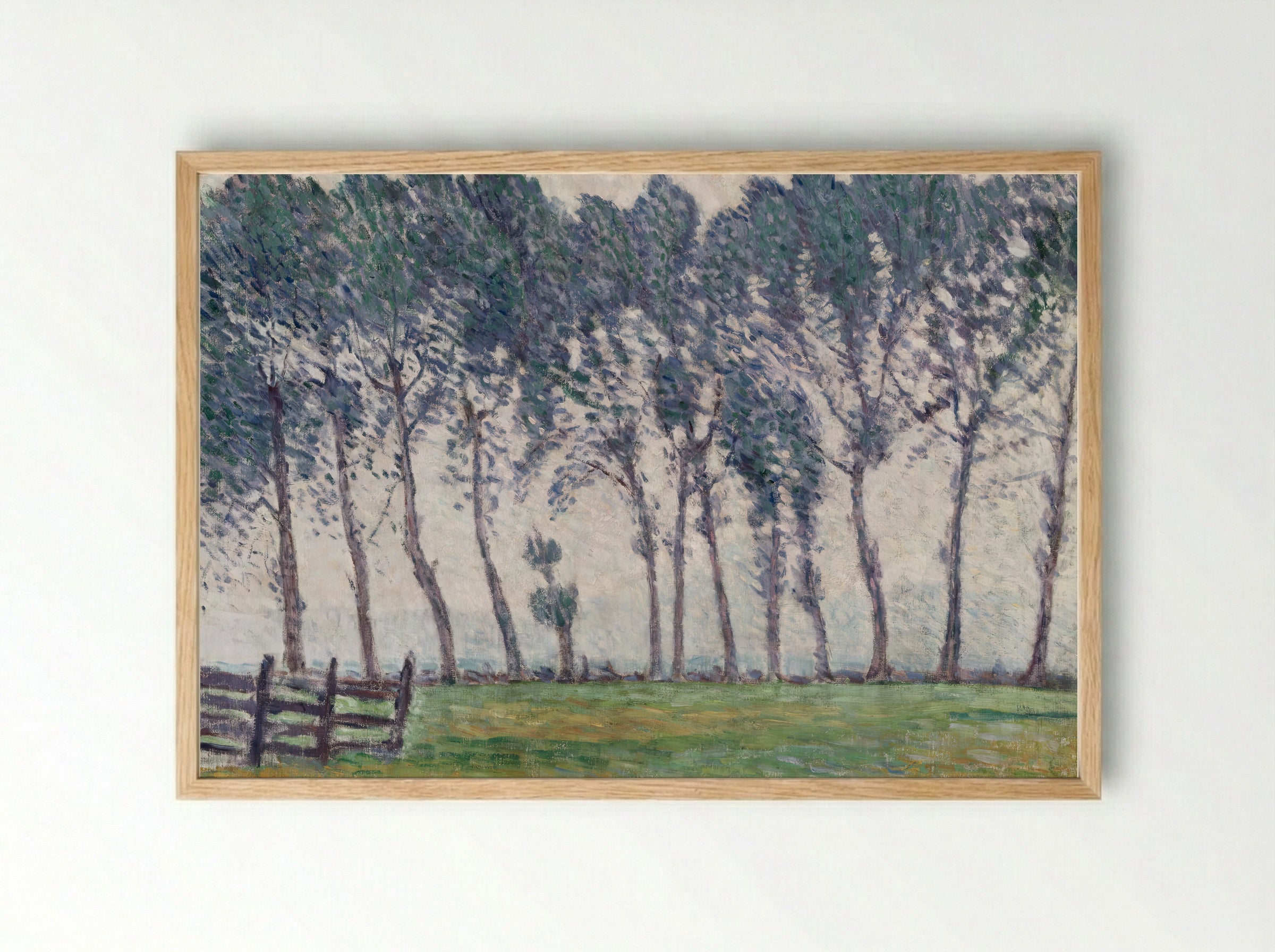
Alfred William Finch's 'Rainy Weather at Hampton Court' captures a tranquil landscape with slender trees bending in the wind. This Post-Impressionist painting brings understated elegance and a calming atmosphere to any room.
Alfred William Finch, a British-born artist who later became a key figure in Finnish art, painted 'Rainy Weather at Hampton Court' in 1907. This evocative landscape captures a row of slender trees bending in the wind and rain, their forms rendered with delicate brushstrokes and a muted colour palette. The scene is set at Hampton Court, a location just southwest of London, known for its historic palace and gardens. Finch's Post-Impressionist style is evident in his use of broken colour and his focus on capturing the atmospheric effects of the weather. The painting conveys a sense of quiet melancholy and the transient beauty of nature. As a fine art print, 'Rainy Weather at Hampton Court' brings a touch of understated elegance to any interior. Its subtle colours and tranquil subject matter make it a perfect addition to a living room, study, or hallway, creating a calming and sophisticated atmosphere. The artwork's historical significance and artistic merit ensure that it will be a cherished piece for years to come, sparking conversation and adding a touch of refined beauty to your home.
Return policy
Because every print is made to order, we don't offer change-of-mind returns, refunds or exchanges. If your order arrives faulty, damaged or incorrect, we'll replace it free of charge — just contact us within 48 hours of delivery. EU customers have a 14-day cooling-off right. See our refunds page for full details.
Shipping
We ship worldwide, printing at the production hub nearest to your delivery address. Delivery times and costs vary by destination — you'll see the options available to you at checkout.
Manufacturing
Each print is produced to order using 12-colour giclée printing on FSC-certified archival paper. Designed in Britain and printed at your nearest production hub to reduce waste and speed up delivery.
Rainy Weather at Hampton Court - Alfred William Finch
Our Features
Designed for Lasting Impact
Specific Features
Every Solis piece is made to order with archival, gallery-quality materials built to last.
- Museum-grade giclée printing for rich, fade-resistant colour
- Archival matte fine-art paper, FSC-certified
- Choose poster, framed print, canvas or framed canvas
- Frames in black, natural wood, dark wood or white
- Framed prints arrive ready to hang
Care & Cleaning
To keep your artwork looking its best:
- Dust gently with a soft, dry cloth
- Avoid prolonged direct sunlight
- Never use liquid cleaners on the print or canvas surface
- Keep in a dry, room-temperature space
- Handle prints with clean, dry hands
Materials & Sizing
Museum-grade giclée on FSC-certified archival matte paper, with framed and canvas options.
- Paper sizes: A4, A3, A2, A1, A0 and B2 (50×70 cm)
- Canvas: XS (20×30 cm) to Large (60×90 cm)
- Frames: black, natural wood, dark wood or white
Why Choose Us ?
100% Satisfaction Guarantee
Fast Shipping
Museum-Quality Materials

Artist Biography
Alfred William Finch
In the late 1890s, Finch relocated to Finland, becoming a pivotal figure in the country's burgeoning art scene. He transitioned from painting to ceramics, embracing the decorative arts and helping to establish the Iris factory, which championed Finnish design. Finch's impact extended beyond his own creations; he mentored younger artists, introducing them to the latest European trends and encouraging a spirit of experimentation.
Though perhaps lesser-known than some of his contemporaries, Alfred William Finch played a vital role in the development of both Belgian and Finnish art. His dedication to artistic exploration and his commitment to fostering creativity make him a fascinating figure. Owning a print of Finch's work is not just acquiring a beautiful image, it's owning a piece of art history.
You May Also Like