

Fine Art Poster
From £28
A giclée print on 200gsm matte fine art paper, using a twelve-colour process for accurate, fade-resistant colour. Supplied unframed, delivered flat or rolled.



Archival giclée
Frames arrive ready to hang
Secure checkout
Made to order
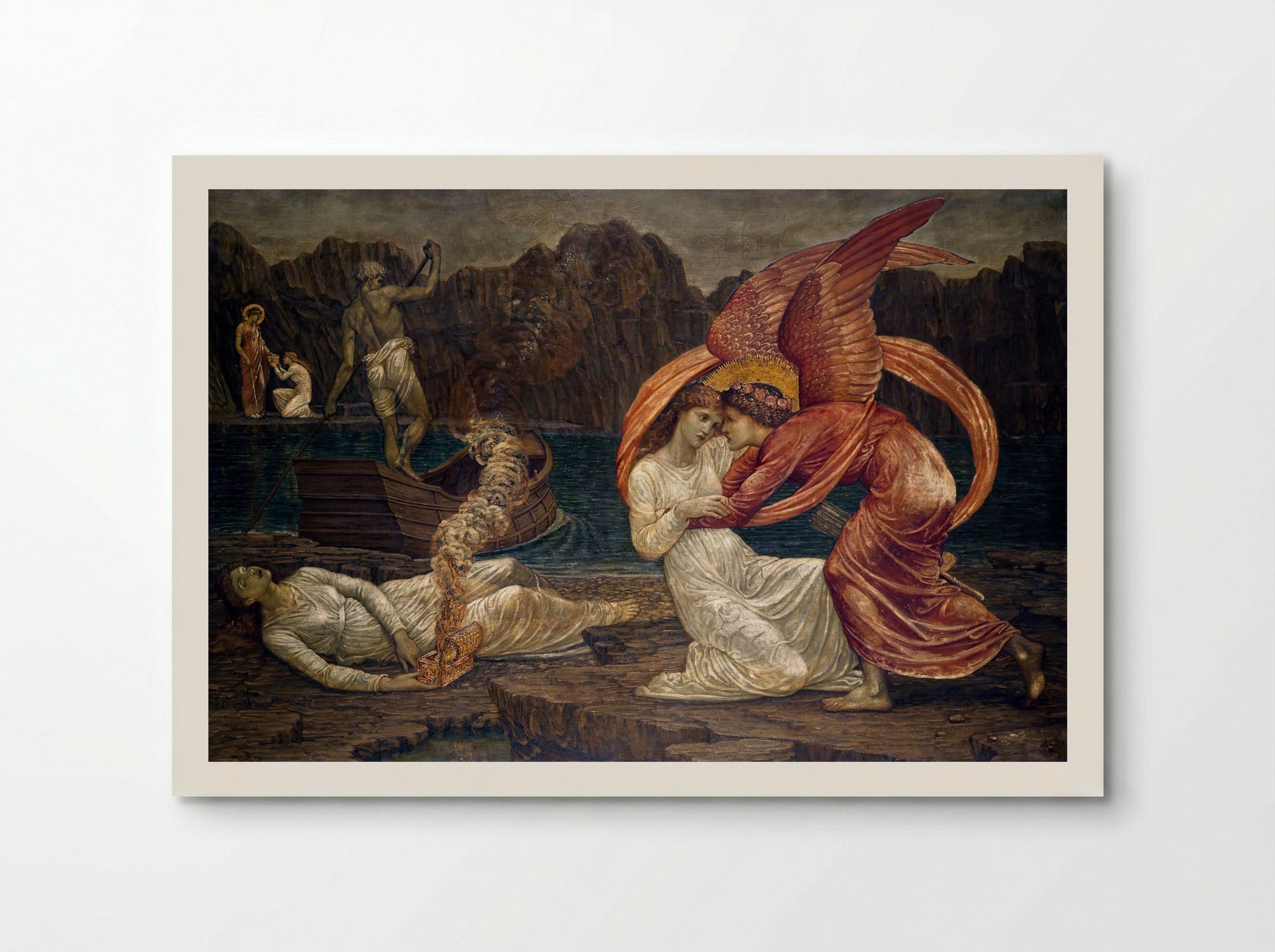
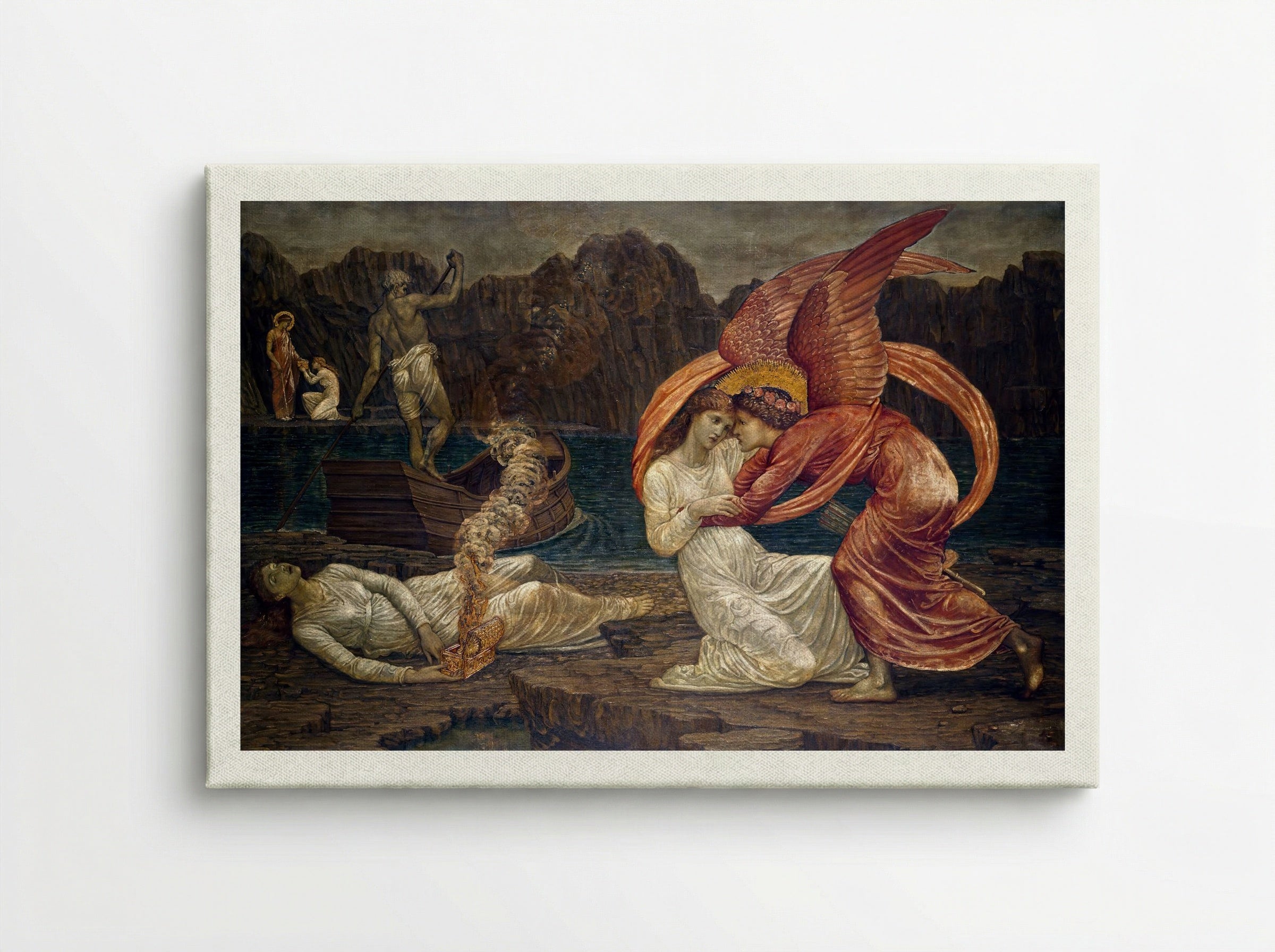
A scene from the Cupid and Psyche myth, Burne-Jones's 'Psyche Receiving the Casket from Proserpine' is a dreamlike Symbolist painting with ethereal figures and rich symbolism, perfect for adding Pre-Raphaelite elegance to your home.
Edward Burne-Jones's 'Psyche Receiving the Casket from Proserpine' is a captivating scene from the Cupid and Psyche myth, part of a series of murals created for the Palace Green Murals project in 1881. Burne-Jones, a key figure in the British Aesthetic Movement, imbues this work with a dreamlike quality and rich symbolism. The composition depicts Psyche, having succumbed to the deadly sleep induced by the contents of Proserpine's casket, being tenderly embraced by Cupid. In the background, Charon ferries souls across the river Styx, adding a layer of classical allusion and melancholy. Burne-Jones's meticulous attention to detail, combined with the ethereal beauty of his figures, makes this a quintessential example of late 19th-century Symbolist painting. The muted colour palette and flowing lines contribute to the overall sense of otherworldly beauty. As a fine art print, this work brings a touch of Pre-Raphaelite elegance and classical mythology to any interior. Its timeless appeal and narrative depth make it a conversation piece, ideal for creating a sophisticated and contemplative atmosphere in your home.
Because every print is made to order, we don't offer change-of-mind returns, refunds or exchanges. If your order arrives faulty, damaged or incorrect, we'll replace it free of charge — just contact us within 48 hours of delivery. See our refunds page for full details.
We ship worldwide, printing at the production hub nearest to your delivery address. Delivery times and costs vary by destination — you'll see the options available to you at checkout.
Each print is produced to order using 12-colour giclée printing on FSC-certified archival paper. Designed in Britain and printed at your nearest production hub to reduce waste and speed up delivery.

Artist Biography
Our Features
Designed for Lasting Impact
Every Solis piece is made to order with archival, gallery-quality materials built to last.
To keep your artwork looking its best:
Museum-grade giclée on FSC-certified archival matte paper, with framed and canvas options.
Made to order
Every piece is printed to order. These are the five finishes, and what makes each one different.
From £28
A giclée print on 200gsm matte fine art paper, using a twelve-colour process for accurate, fade-resistant colour. Supplied unframed, delivered flat or rolled.

From £45
The same fine art print in a solid wood frame with UV-protective acrylic glaze and rigid backing. Five frame colours. Arrives ready to hang.

From £85
A deeper solid wood frame: 33mm deep with a 20mm face and Perspex glaze. The print sits unmounted for a clean gallery presentation. Black, white or natural.

From £30
Hand-stretched canvas with neat gallery-wrapped edges, giving the artwork surface texture and depth. Arrives ready to hang.

From £135
Stretched canvas set in a floating wood frame, our most substantial finish. Arrives ready to hang.
Why Choose Us ?
Damage-free delivery guarantee
Fast Shipping
Museum-Quality Materials
Artist Biography
Edward Burne-Jones
You May Also Like
We use cookies to measure our marketing and see which prints people love.We use cookies to measure our marketing.
By continuing to browse, you agree · Privacy Policy