

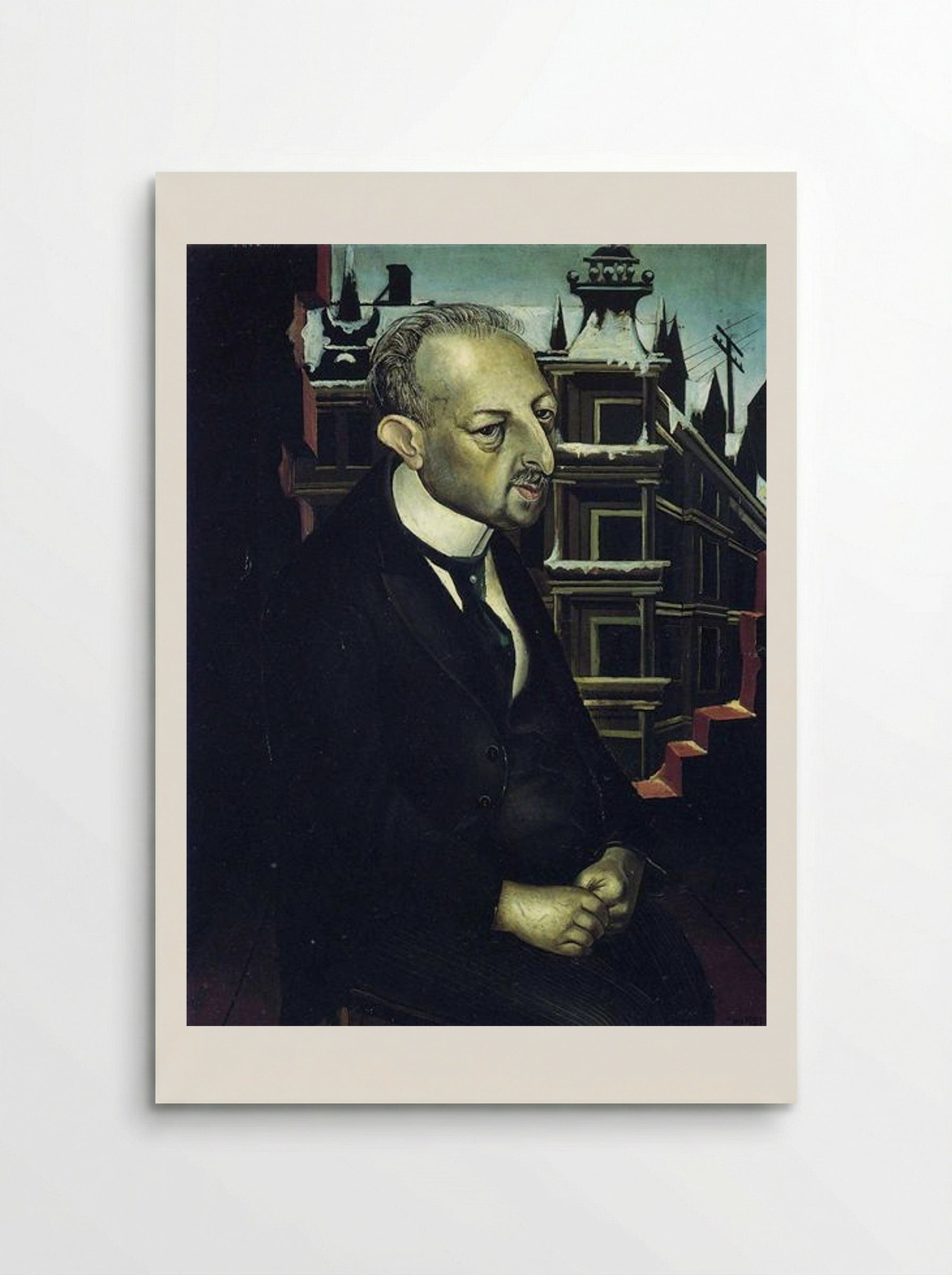
Portrait of the Lawyer Dr. Fritz Glaser - Otto Dix
Archival giclée
Frames arrive ready to hang
Secure checkout
Made to order
Description
Painted in 1921, Otto Dix's 'Portrait of the Lawyer Dr. Fritz Glaser' exemplifies the New Objectivity movement with its unflinching realism and sombre mood. The portrait captures the sitter's personality against an angular architectural backdrop.
Otto Dix, a prominent German artist associated with both Dada and New Objectivity, painted this portrait of Dr. Fritz Glaser in 1921. Glaser was a lawyer and art collector who defended Dix in a number of legal cases involving censorship and obscenity charges against his work. This painting reflects the stylistic characteristics of the New Objectivity movement, which emerged in Germany during the 1920s as a reaction against Expressionism. The movement favoured a return to realism and a detached, objective approach to representation. The portrait presents Glaser in a seated pose, his hands clasped in front of him. Dix's style is characterised by its unflinching realism and attention to detail. The colour palette is subdued, dominated by dark tones that create a sombre mood. The background features an angular, almost Cubist-inspired architectural structure, adding to the sense of unease and modernity. Dix's portraits often possess a psychological intensity, capturing the sitter's personality and inner state. This work is a striking example of Dix's ability to combine realism with a critical and often unsettling perspective on society.
Return policy
Because every print is made to order, we don't offer change-of-mind returns, refunds or exchanges. If your order arrives faulty, damaged or incorrect, we'll replace it free of charge — just contact us within 48 hours of delivery. See our refunds page for full details.
Shipping
We ship worldwide, printing at the production hub nearest to your delivery address. Delivery times and costs vary by destination — you'll see the options available to you at checkout.
Manufacturing
Each print is produced to order using 12-colour giclée printing on FSC-certified archival paper. Designed in Britain and printed at your nearest production hub to reduce waste and speed up delivery.
Care and materials
Specific Features
Every Solis piece is made to order with archival, gallery-quality materials built to last.
- Museum-grade giclée printing for rich, fade-resistant colour
- Archival matte fine-art paper, FSC-certified
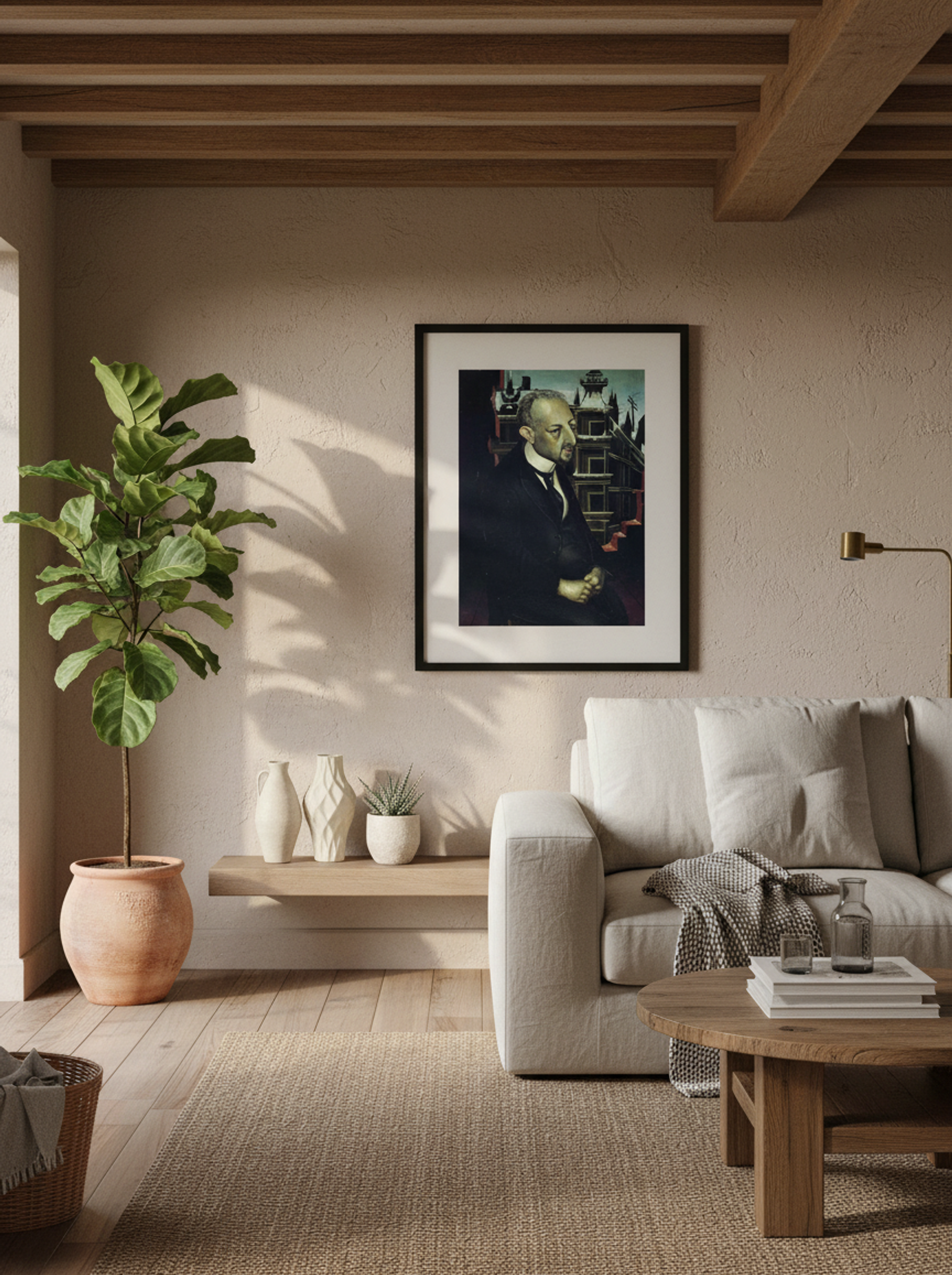
- Multiple sizes and framing options available
- Frames in black, natural wood, dark wood or white
- Framed prints arrive ready to hang
Care & Cleaning
To keep your artwork looking its best:
- Dust gently with a soft, dry cloth
- Avoid prolonged direct sunlight
- Never use liquid cleaners on the print or canvas surface
- Keep in a dry, room-temperature space
- Handle prints with clean, dry hands
Materials & Sizing
Museum-grade giclée on FSC-certified archival matte paper, with framed and canvas options.
- Paper sizes: A4, A3, A2, A1, A0 and B2 (50×70 cm)
- Canvas: XS (20×30 cm) to Large (60×90 cm)
- Frames: black, natural wood, dark wood or white
Portrait of the Lawyer Dr. Fritz Glaser - Otto Dix
Why Choose Us ?
Damage-free delivery guarantee
Fast Shipping
Museum-Quality Materials
You May Also Like