

Fine Art Poster
From £28
A giclée print on 200gsm matte fine art paper, using a twelve-colour process for accurate, fade-resistant colour. Supplied unframed, delivered flat or rolled.



Archival giclée
Frames arrive ready to hang
Secure checkout
Made to order
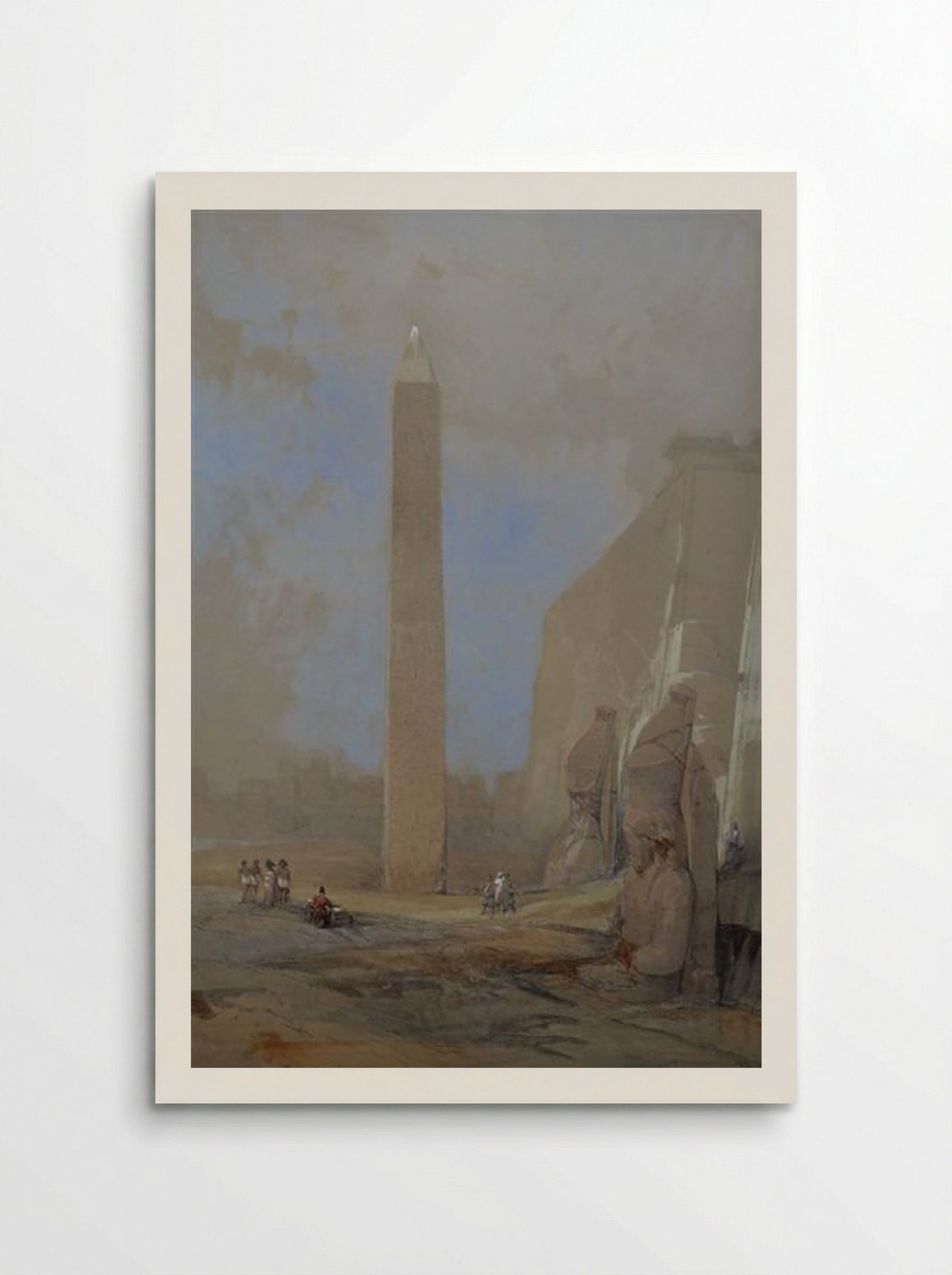
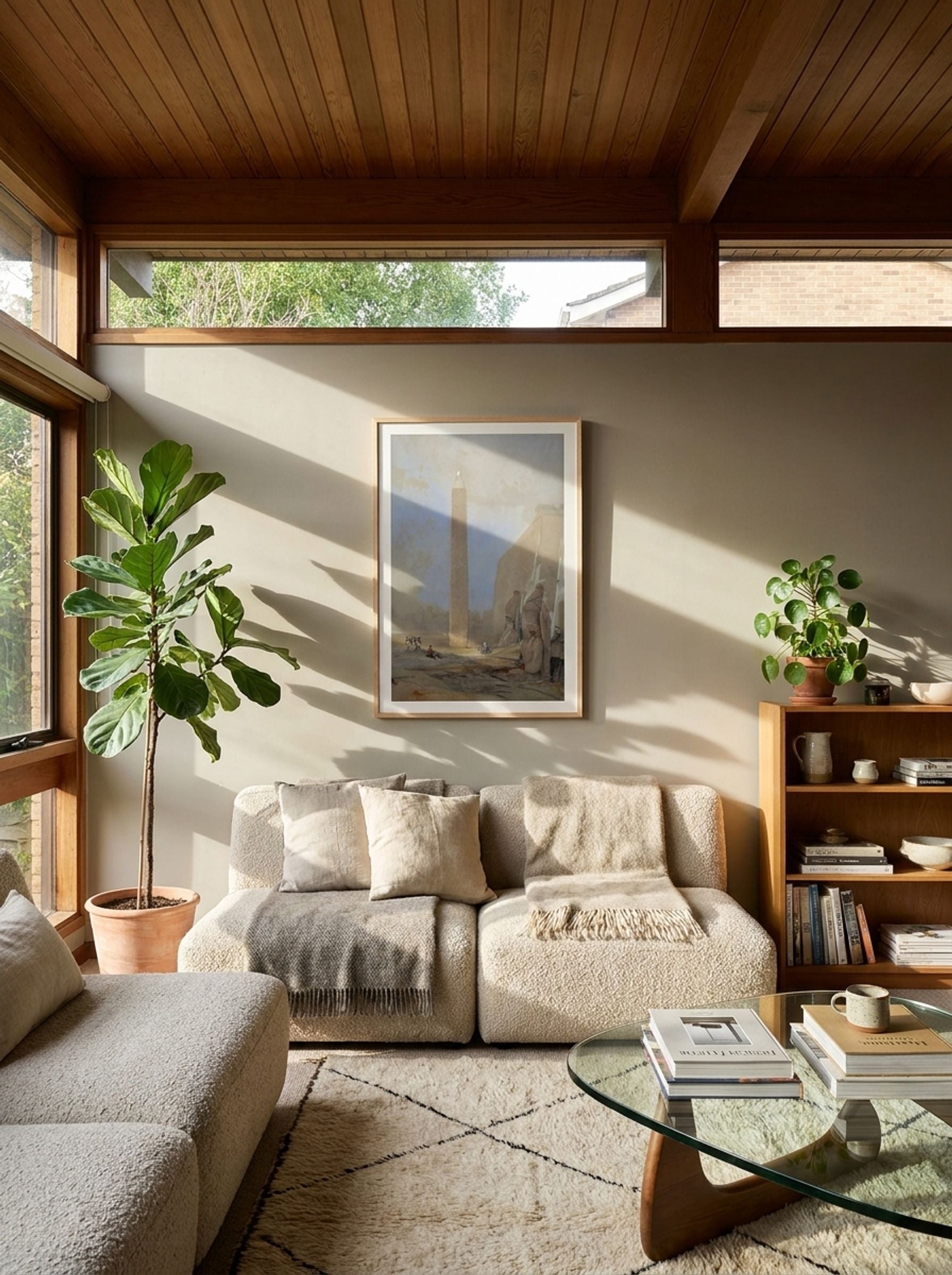
A watercolour by David Roberts, 'Obelisk at Luxor' captures the monumentality of the ancient Egyptian obelisk against a hazy sky. The colour palette is muted, dominated by sandy browns, pale blues, and soft greys, which evoke the desert environment.
David Roberts, a Scottish painter (1796-1864), was celebrated for his detailed depictions of historical sites, particularly those in the Middle East and Egypt. His work is characterised by its precision, atmospheric quality, and attention to architectural detail. Roberts's travels and resulting paintings brought the Near East to European audiences, influencing perceptions of these regions. He was elected to the Royal Academy in 1841. 'Obelisk at Luxor' exemplifies Roberts's Orientalist style. The watercolour captures the monumentality of the ancient Egyptian obelisk against a hazy sky. The scene includes small figures that provide a sense of scale. The colour palette is muted, dominated by sandy browns, pale blues, and soft greys, which evoke the desert environment. The composition balances the verticality of the obelisk with the horizontal expanse of the surrounding landscape. The work combines topographical accuracy with a romantic sensibility, typical of Roberts's approach.
Because every print is made to order, we don't offer change-of-mind returns, refunds or exchanges. If your order arrives faulty, damaged or incorrect, we'll replace it free of charge — just contact us within 48 hours of delivery. See our refunds page for full details.
We ship worldwide, printing at the production hub nearest to your delivery address. Delivery times and costs vary by destination — you'll see the options available to you at checkout.
Each print is produced to order using 12-colour giclée printing on FSC-certified archival paper. Designed in Britain and printed at your nearest production hub to reduce waste and speed up delivery.

Artist Biography
Our Features
Designed for Lasting Impact
Every Solis piece is made to order with archival, gallery-quality materials built to last.
To keep your artwork looking its best:
Museum-grade giclée on FSC-certified archival matte paper, with framed and canvas options.
Made to order
Every piece is printed to order. These are the five finishes, and what makes each one different.
From £28
A giclée print on 200gsm matte fine art paper, using a twelve-colour process for accurate, fade-resistant colour. Supplied unframed, delivered flat or rolled.

From £45
The same fine art print in a solid wood frame with UV-protective acrylic glaze and rigid backing. Five frame colours. Arrives ready to hang.
Why Choose Us ?
Damage-free delivery guarantee
Fast Shipping
Museum-Quality Materials
Artist Biography
David Roberts
You May Also Like
Cookies show us which prints people love, so we hang the right art. Help us fill it?
Essential cookies only if you prefer · Privacy Policy