

Fine Art Poster
From £28
A giclée print on 200gsm matte fine art paper, using a twelve-colour process for accurate, fade-resistant colour. Supplied unframed, delivered flat or rolled.

Archival giclée
Frames arrive ready to hang
Secure checkout
Made to order
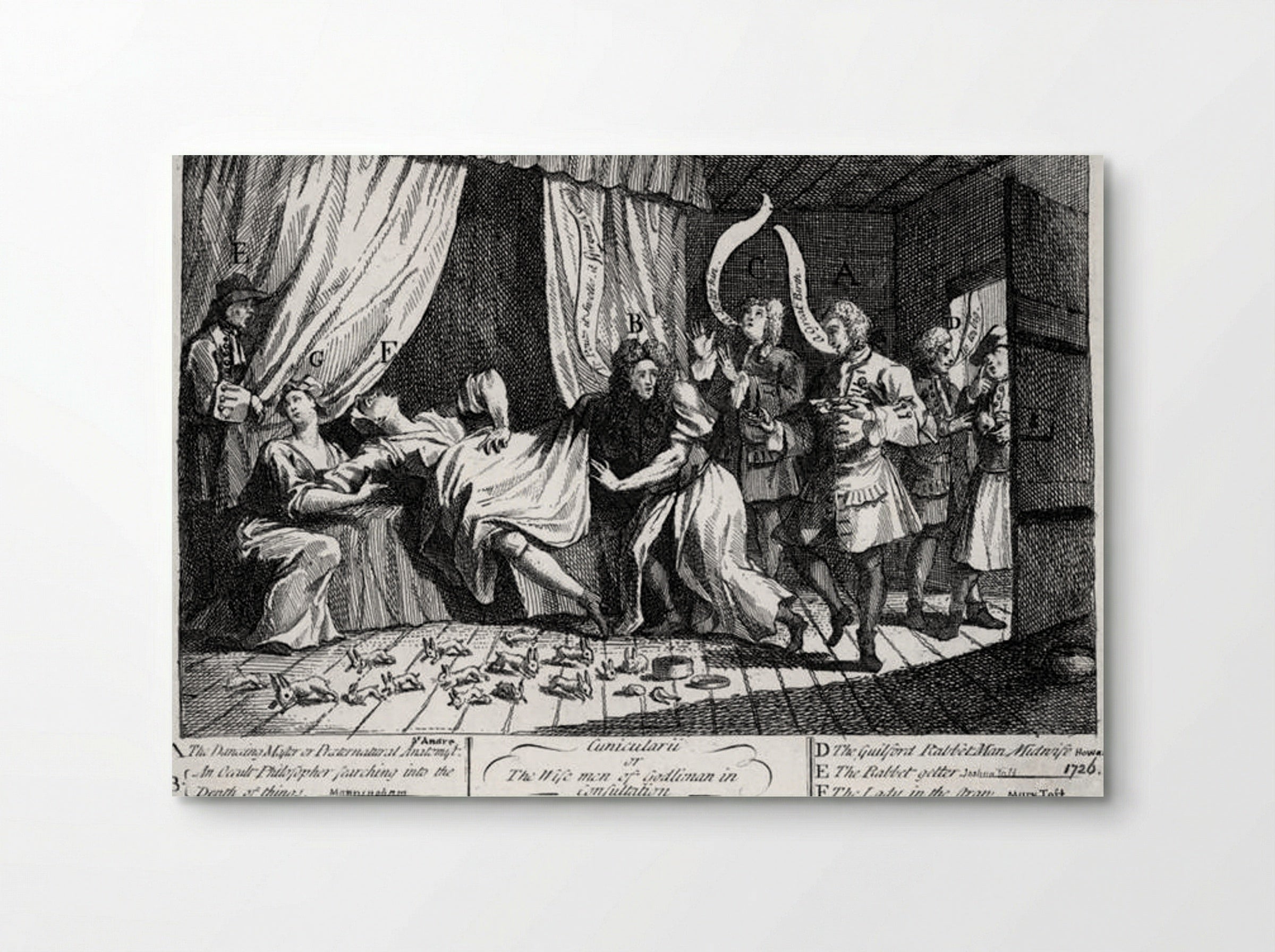
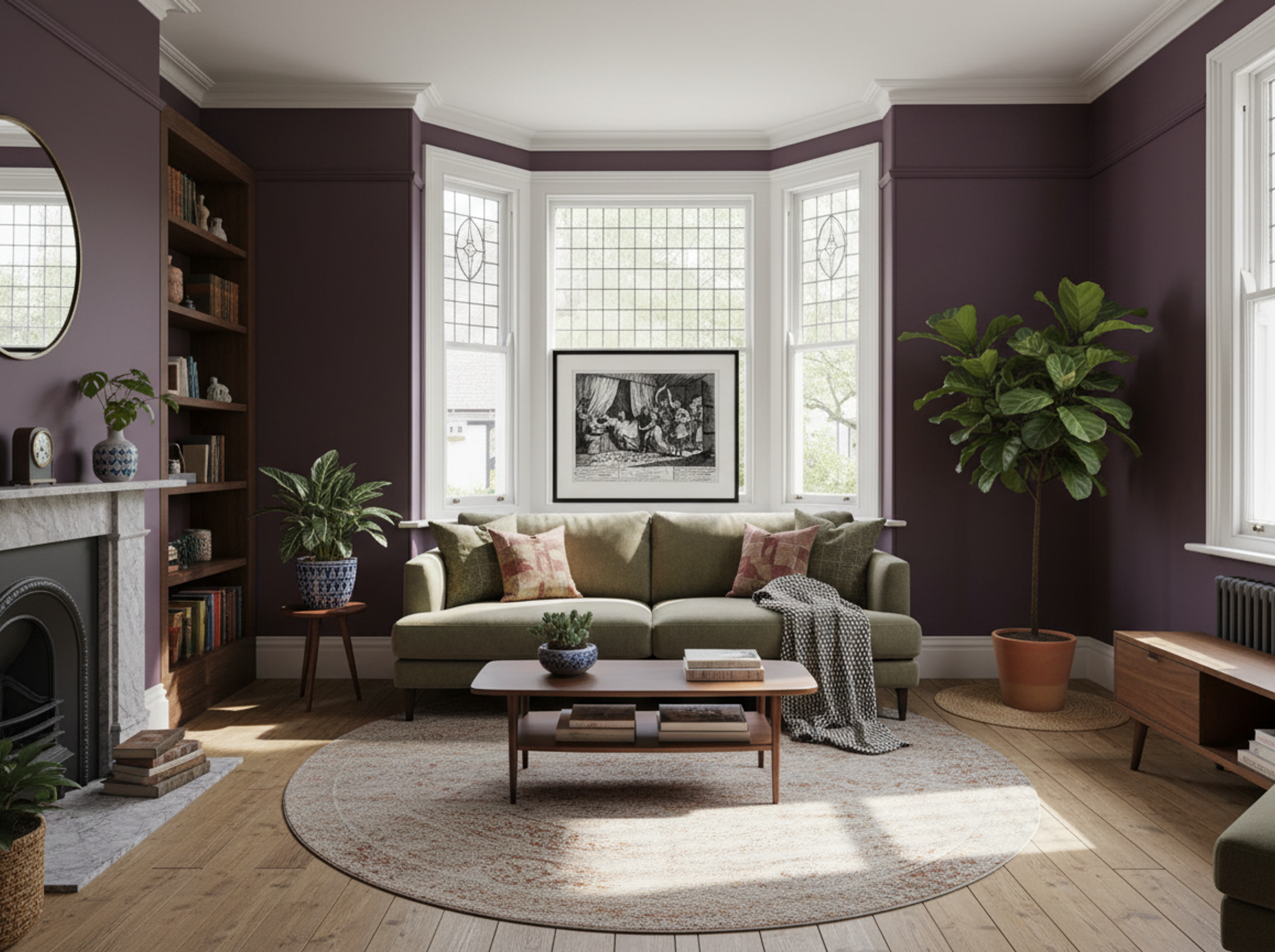
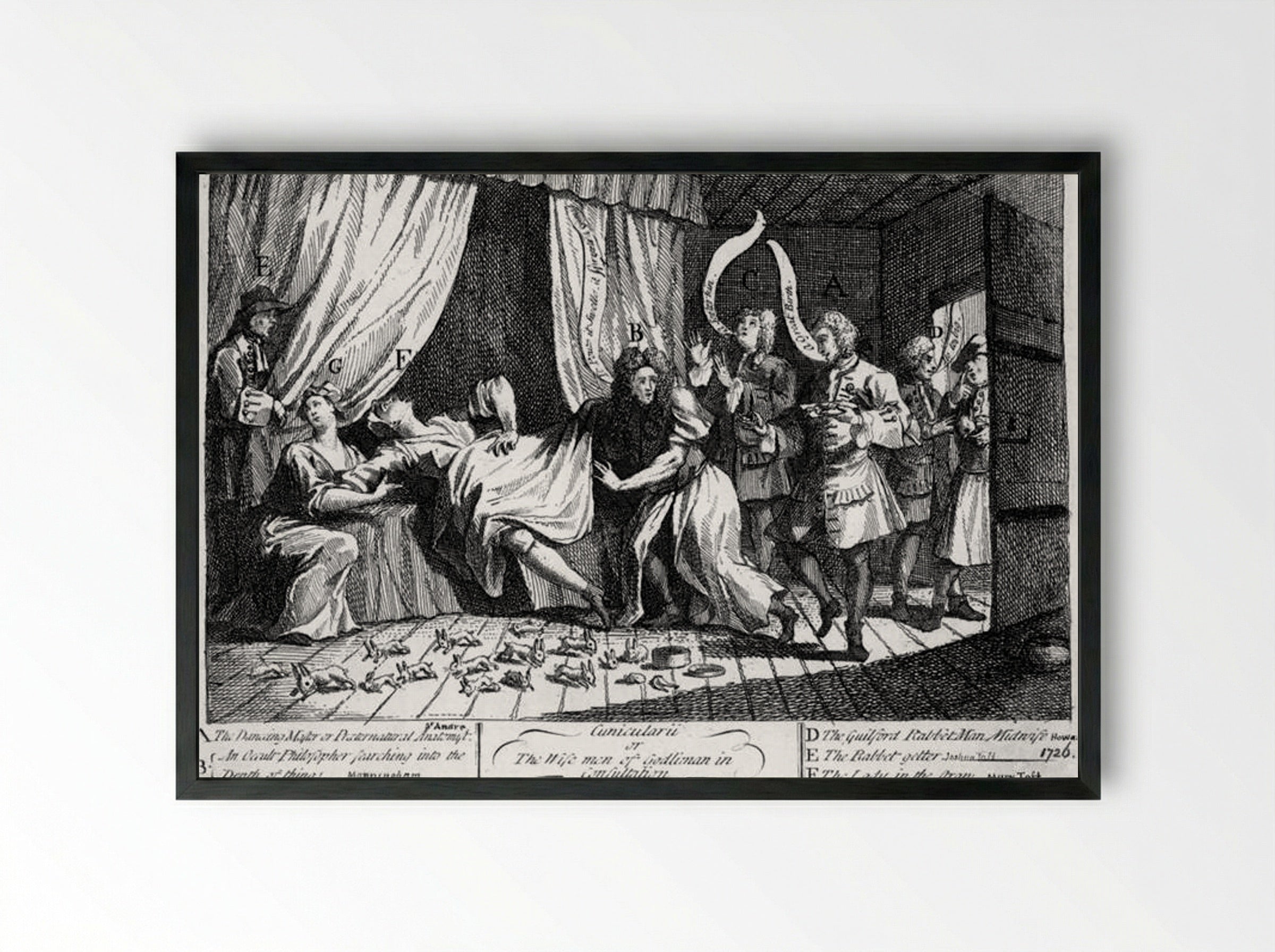
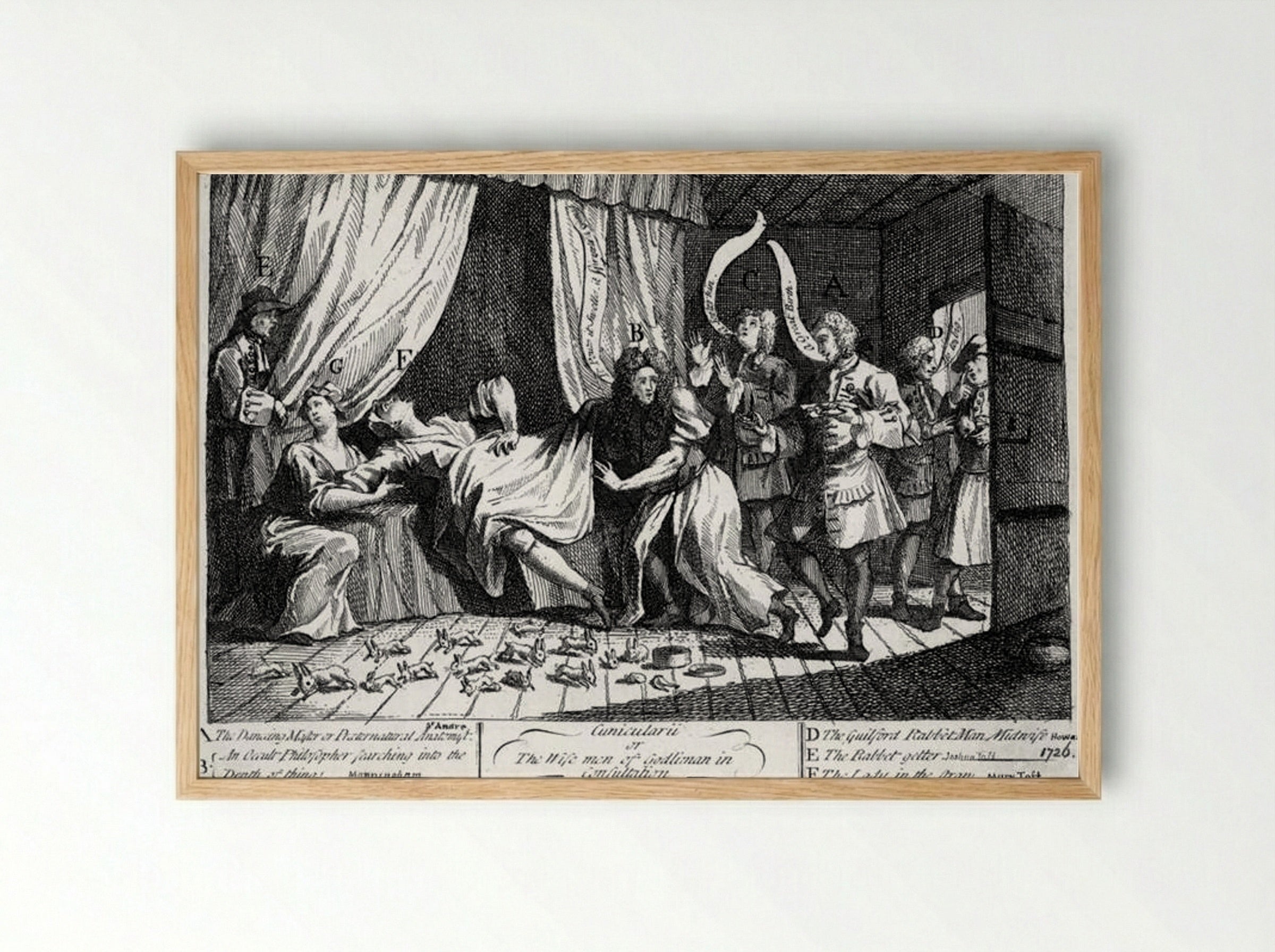
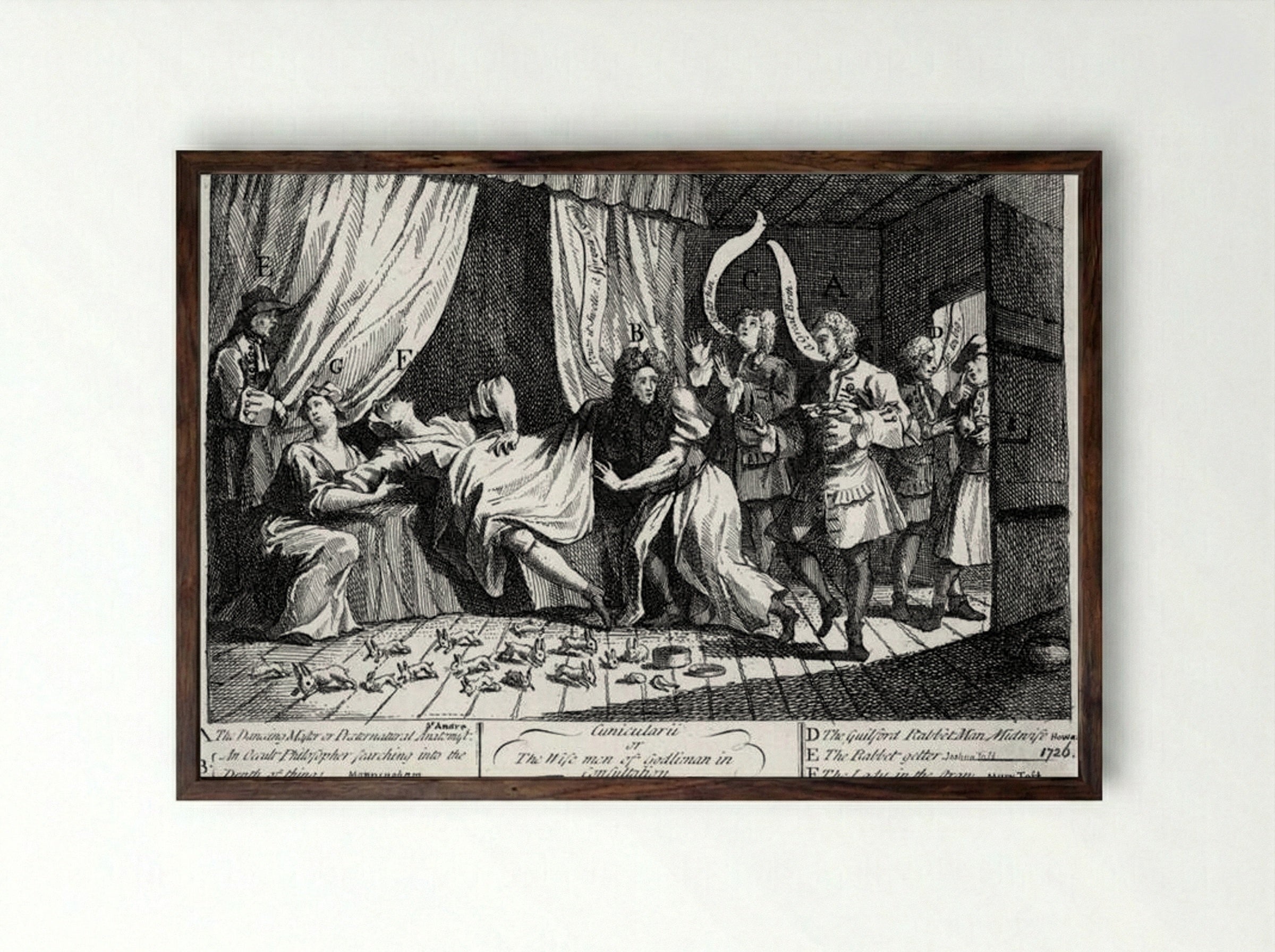
A satirical engraving by William Hogarth from 1726, depicting the infamous Mary Toft and the public sensation surrounding her claim of giving birth to rabbits. The artwork mocks the medical profession's credulity during this early 18th-century episode.
This engraving by William Hogarth, created in 1726, satirises the infamous case of Mary Toft, a woman from Godalming, Surrey, who gained notoriety for claiming to have given birth to rabbits. The image captures the height of the public and medical frenzy surrounding Toft's alleged miraculous births, which briefly captivated early 18th-century England. Hogarth uses his characteristic wit to mock the credulity of the medical profession and the gullibility of the public. The scene depicts a chamber where Mary Toft lies in bed, surrounded by a group of concerned and perplexed figures. These include doctors, surgeons, and other individuals who were involved in examining and verifying Toft's claims. The floor is littered with rabbits, the supposed offspring of Toft's bizarre pregnancy. Hogarth employs detailed line work to convey the expressions of astonishment, doubt, and curiosity on the faces of the onlookers. The composition is carefully arranged to emphasise the absurdity of the situation, with various figures gesturing and pointing, adding to the overall sense of chaos and disbelief. Textual annotations within the image identify specific characters and allude to the various individuals who were caught up in the scandal. Hogarth's print serves as a sharp commentary on the intersection of science, superstition, and public fascination with the unusual, reflecting the social and intellectual climate of the time.
Because every print is made to order, we don't offer change-of-mind returns, refunds or exchanges. If your order arrives faulty, damaged or incorrect, we'll replace it free of charge — just contact us within 48 hours of delivery. See our refunds page for full details.
We ship worldwide, printing at the production hub nearest to your delivery address. Delivery times and costs vary by destination — you'll see the options available to you at checkout.
Each print is produced to order using 12-colour giclée printing on FSC-certified archival paper. Designed in Britain and printed at your nearest production hub to reduce waste and speed up delivery.
Specific Features
Every Solis piece is made to order with archival, gallery-quality materials built to last.
Care & Cleaning
To keep your artwork looking its best:
Materials & Sizing
Museum-grade giclée on FSC-certified archival matte paper, with framed and canvas options.

Artist Biography
Made to order
Every piece is printed to order. These are the five finishes, and what makes each one different.
From £28
A giclée print on 200gsm matte fine art paper, using a twelve-colour process for accurate, fade-resistant colour. Supplied unframed, delivered flat or rolled.

From £45
The same fine art print in a solid wood frame with UV-protective acrylic glaze and rigid backing. Five frame colours. Arrives ready to hang.
Why Choose Us ?
Damage-free delivery guarantee
Fast Shipping
Museum-Quality Materials
You May Also Like
We use cookies to measure our marketing and see which prints people love.We use cookies to measure our marketing.
By continuing to browse, you agree · Privacy Policy