

Fine Art Poster
From £28
A giclée print on 200gsm matte fine art paper, using a twelve-colour process for accurate, fade-resistant colour. Supplied unframed, delivered flat or rolled.



Archival giclée
Frames arrive ready to hang
Secure checkout
Made to order
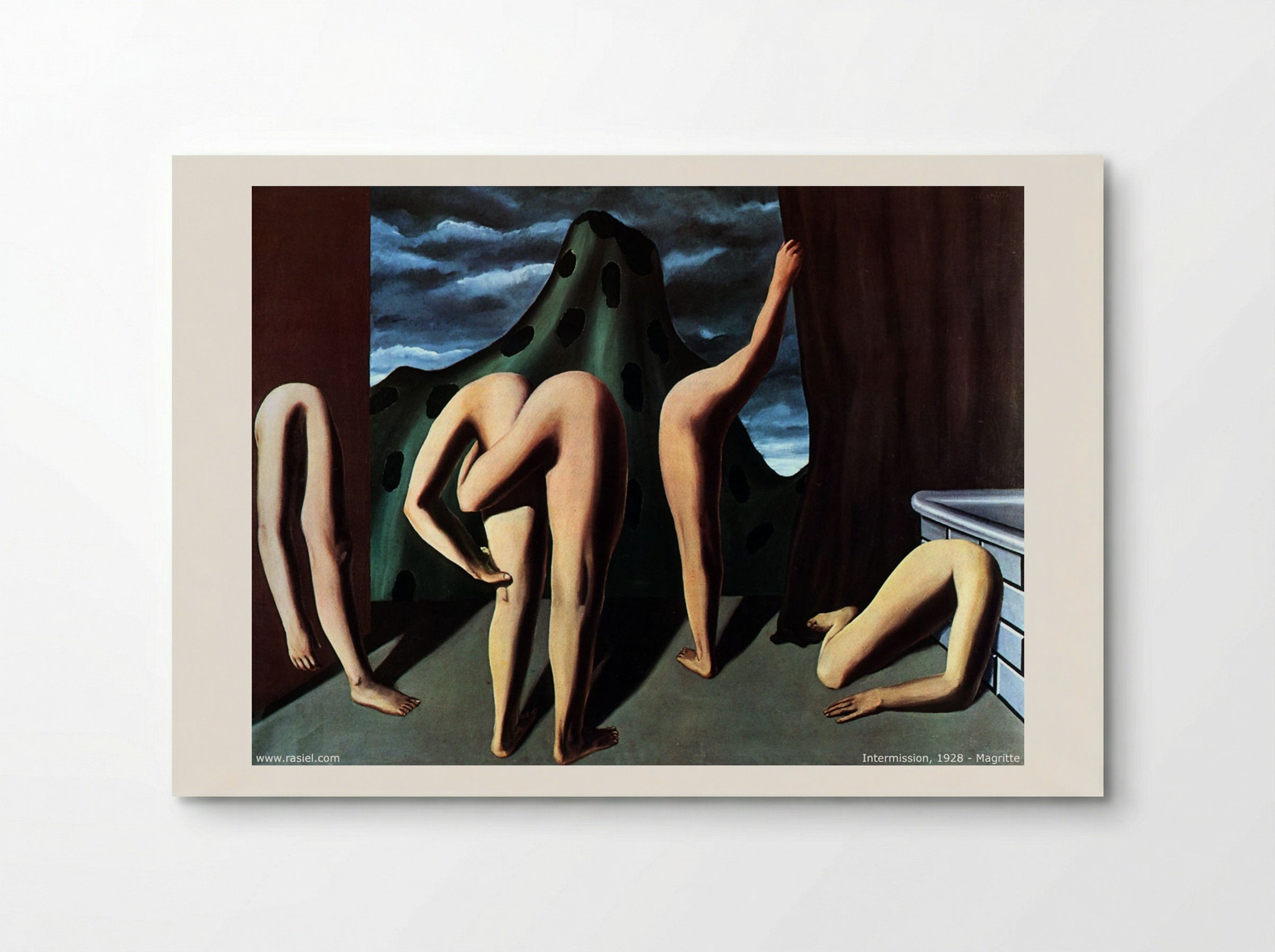
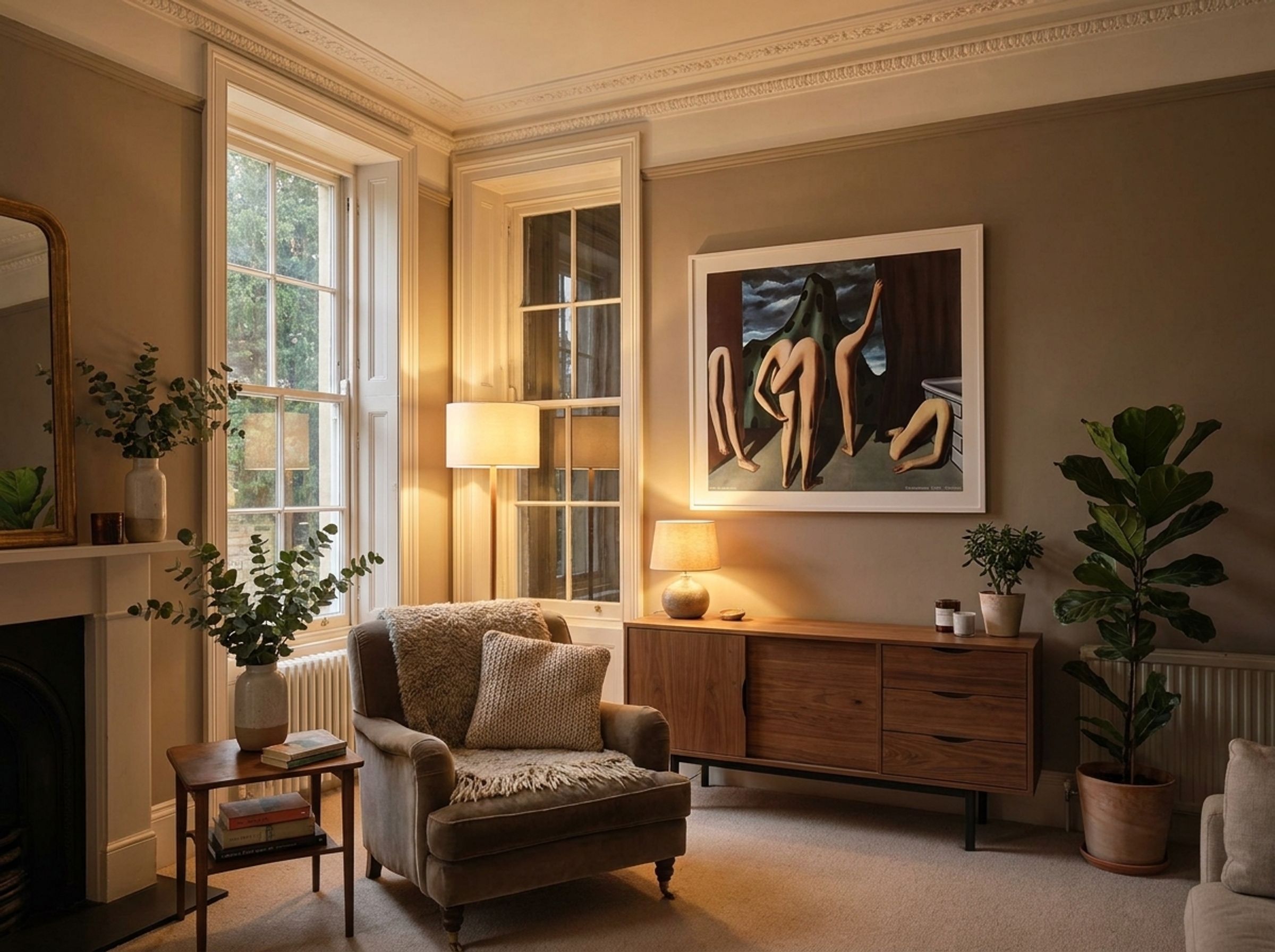
Intermission, painted in 1928, exemplifies René Magritte's surrealist style with its fragmented human figures and unsettling atmosphere. The painting challenges perceptions of reality and identity, inviting contemplation on the nature of the self.
René Magritte's 1928 painting, Intermission, presents a disquieting scene characteristic of his surrealist style. The composition features five fragmented human figures, each reduced to isolated limbs, arranged in an ambiguous space. These body parts, rendered in a pale, fleshy tone, are set against a backdrop of contrasting elements. A dark, mountainous form with circular voids looms in the distance, while a heavy, brown curtain drapes to the right, adding to the sense of theatrical unease. A stark, white bathtub sits incongruously in the corner, further disrupting any semblance of normalcy. Magritte's work often explores the relationship between reality and representation, challenging viewers to question their perceptions. Intermission is no exception, as it disrupts the conventional depiction of the human form and creates a dreamlike, unsettling atmosphere. The painting's title suggests a pause or break, but the scene itself is far from restful. Instead, it evokes a sense of disorientation and the uncanny, inviting contemplation on the nature of identity and the fragmented self. The artist's meticulous technique and precise rendering of details only heighten the painting's surreal quality, making it a compelling example of his unique artistic vision.
You might also like
Because every print is made to order, we don't offer change-of-mind returns, refunds or exchanges. If your order arrives faulty, damaged or incorrect, we'll replace it free of charge — just contact us within 48 hours of delivery. See our refunds page for full details.
We ship worldwide, printing at the production hub nearest to your delivery address. Delivery times and costs vary by destination — you'll see the options available to you at checkout.
Each print is produced to order using 12-colour giclée printing on FSC-certified archival paper. Designed in Britain and printed at your nearest production hub to reduce waste and speed up delivery.
Specific Features
Every Solis piece is made to order with archival, gallery-quality materials built to last.
Care & Cleaning
To keep your artwork looking its best:
Materials & Sizing
Museum-grade giclée on FSC-certified archival matte paper, with framed and canvas options.

Artist Biography
Made to order
Every piece is printed to order. These are the five finishes, and what makes each one different.
From £28
A giclée print on 200gsm matte fine art paper, using a twelve-colour process for accurate, fade-resistant colour. Supplied unframed, delivered flat or rolled.

From £45
The same fine art print in a solid wood frame with UV-protective acrylic glaze and rigid backing. Five frame colours. Arrives ready to hang.
Why Choose Us ?
Damage-free delivery guarantee
Fast Shipping
Museum-Quality Materials
You May Also Like
We use cookies to measure our marketing and see which prints people love.We use cookies to measure our marketing.
By continuing to browse, you agree · Privacy Policy