

Fine Art Poster
From £28
A giclée print on 200gsm matte fine art paper, using a twelve-colour process for accurate, fade-resistant colour. Supplied unframed, delivered flat or rolled.



Archival giclée
Frames arrive ready to hang
Secure checkout
Made to order
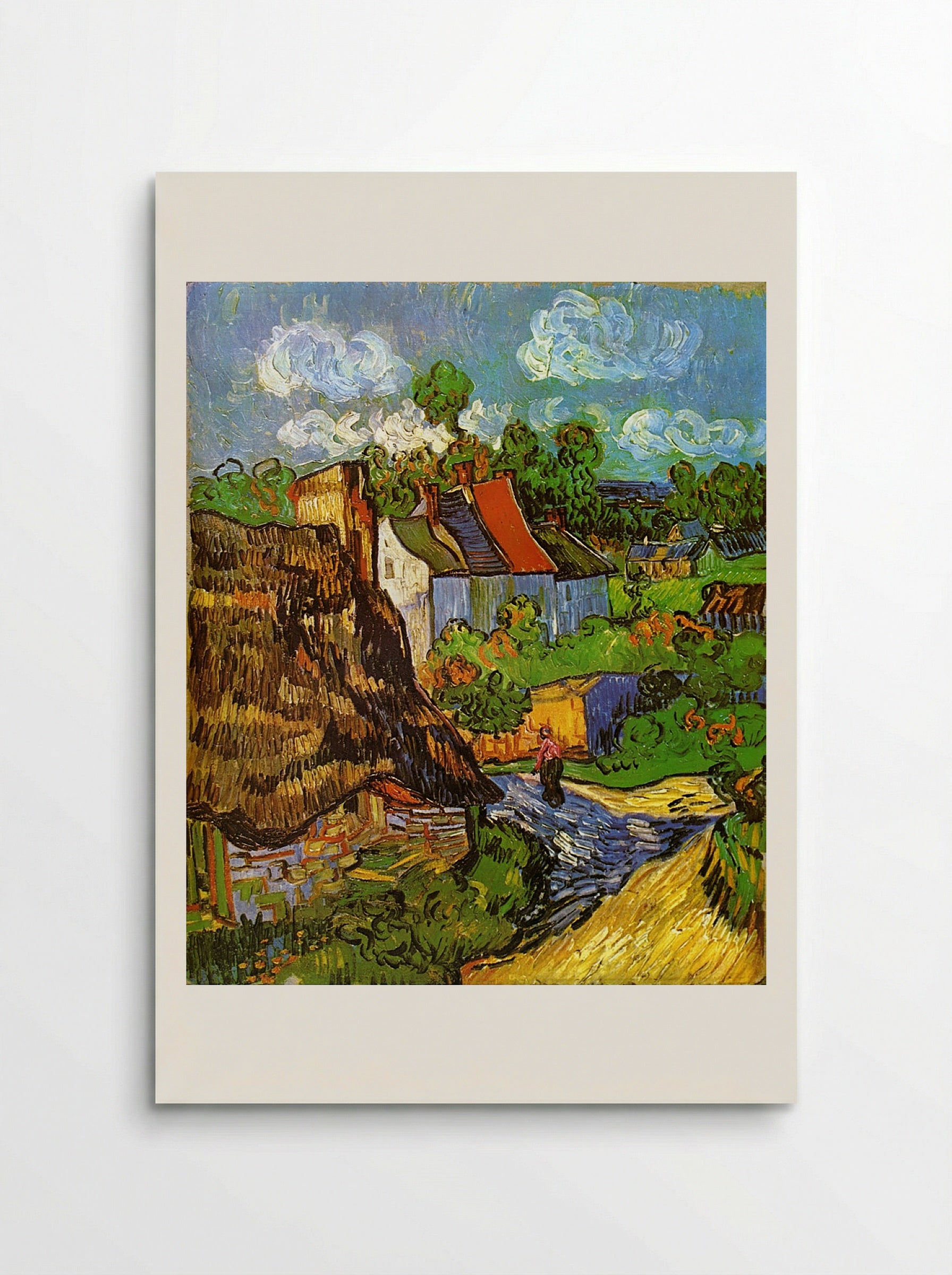
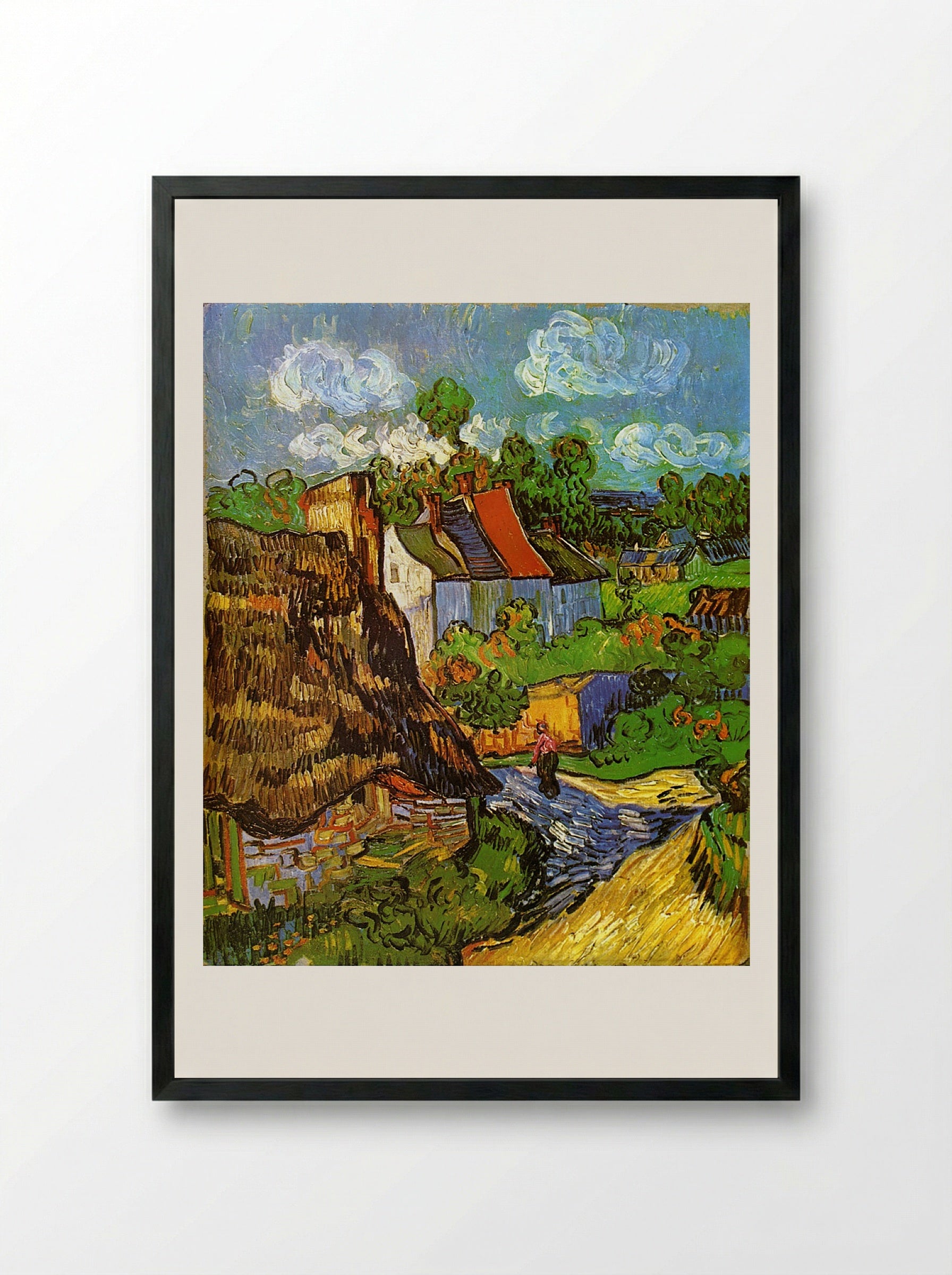
Vincent van Gogh's *Houses at Auvers*, painted in 1890, captures the rustic charm of the French village with bold brushstrokes and a vibrant palette of greens, blues, and yellows.
Painted in 1890, Vincent van Gogh's *Houses at Auvers* depicts a rural scene in the French village where he spent the last months of his life. Van Gogh moved to Auvers-sur-Oise to be closer to his brother Theo and under the care of Dr. Paul Gachet. The painting captures the rustic charm of the village, with its thatched-roof cottages and verdant surroundings. The composition is characterised by its bold brushstrokes and use of colour. The houses are rendered with thick, impasto paint, giving them a tactile quality. The palette is dominated by greens, blues, and yellows, reflecting the natural tones of the landscape. A figure in the middle ground adds a human element to the scene, while the sky is filled with swirling clouds, typical of Van Gogh's expressive style. The painting conveys a sense of tranquility, yet also hints at the artist's inner turmoil during this period of his life. The work is now part of the collection of the Museum of Fine Arts, Boston.
Because every print is made to order, we don't offer change-of-mind returns, refunds or exchanges. If your order arrives faulty, damaged or incorrect, we'll replace it free of charge — just contact us within 48 hours of delivery. See our refunds page for full details.
We ship worldwide, printing at the production hub nearest to your delivery address. Delivery times and costs vary by destination — you'll see the options available to you at checkout.
Each print is produced to order using 12-colour giclée printing on FSC-certified archival paper. Designed in Britain and printed at your nearest production hub to reduce waste and speed up delivery.

Artist Biography
Our Features
Designed for Lasting Impact
Every Solis piece is made to order with archival, gallery-quality materials built to last.
To keep your artwork looking its best:
Museum-grade giclée on FSC-certified archival matte paper, with framed and canvas options.
Made to order
Every piece is printed to order. These are the five finishes, and what makes each one different.
From £28
A giclée print on 200gsm matte fine art paper, using a twelve-colour process for accurate, fade-resistant colour. Supplied unframed, delivered flat or rolled.

From £45
The same fine art print in a solid wood frame with UV-protective acrylic glaze and rigid backing. Five frame colours. Arrives ready to hang.
Why Choose Us ?
Damage-free delivery guarantee
Fast Shipping
Museum-Quality Materials
Artist Biography
Vincent van Gogh
You May Also Like
We use cookies to measure our marketing and see which prints people love.We use cookies to measure our marketing.
By continuing to browse, you agree · Privacy Policy